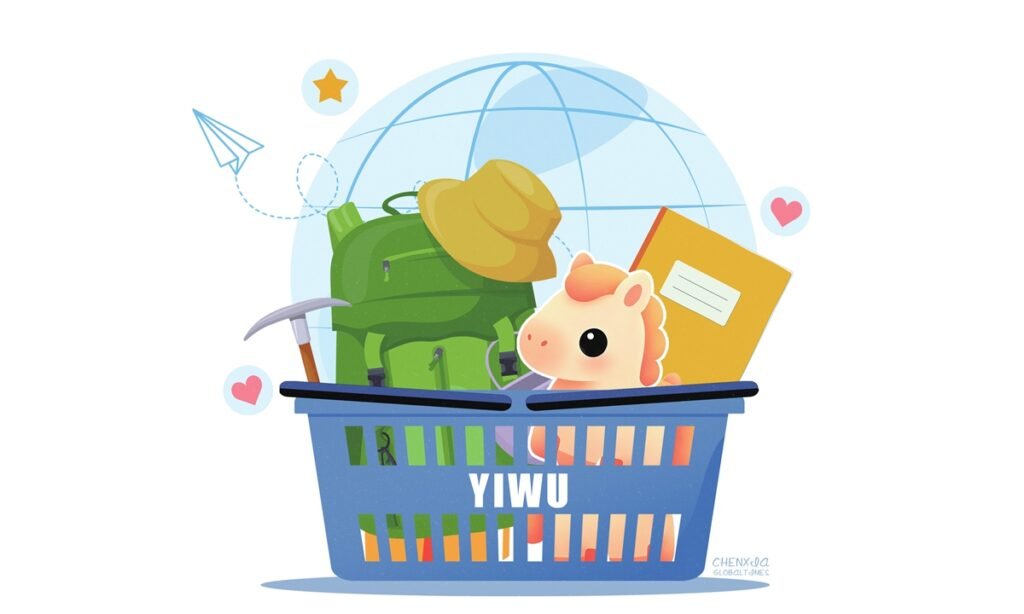
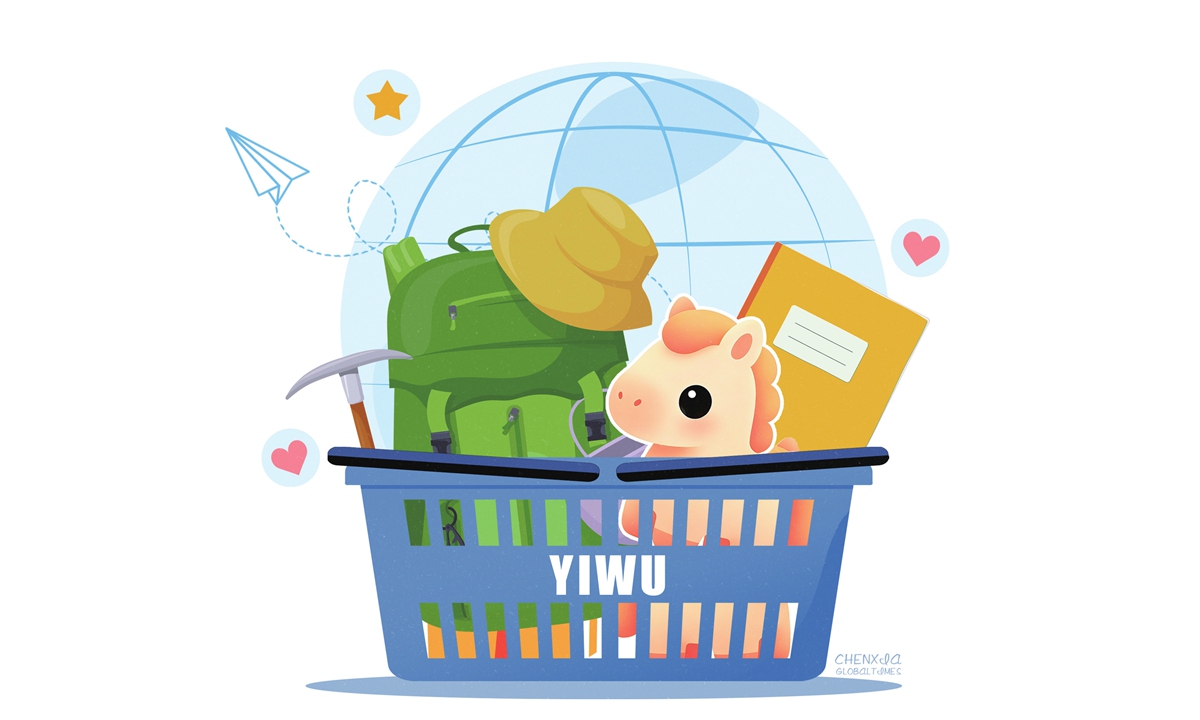
Illustration: Chen Xia/GT
Chinese consumption is evolving, with new trends constantly emerging. Yiwu, a global hub for small commodities, provides a lens on the latest developments.
On Monday, the city will reportedly host a trade fair focused on cultural and tourism products, including intellectual property (IP)-driven creative merchandise, travel-oriented goods, and trendy toys. Together with other forms of new spending, the developments point to a segment of the Chinese consumer market that is both dynamic and rapidly upgrading where preferences are increasingly extending beyond traditional goods toward experiences and cultural content.
In recent years, Chinese consumers have placed increasing emphasis on cultural experiences, tourism, and other forms of lifestyle-oriented new consumption.
Tourism offers a clear illustration of this change: in 2025, China’s domestic tourism scale reached 6.522 billion trips, up 16.2 percent year-on-year. Combining other forms of experience-driven spending, this sizzling growth is an indication of the rapid expansion of China’s cultural and tourism market in the past few years.
The evolution of consumption has underpinned the development of cultural and tourism-related products, including IP-based designer toys and travel-oriented gear. Meanwhile, consumer offerings are becoming increasingly specialized and innovative, reflecting gradual maturation of the market.
The diversity of products to be displayed extends beyond Monday’s trade fair, which spans 50,000 square meters, and is increasingly evident in everyday sales in Yiwu. The outdoor equipment sector, for example, has grown steadily in recent years. According to a report by the Jinhua Daily, a local retailer noted that the domestic camping boom has driven demand for tents, folding tables, and chairs, with inflatable tents emerging as a popular option this year.
Even within a single category, say tents, the Yiwu market offers a wide range of products, varying in both design and price so as to meet diverse consumer needs. The rise of outdoor camping has not only expanded the outdoor products sector, but also raised expectations for design and functionality. Tents, folding furniture, and other items are no longer uniform in style; their designs and color palettes have become more varied, reflecting consumers’ growing preference for products that combine utility with aesthetic appeal.
Outdoor equipment represents only one aspect of the broader changes underway in the Yiwu market. Across cultural and tourism-related products, offerings are becoming more varied and increasingly sophisticated. Together, these developments illustrate the rapid growth of China’s cultural and tourism consumption, both in scale and quality.
China’s cultural and tourism consumption has expanded exponentially in recent years, creating a good number of new opportunities. Some foreign observers who have inaccurately described Chinese consumption as stagnant have overlooked – whether deliberately or inadvertently – the ongoing upgrading in consumer demand and the emergence of multiple new growth levers.
A case in point is the market for trendy toys. According to a report by market research firm iResearch on China’s IP designer toy economy, the market reached 79.6 billion yuan ($11.7 billion) in 2025, representing 17.4 percent year-on-year growth. The report projects that the market is likely to exceed 100 billion yuan by 2027.
Market growth on the consumption side would generate economic value as supply-side capabilities adapt. Production needs to keep pace with the shifting market demand, and China’s manufacturing sector is increasingly doing so, turning emerging consumer trends into the driver for flexible, fast-response supply chains.
Yiwu is such of a good example. The diversity of products and the rise in design sophistication illustrates how quickly production can respond to consumer preferences.
Integrated production clusters and flexible manufacturing systems allow cultural and creative concepts to be translated into physical products rapidly, with some fast-moving items reaching the market within 24 hours or even shorter, according to Chinese media reports.
Over the medium to long term, China’s cultural and tourism consumption is likely to remain on an upward trajectory, creating new opportunities for both domestic and international supply chains. As consumers place greater emphasis on experiences and quality, foreign brands and designers may find growing points of engagement.
Some Western media outlets have portrayed Chinese consumption as stagnant, which does not reflect reality. For international companies with an interest in the Chinese market, opportunities lie in recognizing emerging consumer trends and working with domestic supply chains to respond effectively.
The author is a reporter with the Global Times. bizopinion@globaltimes.com.cn


