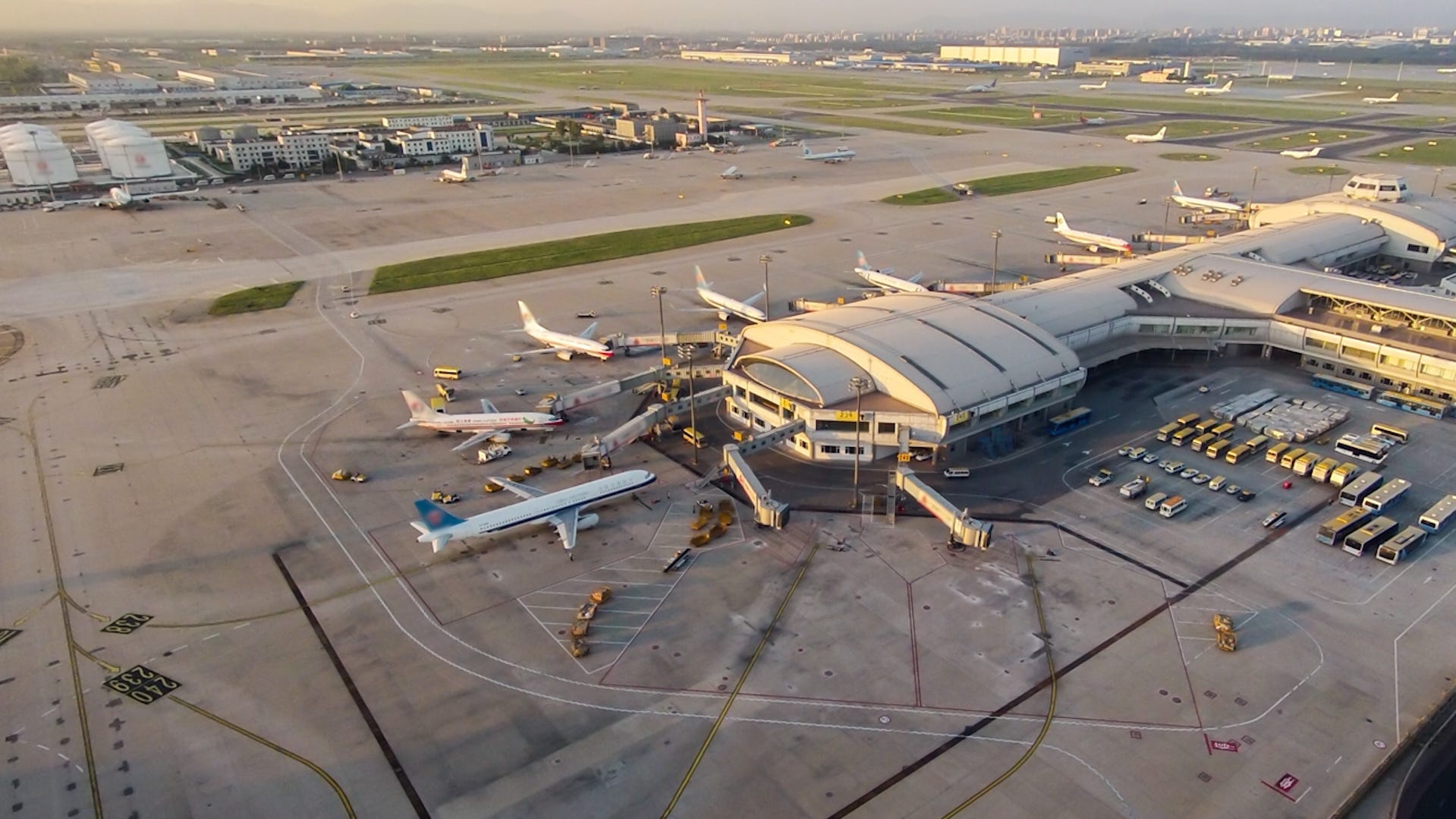

How airlines use new routes to grow demand
Small airlines use new nonstop routes to spark travel demand and grow their customer base.
- Airlines list all flight departure and arrival times in the local time of the respective airports.
- Travelers do not need to calculate time zone differences or daylight saving changes, as airlines handle this automatically.
Booking flights can sometimes feel like solving a math problem, especially when different time zones or changes are involved. It can seem like the potential for a missed flight – or at least a stressful moment of confusion.
To make matters more complicated, daylight saving time varies depending on location. In the United Kingdom, the clocks go back an hour on the last Sunday in October; however, this doesn’t occur in the U.S. until the first Sunday in November. And not everywhere observes daylight saving.
Thankfully, it’s not really dependent on the traveler to figure out flight times, as they are entirely handled by the airlines – and there’s “zero error from the airline side,” according to Dr. Ahmed Abdelghany, professor and associate dean at Embry-Riddle Aeronautical University’s O’Maley College of Business.
As a starting point, while airlines internally use Coordinated Universal Time (UTC), the listed times that travelers see when booking flights or on their tickets are always in local time; hence, it may seem like the math isn’t adding up.
Here’s how flight times work, and why travelers don’t need to worry about calculating time changes.
How do airlines calculate flight departure and arrival times?
All airlines use the same universal static file that contains the time zones of every destination and origin for their flights to develop their schedules. “The calculation is very simple,” said Abdelghany. “You just find the block time, which is the time from gate to gate, and add or subtract from it the time zone difference.”
That’s why a flight departing from California at midnight arrives in New York at around 8 a.m. the next day – it accounts for the three-hour time difference in addition to the five-hour flight journey.
For places where daylight saving time isn’t observed, such as a flight from Hawaii to California, it will show that the flight arrives an hour later, even though the flight duration remains unchanged. This is due to the arrival time being shown in local time.
Do travelers need to calculate time changes?
No math is necessary on the traveler’s behalf since flight times are already calculated by the airline. They just need to remember that the departure time is based on the departing airport’s time zone and the arrival time for the arriving airport.
What travelers do need to pay attention to is whether daylight saving is happening where they are. “I can assure you that the error will come from the passenger who really not aware that the clock has to be changed in my home overnight to the night,” said Abdelghany.
Does daylight saving time affect flights?
Airlines automatically take into account daylight saving. So, a flight arriving at 9 p.m. today will show that it’s arriving at 8 p.m. after daylight saving ends and clocks go back an hour, despite being the same flight.
Travelers don’t need to worry too much as long as their clocks are always up to date. “You have to make sure that, especially if you’re traveling the next day, you adjust your clock,” he said.