Investigators at National Transportation Safety Board probe the crash as experts push for stronger aviation safeguards.
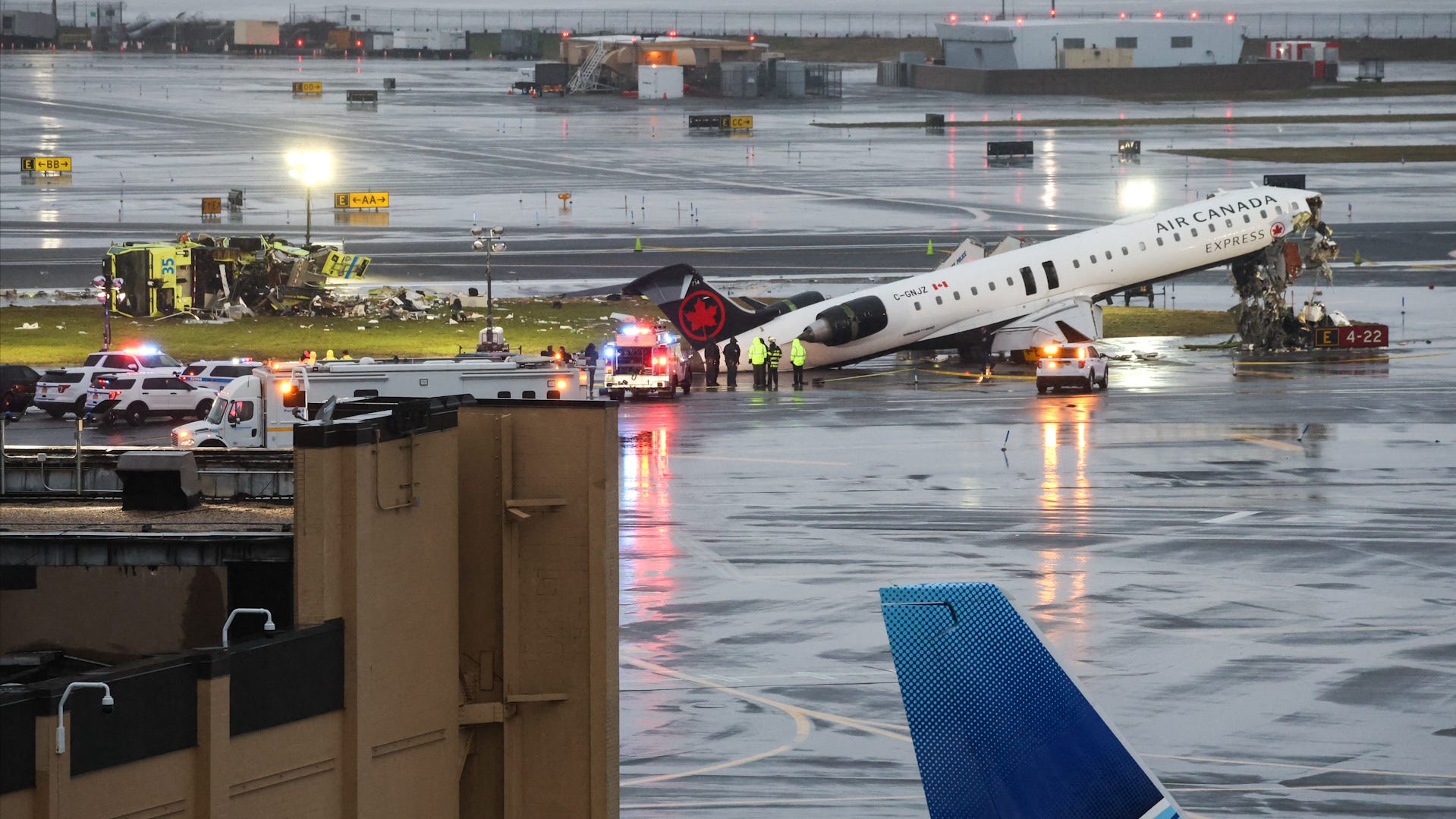

Flying safety concerns rise after deadly US airline crash
Zach Wichter explains why flying remains safe while warning that US aviation faces growing safety concerns including training and technology limits.
- Despite being statistically safe, experts warn against complacency in the aviation industry following recent accidents.
- Aviation experts suggest that regulators like the FAA are not effectively using available data to prevent incidents.
- Runway incursions, airport capacity issues and air traffic controller shortages are cited as major safety concerns.
Cruising Altitude is a weekly column about air travel. Have a suggestion for a future topic? Fill out the form or email me at the address at the bottom of this page.
“This constant drumbeat of ‘aviation is safe’ didn’t help anyone. It’s complacency.”
That’s what Mary Schiavo, former inspector general for the Department of Transportation and a practicing aviation attorney, told me in a phone interview on Tuesday morning.
Schiavo herself was on her way to catch a flight in Chicago when we spoke, so she wasn’t saying that people should stop flying altogether in the wake of Sunday night’s tragic accident at LaGuardia Airport in New York. She was saying, however, that passengers and aviation regulators alike need to heed the warnings of that accident and the many incidents that preceded it.
As just the latest in what feels like an ongoing string of high-profile aviation tragedies in the past year or so, it’s a good moment to take a step back and look at how flying can be made even safer.
We don’t yet know exactly what caused that accident, and we won’t have the full report until the National Transportation Safety Board concludes its investigation many months from now, but we can still use this as a moment to reflect.
“Our aviation system is incredibly safe because there are multiple, multiple layers of defense built in to prevent an accident, so when something goes wrong, that means many, many things went wrong,” NTSB Chairwoman Jennifer Homendy said during a press conference about the Air Canada crash on Tuesday. “We’re here to prevent this from reoccurring.”
From long lines at security checkpoints to an alarming number of close calls at airports around the country, here’s how we got to this point, and what can be done to make flying even safer.
Is flying safe?
Statistically, flying is the safest way to travel. In 2025, there was just one fatal crash involving a commercial jet in the United States. Before that, the last commercial aviation-related fatality in the United States was in 2019, when a passenger was partially sucked out of the window on a Southwest Airlines flight during an explosive decompression incident.
That doesn’t mean the aviation industry, and its regulators, can rest on its laurels.
“We have lots of data that nobody ever looks at, nobody obviously connects the dots, and if they did, we wouldn’t be doing things as we’re doing them today,” Robert W. Mann Jr., a former airline executive officer and current president of R.W. Mann and Co., an independent airline consultancy, told me. “We just don’t do a good job utilizing the information that pilots file, that controllers file, that other operators file.”
Schiavo raised a similar concern, noting that the National Transportation Safety Board regularly criticizes the Federal Aviation Administration and other regulators for not implementing obvious solutions, even after accidents occur.
The NTSB itself recognized this issue in its own final report on the crash near Ronald Reagan Washington National Airport that killed 67 people last year, citing “the absence of effective data sharing and analysis among the FAA, aircraft operators, and other relevant organizations” as a major contributing factor to the disaster.
Homendy, the NTSB chair, has been vocal in her criticism of the FAA.
“You transferred people out instead of taking ownership over the fact that everybody in FAA in the tower was saying there was a problem. … Fix it. Do better,” she said during a hearing about the Reagan National crash last year.
The FAA has said it takes NTSB recommendations seriously and is working on implementing suggestions made in the wake of the Reagan National crash.
The crash at LaGuardia on March 22 is another kind of accident about which there have been clear warnings for years, if not decades. It was a runway incursion. A firetruck crossed onto the runway as the Air Canada regional jet was landing, even as a recording of air traffic control audio revealed that the tower tried to warn the truck not to enter the jet’s path.
“Stop, stop, stop,” a controller says. “Truck one, stop, truck one, stop.”
It’s the type of accident that Schiavo said has been a persistent safety issue for years. “The biggest concern was exactly this accident; it was runway incursions,” Schiavo said. “It was one of the statistics that steadily did not improve.”
In 2025, the FAA reported 1,636 runway incursions nationwide, compared with 1,758 the year before.
Schiavo and Mann both warned that it’s a symptom of airports being stretched to handle traffic beyond their design capacity, without taking full advantage of technology that could ease some of the burdens that creates.
“[Older] airports cannot handle any more traffic,” Schiavo said. She noted that while better technology has allowed airports to increase their capacity by reducing the separation between aircraft in the air, the implementation of that technology has not been seamless.
“Now we’ve had two deadly collisions, and that’s not working,” she said.
For Schiavo, the easiest answer is to reduce capacity at airports “unless and until” airlines and airfield operators install better collision avoidance technology. She said regulators need to force airlines and airports to spend the money to upgrade their systems, or to limit their access to the national airspace until they do.
As far as Schiavo knows, LaGuardia has some of the most advanced runway incursion prevention systems available, but they still didn’t prevent a tragedy.
It falls to the NTSB to uncover exactly how things lined up to go wrong as they did.
Overextended capacity at airports and around the nation’s airspace makes flying more dangerous.
The FAA’s air traffic control organization is about 3,000 controllers short across the country, although Transportation Secretary Sean Duffy said during a news conference after the Air Canada crash that staffing at LaGuardia is close to target levels.
“You have a flight crew in a hurry, you have controllers in a hurry, you have someone on the ground in a hurry, and something happens,” Mann said. “There’s nothing wrong with hustling, but you shouldn’t be cutting corners – and I’m not suggesting any corners were cut, but I’m suggesting that sometimes, in an effort to make things work, margins get squeezed, and some of those are safety margins.”
TSA under strain
Short-staffing at the FAA, an overreliance on old technology and a national airspace system with many pockets that are at or over their design capacity all conspire to make things chaotic in a way that can hinder safety.
“We are seeing symptoms of the mass rush back to flying post-pandemic and the effects of the frantic hiring spree that was happening,” Laura Einsetler, a captain at a major U.S. airline and author of the Captain Laura blog, told me.
Those pressures are only being amplified by the government shutdown, which, in its own way, is making flying less safe. Hours-long security lines caused by unpaid TSA officers calling out to supplement their income only make flyers more tense and threats more likely to slip through the cracks.
“I never thought I’d see the day when Americans had forgotten how important top-rate airport security is,” Schiavo said.
Message to travelers
Schiavo, Mann and Einsetler agreed that flying is still very safe, but more can be done to make it safer. After a second deadly accident in the United States in just over a year, will regulators move faster to take up the recommendations of experts?
“We put our lives on the line every day, you can be assured when we have skin in the game we are absolutely going to be doing everything we can to be at our best,” Einsetler said, but added that more needs to be done. “We absolutely need to pour government investments, private investments, into the overall aviation infrastructure right now. It’s becoming very critical.”
Zach Wichter is a travel reporter and writes the Cruising Altitude column for USA TODAY. He is based in New York, and you can reach him at zwichter@usatoday.com.


