Airlines haven’t made major schedule cuts yet, but experts warn prolonged oil disruptions could affect flights and prices.
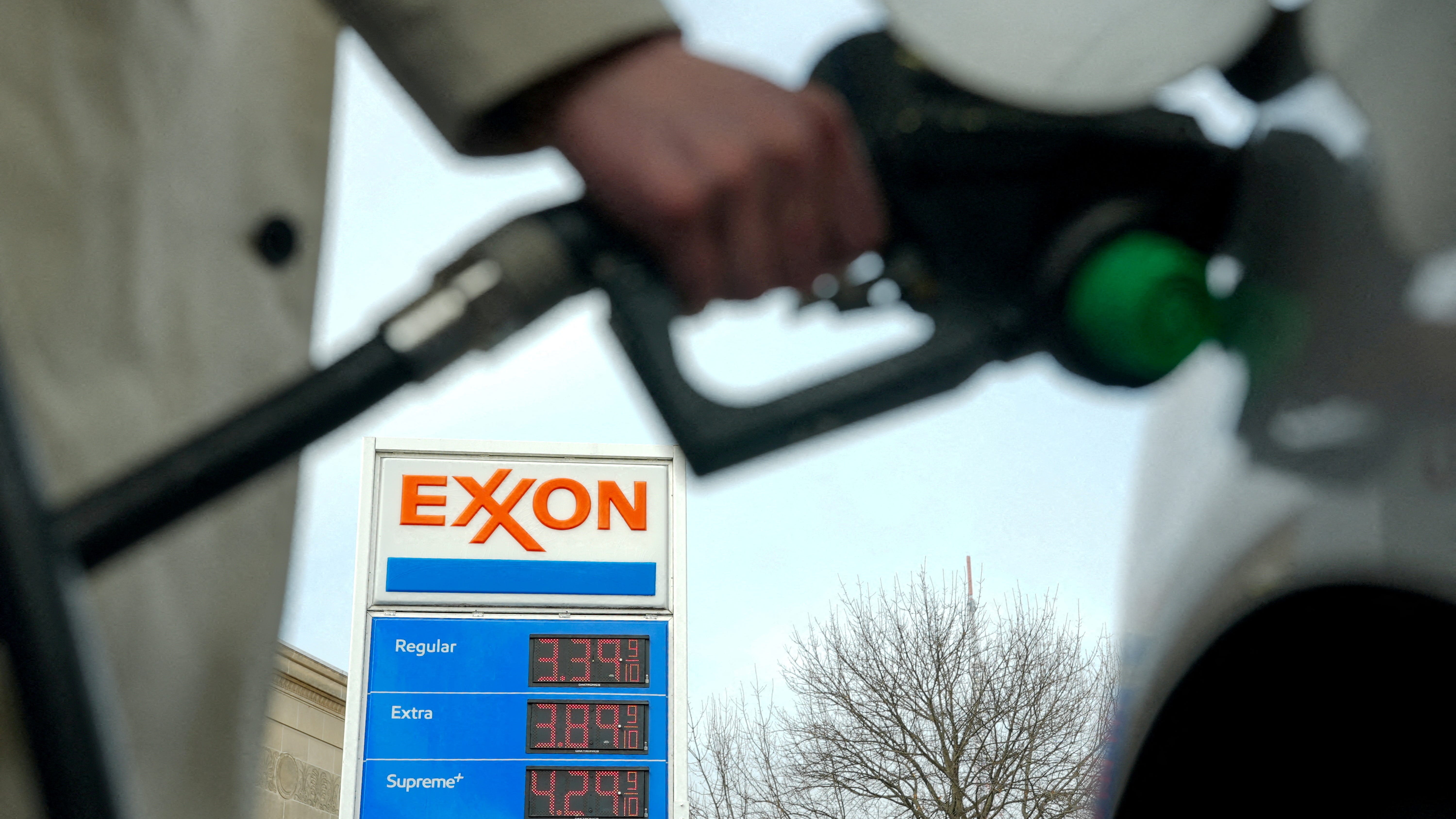

Oil drops after ceasefire, gas prices steady
Oil prices decline following ceasefire involving U.S., Israel, and Iran, impacting global market shares. Gas prices remain stable amid the news.
- Rising prices and geopolitical uncertainty are causing some American travelers to reconsider their summer plans.
- Despite the war in Iran, major U.S. airlines have not significantly cut schedules or raised fares for summer travel.
- Airlines have indicated they are prepared to raise fares if high oil prices persist.
- Experts advise travelers to book summer trips now and consider purchasing refundable tickets due to ongoing uncertainty.
For Dawn Montgomery, the craziness of 2026 is already affecting her summer travel plans.
“Out of the three international trips, I’ve already canceled the first (one),” she told USA TODAY.
Like many American travelers, a combination of rising prices and geopolitical uncertainty are making the journalist and media consultant question if it’s better to stay closer to her home in Decatur, Georgia, or travel farther afield this summer.
“Two of the three trips have already been pre-planned, have already been paid for,” she said. “The one trip that I don’t have planned, which is more so July, do you really want to go somewhere, or do I just want to drive?”
While she’s still planning to visit her son in Italy in June for his 21st birthday, Montgomery said she canceled a trip to St. Maarten in May and is still weighing whether to go to Mexico or stay closer to home and visit Asheville, North Carolina, in July.
Travelers like Montgomery can rest assured that there haven’t been major schedule cuts or price changes by airlines, according to industry analysts, even as the closure of the Strait of Hormuz drives oil prices up. However, experts warn the ongoing uncertainty could eventually lead to bigger travel disruptions beyond the summer if the war in Iran heats back up.
How is the Iran war affecting flights this summer?
While the war is ravaging many parts of the Middle East, upending daily life in countries in that region, the effects in the United States are mostly economic so far.
Major disruptions haven’t come to U.S. airlines as a result of the Iran war. Some flights to the Middle East have been rerouted, and service to select destinations in or near the conflict zone has been curtailed, but domestic flights and those to popular international tourist destinations in Europe, Asia, Latin America and Oceania are largely unaffected.
“The U.S. is an isolated market. We’ve seen continued suspensions in the Middle East. United (Airlines) was the first to talk about trimming capacity out,” Brett Snyder, author of the blog Cranky Flier and owner of the travel agency Cranky Concierge, told USA TODAY. “So far, it’s been more around the edges. We saw some airlines like Breeze (Airways) delay its summer start for its (transcontinental) flights from LA. Longer-haul flights use more gas and that makes them harder to cover costs.”
OAG, an analytics firm that tracks airline schedules, said major changes since the war started have really only significantly affected carriers in the Middle East. OAG data showed there was actually a slight uptick in the total number of flights on the schedule for April between what airlines filed in February to fly this month versus what was on the schedule as of April 6.
“There is very little difference for most carriers, aside from those operating and based in the region such as Emirates and Etihad Airlines,” John Grant, a spokesperson for OAG told USA TODAY in an email. “Further afield some airlines have recently started making adjustments to their operations and typically on routes where they had high daily frequency of service so that any passengers could be reaccommodated on other flights on the same day.”
That means the airlines that have made cuts in the United States so far have mostly done so on routes with multiple flights each day. This makes it easier for airlines to rebook passengers with existing reservations, minimizing disruptions for those travelers.
“Fuel is more expensive, so we’re going to reduce the number of flights that we’re offering, particularly midweek,” Diane Merians Penaloza, a lecturer at the City University of New York School of Professional Studies, told USA TODAY in an interview.
Will airfares get more expensive?
Airlines haven’t done a lot in the way of adjusting ticket prices as a result of higher oil prices so far, but all major U.S. carriers recently announced plans to raise their checked bag fees, citing higher operating costs.
“It’s pretty remarkable that fares really have not seen a negative impact from what’s going on in the Middle East at this point,” Snyder said. “Airlines in the U.S. are continuing to say that demand is strong, all is well, so that means fares are high.”
Airlines benefiting from already high fares and high travel demand say they’re poised to ride out this volatility without too much impact on their operations or their bottom lines. Executives in earnings calls and recent public statements have noted that demand for air travel remains high, even as costs for airlines and some fees for passengers rise. That does mean, however, that the companies are prepared to raise fares if oil prices remain elevated for a while.
“The war in Iran has airline executives practically tripping over themselves. They’re following the COVID-era corporate playbook: giddily discussing how they can pad their pockets by using a crisis to gouge consumers already past their breaking point. Don’t take it from me; just listen to what they’re saying,” Lindsay Owens, executive director of progressive think tank Groundwork Collaborative, said in a statement to USA TODAY.
The advocacy group rounded up statements by airline CEOs that suggest the companies are prepared to use fuel prices as cover for raising their revenue.
“The revenue environment is really strong. By the way, we have a goal this year to fully offset the increase in fuel prices, which is about $4.6 billion at the moment for revenue to fully offset that,” United Airlines CEO Scott Kirby said at the JP Morgan Industrials Conference on March 17, according to the report.
Could there be more travel disruptions later this year?
While summer travel looks to be stable so far this year, further disruptions could come to air travel if the Iran war ramps back up or if the closure of the Strait of Hormuz isn’t resolved.
“It’s unlikely we’ll have huge impacts for the summer. It’s more likely to be post-summer, but we’ll see what gets filed,” Snyder said.
Merians Penaloza warned that prolonged disruption to global oil shipping could have a major impact on airlines around the world.
“If the Strait of Hormuz stays closed for the next 12-18 months, you’re looking at 30, perhaps 40% fewer seats available globally,” she said. “As life gets more expensive, travel is also more expensive. You have to make the choice between: do I feed my kids or do I go on a trip?”
Is now the time to book summer travel?
Yes.
For those who are continuing with their travel plans, now’s the time to start looking. “I tend not to be one of these people that suggests dwelling on the price of the ticket. Will it go down $5 or what might happen?” Snyder said. “Look at the trip you’re doing and if you see a good fare, book it.”
He added that travelers don’t necessarily need travel insurance, but this summer might be a good time to consider purchasing refundable airfare, rather than tickets with more restrictions.
“It’s not like it used to be where you’re talking about thousands of dollars more. Usually, you’re looking at a more reasonable increase,” Snyder said. “Get rid of the old notion that a refundable fare is thousands more. That’s not the case anymore.”
This story was updated to refresh headlines.
Zach Wichter is a travel reporter and writes the Cruising Altitude column for USA TODAY. He is based in New York, and you can reach him at zwichter@usatoday.com.


