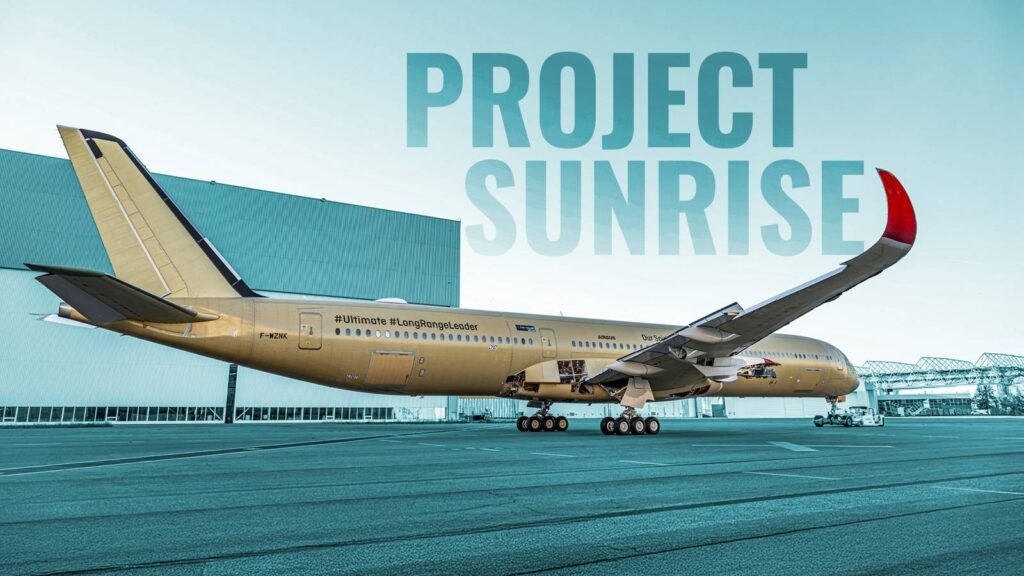
In 2026, Qantas Airways is set to usher in a new chapter of ultra-long-haul aviation with the arrival of the specially configured Airbus A350-1000 under its flagship “Project Sunrise” program. These aircraft are purpose-built to bridge the vast distances between the East Coast of Australia and major global hubs like London and New York. This represents a strategic leap that promises to redefine what nonstop travel from Australia can mean. Beyond just range, these new jets are engineered around passenger wellbeing, with tailored cabin layouts and premium experiences for what will become some of the world’s longest commercial services.
Qantas has committed to a fleet of 12 such ultra-long-range models, seating just 238 passengers in a bespoke four-class configuration that emphasizes premium space and comfort. The airline aims to eliminate layovers and slash hours off existing one-stop routings, which it believes will allow it to reclaim a competitive edge in intercontinental travel and help reinvigorate the airline’s brand as a global carrier. The airline also aims to align with shifting consumer expectations for luxury, direct connectivity, and sustainability. As the first deliveries for the type approach in late 2026, and commercial service is forecast for early 2027, the aviation world will be watching to see how Qantas leverages this transformational aircraft to reshape its network and strengthen its competitive position within the market.
An Overview of the Airbus A350-1000

We begin with an overview of the Airbus A350-1000. The Airbus A350-1000 represents the largest and longest-range member of the Airbus A350 family. The aircraft’s length is around 242 ft (73.8 m), with a wingspan of roughly 212 ft (64.8 m). In its standard long-range form, the aircraft can fly up to 8,000 nautical miles (around 15,000 km), giving airlines globe-spanning range with the efficiency of a twin-engine aircraft, something which initially made the A350 family extremely popular with global operators.
For Project Sunrise, Airbus is building a uniquely-configured Airbus A350-1000ULR variant, which will feature an extra 20,000-liter (roughly 5,300 US gallon) rear center fuel tank, which will come along with upgraded control systems that will help support flights of up to 22 hours non-stop. This unlocks nonstop links from Australia’s East Coast to cities like London and New York, routes previously only feasible with stopping services.
|
Cabin: |
Number Of Seats: |
|---|---|
|
First Suite: |
6 |
|
Business Suite: |
52 |
|
Premium Economy: |
40 |
|
Economy: |
140 |
Qantas’ configuration offers strikingly low density at just 238 seats, the fewest of any Airbus A350-1000 model in service. They will be split up in the manner described in the table above, per figures provided to Simple Flying by the airline. Overall, the cabin is tailored for ultra-long-haul flying, with a dedicated Wellbeing Zone for stretching and movement, alongside advanced circadian lighting and full high-speed Wi-Fi that comes along with Bluetooth audio support across all cabins.
An aircraft powered by Rolls-Royce Trent XWB-97 engines, the Airbus A350-1000 pairs high-thrust performance with a carbon fiber airframe and aerodynamically optimized wings, delivering lower fuel burn and reduced overall emissions on a per-seat basis. For Qantas, this aircraft is designed to overcome the airline’s geographic disadvantage and serve destinations all across the globe.
How Does Qantas Intend To Use The Airbus A350-1000ULR?

The primary objective and stated purpose of Qantas’ acquisition of the Airbus A350-1000ULR is to use the jet on prestigious, high-yielding non-stop routes from Australia’s East Coast to global hubs like London and New York. The airline aims to use the jet from departure points like Sydney, Melbourne, and potentially Brisbane. These are all markets where a seamless, direct service offers high strategic value to the airline, as the elimination of layovers and improved connectivity can help support premium pricing.
By launching these kinds of nonstop services, Qantas aims to differentiate itself from key competitors, capturing aspirational travel demand and deepening the carrier’s global brand. Beyond those kinds of headline routes, the A350-1000 may also enable second-tier non-stop missions previously only possible with compromise. Namely, services from Australia to Europe or North America are typically connected only to secondary markets on each end. For leisure destinations, widebody economics have proven difficult to justify due to a lack of strong pricing power.
In doing so, Qantas can introduce new schedule flexibility, deploy fewer but higher-yield flights, and exploit shoulder-season demand with a premium-heavy configuration that is mostly tailored for long-haul innovation. From an operational perspective, the aircraft allows Qantas to rethink its network strategy by shifting focus from multi-stop hub routings to direct point-to-point business and leisure travel flows. Additionally, the lower-density cabin and wellness-oriented design support premium travelers (especially those traveling for work), and it will likely allow the airline to command higher yields and maintain stronger brand loyalty on these kinds of ultra-long-haul segments.
What Are The Financial Implications Of The A350-1000ULR Acquisition For Qantas?

From a financial standpoint, the introduction of the Airbus A350-1000 positions Qantas for both revenue growth and overall cost optimization, albeit with significant upfront investment and risk. On the revenue side, direct, ultra-long-haul flights open access to premium demand willing to pay for convenience, likely enabling fare premiums of perhaps 15-25% over one-stop alternatives. The bespoke low-density seating means that the airline can target significantly higher per-passenger yields, especially in First and Business cabins.
On the cost side, the modern airframe offers lower fuel burn per seat, alongside reduced maintenance downtime and reduced cargo constraints. By serving ultra-long missions with right-sized capacity, Qantas can avoid deploying oversized widebody jets on these routes instead of optimizing for load factor and overall utilization. Yet these benefits come along with high capital expenditures. The aircraft order itself, alongside certification, training, and infrastructure costs, will undoubtedly run into the billions.
If yield or load factors underperform expectations, either due to macroeconomic shocks, sustainability pressures, or regulatory changes, the risks associated with this investment will amplify. Ultra-long-haul operations entail elevated crew costs, specialized training, and wellness provisions that increase operating overheads. For Qantas to realize a return on its investment, the company will need to ensure strong premium cabin penetration and disciplined cost management.
What Are The Financial Implications Of This Acquisition For Airbus?

For Airbus, the Qantas Airbus A350-1000 order helps underline a major commercial win for the manufacturer in the ultra-long-haul segment, and it reinforces the airline’s strategic positioning against major twin-aisle competitors. The contract meaningfully contributes to Airbus’s growing order book, helping support economies of scale in production and signaling to other carriers the capability of ultra-long-range narrowbody twin-engine aircraft.
The bespoke modifications made to this airframe, including a rear center fuel tank and a tailored cabin layout, help advance Airbus’s technical expertise and may generate intellectual property and aftermarket service opportunities for the company. With the entry into service of these aircraft, Airbus secures long-term maintenance, parts supply, and cabin retrofit contracts, creating the potential for high-margin downstream revenue streams. Nonetheless, success depends primarily on execution, with certification delays, technical issues, and early reliability problems potentially damaging Airbus’ reputation in the premium ultra-long-haul sector.
The manufacturer’s investment in custom tooling, assembly line adaptation, and ongoing support also carries cost risks if repeat orders do not eventually materialize. On a broader scale, this deal may encourage other airlines to order the Airbus A350-1000ULR, ultimately boosting Airbus’ profitability and enabling the development of other advanced products.
What Is The Qantas Growth Strategy?

The Qantas growth strategy is extremely relevant to this story. The airline’s continued path to expansion centers on its ability to leverage change-defining fleet investments, network innovation, and premium overall positioning in order to transcend its historical role as a regional carrier and evolve into a globally significant carrier.
With the Airbus A350-1000 at its core, the airline is focused on unlocking new ultra-long-haul routes, tapping premium travelers who value time savings and overall convenience while differentiating itself through bespoke cabin experiences that emphasize wellness, privacy, and overall yields. At the same time, Qantas is looking to right-size its fleet mix to optimize for revenue generation across domestic, regional, and international segments, deploying aircraft appropriately rather than defaulting to oversized widebodies.
By pioneering direct flights from Australia’s East Coast to key global hubs, the airline not only rewires its network but builds a competitive moat around its brand. This growth strategy complements Qantas’ broader agenda of strengthening overall profitability, raising margins in premium cabins, and embracing sustainability through the development of modern, fuel-efficient aircraft, all while meeting evolving traveler expectations in an increasingly premium-driven global aviation landscape.
What Is Our Bottom Line?

With its Project Sunrise flights, Qantas is looking to break new ground in the world of commercial aviation. Not only will these flights cover never-before-seen distances, but they will also add exceptional financial value to the airline’s network.
Connections from London and New York to Sydney are the last major global routes yet to be served by nonstop flights. These major business hubs with historical economic and political ties see a large amount of demand that is currently funneled through intermediate connecting hubs.
The objective of these new routes is to eliminate these stops and to allow for seamless, fluid traffic across continents that are on virtually the opposite side of the world from each other. To operate such routes over incredible distances, the airline needs a game-changing jet. That, at the end of the day, is where the Airbus A350-1000ULR comes into play.


