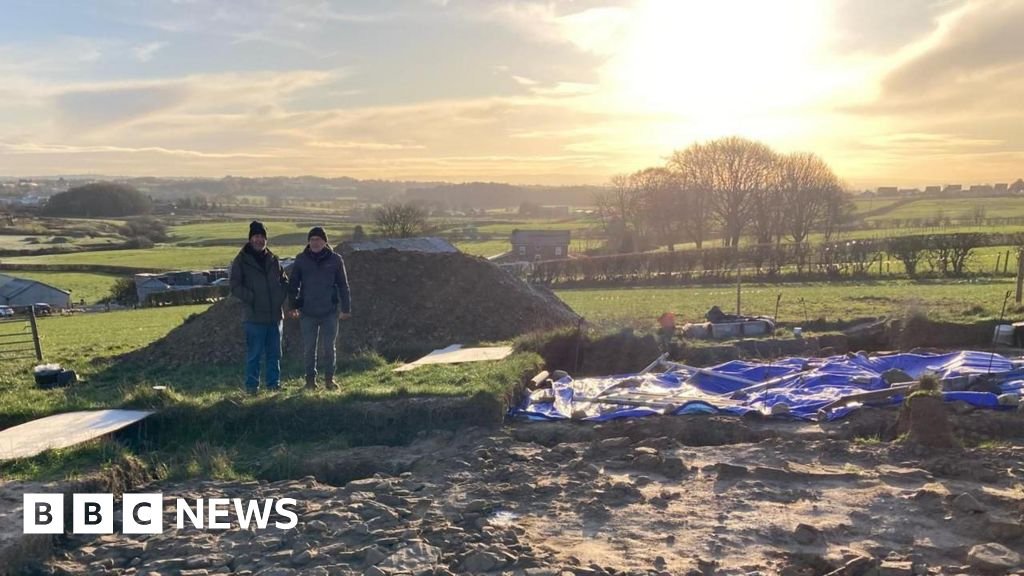
Amateur archaeologists have found evidence of what they believe was a “significant” Bronze Age monument from about 4,500 years ago on a farm in Greater Manchester.
Wigan Archaeological Society said they had discovered what is thought to have been an ancient burial site on the land in Aspull – with the history of the site potentially stretching back even further.
Member Bill Aldridge said: “We think it’s been repurposed from an earlier monument – a neolithic henge – because the size of the ring ditch around it is so big and it’s oval in shape, with an entrance at one side.
“Bronze Age people didn’t do that.”
The society have been excavating the site with the farmer’s permission since 2022.
Mr Aldridge said: “It’s more like a henge, which is totally unprecedented in this part of the country.”
A henge is a circular or oval enclosure around a ditch, dating from about 3,000 to 2,000 BC, with about 100 remaining across the British Isles.
Chris Drabble, who is also a part of the society, said there were “lots of different theories” about what happened on the ancient site.
It could have been used to mine materials for jewellery or there may have been marshes and floods in the area, he said.
“Something made it special,” he added.


