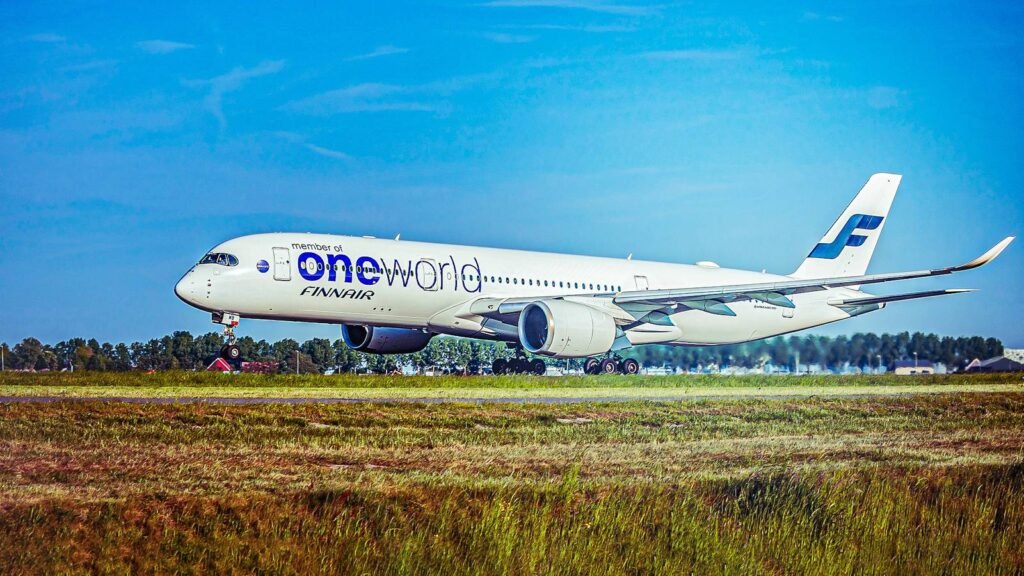
The Airbus A350XWB “extra widebody” is famous for being an extremely efficient and modern jetliner. It was created as a clean sheet design and response to the Boeing 787 Dreamliner made by Boeing, and has been a hit on the market since it debuted. The merits of the aircraft’s design are well known for their benefits to airlines, but what about flyers?
A lot of the same design and engineering features that went into making the jet bigger and better in many metrics across the board, and only improve performance and operating costs, but also make it a much more pleasant way to travel by air. Let’s explore the different design features that Airbus put into their top-shelf airliner and analyze how they take the flying experience to a whole new level.
5
Vaulted Ceilings Over The Aisle
Most Spacious Cabin In The Industry

It goes without saying that when it comes to air travel, size matters. Seat and overhead bin size can make or break any travel plans, whether you’re a frequent flyer on a business trip or taking a vacation halfway around the globe. The A350 features a 221-inch-wide “Airspace” cabin, which offers the highest comfort in all classes as well as flexibility for airlines to change and customize the configuration to market demand.
The cabin architecture of the A350 not only allows for a spacious environment created by the high ceilings, but also means that the overhead bins are the largest in the industry. Seat width and leg room in every cabin class are among the best in the industry. The straight walls of the A350 cabin have some of the best shoulder-level space as well.

The cabin also features customizable, soft LED mood lighting designed to reduce the effects of jet lag and enhance the overall ambiance. Seats in Business and First class often feature doors and high partitions to create private suites, with some designs removing overhead bins to create a more open feel. On some configurations, windows feature electric blinds with multiple shaded options.
The Airspace cabin enables the creation of stunningly luxurious business and first-class products by top airlines like Qatar Airways and Singapore Airlines. The larger variant, the A350-1000, even offers 40% more premium cabin area for operators to appoint with any luxurious arrangement they see fit. That has proven to be extremely valuable in the post-COVID-19 aviation market, which has seen a steadily rising demand for premium service compared and lower interest in “bare bones,” economy air travel.

“Yes”: Talks About A Stretched Airbus A350 Model Reignite At The Dubai Airshow
Is the A350-2000 finally coming?
4
Tranquility From Takeoff To Touchdown
Quietest Cabin In Its Class

The A350 has the quietest twin-aisle cabin available in the airliner industry. The airspace cabin is five decibels quieter than competing aircraft across the entire length, with the front sections being nine decibels quieter on average. That comes out to a four times lower total noise level than the current average across the global industry. There are many comfort features that can go a long way towards improving the fatigue from a long flight, but few of them make as much of a difference as simple noise.
The low noise level inside the A350 cabin has been compared to the upper deck of the super jumbo Airbus A380. Some flyers describe it as virtually silent, or at least as close to as possible while riding along in a twinjet that produces nearly 200,000 pounds of thrust. This is one area in which the A350 is unquestionably among the finest planes flying today.
Its cabin noise levels at cruise are notably low, generally remaining below 60 decibels (dB). The A350 achieves its low noise profile through a combination of advanced design and technology. Rolls-Royce Trent XWB engines, which are designed to be highly efficient and quiet. Key features include the very high bypass ratio, large fan diameters with lower blade-tip speeds, and acoustically engineered engine nacelles that cut its noise footprint.
The aircraft’s smooth aerodynamic design and unique winglets reduce drag and airflow noise. Extensive soundproofing and acoustic insulation materials are integrated throughout the cabin. The fuselage is made largely from carbon-fiber-reinforced plastic (CFRP), which is more effective at dampening vibrations and noise transmission.

As It Happens: Dubai Airshow 2025 Day 4
Keep up with the latest from on the ground at the 2025 edition of the Dubai Airshow!
3
30,000 Feet? No Sweat
The Lowest Cabin Pressure Altitude And Highest Humidity

The A350 cabin altitude is 5,500 feet, compared to 8,000 feet on average in the industry, and 6,000 feet in the 787. That directly improves passenger experience in all classes at the anatomical level. Lower altitude by reducing fatigue, increasing hydration, and mitigating jet lag after effects. To maximize the benefits, Airbus also designed the cabin to have a higher humidity level.
The post-COVID-19 commercial flying industry has also seen a rise in ultra-long-haul routes, with the longest flight time averages inching closer to 20 hours every year since air travel resumed normal traffic levels. Singapore Airlines is famous for flying a route known as SQ23, which connects Singapore Airport (SIN) to New York’s JFK International (JFK). The 9,500-mile-long trek is nearly 19 hours in duration, and the airline custom-ordered a variant of the A350-900 with extra fuel tanks to accomplish the mission, the A350-900ULR.
Even if you aren’t flying one of the longest commercial air corridors in the world, the lower cabin altitude and higher humidity are going to make a noticeable difference in how you feel during the flight and after you deplane at the destination. Instead of feeling tired for a couple of days after you cross the Equator or International Date Line, you will arrive feeling fresher and ready for whatever your plans are, whether it’s sightseeing or getting down to work.
The upcoming Qantas A350s under “Project Sunrise” ultra-long-haul flights will introduce the first A350-1000ULR aircraft in revenue service. Qantas’ project aims to operate the world’s longest commercial passenger flights, connecting Australia’s east coast cities (Sydney and Melbourne) directly with major global hubs like London and New York.
These flights will take up to 22 hours and cut travel time by as much as four hours compared to current one-stop services. To make these flights viable, Qantas focused not just on range, but also on creating a passenger experience designed to minimize jet lag and fatigue. Qantas chose a specially-configured Airbus A350-1000ULR after a detailed evaluation against the Boeing 777X.
2
Fresh Air On Demand
The Quietest AC With Double The Temperature Zones

Airbus updated the air conditioning to not only have eight temperature control zones and be much quieter than previous-generation jetliners. The new high-efficiency particulate arrestor (HEPA) filters remove 99% of all contaminants while circulating the air in the cabin to fully refresh it every 2 to 3 minutes.
The A350 features up to eight independent temperature control zones for passengers. The system can maintain higher cabin humidity levels, around 20-25%, as opposed to the very dry 10-15% common in older airliners. This helps prevent dehydration, dry eyes, and dry skin, especially on long-haul flights.

The hospital-grade HEPA filters and efficient airflow systems offer peace of mind. Conditioned air enters the cabin from overhead inlets and is extracted at floor level, creating a top-to-bottom airflow pattern that helps prevent the spread of airborne particles down the length of the cabin.
The system simultaneously protects against airborne disease transmission and ensures a consistently healthy cabin environment. The combination of better oxygenation, improved humidity, and lower noise levels significantly lessens physical stress on the body, helping passengers feel more refreshed upon arrival at their destination.

Ethiopian Airlines Orders Six More Airbus A350s
The deal follows the carrier’s purchase of 11 Boeing 737 MAX jets yesterday at the Dubai Airshow.
1
Comfort In Every Class
Industry-Leading Seats, Entertainment And Amenities

The A350 is a pioneer in in-flight connectivity, offering robust solutions for passengers to stay connected and powered up. Wi-Fi systems leverage advanced satellite networks, like ViaSat’s Global Xpress, to provide uninterrupted global connectivity, even over polar routes. Every seat is equipped with both USB-A and modern, high-power USB-C ports for charging personal electronic devices.
Universal AC power outlets are available at all seats or in higher classes, ensuring compatibility for charging laptops and other devices. In premium cabins on some airlines, passengers can also find wireless induction charging pads to power their compatible devices without needing cables.
Some airlines offer up to 60 watts of power through USB-C ports, ensuring devices charge quickly. The airlines that currently offer wireless charging pads are:
Passengers can often pair their personal smartphones or tablets with the seatback screen, allowing them to use their device as a second screen or as a remote control to browse the entertainment catalog or view the interactive map. Many airlines have a tail camera that is available through the seat back in-flight entertainment (IFE) on large, anti-glare 4K Ultra High-Definition touch screens.
Not only do the IFE systems let passengers see their jetliner soar through the sky, but they also provide a cinematic experience at every seat. Screens range in size from around 11.6 to 13.3 inches in economy, up to 16 inches in premium economy, 20-24 inches in business, and even 43 inches in first class.
A major feature is the ability for passengers to connect their own wireless headphones or other personal Bluetooth devices directly to the in-seat screen. Accessibility features for passengers with vision impairments, such as audio-cue navigation, voice feedback, and audio-descriptive content.


