
Images showing a heavy truck and crane inside Hagia Sophia have sparked widespread concern in Turkey and abroad. Photos from Turkish media reveal the crane positioned on the building’s interior floor, with protective panels beneath it, while other heavy vehicles appear near the “Gate of the Emperor”. The sight shocked many experts, who warned that such weight could threaten the monument’s historic marble surfaces and fragile structure.
I don’t know what to say other than I worked so hard for 2 decades to not let this happen. Those who know ANYTHING about Hagia Sophia will understand how destructive this is… pic.twitter.com/P6OS3iGBpT
— Dr. Tugba Tanyeri-Erdemir (@TurkishFacade) November 24, 2025
Heavy truck part of the restoration
Turkish authorities say the machinery is part of a restoration and seismic reinforcement project. They explained that a temporary steel shelter is being installed above the dome, supported by four interior columns, and that a multilayer protective floor system was put in place to absorb the load and protect the original marble. Officials also claim that exhaust from the machines is being controlled with special equipment.
Feels weird seeing a giant truck inside the 1500 year old Hagia Sophia driving on ancient Roman floors pic.twitter.com/Pm4PHrf2G8
— ShadowsOfConstantinople (@RomeInTheEast) November 24, 2025
Experts are Cautious
Despite these assurances, experts remain cautious, arguing that bringing multi-ton vehicles inside a world heritage monument carries significant risks. They are urging authorities to publish the full engineering studies and allow independent review of the methods used.
The images of a truck parked inside Hagia Sophia have intensified public debate and highlighted the fragile balance between necessary restoration work and safeguarding one of the world’s most important cultural landmarks.
Hagia Sophia
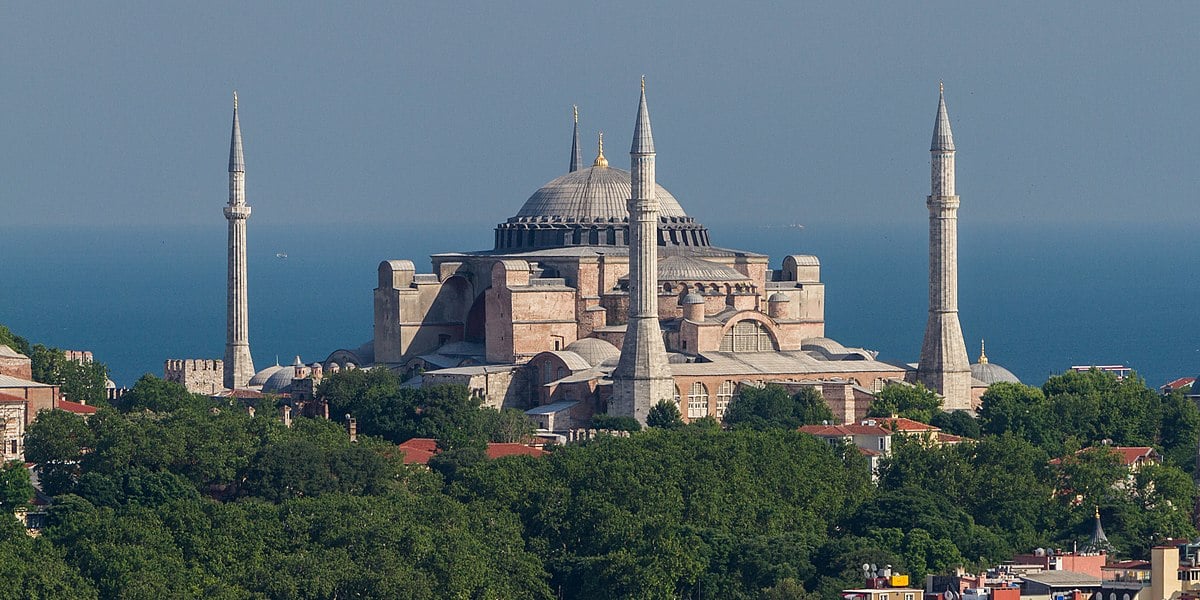
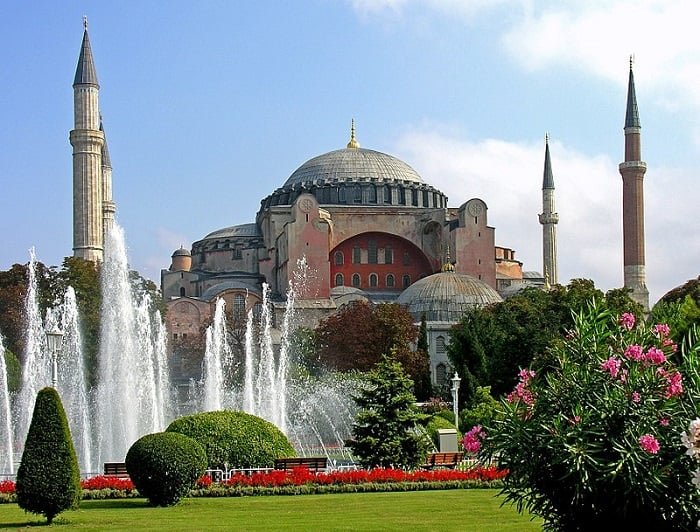
Hagia Sophia was built in the 6th century by the Byzantine Emperor Justinian I as the grand cathedral of Constantinople, intended to showcase the empire’s power and devotion through its vast dome and groundbreaking architecture. For nearly a thousand years it stood as the heart of Eastern Christianity. After the Ottoman conquest in 1453, it was converted into a mosque, with minarets and Islamic features added while much of the original structure remained. In 1934 it became a museum under the Turkish Republic, allowing both its Christian mosaics and later additions to be viewed together. In 2020 it was converted back into a mosque.