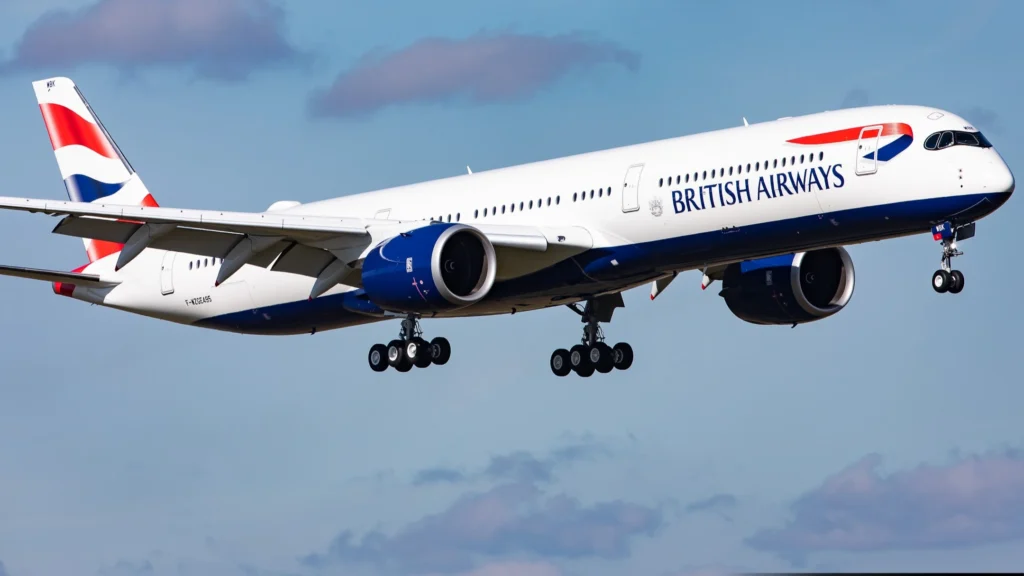
LONDON- British Airways (BA) is surveying its loyalty members to identify onboard and pre-flight services that passengers may voluntarily decline to support sustainability.
The request focuses on Club World and Club Europe travelers operating primarily via London Heathrow (LHR), where premium brand expectations and service differentiation remain high.
The questionnaire evaluates which elements customers could opt out of without noticeably diminishing their journey.
It reflects airline interest in reducing waste, fuel weight, and operational cost while maintaining a premium service promise.
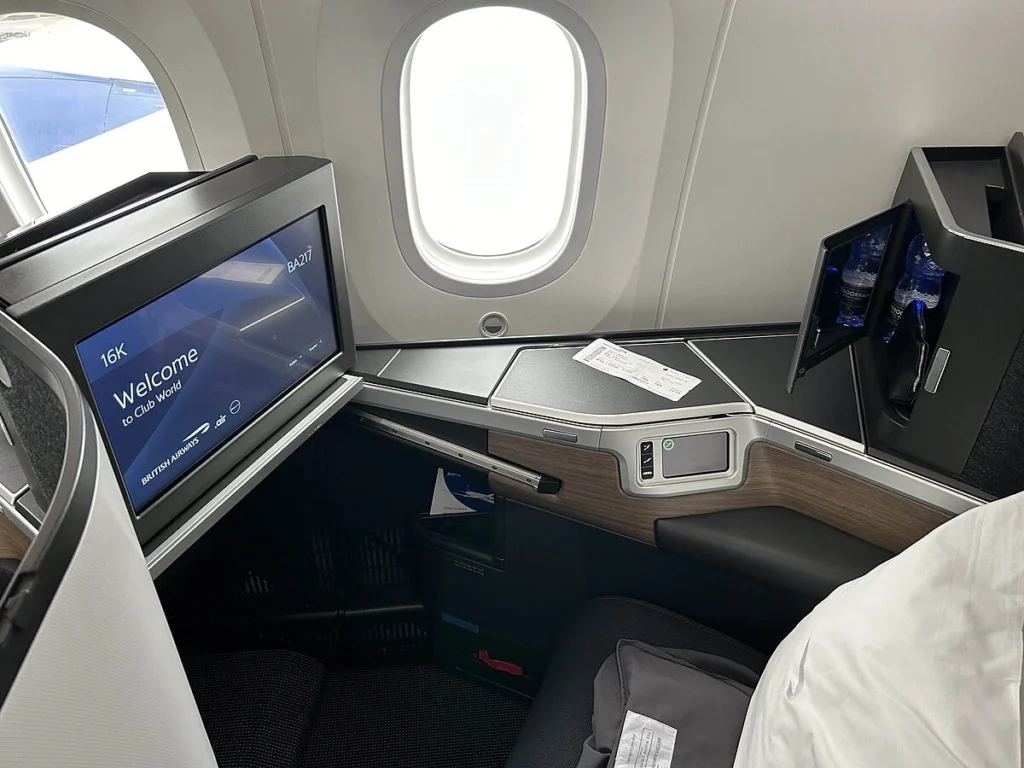
British Airways Removes Premium Perks
The survey lists multiple components of the travel experience that could become optional rather than automatically provisioned.
These include skipping an in-flight meal, traveling with fewer bags, packing below maximum luggage allowance, declining sleepwear or amenity kits, bringing a refillable water bottle, and selecting meals in advance. Each option aims to limit waste and onboard weight.
According to Head for Points, the outreach is noteworthy because airlines typically introduce reductions first and then cite customer demand afterward, not before.
British Airways’ proposal for meal opt-outs mirrors a process already used by Virgin Atlantic, which allows passengers to decline meals on overnight services.
Given the weight impact of provisioning, the business case is clear, and such an initiative requires no survey to prove value.
The pre-ordering of meals, once offered pre-pandemic, has not been restored, potentially because the broader menu offered during pre-order encourages passengers to choose higher-priced dishes.
However, the approach benefits both the airline and the traveler by improving choice and reducing uneaten food.
The survey question on baggage quantity raises the possibility of future changes to allowances or incentives for lighter packing.
The assumption that passengers deliberately overpack to use their full allowance appears unlikely; many frequent flyers already prefer minimal luggage for efficiency.
The reusable water bottle suggestion is notable because British Airways previously removed free bottled water on limited routes and reinstated it shortly after negative feedback. Encouraging reusable bottles may return only if supported by explicit customer responses.
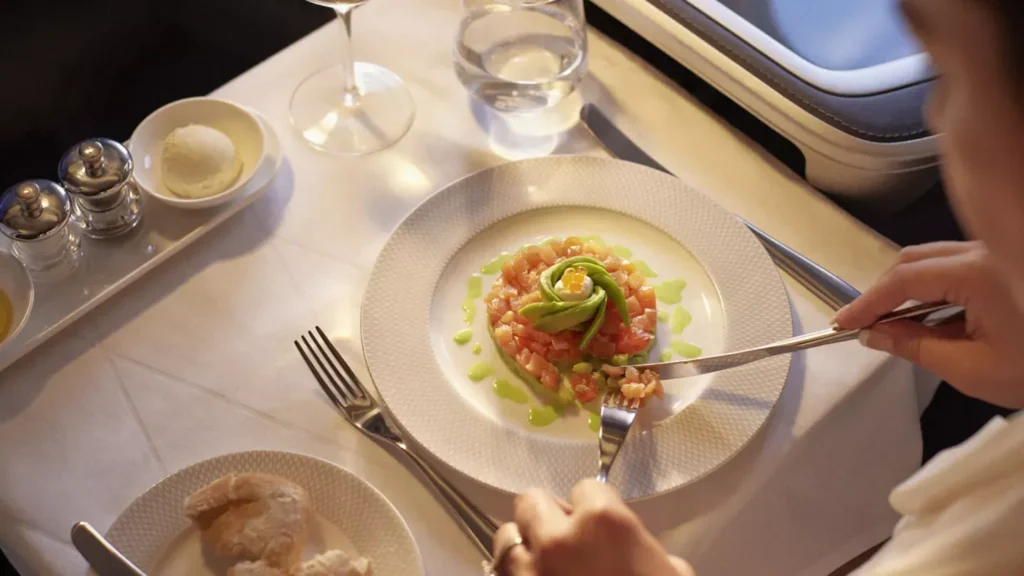
Opting Out of In-Flight Meals Ahead of Flying
Opting out of sleepwear and amenity kits is also under review. British Airways already knows that roughly half of all business class passengers refuse sleepwear, which raises the question of how advance opt-outs would materially improve provisioning.
A more pragmatic improvement would be collecting sizes ahead of time to reduce excess inventory.
The sizing challenges are well known across the industry; for example, Virgin Atlantic’s medium large set recently proved too small for a teenager, highlighting inconsistency in sizing standards.
Amenity kits remain divisive, as many passengers require only a limited selection of items. A practical improvement would be stocking essential products in onboard bathrooms while allowing passengers to pick up a storage pouch if desired.
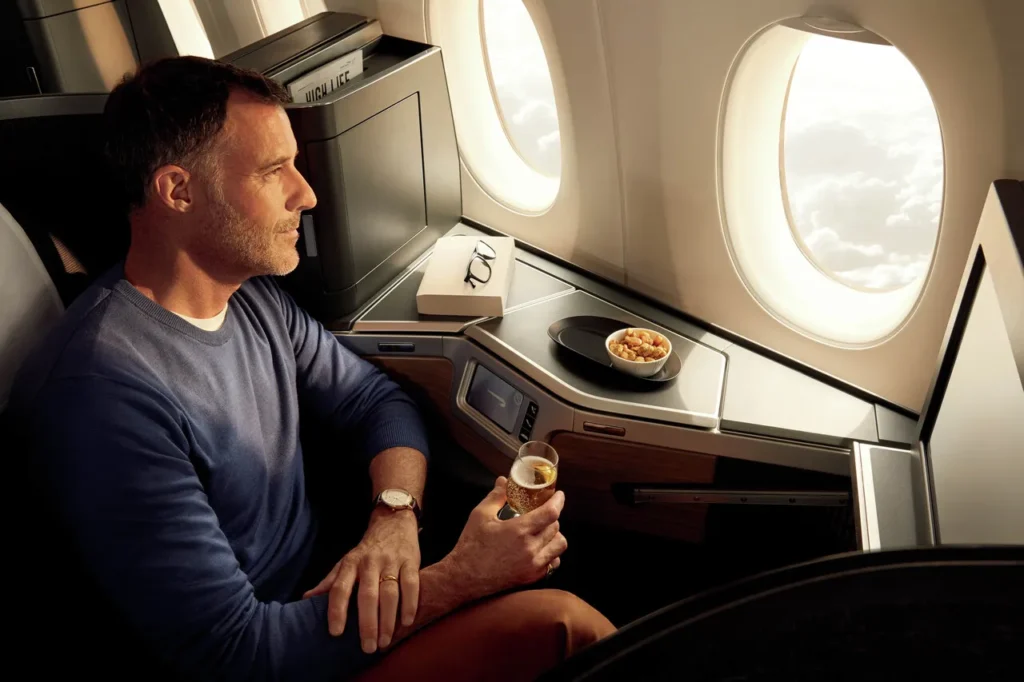
Sustainability With Premium Brand
Decluttering onboard services may reduce waste and simplify operations, yet each withdrawn element risks reducing the perceived value of premium cabins.
Even if many travelers do not personally need every optional item, the availability of these features reinforces the sense of premium travel.
Service reductions that become highly visible can undermine confidence in the brand. The industry still recalls the previous era under Alex Cruz, when the airline removed flowers from washrooms but left the empty flower holders in place, creating a persistent reminder of cost cutting rather than service enhancement.
Data-Driven Implementation
If the feedback supports these measures, British Airways could introduce digital preference selection during booking or check-in, enabling precision loading of meals, amenity kits, and sleepwear.
Crew briefings and stocking levels could be refined by route, cabin, and demand forecast. The success of this strategy depends on optimizing resource management without reducing the premium positioning of Club World and Club Europe.
Travelers may accept sustainability changes when participation is voluntary, but mandatory reductions could backfire.
Stay tuned with us. Further, follow us on social media for the latest updates.
Join us on Telegram Group for the Latest Aviation Updates. Subsequently, follow us on Google News


