In recent times, I’ve been writing a series about some of the world’s luxury hotel groups, both big and small. This includes everything from Airelles to Four Seasons.
In this post, I’d like to talk broadly about Ritz-Carlton Hotels and Resorts. Okay, just about everyone knows what Ritz-Carlton is, as it’s one of the world’s most well known luxury hotel brands. That being said, is it really all it’s cracked up to be, and how will it evolve over time? Let’s start with a bit of background, and then I’ll share my take…
Basics & background of the Ritz-Carlton brand
Nowadays Ritz-Carlton is owned by Marriott, and it has well over 100 properties around the globe, with dozens of properties in development.
The history of what ultimately became Ritz-Carlton goes back over 125 years, to the late 1800s. The brand began with Swiss hotelier César Ritz, known in the industry as the “king of hoteliers and hotelier to kings.” He’s the person behind The Ritz Paris and The Carlton London (the former has no association with modern day Ritz-Carlton, and the latter is no longer open).
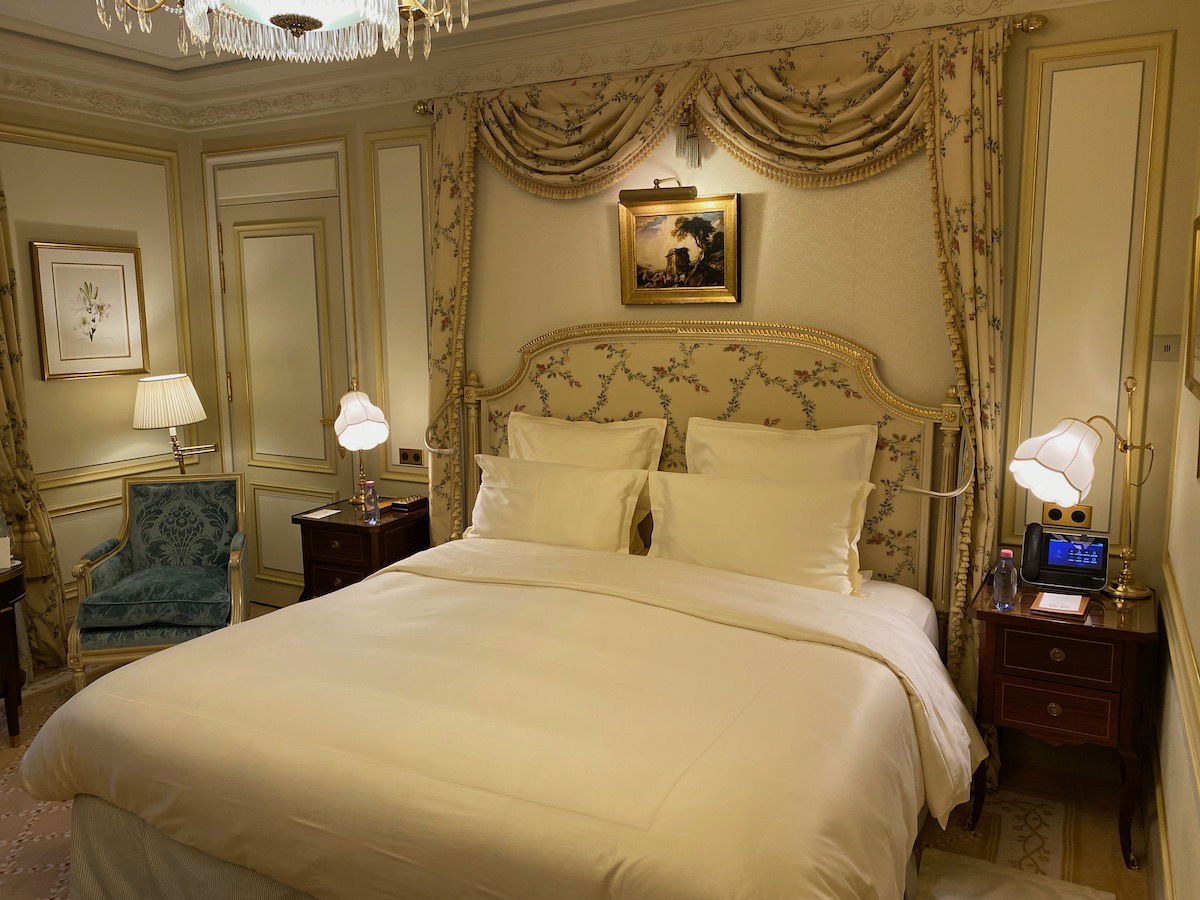
The specific Ritz-Carlton brand was first used in the early 1900s, when Ritz-Carlton restaurants were opened onboard ships, though that only lasted for a year, until World War I broke out. Ritz also died in 1918, though his wife continued the tradition of opening hotels named after him.
Now, I don’t want to go on too much of a tangent, so let’s fast forward to 1983, which is when the current version of Ritz-Carlton was founded, as it’s when the previous owners sold the brand name and the Ritz-Carlton property in Boston. That’s really what launched the modern day version of Ritz-Carlton.
A little over a decade later, in 1995, Marriott bought a 49% stake in Ritz-Carlton, in order to expand in the luxury segment. Then in 1998, Marriott purchased an additional 50% stake in Ritz-Carlton, giving it 99% ownership. So there’s no denying that Ritz-Carlton has an incredibly legacy, as there aren’t many hotel groups that go back this far.

Ritz-Carlton is a consistently high quality hotel group
To Ritz-Carlton’s credit, there’s no denying that the brand is near the top of the Marriott portfolio, and that Ritz-Carlton offers hotels that are generally high quality. The hotels typically have good service, and at least some perks associated with luxury hotels are consistent, like turndown service.
I think one thing that Ritz-Carlton does exceptionally well is having high quality club lounges. There’s not a hotel group that offers excellent lounges as consistently as Ritz-Carlton. Admittedly you don’t get upgrades to club rooms on account of Bonvoy elite status, and access is very expensive. But if you’re willing to pay, at least you get a very nice experience.

To be honest, I’m not sure I have a whole lot of other nice things to say about the Ritz-Carlton brand at large, which brings me to my next point…
Ritz-Carlton also suffers from the Marriott effect
Like every hotel group, there’s inconsistency between individual hotels belonging to Ritz-Carlton. As you’d expect, some are much higher quality than others, and on top of that, geography also plays into the quality of a hotel experience (that’s true across hotel groups, generally).
For example, while the Ritz-Carlton Turks & Caicos has a nice setting on Grace Beach, I still can’t get over how cheap the finishes in the hotel are.

Personally, among luxury hotel groups, I don’t think of Ritz-Carlton particularly highly. I think part of the issue is that Ritz-Carlton belongs to Marriott, and we’ve increasingly seen over the years that Marriott isn’t really in the hospitality business, but instead, is in the room count and hotel owner relationship business. Admittedly that’s technically the case for all hotel management and franchise companies, but you definitely feel it more with Marriott than with others.
It feels like Ritz-Carlton largely uses the Marriott Bonvoy program as a crutch to fill rooms and to get away with offering a mediocre experience. I can’t blame the hotel group, since these loyalty programs work. There’s a certain irony to this, though, since Ritz-Carlton is a brand that offers very limited elite perks for Bonvoy members.
It just feels like so much about Ritz-Carlton has been “Marriottized” over the years. Personally, I think service at Ritz-Carlton is often rather canned and overly scripted, rather than sincere and anticipatory. Like, the focus seems to be more on incorporating the guest’s last name into every sentence, rather than actually understanding what they need, or how to create a frictionless stay.
Similarly, as we’ve seen so many Ritz-Carlton properties renovated, I can’t help but feel like the design choices are often very generic, and not necessarily different than what you’d expect at a mid-range Marriott property.

Ritz-Carlton also operates a lot of hotels with high room counts, and at times, the properties feel like “luxury factories” (View from the Wing coined the term “resort factories” for Ritz-Carlton back in 2013, and I think that’s accurate). Rather than some sort of exclusive, top notch luxury properties, you often just feel like you’re part of an assembly line. “Oh, you didn’t make a reservation for breakfast while you’re on vacation? That’ll be a 45-minute wait!”
I think at least on paper, Ritz-Carlton and Four Seasons are direct competitors, but I think Four Seasons is an exponentially higher quality hotel group. Both have similar portfolios and operate roughly similarly sized hotels, but I find that Four Seasons has some things that really set it apart — a higher base level of finishes, actually exceptional service with engaged employees, being very kids friendly, etc. I think that partly comes down to Four Seasons having to win business with every stay based on the guest experience, rather than based on a loyalty program.
I wonder what the future holds for Ritz-Carlton
I can’t help but wonder how the Ritz-Carlton brand will modernize for a younger generation. When I think of the Ritz-Carlton brand, the first thing that comes to mind is a hotel that’s probably a bit past its prime, with a huge lobby that has a lot of marble.

I think the brand was maybe at its (modern) prime in the 1990s, and there’s no denying that many older folks have a very fond perception of the brand. I do wonder how Ritz-Carlton will modernize for a younger generation, though.
What’s interesting is that it seems like EDITION is Marriott’s luxury brand that’s intended for a younger crowd, though that brand has its own issues, as I see it. The question is, how do you modernize the Ritz-Carlton brand, while differentiating it from EDITION?
For example, I recently stayed at the Ritz-Carlton Bangkok, and I think that’s one direction the hotel group could go. It’s sort of the same luxury generic design you’d expect from Ritz-Carlton, but it’s modernized a bit.
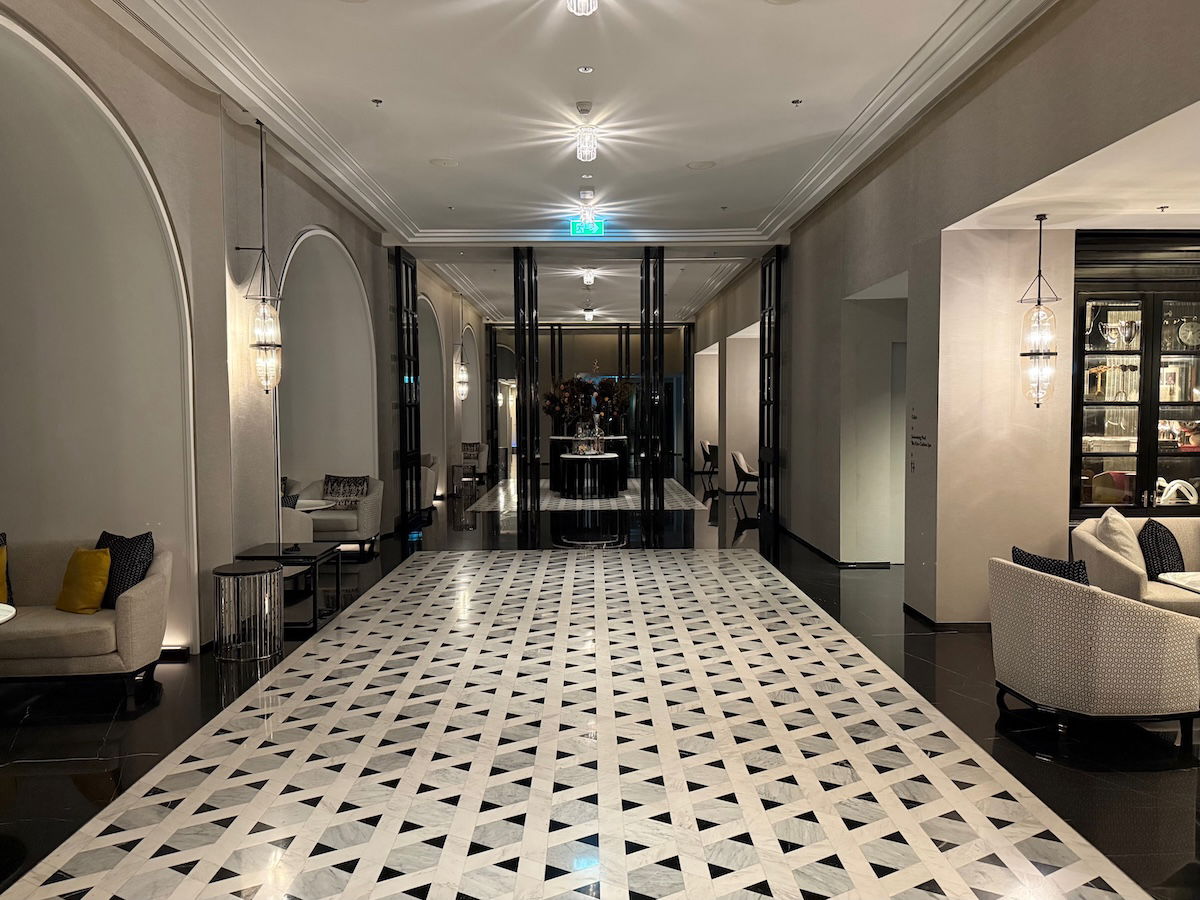
But I think another interesting direction is the Ritz-Carlton New York NoMad, which I actually really liked, though it almost feels like it’s not a Ritz-Carlton. It’s modern, it doesn’t have some massive marble lobby, and the hotel has a variety of dining outlets from José Andrés, which are super popular with locals as well.
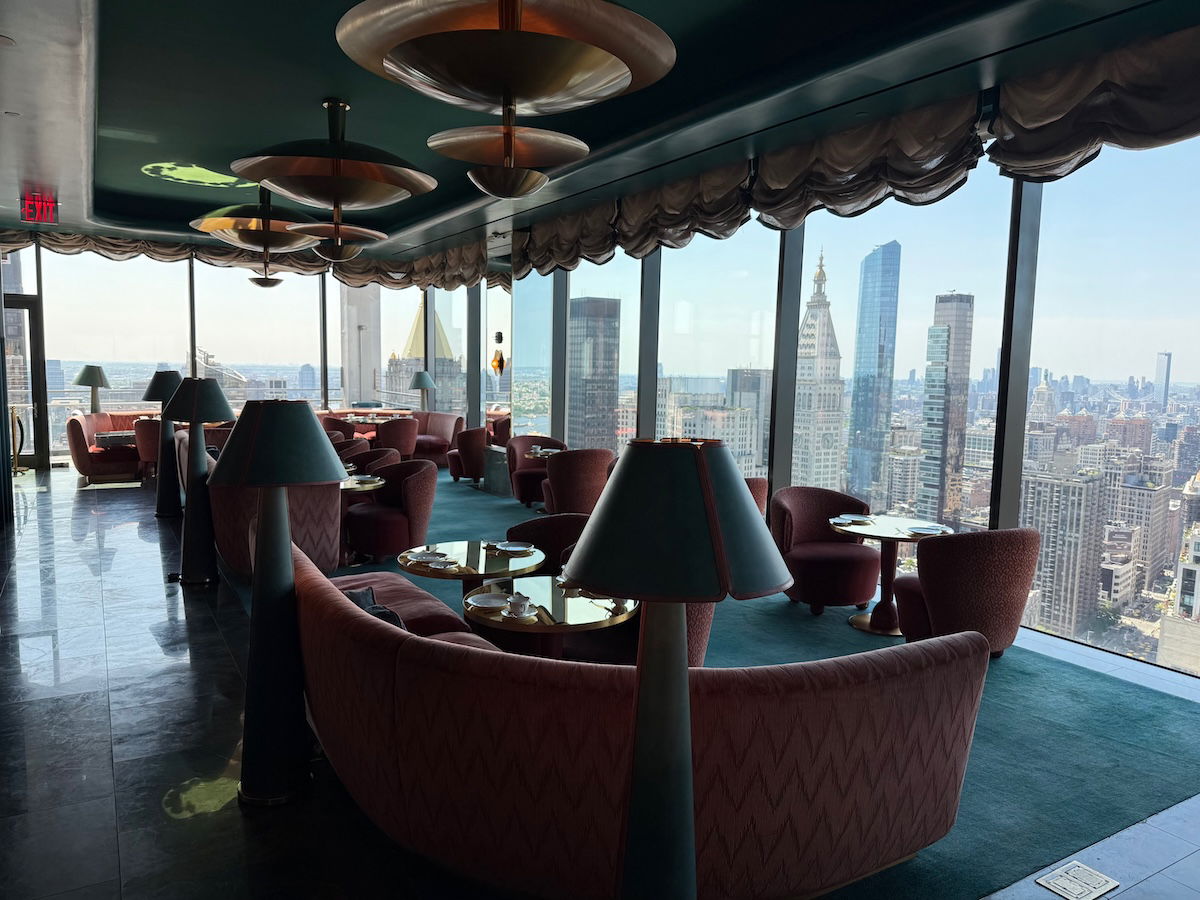
The New York NoMad property almost feels like a hybrid between a Ritz-Carlton and an EDITION, in terms of the vibe, since EDITION is known for its trendy venues (even if hospitality often leaves something to be desired).
So it’s going to be interesting to see if over the coming years, most new Ritz-Carlton properties are more like Bangkok, or more like New York. Either way, consumer tastes are evolving, and I do think Ritz-Carlton needs a bit of a refresh.
Bottom line
While Ritz-Carlton is one of Marriott’s flagship luxury brands, it definitely uses the Bonvoy program as a crutch to compete with other true luxury hotel groups. Ritz-Carlton properties are consistently pretty high quality, though I don’t find them to be up to the level of Four Seasons, Rosewood, etc.
What stands out to me most about the brand is the huge inconsistency in terms of the quality of properties, and the not terribly sincere service, at least in my experience. I am curious to see how the Ritz-Carlton brand will evolve for a younger generation, especially without cannibalizing fellow Marriott brand EDITION.
What’s your perception of the Ritz-Carlton brand?


