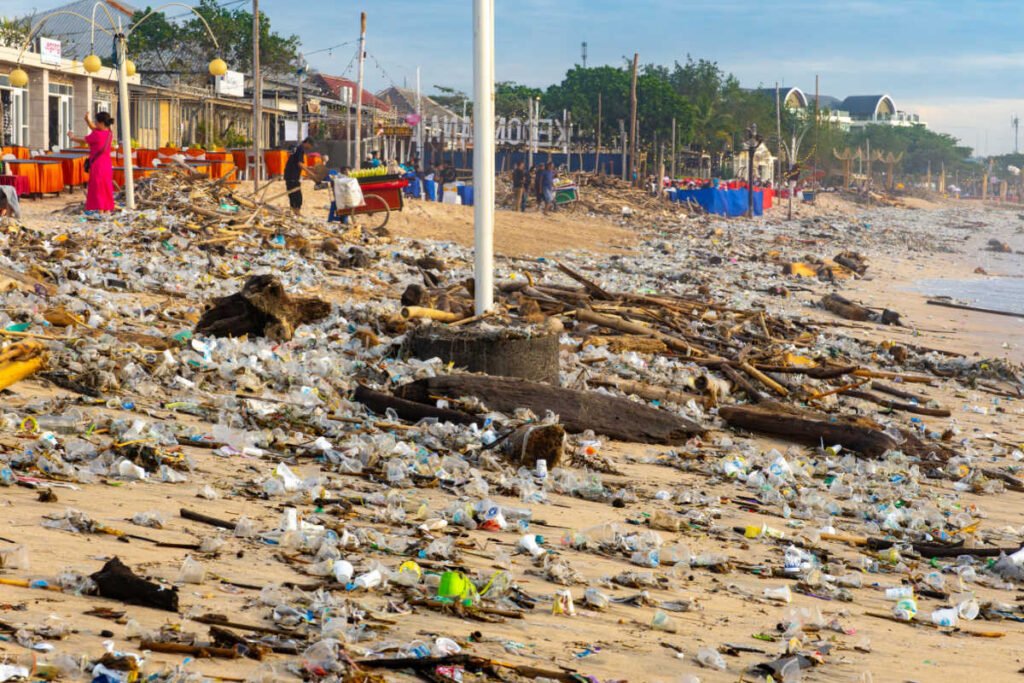
It is that time of year again. Sadly, the rainy season in Bali not only brings the risk of major flooding but also tides of plastic trash.
The issue seems to be getting worse each year, and though the island has already seen several waves of tidal trash this year, on Thursday morning, the first major wave arrived.
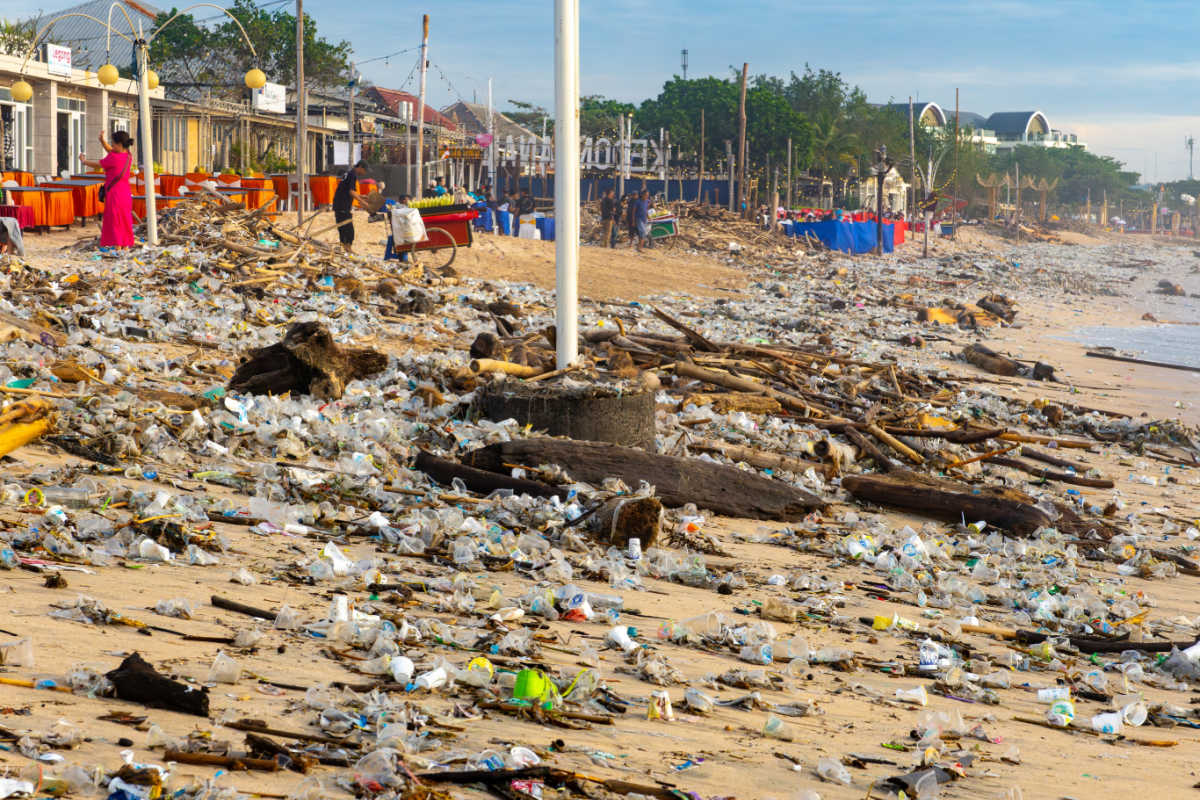
On Thursday, 18th December, the first major tide of ocean debris arrived on Kedonganan Beach in the popular tourism resort of Jimbaran. Best known to tourists for its oceanfront seafood restaurants and long stretches of white sand, Jimbaran is a popular resort destination for families and couples alike.
Both Jimbaran and Kedonganan are busy local fishing villages, and both beaches are often characterised by the colourful traditional jukung fishing boats that are moored along the shoreline.
This morning, the usual beachfront view looked very different. Local fishermen could be seen preparing their boats and clearing out their nets while standing ankle deep in a tide of plastic debris that had been deposited all along the length of the beach.
The wave of waste also contained organic materials like driftwood.
This will sadly be the first of many such tides of plastic waste that will land on Bali’s shores this rainy season. The first waves of waste were recorded in late November, and the worst typically hit in late December and early January.
Jimbaran Beach and Kedonganan Beach are typically the worst affected by tidal trajectories, though this issue also has devastating impacts on beaches throughout Badung Regency, from Uluwatu through Jimbaran to Kuta, Legian, and Seminyak.
Leaders in Bali are all too aware of this now-annual phenomenon and have cleanup teams on standby throughout the Badung coast to ensure waste is removed as quickly as possible, protecting public safety and enabling tourists to enjoy these world-famous beaches.
Speaking to reporters in late November, the Head of the Cleanliness and Hazardous Waste Management Division of the Badung DLHK, Anak Agung Gede Dalem, confirmed that teams will remain on standby throughout the rainy season. Dalem confirmed that there are 6 loaders, 2 beach cleaner units, 2 diggers, and 5 trucks on standby every day. This is in addition to 41 trash trucks that can be deployed if the volume of garbage increases.
He told reporters, “DLHK Badung stated that it is ready to deploy 300 cleaning personnel, while the Indonesian National Armed Forces (TNI) is ready to deploy 1,500 personnel to assist in handling if there is a surge in garbage shipments.”
Bali Trash Tide Tracker
The annual “trash season” has arrived. Here is where the debris is washing up and where to find clean beaches right now. Click to reveal.
This is in addition to community-organised groups who bring teams of volunteers to the worst-affected areas to coordinate and clean up Bali’s most popular beaches.
Sungai Watch is the most high-profile NGO conducting this work in Bali and regularly organizes beach-cleaning operations with its workforce and volunteers to remove waste from the beachfronts and recycle and reuse as much of the debris as possible.
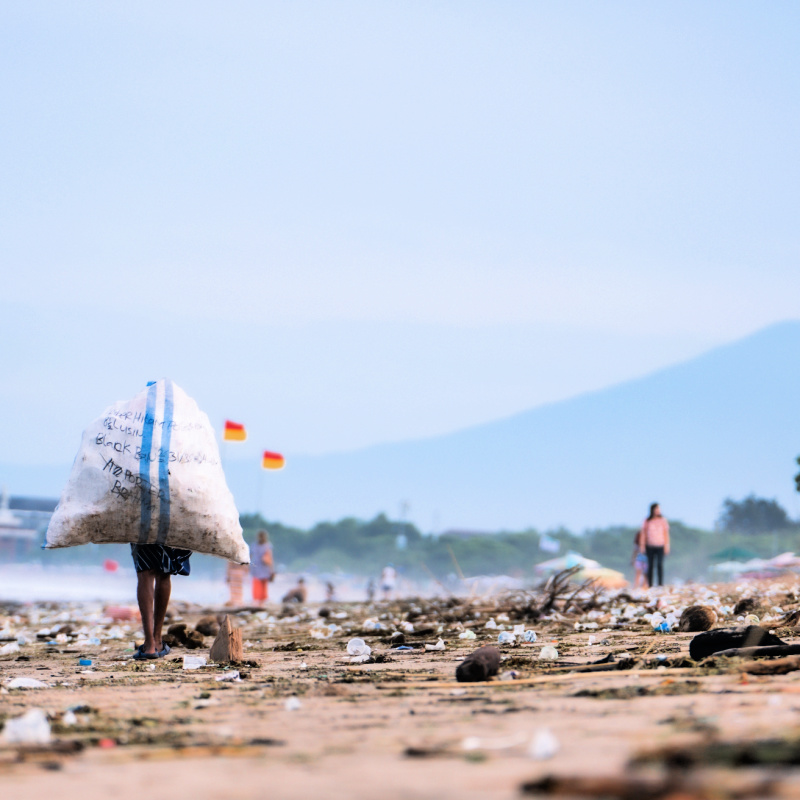
Here at The Bali Sun, we know how devastating and disheartening it is to hear about tides of waste washing up on family-favorite vacation beaches.
For tourists traveling to Bali this rainy season who are concerned about the tides of plastic trash affecting their vacation, there is hope.

The cleanup teams work incredibly hard to ensure that the beaches are clear of trash as quickly as possible. Generally, these waves of waste arrive overnight, and so teams get to work in the early hours of the morning to have the beaches ready for when the public starts to arrive.
On the days when plastic waste does affect the beaches of Badung Regency from Uluwatu through to Cananggu, there are plenty of other coastal regions of Bali that remain unaffected, for example, Amed in East Bali, Lovina in North Bali, and much closer by, Sanur is seldom affected by these waves of waste.
Discover more from The Bali Sun
Subscribe to get the latest posts sent to your email.


