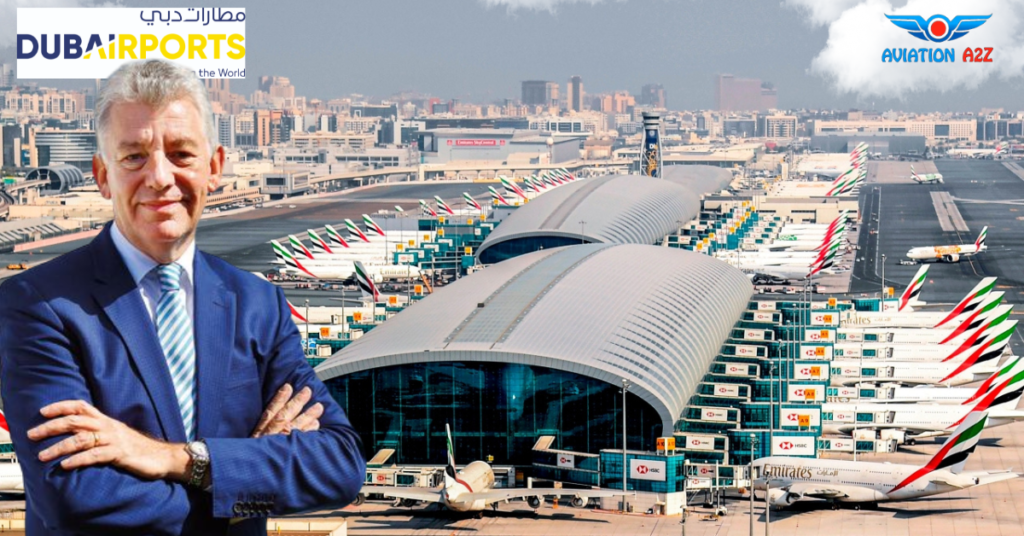
DUBAI- World’s Busiest International Airport, Dubai International Airport (DXB), nears a historic milestone as the world’s first to handle 100 million passengers annually.
Emirates Airline (EK), operational for 40 years at this UAE hub, drives much of the volume, but a post-COVID reversal sees most travelers now originating or ending journeys here rather than connecting.
In 2019, origin and destination (O&D) traffic accounted for 40% of movements at DXB. Recent data shows this figure climbs to 55%, signaling Dubai’s emergence as a prime endpoint.
Robert Whitehouse, vice-president of research at Dubai Airports, attributes the rise to inbound tourism, resident outbound travel, and growing expatriate populations choosing the city as home.
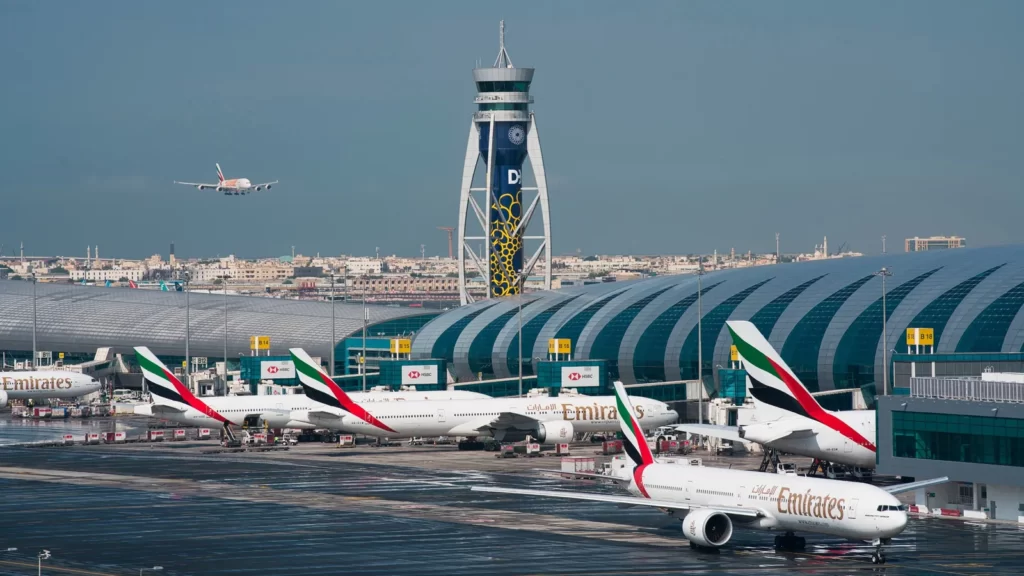
Dubai Airport Eyes 100 Million Passengers
Dubai Airports released figures highlighting this dramatic switch from the pre-COVID era, where transfers dominated.
Reported by the Independent, the surge in O&D passengers reflects Dubai’s strategic pivot toward leisure and business stays over mere stopovers.
New developments, including constant openings of hotels, restaurants, and attractions, anchor travelers longer.
The Burj Khalifa, standing over half a mile tall as the world’s highest building, exemplifies this draw, pulling millions for views and experiences.
This balanced growth fosters sustainability for DXB, reducing reliance on volatile connecting flows. Whitehouse notes it creates a “balanced mix” that buffers against global disruptions.
As flights multiply, the airport’s infrastructure, 2 parallel runways and expansive terminals, handles the load efficiently, cementing its 2014 status as the busiest international hub, surpassing London Heathrow Airport (LHR) for non-domestic traffic.
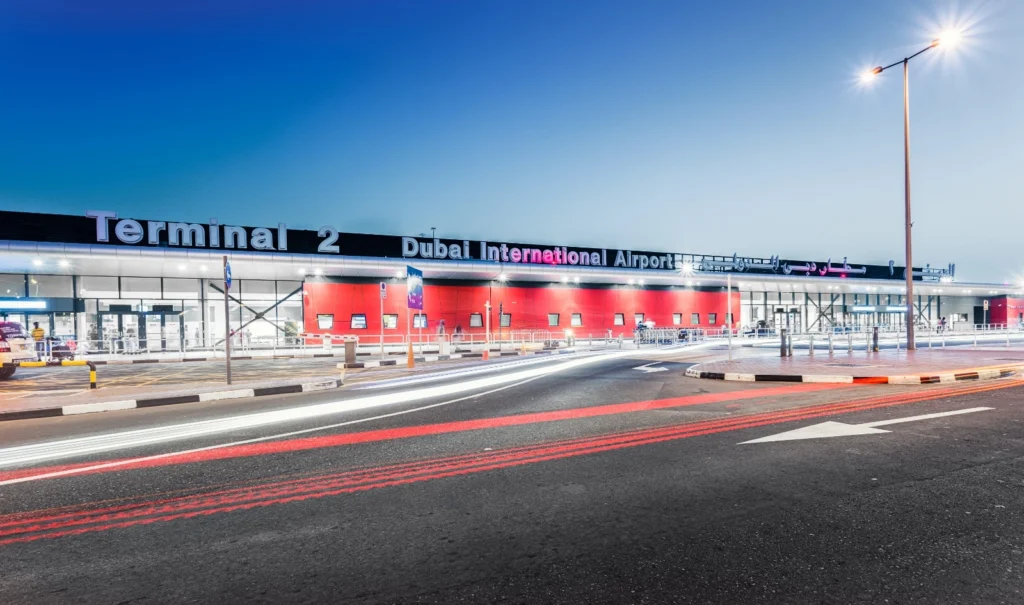
New Routes Fueling the Origin Surge
Airlines expand capacity to meet demand, with most passengers disembarking in Dubai. This winter, British Airways (BA) and Virgin Atlantic (VS) are boosting seats from LHR, targeting end-of-journey arrivals.
Austrian Airlines (OS) relaunches its Vienna International Airport link, adding European access.
From Asia, 3 twice-weekly services launch: FlyArystan (FS) from Aktau International Airport (SCO) in Kazakhstan, Varesh Airlines (VRH) from Sari Airport (SRY) in Iran, and Fly Jinnah (9P) from Allama Iqbal International Airport (LHE) in Pakistan.
These routes tap regional markets, enhancing direct O&D inflows.
Saudi Arabia contributes significantly, with traffic projected at eight million by year-end—about 22,000 daily passengers, bolstered by eased travel and economic ties.
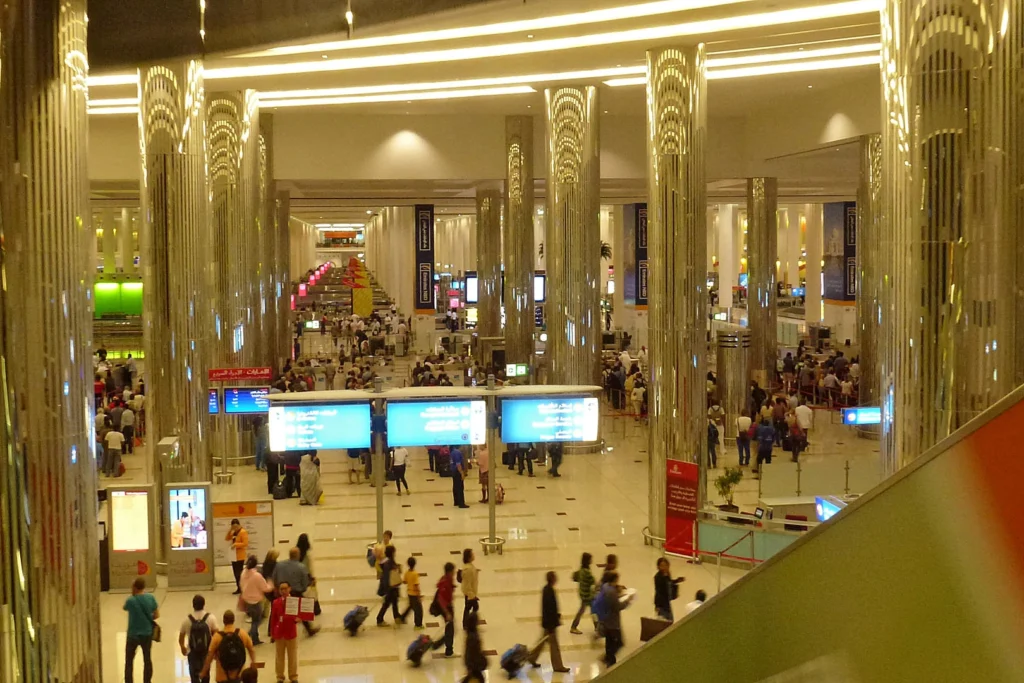
Global Hubs in Comparison
DXB faces rivals like Hamad International Airport (DOH) in Doha, where 75% of passengers transfer, mostly on Qatar Airways (QR).
Abu Dhabi International Airport (AUH), Etihad Airways (EY)’s base, sees connecting traffic drop to 50%, as half now travel to or from the emirate.
The Zayed National Museum opened there recently, with Frank Gehry’s Guggenheim set for 2026, mirroring Dubai’s attraction strategy.
Other major hubs show varied transfer reliance:
| Airport | Transfer Percentage | Key Hub Airline |
|---|---|---|
| Amsterdam Schiphol (AMS) | 64% | KLM |
| Singapore Changi (SIN) | 63% | Singapore Airlines |
| Frankfurt (FRA) | 48% | Lufthansa |
| Istanbul (IST) | 48% | Turkish Airlines |
| Paris Charles de Gaulle (CDG) | 29% | Air France |
| Hong Kong (HKG) | 22% | Cathay Pacific |
| London Heathrow (LHR) | 22% | British Airways |
US and Canadian airports complicate comparisons, as international arrivals face full immigration, blurring O&D lines. Riyadh Air’s planned Saudi base adds future pressure.
DXB eyes the 100 million mark in late 2026 or 2027, underscoring its trajectory from transit giant to destination leader.
Stay tuned with us. Further, follow us on social media for the latest updates.
Join us on Telegram Group for the Latest Aviation Updates. Subsequently, follow us on Google News


