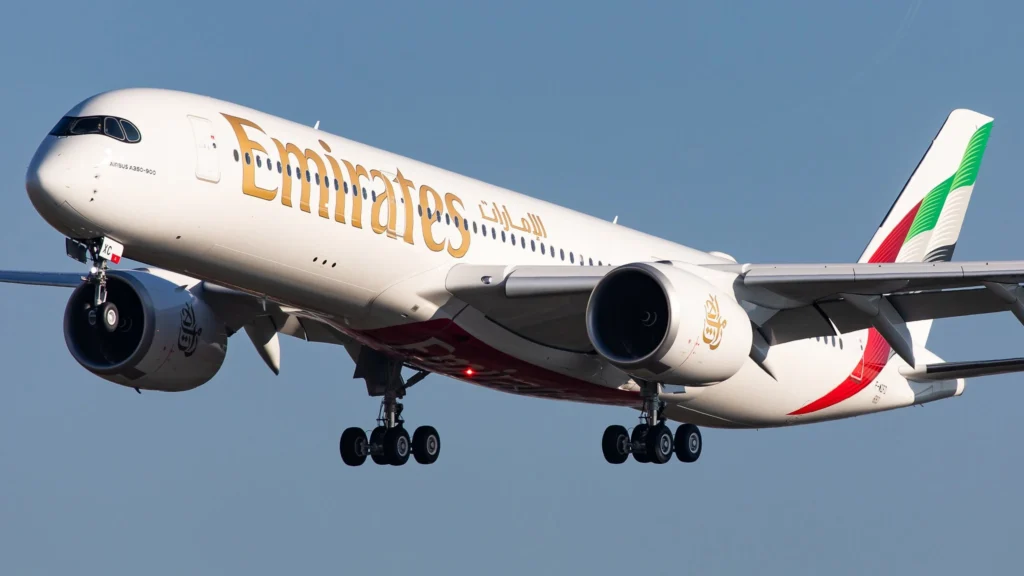
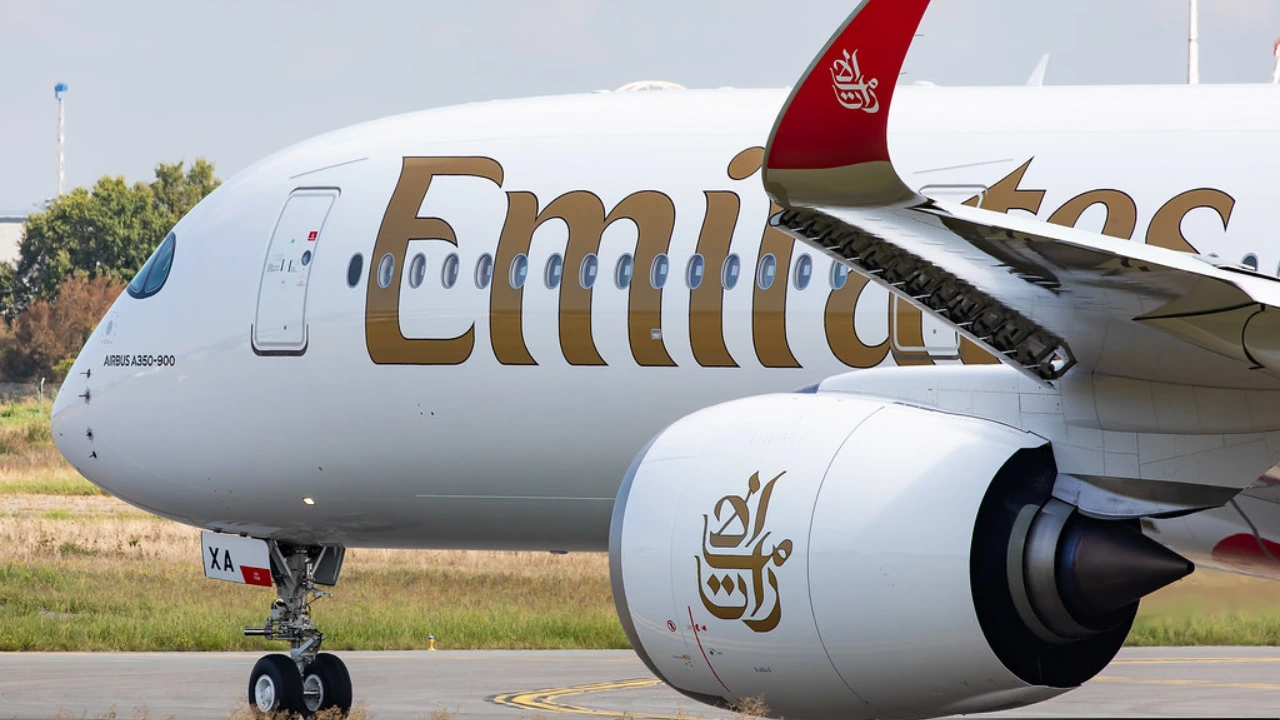
DUBAI— Emirates (EK) has advanced the entry of its Airbus A350-900 into the Americas, confirming that the aircraft will begin daily operations on its Dubai to Montreal route earlier than planned. The move follows the faster-than-expected delivery of additional A350 aircraft into the airline’s fleet.
The service will connect Dubai International Airport (DXB) with Montréal–Trudeau International Airport (YUL), marking the first time Emirates deploys the Airbus A350 on a route in the Americas. The upgrade represents a notable fleet milestone for the Gulf carrier as it expands long-haul A350 operations beyond Europe and Asia.
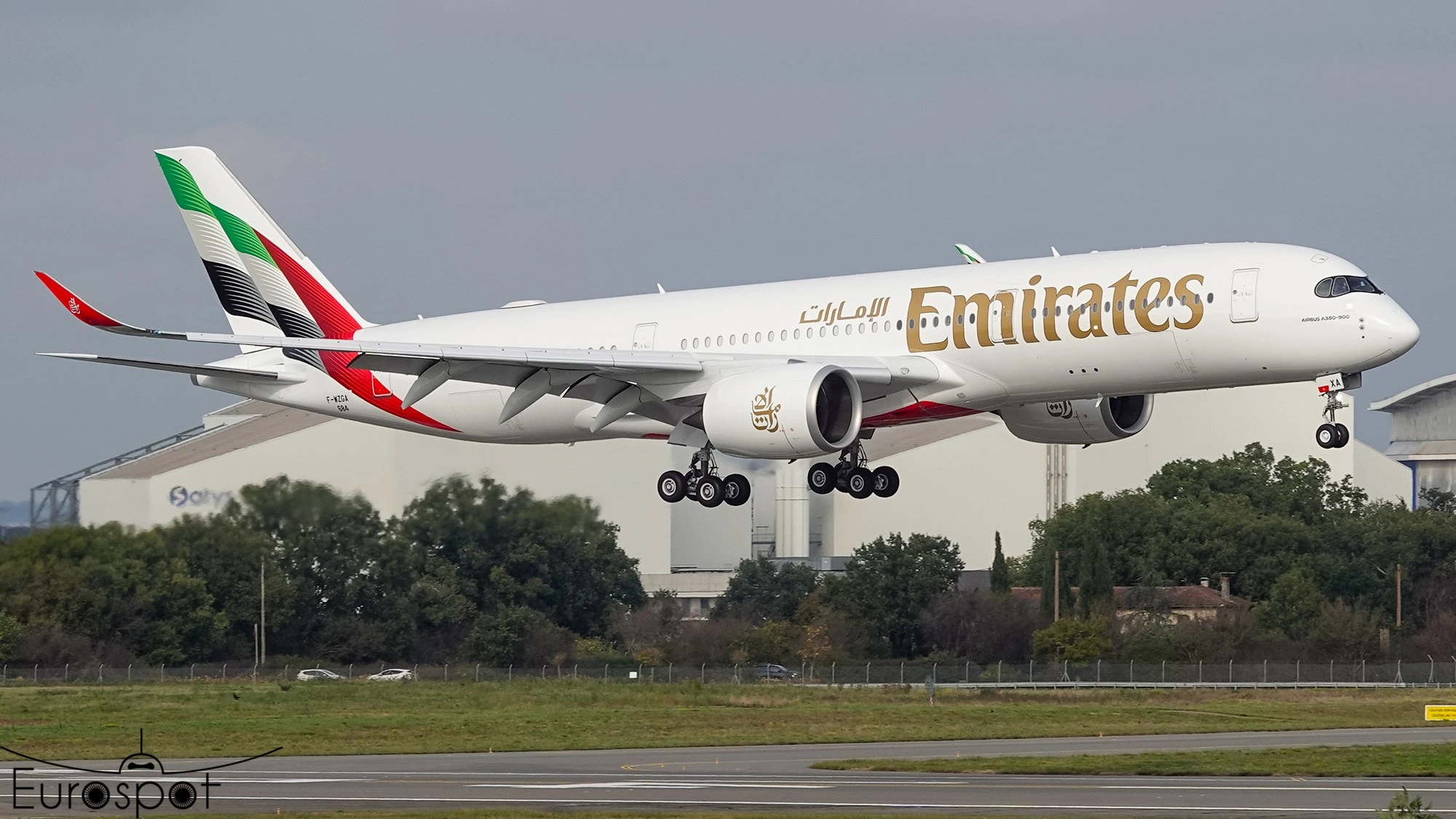
Emirates Deploys A350 to Montreal
Emirates confirmed that the aircraft change will take effect on January 11, 2026, nearly three weeks ahead of the previously announced February launch. The route is currently operated by the Boeing 777-200LR, which will be replaced entirely by the new-generation widebody.
The daily service will operate as flight EK243 from Dubai, departing at 2:45 a.m. and arriving in Montreal at 7:35 a.m.
The return leg, EK244, will depart Montreal at 10:40 a.m. and land in Dubai at 8:00 a.m. the following day.
The sector spans approximately 6,611 miles, with scheduled block times of 13 hours and 50 minutes westbound and 12 hours and 20 minutes eastbound. This makes Montreal one of the longest routes currently planned for Emirates’ A350 fleet.
For Emirates, the deployment reflects growing confidence in the aircraft’s long-haul performance. It also positions Montreal as a strategic testing ground for the A350 in the North American market.
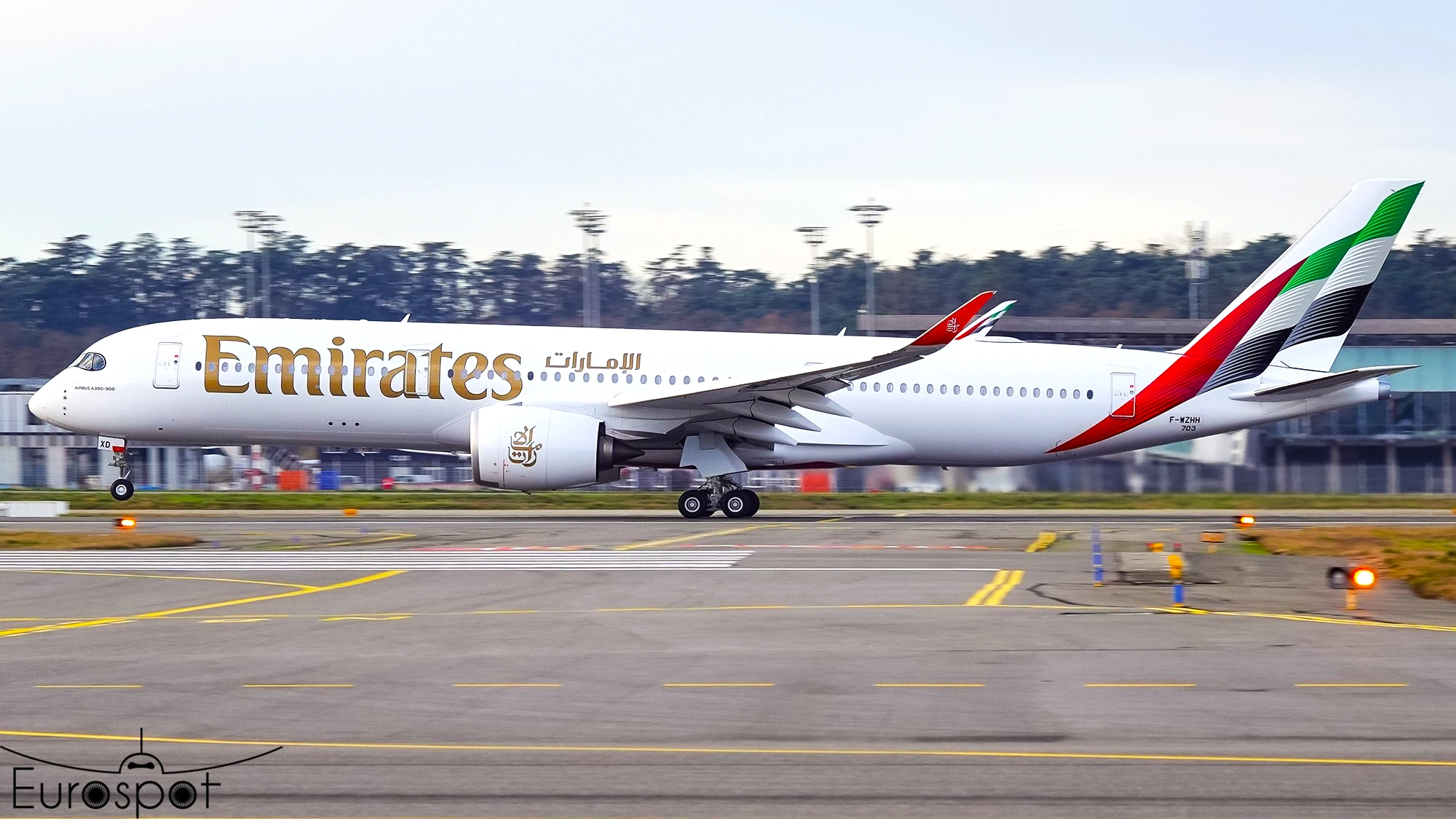
Emirates’ Fleet Transition Strategy
Historically, Emirates has relied almost exclusively on Airbus A380s and Boeing 777s for its widebody operations. The introduction of the A350 represents a gradual but significant diversification of its long-haul fleet.
Early A350 deliveries were limited to shorter and medium-haul routes due to the absence of crew rest facilities. Recent aircraft deliveries now include dedicated crew rest areas, enabling sustained ultra-long-haul operations such as the Dubai–Montreal sector.
The Montreal service is among the first long-haul routes to benefit from these updated A350s.
Adelaide became the initial destination for the long-range variant earlier in December 2025, signaling a phased expansion strategy.

Modern Cabin
The long-haul A350 configuration features 298 seats across three cabins. This includes 32 business class seats, 28 premium economy seats, and 238 economy class seats.
Compared with the Boeing 777-200LR, the A350 introduces Emirates’ latest business class product and a higher number of premium economy seats.
This also marks the first time Emirates offers premium economy on a Canada route.
Passengers are expected to benefit from a quieter cabin, improved humidity, advanced inflight technology, and wider economy seats. These enhancements align with Emirates’ broader focus on onboard comfort and fuel-efficient operations.
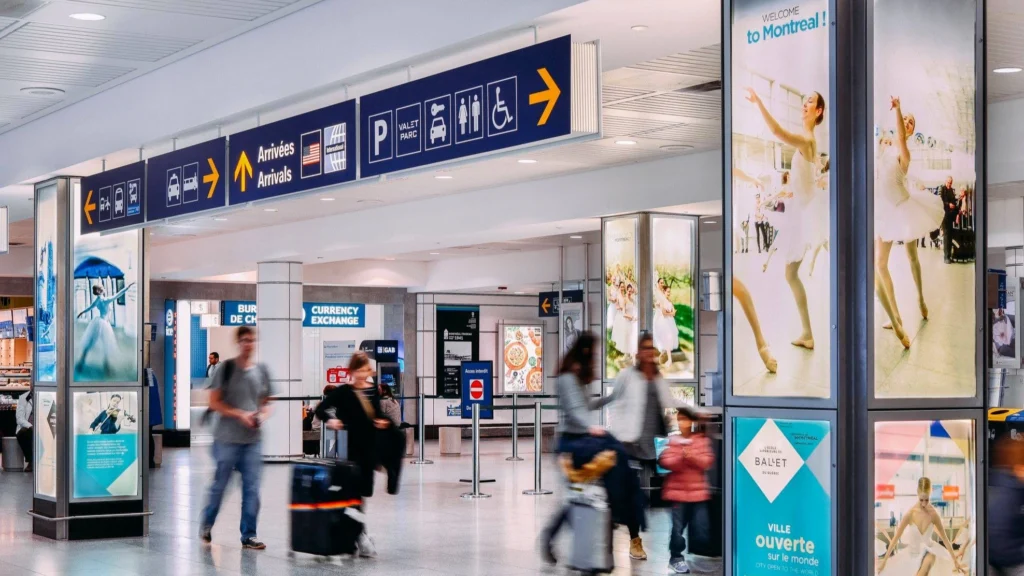
Montreal Travel Guide
Montreal stands apart as Canada’s most European city, defined by French heritage, historic streets, and a creative cultural scene. It blends old-world architecture with modern urban life at a lower cost than most major Canadian cities.
This guide outlines what makes Montreal unique, from its landmarks and neighborhoods to costs, safety, and transport, helping travelers plan an efficient and rewarding visit.
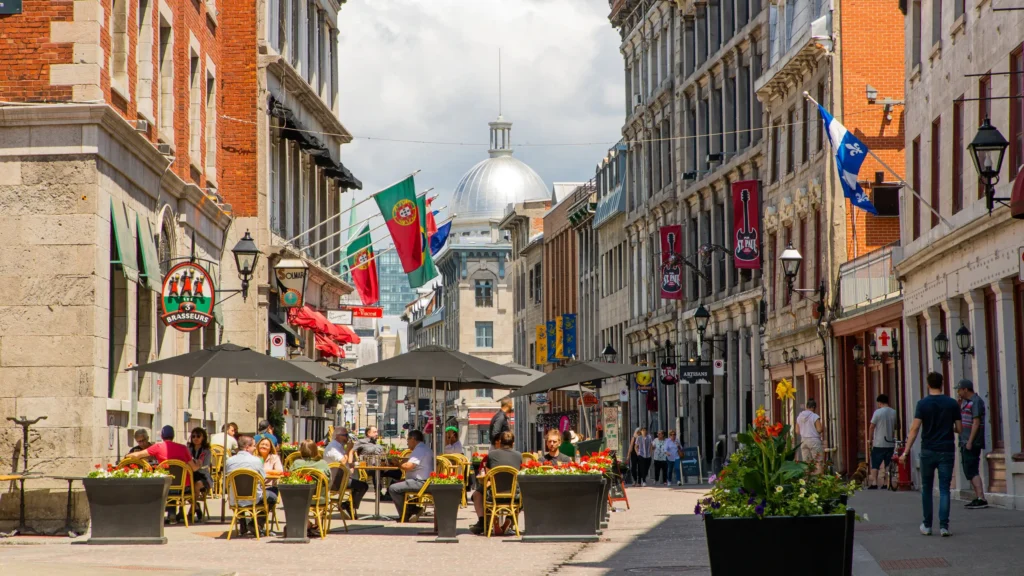
A City Shaped by French Roots and Urban Energy
Montreal is the second-largest city in Canada and one of the world’s largest French-speaking urban centers. Its identity is shaped by centuries of French influence, visible in its language, food, architecture, and pace of life.
Old Montreal anchors the city’s historic core, with cobblestone streets and stone buildings dating back to the 1700s. This area houses major landmarks such as Notre-Dame Basilica and Place d’Armes, alongside museums, galleries, and riverfront promenades.
Beyond the historic center, Montreal feels open and livable. Neighborhoods like Le Plateau and Mile End balance residential calm with cafés, boutiques, and street art. The city’s strong cycling infrastructure and accessible public parks support an active outdoor lifestyle uncommon for a major North American city.
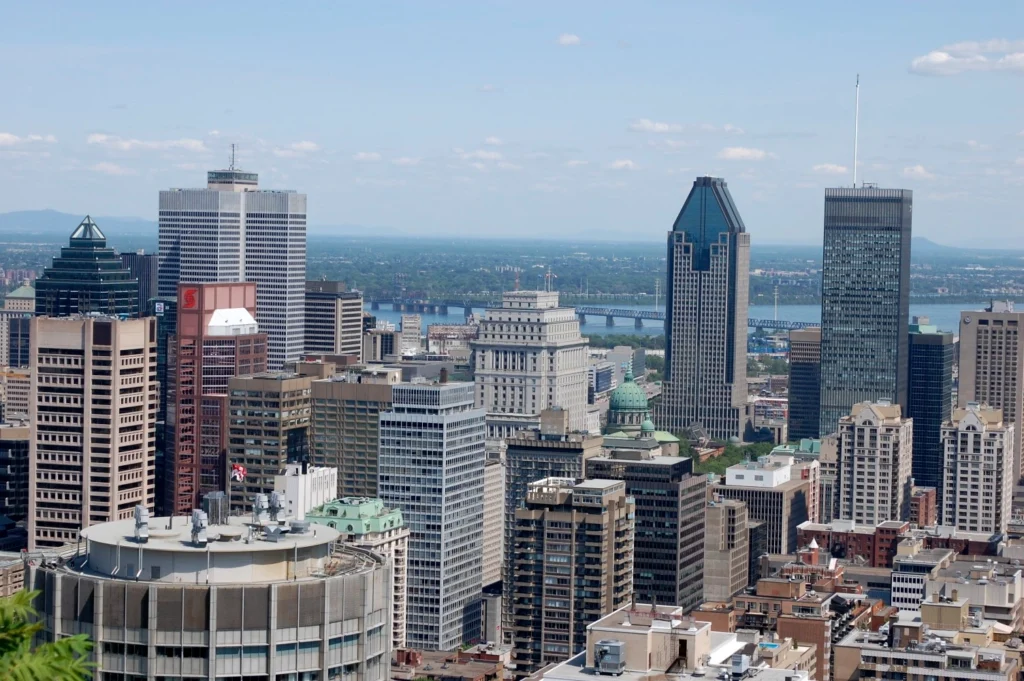
Top Attractions That Define Montreal
Old Montreal
Old Montreal is the city’s most recognizable district. It features preserved architecture, public squares, and cultural institutions like the Montreal Museum of Archaeology and History. The area is walkable and best explored on foot.
Mount Royal Park
Mount Royal Park sits at the city’s center and offers panoramic views of the skyline. The park supports year-round activities, including walking, cycling, skating, and cross-country skiing. Summer weekends often bring informal drum circles and picnics.
Montreal Biodome
The Biodome presents four ecosystems under one roof, from tropical forests to sub-Antarctic islands. It houses hundreds of animal species and is especially popular with families and educational groups.
Montreal Museum of Fine Arts
One of Canada’s largest art museums, this institution holds over 43,000 works. Its Canadian and Indigenous collections provide insight into regional and national art history.
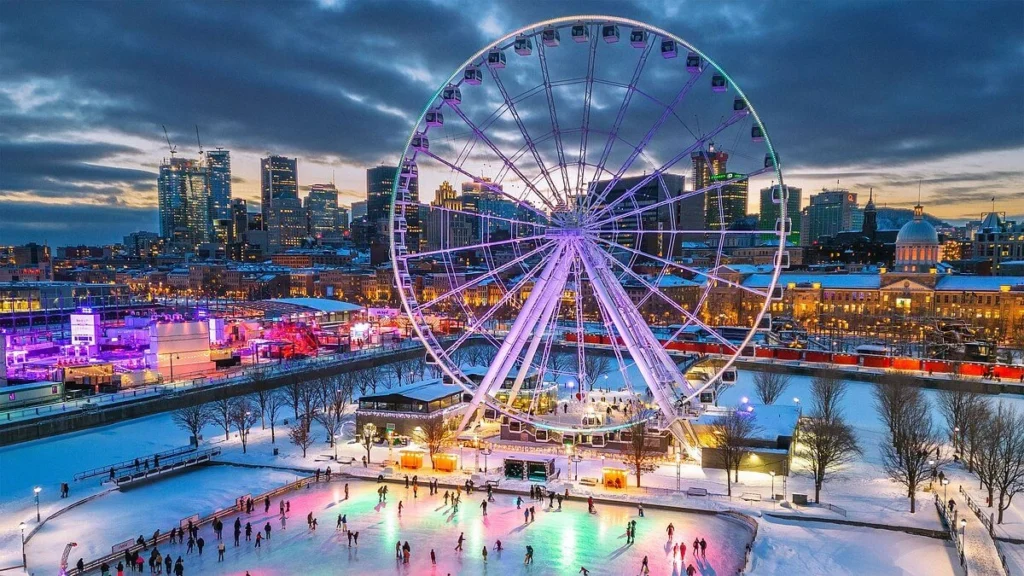
Cultural Experiences Beyond the Highlights
Botanical Garden
The Montreal Botanical Garden spans 185 acres and ranks among the world’s largest. It includes themed gardens, indoor greenhouses, and spaces dedicated to Indigenous plant life.
Jean-Talon Market
Located in Little Italy, Jean-Talon Market is the city’s largest food market. It offers local produce, Quebec specialties, and casual dining, making it a practical stop for both meals and groceries.
Parc Jean-Drapeau
This island park hosts major festivals, international events, and seasonal attractions. It remains central to Montreal’s identity as a global events city.
Food and Nightlife
Montreal is widely regarded as Canada’s food capital. Local specialties include bagels, smoked meat, and poutine. Jazz clubs, drag cabarets, and neighborhood bars contribute to a diverse nightlife scene.
Safety and Practical Considerations
Montreal is considered a safe city, with violent crime rare. Petty theft can occur in crowded areas and on public transit, so basic precautions are advised.
Winters can be extreme, with severe cold and heavy snowfall. Proper winter clothing is essential for cold-season travel. Emergency services are reached by dialing 911.
Typical Travel Costs
Accommodation ranges from affordable hostels to mid-range hotels and short-term rentals. Food costs remain reasonable compared to other major Canadian cities, especially when using markets and casual eateries.
Daily budgets can be categorized as follows:
- Backpacker: around 60 CAD per day
- Mid-range: around 150 CAD per day
- Upscale: 265 CAD and above per day

Getting Around the City
Montreal’s public transport system includes buses and a reliable subway network. A day pass offers good value for visitors. The city is also highly bike-friendly, with an extensive public bike rental system.
Car rentals are available but generally unnecessary due to parking costs and efficient public transport.
Best Time to Visit
Summer brings festivals, warm weather, and higher prices. Late spring and early fall offer mild temperatures and fewer crowds, making them ideal for sightseeing.
Winter is cold and snowy, best suited to travelers comfortable with harsh conditions or winter sports.
Bottom Line
Emirates’ decision to accelerate the Airbus A350 debut on its Dubai–Montreal route underscores the aircraft’s growing role in the airline’s long-haul network.
The move strengthens Emirates’ North American presence while introducing newer cabins and premium economy service to Canada.
Stay tuned with us. Further, follow us on social media for the latest updates.
Join us on Telegram Group for the Latest Aviation Updates. Subsequently, follow us on Google News