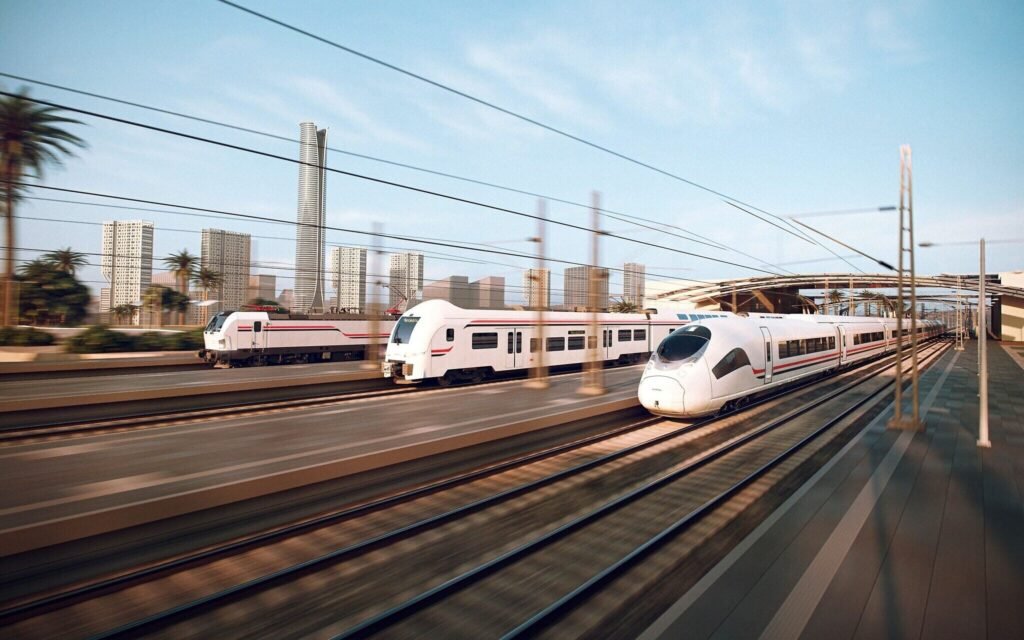
NEW ADMINISTRATIVE CAPITAL, Egypt (AFP) — Workers have started laying tracks in the desert east of Cairo for Egypt’s first high-speed train, which will link the Red Sea and the Mediterranean in the latest attempt to modernize transport in the vast country.
Described by Transportation Minister Kamel al-Wazir as a “new Suez Canal on rails,” the project is slated to be completed in 2026 and will carry passengers and cargo the 660-kilometer (410-mile) distance in as little as three hours.
The Green Line, as it is known, is the latest of a long list of megaprojects undertaken by Egyptian President Abdel-Fattah el-Sissi’s government in the past decade — the crowning jewel of which is a still sparsely populated $58 billion New Administrative Capital east of Cairo.
In 2021, Egypt signed a $4.5 billion contract with a consortium that includes German company Siemens to establish the Green Line, which will form the first of three high-speed tracks across the country.
Authorities hope the nearly 2,000 kilometer-network will carry 1.5 million passengers per day.
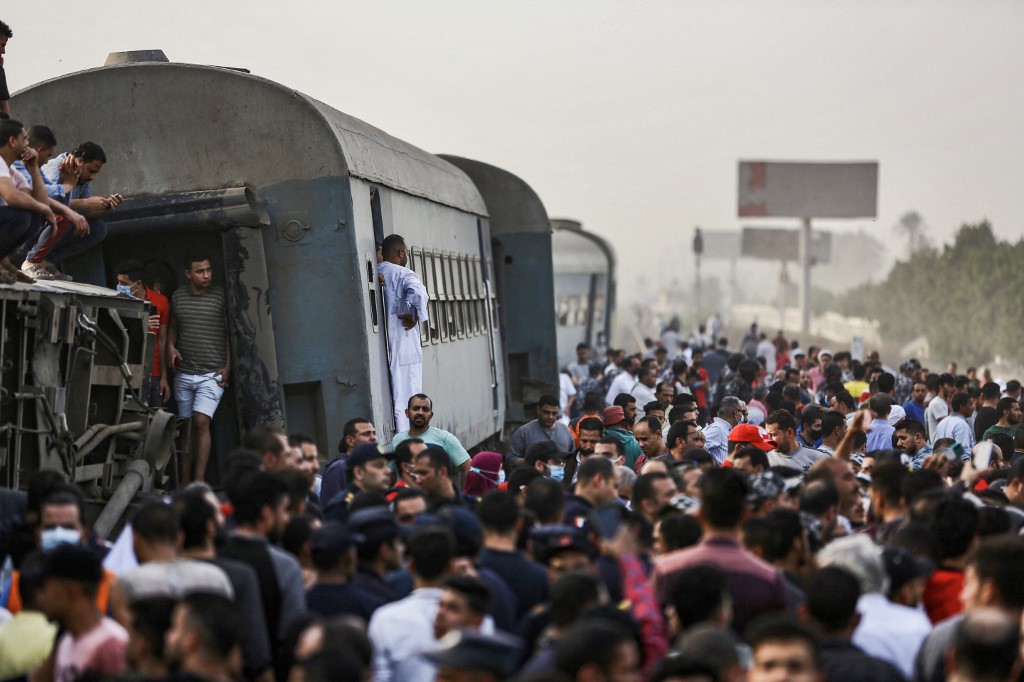
Egypt’s existing train network — used by a million people every day — is plagued by infrastructure and maintenance problems that caused nearly 200 accidents last year, according to official figures.
The Green Line will run across the country’s north, from Ain Sokhna on the Red Sea to Marsa Matrouh on the Mediterranean, crossing two Cairo satellite cities — the New Administrative Capital to the east, and to the west 6th of October City, home to Egypt’s only dry port.
Urban planning bet
According to Tarek Goueili, head of the National Authority for Tunnels, Egypt’s revamped rail network will carry 15 million tonnes of cargo per year — 3 percent of last year’s Suez Canal transit volume.
For those behind it, the Green Line is also an urban planning bet.
“The high-speed line will ease pressure on Greater Cairo and encourage the emergence of new growth hubs,” said Faical Chaabane of French company Systra, which is building the track.
In one desert station that Systra showed reporters, workers on scaffolding have raised an imposing geometric ceiling over six open-air tracks.
Much of the New Administrative Capital that surrounds it is also still a construction site, home to government ministries where workers commute by bus every day.
“Nobody will end up living here. We’ve built this whole project, but it will all serve tourists and cargo,” Mohamed, one of the construction workers at the station, told AFP.
With desert accounting for most of the country’s million square kilometers, the vast majority of Egypt’s 108 million people — the Arab world’s largest population — are stacked vertically along the Nile River and its delta.
After its inauguration, the Green Line will be followed by the Blue Line, which will track the Nile linking Cairo to Aswan, and the Red Line, which will connect the Red Sea cities of Hurghada and Safaga inland to Luxor.