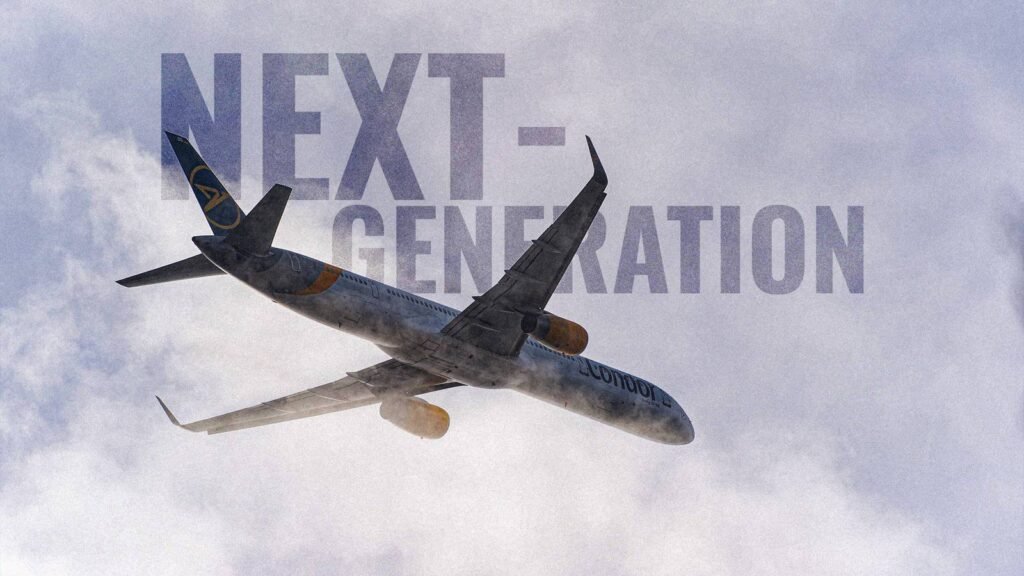
The Boeing 757 has long been regarded as one of the most versatile narrowbody aircraft ever built, capable of serving short domestic routes as well as transatlantic flights from airports with challenging conditions. Despite its popularity with airlines and passengers alike, Boeing chose not to develop a next-generation version, leaving a gap in the so-called ‘middle-of-the-market’ segment.
Understanding why this decision was made requires examining a combination of technical, financial, and strategic factors that influenced the company over the past two decades. From production line logistics and engine limitations to shifting airline demand and strategic priorities, multiple challenges made a 757 successor difficult to justify. At the same time,  Boeing’sfocus on upgrading the 737 and managing other major programs limited its ability to pursue a clean-sheet design.
Meanwhile, Airbus seized the opportunity to fill the middle-market niche with the A321neo, A321LR, and A321XLR, effectively dominating the routes that a modernized 757 might have served. Let’s explore the key reasons Boeing never replaced the 757 and the implications for the commercial aviation market.
End Of Production & High Restart Costs

One of the trickiest areas when developing, producing, and selling an aircraft is production line logistics. Boeing ended 757 production in 2004 after airline orders fell sharply, and, once production stopped, the infrastructure supporting the aircraft was no longer needed. As such, Boeing quickly reallocated space, resources, and investment to other programs, making any future restart far more difficult.
Following the shutdown, manufacturing tooling for the 757 was dismantled or repurposed for other aircraft, particularly the 737. Key suppliers also moved on to newer platforms, meaning contracts expired, and production expertise was lost. Restarting the 757 would not have been a simple process, as Boeing would have needed to rebuild much of the supply chain and reestablish supplier relationships at high cost.
In addition to these logistical challenges, certification requirements have evolved since the 757 was originally approved. Any updated version would need to meet newer safety, noise, and emissions standards, requiring further redesign and testing. When these factors were considered together, Boeing concluded that the financial risk of restarting the 757 outweighed the potential sales.
Lack Of Suitable Modern Engines

The Boeing 757 was powered by high-thrust engines in the 38,000–43,000-pound range, which gave the aircraft strong performance on demanding routes, including hot-and-high airports and long, thin transcontinental or transatlantic flights. This level of thrust was unusual for a narrowbody aircraft and became one of the 757’s defining characteristics. Any next-generation version would have needed engines with similar or better performance to maintain those capabilities.
By the time Boeing considered updating the 757, engine development priorities had shifted. Modern narrowbody engines focused on lower thrust levels paired with very high bypass ratios to maximize fuel efficiency on shorter, more common routes. As a result, existing engines were not well-suited to the 757, as they were either too large in diameter or too heavy to fit under the wing and landing gear without major structural redesign.
Developing a brand-new engine tailored to the 757 would have required close cooperation with engine manufacturers, significantly increasing complexity, cost, and risk. Such engine programs typically take a decade or more and require billions of dollars in investment. Without committing to that level of development, any 757 update would have delivered only marginal fuel-burn improvements, making it difficult to justify economically.

Should Boeing Have Updated The 757?
Since at least 2015, many analysts have considered bringing an updated 757X to the market impractical.
Weak Market Demand

In the early 2000s, most airlines prioritized cost efficiency over extended range, favoring aircraft that minimized operating expenses on high-density routes. Rising fuel prices, intense competitive pressure, and consistently slim profit margins pushed carriers toward smaller, more economical narrowbodies or larger widebodies that delivered lower costs per seat. In this operating environment, the 757’s combination of range, payload, and performance was viewed as a niche capability.
At the same time, hub-and-spoke networks continued to dominate airline route planning, further reducing demand for long-range narrowbody aircraft. Longer routes were typically assigned to widebody jets, which offered superior per-seat economics and greater passenger capacity. As such, only a limited group of airlines placed significant value on the 757’s ability to operate from hot-and-high airports or to serve long, thin routes that could not economically support widebodies.
|
Specifications (Per Skybrary) |
Boeing 757‑200 |
Boeing 757‑300 |
|---|---|---|
|
Length |
155 feet three inches (47.3 m) |
178 feet nine inches (54.5 m) |
|
Wingspan |
125 feet (38.1 m) |
125 feet (38.1 m) |
|
Height |
44 feet seven inches (13.6 m) |
44 feet seven inches (13.6 m) |
|
Typical Engines |
2 × PW2037 / PW2040 or RB211‑535E4B |
2 × PW2037 / PW2040 / PW2043 or RB211‑535E4B |
|
Range |
3,915 NM (7,250 km) |
3,400 NM (6,295 km) |
|
Max Takeoff Weight |
255,000 lb (115,680 kg) |
272,500 lb (123,600 kg) |
|
Cruise Speed |
Mach 0.80 (530 mph/850 km/h) |
Mach 0.80 (530 mph/850 km/h) |
|
Typical Seating (two‑class) |
200 passengers |
243 passengers |
Because this demand came from a relatively small group of operators, Boeing concluded that there was insufficient global interest to sustain long-term production or justify the significant investment required for an updated model. The company, therefore, viewed the market as a niche rather than broadly applicable. It was only later, as the 757 fleet continued to age and airlines increasingly shifted toward flexible point-to-point network strategies, that the broader value of a 757-style aircraft became more apparent across the industry.
Boeing’s Focus On The 737 Program

The Boeing 737 already had a vast global customer base and well-established production lines, making it a safer and more profitable platform for Boeing to invest in. Incremental upgrades to an existing aircraft required far less time and money than reviving the discontinued 757, which would have involved rebuilding supply chains and restarting certification. From a business perspective, focusing on the 737 offered quicker returns with significantly lower risk.
Airlines also strongly favored fleet commonality, as operating a single aircraft family reduces pilot training costs, maintenance complexity, and spare-parts inventories. By continuing to develop the 737, Boeing could offer airlines improved performance while preserving common type ratings and operational simplicity. This made upgraded 737 variants more attractive to many carriers than introducing an entirely new aircraft type.
With the launch of the 737 MAX, Boeing positioned the aircraft to take over many of the 757’s lower-range missions, especially on shorter transcontinental and high-density routes. While the MAX offered better efficiency and lower operating costs, it could not fully match the 757’s range or payload. Boeing believed, however, that it would meet the needs of most airlines. This decision delayed investment in a true middle-of-the-market replacement, leaving a gap that became more noticeable over time.

Strategic & Financial Constraints

Boeing faced rising development costs across several major aircraft programs at the same time, placing significant pressure on its finances and engineering resources. Ongoing work on the 737, 787, and 777X, along with commitments to military and defense projects, meant that attention and funding were spread thin. In this environment, launching another large commercial aircraft program became increasingly difficult to justify.
As additional crises emerged, including production disruptions and certification challenges, Boeing’s tolerance for risk declined even further. Clean-sheet aircraft designs involve significant technical and financial uncertainty, prompting management to adopt an increasingly cautious approach to new programs. Internal focus shifted toward stabilizing operations and restoring regulatory trust. As a result, incremental upgrades to existing platforms became more appealing than investing in entirely new aircraft designs.
Although the New Midsize Airplane, often referred to as the “797,” was frequently discussed as a potential solution to the middle-of-the-market gap, it was never formally launched and faced repeated delays. Boeing’s management instead emphasized shareholder returns and near-term financial stability rather than committing to a costly new aircraft program. Consequently, long-term innovation in this segment was deferred, leaving Boeing without a direct successor to the 757.
Airbus Filled The Market Gap

Airbus gradually expanded the A321 platform, introducing new-generation engines, larger and more efficient fuel tanks, and refined aerodynamic improvements to steadily increase both range and overall efficiency. These upgrades allowed the A321neo to deliver significantly better fuel burn and lower operating costs than the aging Boeing 757, making it an increasingly attractive option for airlines seeking economical solutions on medium- and longer-haul routes.
The introduction of the Airbus A321LR marked a major shift, enabling reliable transatlantic operations with a narrowbody aircraft and covering many routes that had previously been the exclusive domain of the 757. The subsequent A321XLR further extended this capability, offering even greater range and flexibility, effectively surpassing the requirements of most former 757 missions while preserving the inherent cost advantages of a single-aisle design.
Crucially, Airbus implemented these enhancements using largely existing production infrastructure, minimizing development risk and accelerating entry into service. This approach allowed airlines to receive aircraft more quickly and with lower acquisition risk. As a result, carriers increasingly turned to Airbus aircraft to fill the emerging middle-market niche, leaving Boeing without a direct, purpose-built competitor in this segment for much of the decade.


