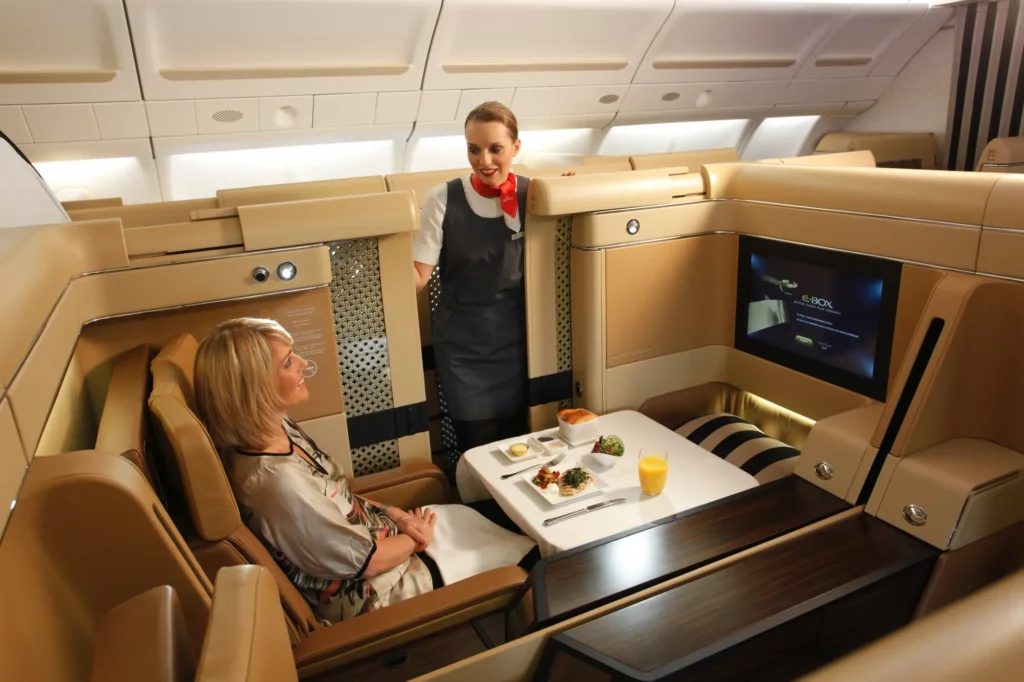
Long-haul flying places unique physical and mental demands on cabin crew, particularly on aircraft that remain airborne for more than half a day. On the Airbus A380, those demands are addressed through purpose-built crew rest facilities that are integrated into the aircraft’s design rather than improvised around passenger spaces.
These dedicated areas allow airlines to maintain alert, well-rested cabin teams throughout ultra-long-haul operations.
Unlike smaller widebody aircraft, where rest often involves modified seats or curtained sections, the A380 was engineered with crew welfare in mind from the outset.
Its sheer size enables airlines to schedule structured rest cycles without disrupting passenger service or compromising safety coverage across multiple cabins.
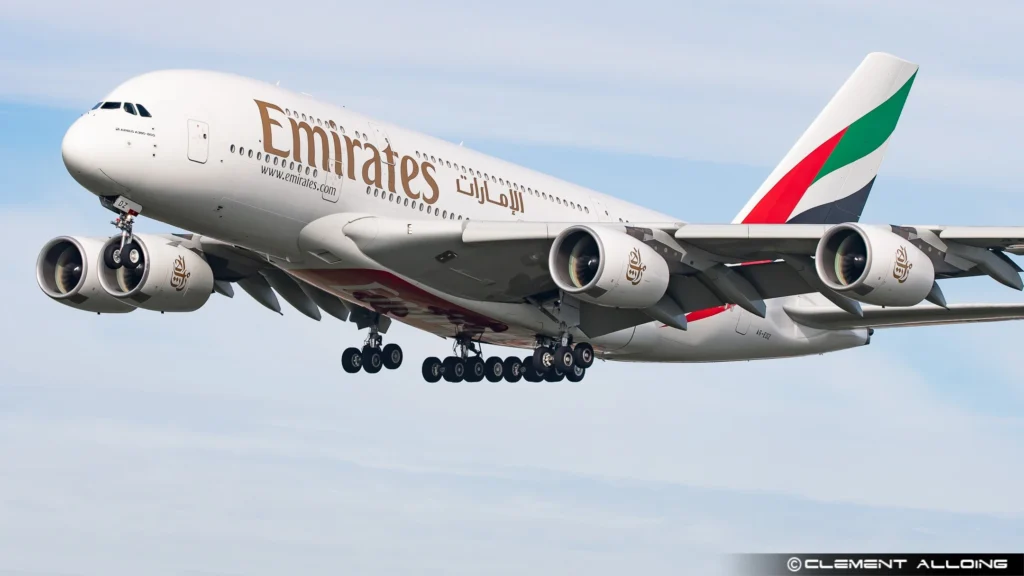
Airbus A380 Crew Rest Area
The Airbus A380 effectively operates with more than just its two visible passenger decks. Hidden within the airframe is a crew-only rest level, most commonly positioned below the main deck. This area is inaccessible to passengers and entirely separated from the noise and activity of the working cabin.
Housing the rest area below deck serves several purposes. It shields off-duty crew from passenger movement, galley operations, and cabin announcements, while also allowing airlines to preserve valuable seating space on the main decks.
On flights carrying more than 400 passengers, cabin staffing can exceed 20 crew members, making staggered rest periods essential rather than optional.
Airbus designed the A380 to support extended flight times of up to 17 hours. Without a dedicated rest infrastructure, sustaining service quality and emergency readiness over such durations would be difficult.
The crew rest compartment, therefore, forms part of the aircraft’s overall safety framework, not a comfort-driven add-on.
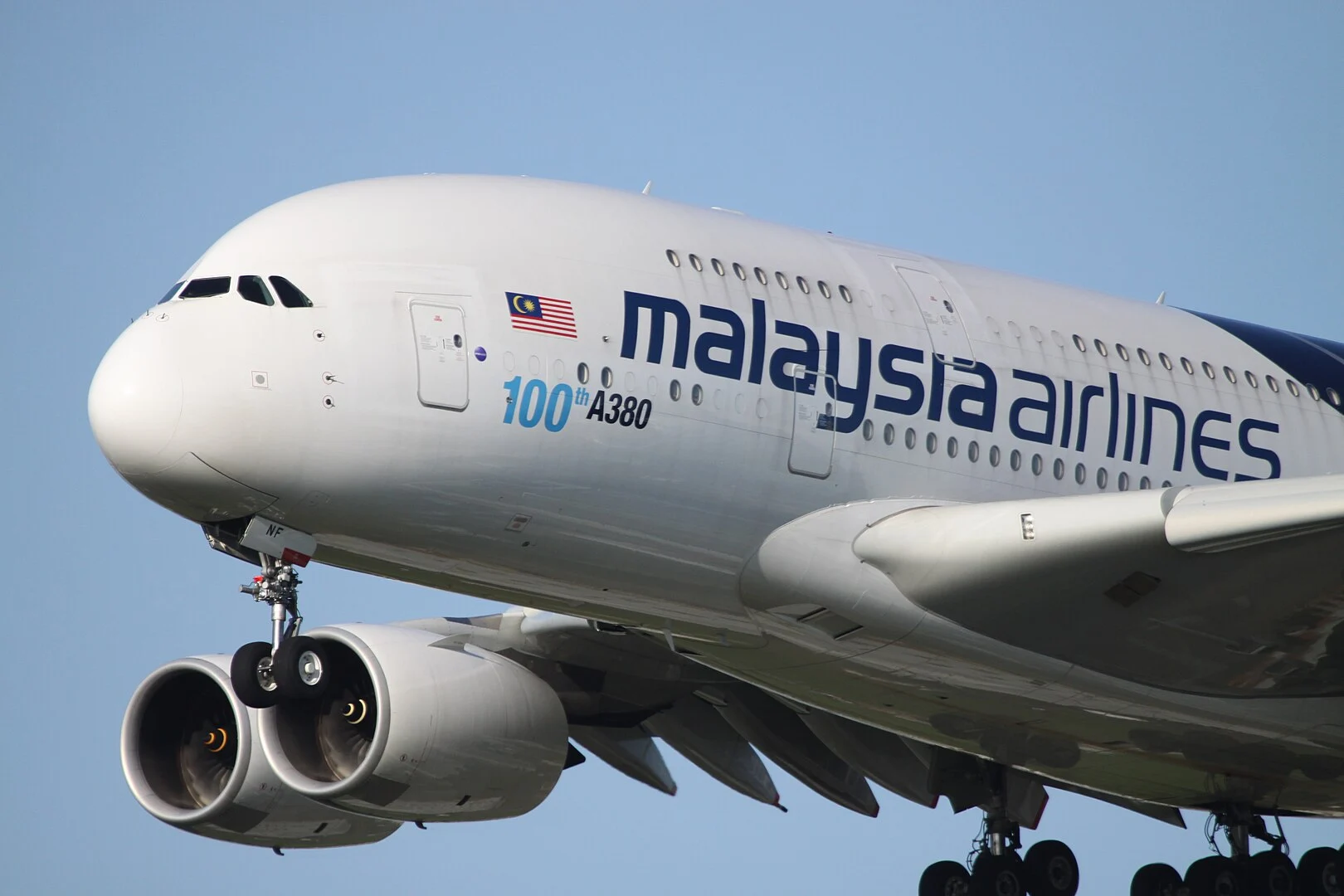
Access Without Disruption
Crew access to the rest area is deliberately understated. From the passenger cabin, the entrance typically appears as a standard service door, often located near a staircase within the economy section. Its discreet design prevents congestion and keeps the space protected from unauthorized entry.
Behind the door, a narrow staircase leads down to the rest compartment. Most A380s are equipped with a 12-bunk configuration, which occupies space that could otherwise be used for cargo.
This trade-off has historically limited the aircraft’s appeal for freight-heavy operators, but it remains essential for long-haul passenger missions.
Redundancy is built into the layout. Emergency escape provisions exist for off-duty crew, ensuring access even if the primary entry becomes unusable.
These details underline how the rest area is treated as a critical operational zone rather than a secondary facility.
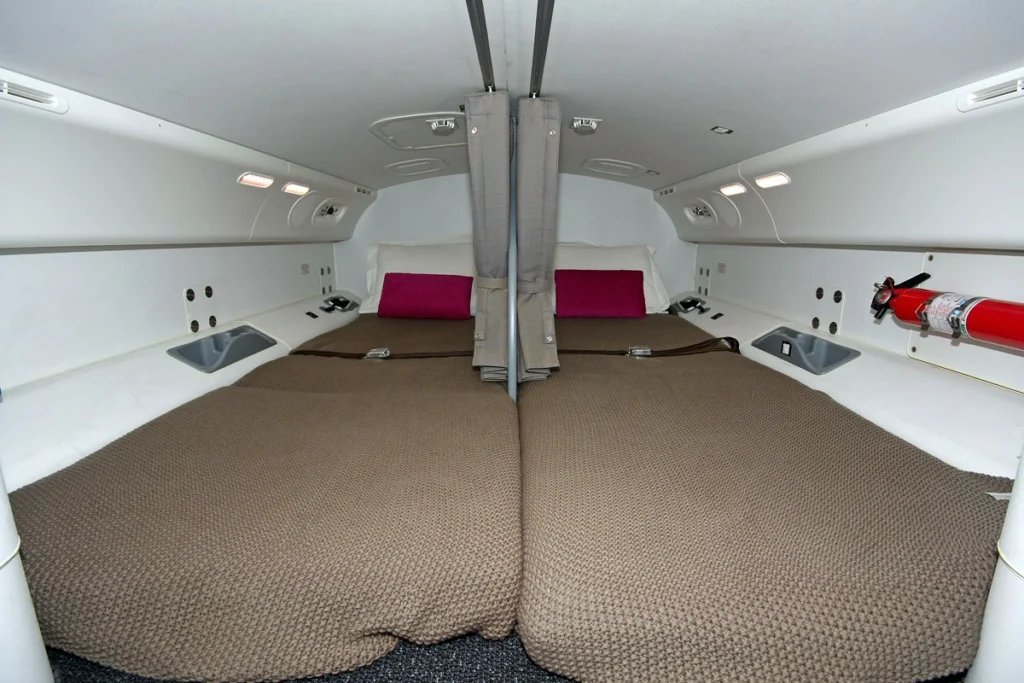
Inside The Crew Bunk Area
The atmosphere inside the crew rest compartment contrasts sharply with the open feel of the A380’s passenger cabins. The space is compact, windowless, and intentionally minimal. Each bunk is designed for one purpose: effective sleep.
Crew members are provided with flat sleeping surfaces, individual lighting, ventilation, and privacy curtains.
Storage hooks, mirrors, and charging points help manage personal items during rest periods. Safety equipment, including oxygen masks, intercoms, and seatbelt indicators, remains integrated throughout the compartment.
While social media often labels these spaces as cramped, functionality takes precedence over aesthetics. For a fatigued crew member mid-rotation, the ability to lie flat in a quiet, temperature-controlled environment significantly improves recovery compared to upright rest.
Separate Rest For Pilots
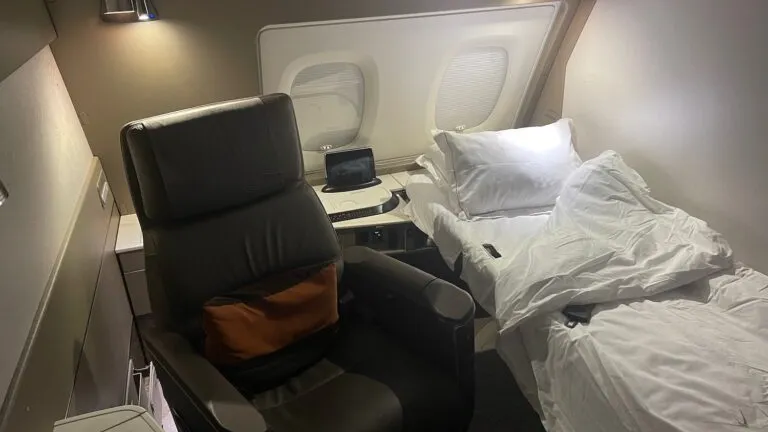
On the Airbus A380, cabin crew and flight crew do not share rest facilities. Pilots typically have a dedicated rest area located near the cockpit, designed to support deeper, uninterrupted rest before returning to flight duties.
These spaces often include greater headroom and seating rather than stacked bunks.
Aircraft configuration flexibility allows airlines to adjust these layouts. Some operators have relocated pilot rest areas below deck to reconfigure premium passenger amenities.
This adaptability enables airlines to align internal spaces with staffing strategies and product priorities without compromising rest requirements.
Rest As A Scheduling System
The physical bunk room represents only one component of crew rest on the A380. Equally important is how airlines choreograph duty rotations. Pre-flight briefings assign cabin zones and responsibilities so that crew handovers occur seamlessly once cruising altitude is reached.
Rest periods are carefully timed to ensure continuous service coverage. Depending on flight length and airline policy, cabin crew may receive rest blocks ranging from four to six hours.
Throughout these rotations, responsibilities such as call bell monitoring and passenger follow-ups are clearly transferred between teams.
This structured approach ensures that no section of the cabin is left unsupported, even as crew members cycle through rest periods. By the time the aircraft begins its descent, refreshed staff are back on duty, capable of responding effectively to any situation.
https://commons.wikimedia.org/wiki/File:A7-APF_A380_Qatar_(34010862996).jpg
Bottom Line
The Airbus A380’s crew rest design reflects a broader philosophy: long-haul safety and service quality depend on human performance as much as engineering.
By embedding dedicated rest spaces into the aircraft, Airbus enabled airlines to operate ultra-long-haul routes without exhausting their crews.
For passengers, these hidden compartments remain largely invisible.
For cabin crew and pilots, they make the A380 one of the most workable aircraft in commercial aviation, ensuring that those responsible for safety and service are rested when it matters most.
Stay tuned with us. Further, follow us on social media for the latest updates.
Join us on Telegram Group for the Latest Aviation Updates. Subsequently, follow us on Google News


