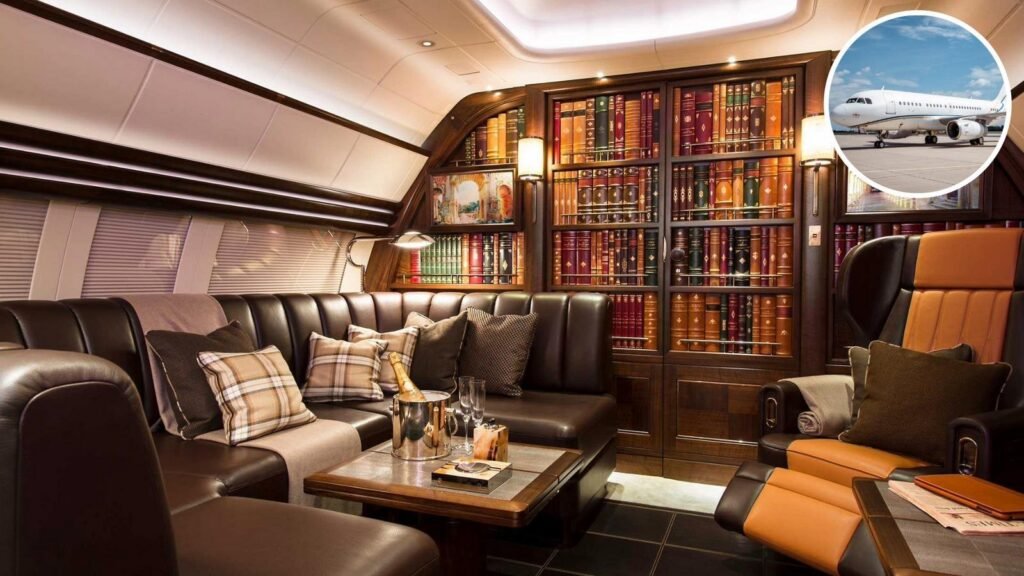
Private jets usually chase the same idea of modern luxury, clean surfaces, pale colors, and technology left deliberately on display. Atlas takes a very different path. It is a privately commissioned Airbus ACJ319 interior that reimagines the aircraft as a flying gentleman’s lounge rather than a piece of business aviation. Designed by Winch Design, the jet feels closer to an old private club or a discreet hotel salon than anything normally associated with flying at 35,000 feet.
The overriding idea is simple but radical: make the aircraft disappear. All visible reminders of aviation are hidden or absorbed into the architecture. Technology, safety signage, and galley elements are carefully concealed so the cabin reads as a sequence of rooms, not a tube. The result is psychological as much as visual. Once seated, it is easy to forget that this is an airplane at all.

The heart of Atlas is the library, and it is here that the interior reveals its confidence. The floor is leather, an almost unheard-of choice in an airliner-class jet. It softens acoustics, adds warmth underfoot, and introduces a subtle, unmistakably masculine scent to the cabin. This is not just indulgence. Leather flooring in an aircraft must meet strict burn, smoke, and toxicity regulations, withstand humidity changes, and pass certification scrutiny. Getting it approved is expensive and complex, which is precisely why it matters. It signals an owner willing to absorb cost and engineering effort purely for atmosphere.
The visual language leans heavily into a vintage smoking-room aesthetic. Dark woods, tufted leather seating, and warm, low lighting create a mood that feels deliberately anachronistic. Smoking itself may be banned, but the romance of the space remains. This is not a jet designed for open-plan entertaining or loud socializing. It is built for quiet conversations and controlled access.

Atlas also hides one of its most theatrical features in plain sight. In the most 007 fashion, the aft bookshelf in the library is not a wall but a concealed door. Pull the correct book or mechanism, and it opens into the master suite, keeping the owner’s private quarters completely secret from guests. The trick is psychological. The bookshelf makes the library feel like the rear of the aircraft, while the true private space remains visually erased. Inside the suite is a proper bed for full overnight rest, along with a sofa for guests who want privacy without going to sleep.

The choice of aircraft matters. A typical ACJ319 offers more than 5,300 cubic feet of cabin volume and is usually configured for eight to nineteen VIP passengers with separate lounge, dining, and bedroom areas. New ACJ319s in the pre-neo era were priced roughly between $73 million and $92 million, depending on specification. VIP completion or major refurbishment typically adds another $10-30 million dollars, with ultra-luxury interiors pushing far higher. Studies of bespoke A319 interiors show that leather and finish work alone can approach $24 million, with extreme projects nearing $100 million once fully completed and certified.

Given Atlas’s three-year design cycle, bespoke joinery, leather floors, and blue-chip design pedigree, it realistically sits in the upper half of that completion range, with an all-in program cost close to or above $100 million when new.

This jet was not built for a tech billionaire chasing minimalism. Its design language suggests old money, or an Anglophile owner who values privacy, tradition, and narrative over novelty. Atlas does not try to impress everyone. It is designed to disappear for those who matter, and that restraint is exactly what makes it so powerful.


