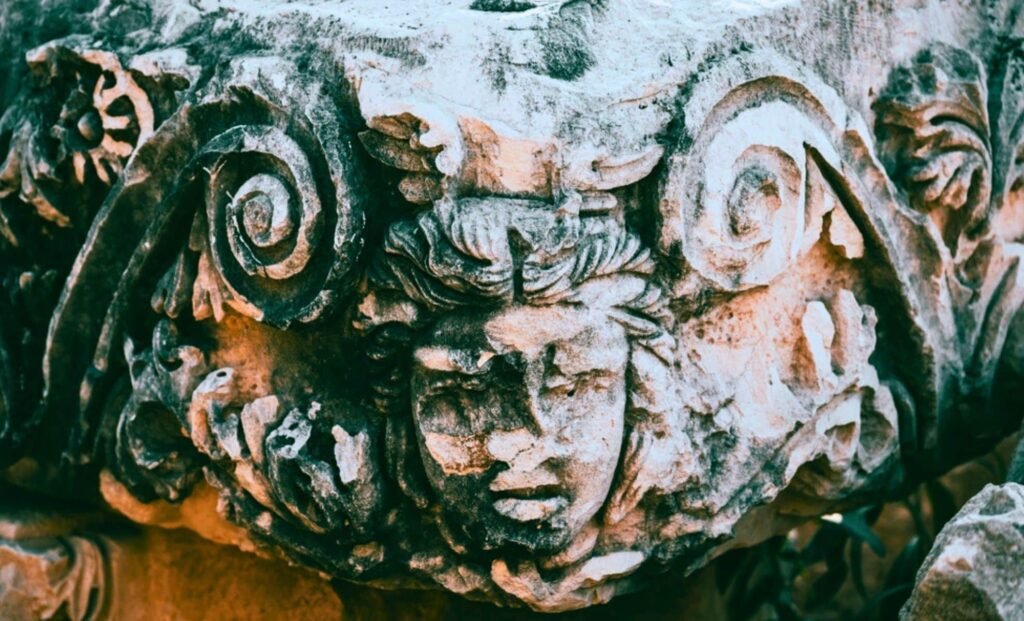
In international cultural policy circles, few issues remain as persistently contentious as the rightful ownership of ancient Greek artefacts. For decades, the focus has been on high-profile museum holdings, such as the Parthenon Sculptures housed at the British Museum, while smaller, privately held items have typically drawn less scrutiny.
Occasionally, however, a minor object surfaces that challenges assumptions about both provenance and preservation. One such case recently emerged in Chile, drawing the attention of Greek heritage authorities and prompting a detailed archaeological assessment.
At first glance, the marble fragment in question appeared to fit within a familiar narrative: a relic taken abroad mid-century, resting quietly on a private shelf for decades, returned amid growing calls for restitution. But initial impressions didn’t hold.
After formal analysis, Greek officials determined the piece did not belong to the Parthenon at all, but to a far older structure that predates it by nearly a century.
Artefact Reclassified After Voluntary Return
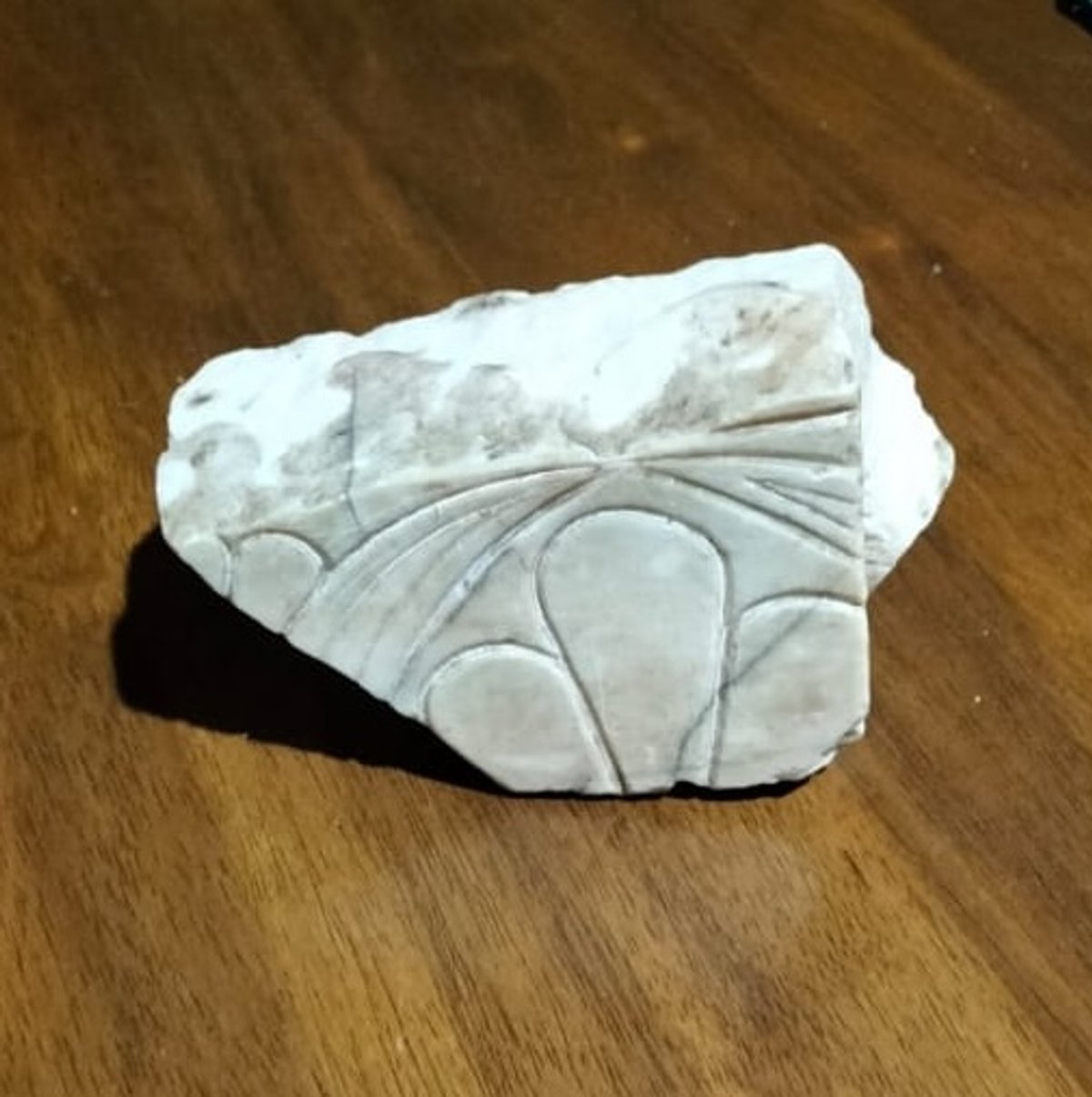
According to a statement from the Greek Ministry of Culture, the marble fragment, weighing just over a kilogram and carved with a lotus flower motif, is now believed to have come from the Hekatompedon, a sixth-century BCE temple located on the Acropolis of Athens. Built around 570 BCE, the Hekatompedon is considered the Acropolis’ earliest monumental temple and was largely dismantled by the time the Parthenon was constructed in the fifth century BCE.
:focal(758x505:759x506)/https://tf-cmsv2-smithsonianmag-media.s3.amazonaws.com/filer_public/5f/e2/5fe29976-e8e8-4ffe-aae3-604a3a327821/6.jpeg)
The object had been in the possession of Enrico Tosti-Croce, a retired engineer in Chile who inherited it from his father, Gaetano Tosti-Croce, an Italian naval officer. Gaetano had reportedly removed the fragment during a 1930 visit to Athens with the Italian Navy and kept it as an ornamental souvenir after emigrating to Viña del Mar, Chile.
Prompted by ongoing news coverage of Greece’s campaign to reclaim antiquities, Tosti-Croce contacted the Greek Embassy in Santiago in January. He submitted photographs and documentation of the artefact, and in March, delivered it to embassy officials.

Months later, a letter from Olympia Vikatou, Director of the Greek Archaeological Service, confirmed the fragment was likely part of a gutter or cistern from the Hekatompedon, which featured decorative architectural elements such as alternating palmettes and lotus designs. Vikatou’s name appears in official listings of the Greek Ephorate of Antiquities.
“It turned out the piece wasn’t from the Parthenon, but from an even older temple,” Tosti-Croce told The Art Newspaper.
Shifting Focus in the Parthenon Marbles Debate
The reclassification of the Chilean fragment comes amid renewed international debate over the Parthenon Marbles, also known as the Elgin Marbles, currently held in London. The sculptures were removed in the early 1800s by Thomas Bruce, 7th Earl of Elgin, while Greece was under Ottoman rule. Since the 1980s, Greek governments have repeatedly petitioned for their return.
In 2022, Culture Minister Lina Mendoni described the original removal as “a blatant act of serial theft,” stating that Elgin acted “without real legal permission to do so,” as reported by The Guardian.
The British Museum’s official position maintains that the sculptures were acquired legally and preserved in accordance with the standards of the time. While formal repatriation has not occurred, the museum has participated in limited dialogues about potential loans or cultural partnerships.
Meanwhile, smaller-scale returns like the Tosti-Croce fragment offer an alternate path, less dependent on institutional negotiations and more rooted in individual agency.
Theodosios Theos, Deputy Chief of Mission at the Greek Embassy in Chile, said the return “can be an example of honour and courage for other citizens in Chile or abroad to do the same,” according to El País.
/https://tf-cmsv2-smithsonianmag-media.s3.amazonaws.com/filer_public/56/3d/563d881e-c68b-4e17-a9d4-840eb49725d6/lioness-hekatompedon.jpg)
Visual comparisons with verified Hekatompedon artefacts, including a lion devouring a calf and serpent fragments, further support the marble’s revised classification. Additional historical context is available via the Acropolis Museum’s entry on the temple.
Understated Object, Oversized Implications
While not as prominent as the Parthenon itself, the Hekatompedon represents a critical phase in archaic Greek architecture. Its surviving elements provide insight into early Athenian temple design and religious practice, preceding the classical forms more commonly preserved in major collections.
The return of the marble fragment adds to a limited but growing set of known materials from the temple. It also raises questions about how many similar objects may remain in private homes or lesser-known collections worldwide, either unrecognised or misidentified.
According to UNESCO’s World Heritage Centre, the Acropolis of Athens is not only an iconic site of ancient architecture, but also a benchmark for ongoing dialogue around the protection of cultural property and historic restitution.
Authorities have not indicated whether further investigations are underway related to the Hekatompedon. There is also no public information on whether the fragment will be displayed or studied further in Greece.