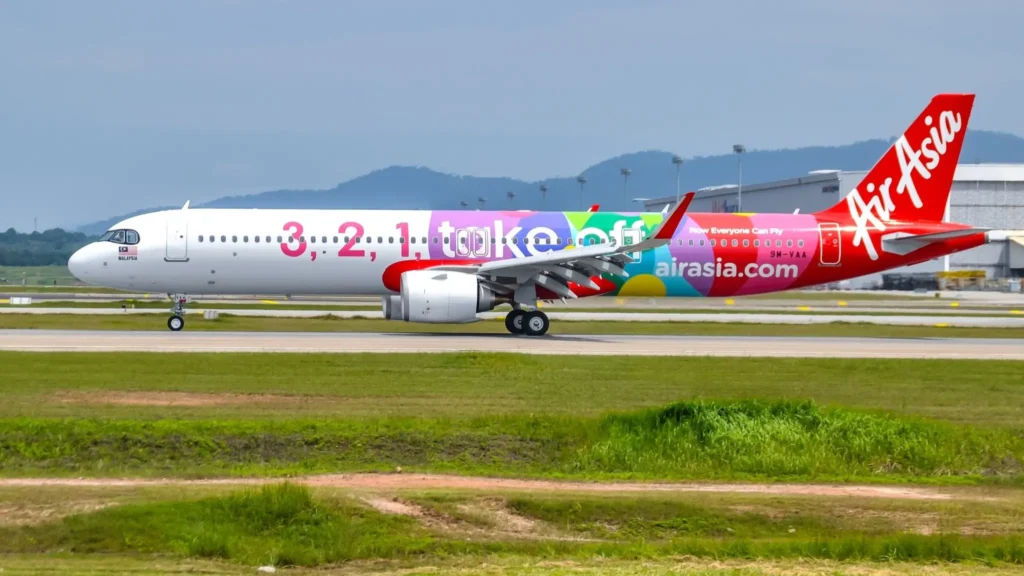
PARIS- European planemaker Airbus is close to securing a major aircraft order from AirAsia, marking a potential shift in the airline’s fleet strategy toward smaller narrowbody jets.
The proposed deal could involve around 100 A220 aircraft, with options for additional units, as AirAsia advances its operational turnaround plans.

AirAsia Eyes Airbus A220s
The discussions center on the Airbus A220, a jet positioned for regional and short-haul routes with improved fuel efficiency and range flexibility. If finalized, this would be AirAsia’s first order for aircraft in the A220 category, expanding beyond its long-standing focus on the A320 family, Reuters reported.
Industry sources indicate the agreement may also include options for about 50 additional aircraft. An announcement could come soon, though both Airbus and AirAsia have declined to confirm details publicly. AirAsia stated it has no announcements to make at this time.
Talks around a high-density, 160-seat version of the A220 emerged ahead of the previous Paris Airshow. The variant would align with AirAsia’s low-cost model by increasing seat capacity while maintaining operating efficiency.
Brazilian manufacturer Embraer has also been in discussions with AirAsia, aiming to challenge Airbus’ dominant position within the airline’s fleet. Despite this competition, Airbus has renewed efforts to close the A220 deal, according to recent reporting.
Existing Airbus Commitments and Fleet Growth
AirAsia remains one of Airbus’ largest customers, with more than 350 A320 family aircraft already on order. In July, the airline added 50 A321XLR jets to support longer-range routes.
AirAsia co-founder Tony Fernandes previously stated that the airline was ready to introduce smaller aircraft to serve new destinations and strengthen regional connectivity. This position was reinforced by Deputy Group CEO Farouk Kamal, who confirmed ongoing discussions with manufacturers as the airline evaluates up to 150 additional aircraft.
AirAsia’s growth plans follow a challenging period caused by pandemic travel restrictions, which led Malaysia’s stock exchange to classify its parent company, Capital A, as financially distressed under PN17 status.
Fernandes, who also serves as CEO of Capital A, recently confirmed the group has completed its PN17 regularisation plan and is now working toward financial recovery. A restructuring that consolidates all AirAsia-branded aviation businesses under AirAsia X is expected to support cost reduction and operational focus, while Capital A concentrates on restoring financial stability.
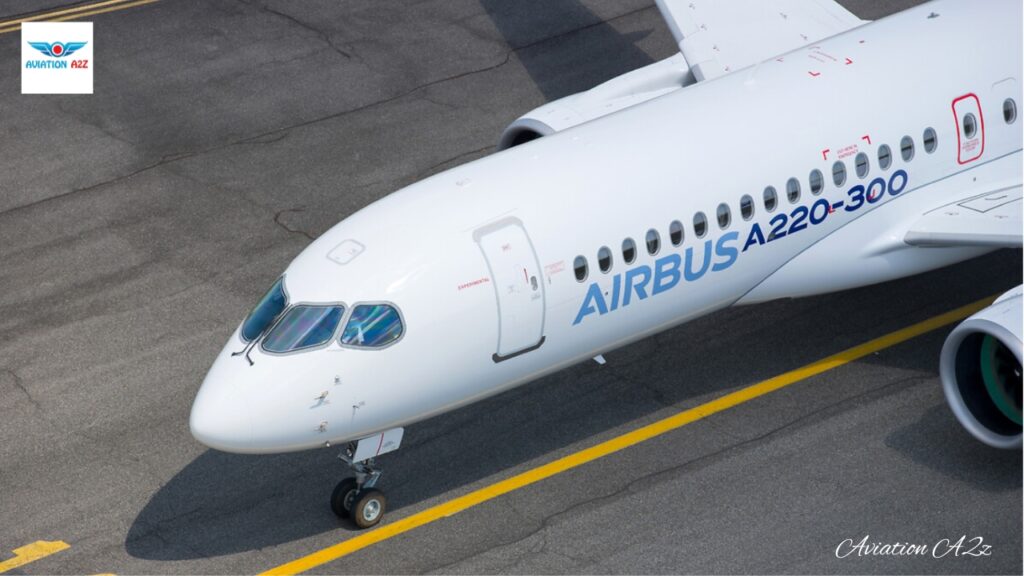
About Airbus A220s
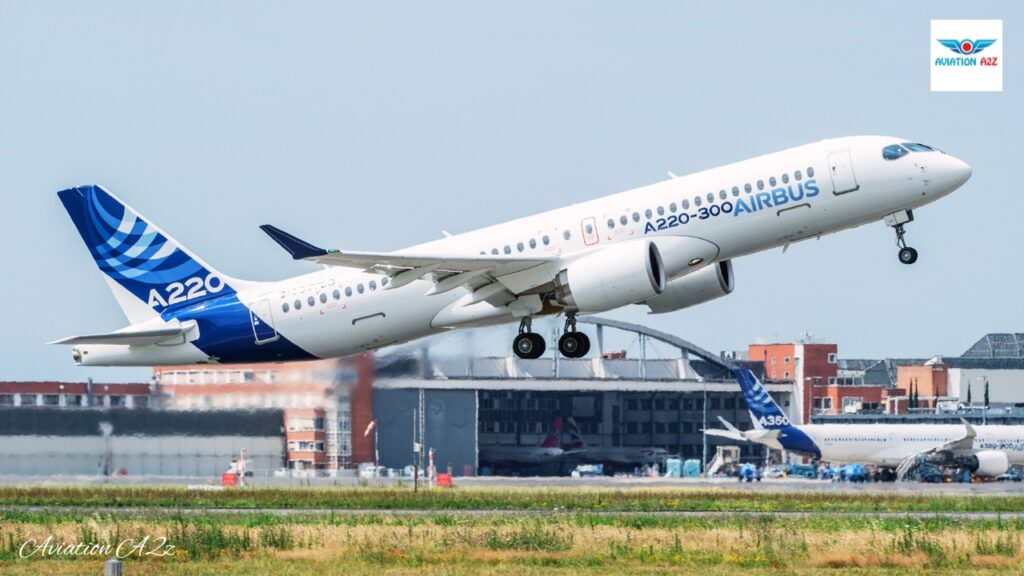
The Airbus A220 represents a new standard in the 100 to 160 seat aircraft category, blending advanced design with passenger-focused comfort. Built as a clean-sheet aircraft, it addresses modern airline needs while improving the travel experience.
With lower emissions, quieter operations, and a spacious cabin, the A220 delivers efficiency without compromise. It serves regional, transcontinental, and select international routes with consistent performance.
The A220 was designed from the ground up to redefine expectations for smaller single-aisle aircraft. Introduced into commercial service in 2016, it combines the economics of a regional jet with the comfort and capability of a larger narrowbody aircraft.
Originally launched by Bombardier as the C Series in 2008, the program achieved its first flight in September 2013. Airbus became the majority partner in 2018, integrating the aircraft into its global industrial and engineering ecosystem. This transition strengthened production scale, support infrastructure, and long-term development.
Today, the A220 is a core part of Airbus’ single-aisle portfolio. It supports routes ranging from short regional sectors to flights of up to 3,600 nautical miles, offering airlines flexibility across diverse networks.
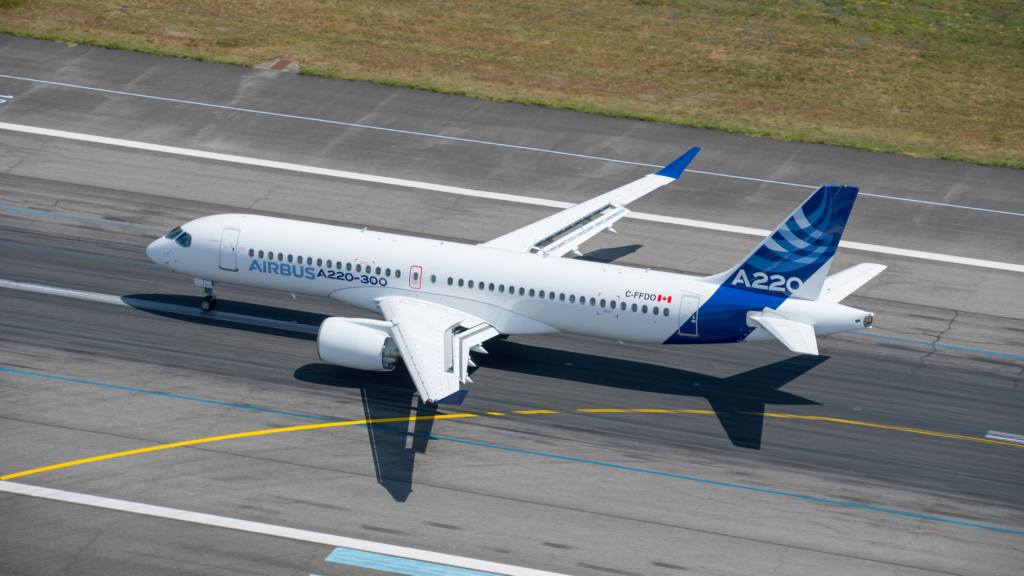
A220 Program Growth and Service Record
Since entry into service, the A220 fleet has accumulated more than 3 million flight hours. It operates on over 1,800 routes connecting more than 480 destinations worldwide. Airlines value their fuel efficiency and reliability, while passengers consistently rate their cabin comfort and quietness highly.
The aircraft maintains approximately 99.0 percent operational reliability based on a three-month rolling average. This performance reinforces its role as a dependable asset for modern fleets.
The Mirabel production site in Canada reflects the program’s growth. What began with around 50 staff in 2008 has expanded to roughly 4,000 employees today, supporting large-scale manufacturing and continuous improvement.
Aircraft Variants and Performance Capabilities
The A220 Family includes two passenger variants with a common pilot type rating, allowing airlines to optimize crew flexibility.
- A220-100
Capacity: 100 to 120 passengers
Range: Up to 3,600 nautical miles - A220-300
Capacity: 120 to 160 passengers
Range: Up to 3,450 nautical miles
A business aviation version is also available. The ACJ TwoTwenty offers over 12 hours of nonstop range and provides more than twice the cabin space of other ultra-long-range business jets in its class.
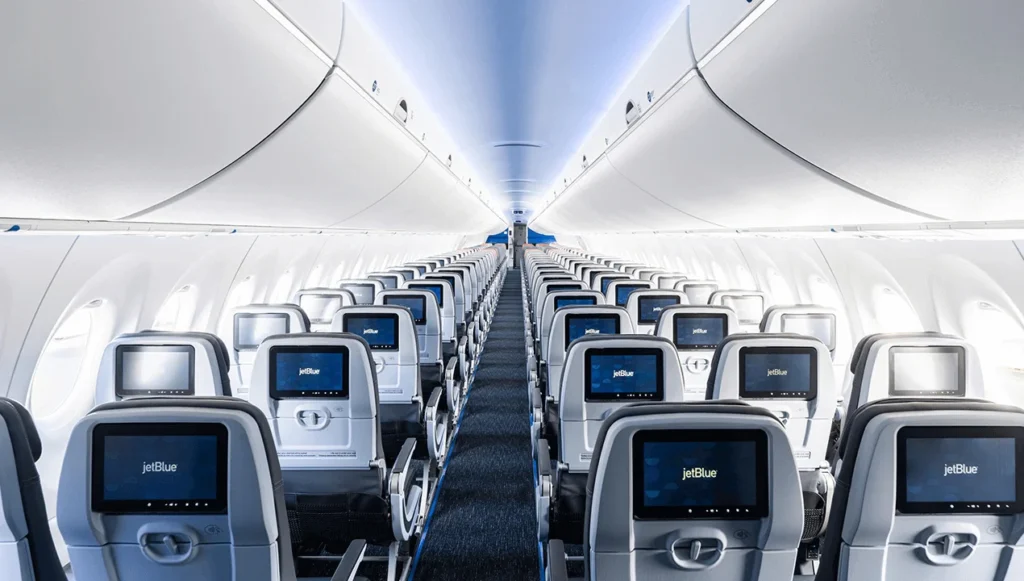
Passenger Experience Inside the A220
The A220 features the Airbus Airspace cabin, designed to maximize comfort and space. It offers the widest economy seats, the highest ceilings, and the largest cabin cross-section in its segment.
A 2-3 seating layout ensures most passengers sit by either a window or an aisle. Extra-large windows allow more natural light, while full-color LED ambient lighting enhances the cabin atmosphere. Overhead bins provide 20 percent more volume, improving boarding efficiency and personal storage.
Noise-dampening materials, advanced climate control, and a lower cabin altitude contribute to reduced fatigue and a calmer onboard environment.
Advanced Engineering and Aircraft Innovation
As a clean-sheet design, the A220 incorporates advanced materials and systems throughout the airframe. Approximately 40 percent of its structure uses advanced materials, including carbon fiber composites and titanium, reducing weight and improving fuel efficiency.
The aluminum-lithium fuselage increases corrosion resistance and structural durability. High-aspect-ratio wings, combined with advanced winglets, reduce drag and improve aerodynamic performance. Fly-by-wire controls allow real-time response to flight conditions, enhancing stability and comfort.
The aircraft is equipped with a modern avionics suite that supports optimized navigation, fuel management, and safety. Integrated systems enable real-time data sharing and predictive maintenance, reducing downtime and operating costs.
The cockpit layout uses intuitive flight systems, sidestick controllers, heads-up displays, and a single type rating across variants, reducing pilot workload and training complexity.
Environmental Performance and Sustainability
The A220 delivers a 25 percent reduction in fuel burn and CO₂ emissions per seat compared to previous-generation aircraft. Its lightweight structure and latest-generation engines also contribute to a noise footprint that is about 50 percent smaller.
The aircraft is certified to operate with up to 50 percent Sustainable Aviation Fuel, with a target of full SAF capability by 2030. These features make it suitable for operations at noise-sensitive and urban airports while supporting airline sustainability goals.
Designed for Long-Term Relevance
The A220 was built with future operations in mind. Its combination of advanced aerodynamics, efficient engines, and modern systems positions it well for evolving regulatory and environmental requirements.
Lower operating costs per seat, estimated at 25 percent less than previous-generation aircraft, allow airlines to operate profitably across a wide range of markets while maintaining high passenger satisfaction.
Stay tuned with us. Further, follow us on social media for the latest updates.
Join us on Telegram Group for the Latest Aviation Updates. Subsequently, follow us on Google News


