LONDON- Las Vegas was the departure point of a serious but controlled aviation incident involving a British Airways (BA) long-haul aircraft earlier this week. The Airbus A350-1000 was operating a scheduled overnight service from Harry Reid International Airport (LAS) to London Heathrow Airport (LHR) when it experienced a landing gear malfunction shortly after takeoff.
Despite the mechanical failure, the widebody aircraft continued its transatlantic journey and landed safely in the United Kingdom. The event has drawn attention within the aviation sector due to the nature of the failure, the distance flown, and the operational decision-making involved.
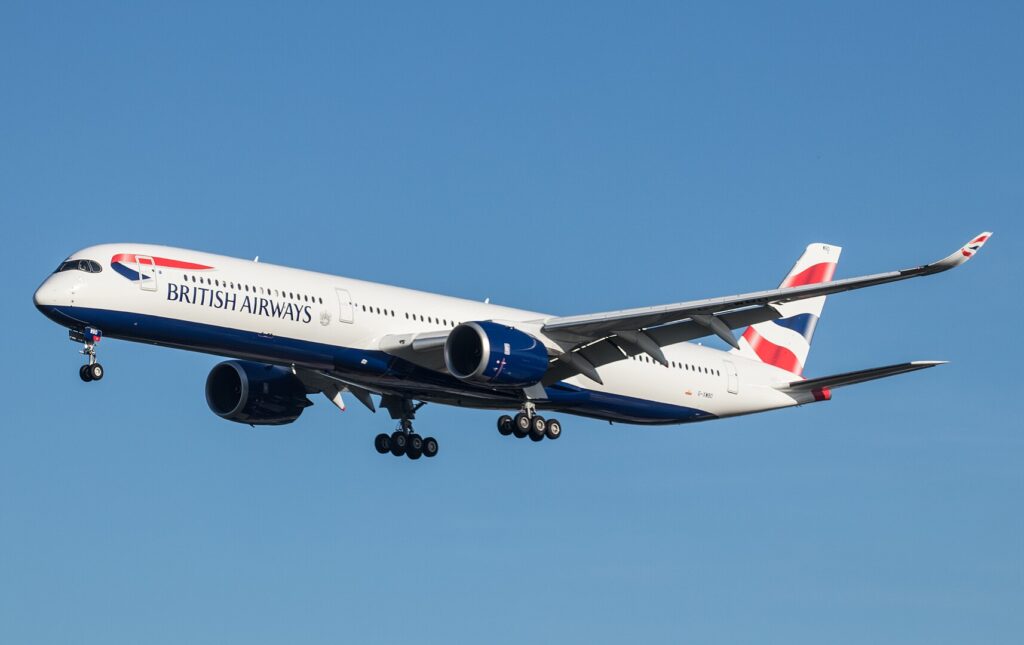
British Airways A350 Losses Wheel
The incident occurred shortly after departure when one wheel from the aircraft’s main landing gear detached during the initial climb.
Video footage captured from the airport perimeter showed visible sparks near the right-side landing gear as the aircraft lifted off, followed by the wheel separating from the assembly.
Flight crew received indications consistent with a landing gear anomaly, but no immediate loss of aircraft controllability.
The Airbus A350-1000 continued climbing normally and stabilized at its planned cruise profile shortly after departure.
Following initial assessments, the flight crew elected to continue toward its destination rather than return to the departure airport.
The aircraft climbed to a cruising altitude of approximately 39,000 feet and proceeded eastbound across the Atlantic Ocean on its planned routing.
Operational factors such as aircraft performance, fuel state, and redundancy within the landing gear system likely influenced the decision.
Modern widebody aircraft are designed to tolerate certain landing gear failures, allowing for extended flight under controlled conditions when safety margins remain intact.
ALSO READ: United A321neo Loses Nose Wheel After Violent Landing at Orlando Airport
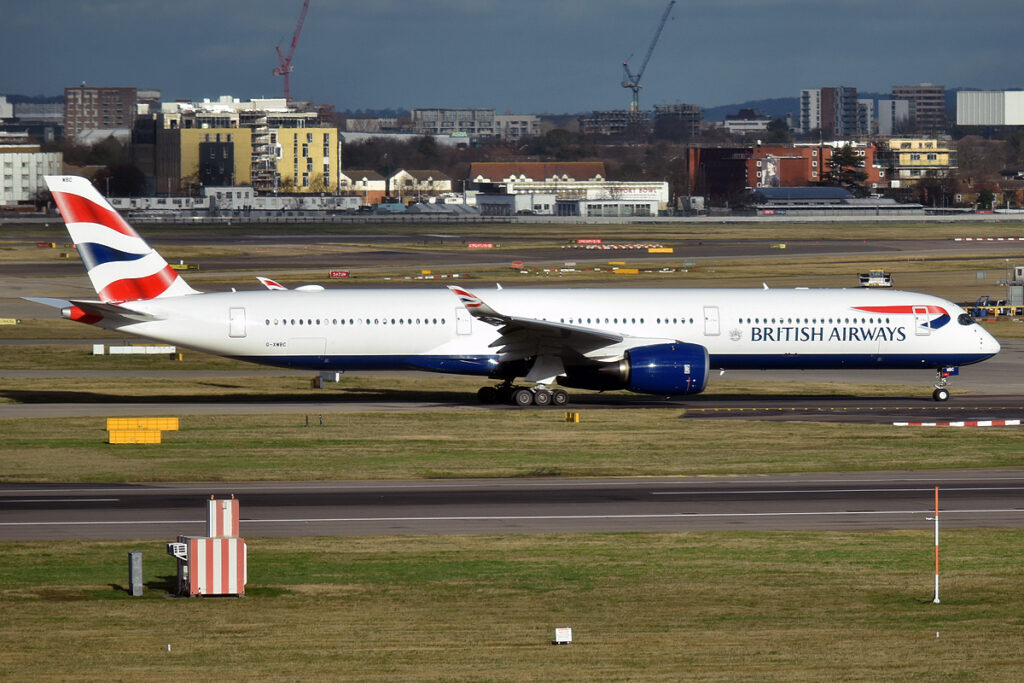
Safe Landing Outcome
After covering a distance of more than 5,200 miles, the aircraft landed safely at London Heathrow.
Emergency services were positioned as a precaution, and the landing was completed without further incident or injury to passengers and crew.
Post-landing inspections confirmed the absence of one landing gear wheel, prompting a technical review and recovery operation.
The aircraft was removed from service for detailed maintenance checks, while aviation authorities and the airline initiated standard internal assessments.
Bottom Line
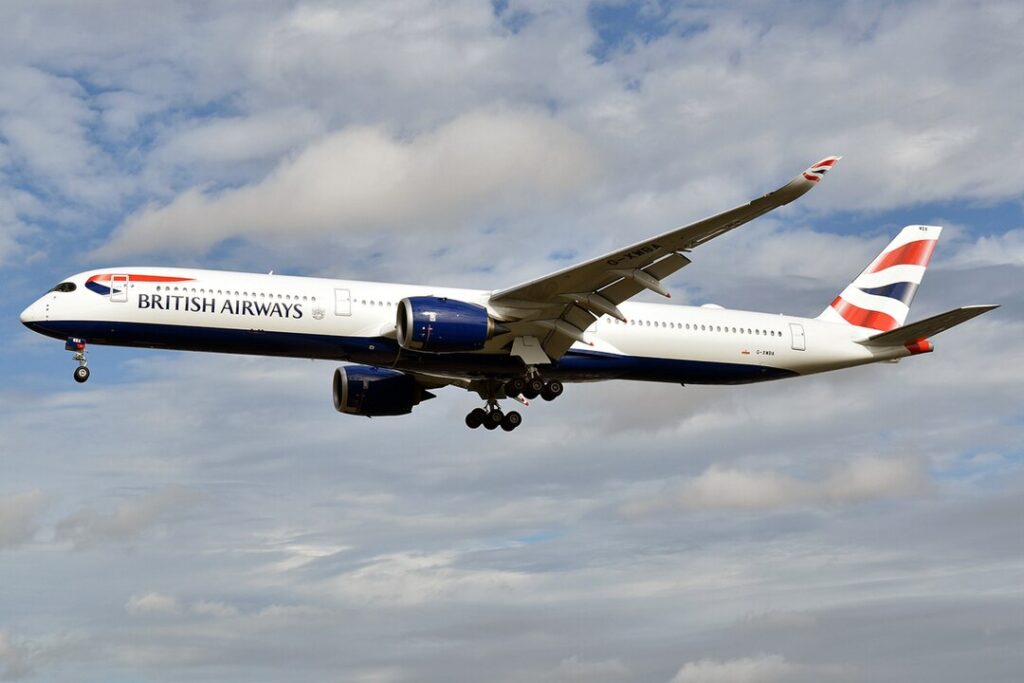
The British Airways Airbus A350-1000 incident highlights the resilience of modern aircraft systems and the complexity of real-time operational decisions.
While the loss of a landing gear wheel is rare, the aircraft’s safe transatlantic flight and landing demonstrate built-in design redundancies and crew training effectiveness.
The event will likely contribute to further scrutiny of maintenance, inspection, and post-departure monitoring procedures across the industry.
Stay tuned with us. Further, follow us on social media for the latest updates.
Join us on Telegram Group for the Latest Aviation Updates. Subsequently, follow us on Google News


