
There’s a fascinating phenomenon happening in commercial aviation, and it’s that flights are getting diverted because passengers are accidentally dropping their laptops. These computers end up in spaces that are not reachable by flight crews, and so the planes turn around out of an abundance of caution. Another one of these events happened just two weeks ago. But what’s going on here? How are passengers somehow dropping laptops from their seats and into voids? The reason why actually makes a ton of sense.
On Thursday, January 22, 2026, United Airlines flight UA748, a Boeing 767-300 with registration N668UA, departed Washington Dulles at around 5:45 pm, bound for Geneva, Switzerland. The flight was supposed to take around seven hours, but unfortunately, the flight never made more than an hour of progress. A passenger accidentally dropped their laptop through a crack in the cabin floor, rendering the device inaccessible. The flight diverted over Maine and then landed at Newark Liberty International Airport a little after 8 pm.


This incident is the third to occur aboard a United Airlines flight since October 2025. All three incidents involved a Boeing 767 widebody airliner, and all three incidents involved a business class passenger inexplicably losing their laptop into the “cargo hold” (it’s not the actual cargo hold, but that’s how it’s been reported) by dropping it into a gap between their seat and the wall. At first, nobody was quite sure how this was possible. However, we finally have an explanation for how it’s possible for someone to drop a laptop into a void aboard a plane, and it actually makes sense.
Fires Are A Big Deal
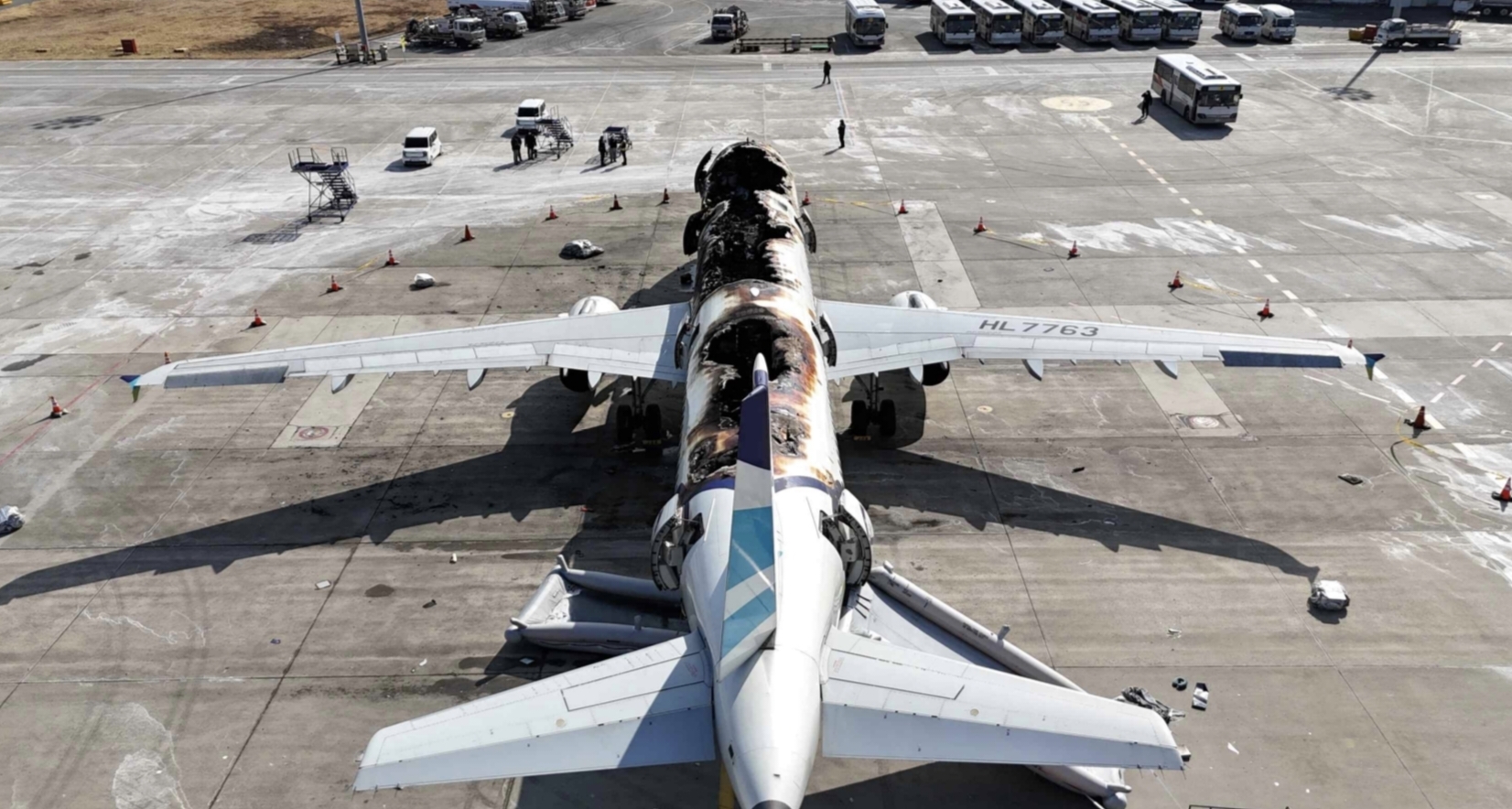
The subject of devices with lithium batteries and commercial aircraft is a serious one. According to the UL Standards & Engagement, statistics from 2024 suggest that there are, on average, two battery thermal runaway events reported onboard a commercial aircraft each week. According to ABC 7 News Amarillo, that represents an increase of 388 percent since 2015.
Fires, in general, can quickly impact the safety of a flight. According to the UK Civil Aviation Authority, on average, flight crews have only 19 minutes to get an aircraft on the ground before an uncontrolled fire becomes non-survivable. Pilots, regardless of whether their steed is a tiny Cessna 172 like the one I fly, or a gargantuan Airbus A380, treat fires with the utmost importance. There are checklists to follow and actions you’re expected to follow through with.

Thankfully, the airline industry is remarkably safe, and while phone batteries, power banks, and vapes going poof is a concern, the trained flight crews aboard these planes have tools to extinguish these fires and get the aircraft on the ground as soon as possible. These crews will extinguish flames from the battery and then place the device into a fire containment bag or a metal trashcan that’s filled with water. Even in one of the worst battery fire incidents in recent memory, Air Busan Flight 391 from January 28, 2025, everyone got off the plane alive, though the plane itself was a total loss. That’s how amazingly safe aviation is.
Unfortunately, the crews can only take control of a situation involving a lithium battery when they have access to that battery. So, if a passenger manages to drop a device into a place that cannot be reached, it’s logical to divert that flight even though the device is most likely just fine. If that device were to get crushed, overheated, or otherwise harmed, pilots don’t want to have a fire burning in a place that can’t be accessed. So, flight crews err on the side of safety and get on the ground.
This is where recent events aboard three United Airlines flights come in.
Passengers Keep Losing Their Laptops In A Weird Place

On Wednesday, October 15, 2025, United Airlines flight UA126, which was operated by Boeing 767-400ER, registration N76054, attempted to fly from Washington Dulles to Rome Fiumicino. The flight took off normally at 10:22 pm, and then, less than an hour into the flight and while on a climb to 31,000 feet, the pilots radioed to air traffic control about a weird problem. Somehow, a passenger was using their laptop, dropped it, and the laptop inexplicably disappeared under the cabin floor.
The ATC audio from that flight is embedded below, where even the pilot on the call seems to express some amazement at what happened:
The ATC also expressed their bewilderment, saying “[T]hat’s a new debrief story, I’ve never heard anything like that before.”
The aircraft landed at Washington Dulles at 12:35 pm, aircraft maintenance removed the laptop, and then the flight took off around three hours later, landing in Rome at 5:26 pm without incident. At the time, I reached out to United Airlines, asking about how this could have happened. The airline never returned my requests for comment. Not even aviation blogs could explain exactly what happened at the time.

Then, it happened again. On November 19, 2025, United Airlines flight UA925, another flight that was operated by a Boeing 767 widebody, had to be diverted because of a laptop somehow falling into a void just above, but not in the cargo hold. That aircraft departed London Heathrow bound for Washington Dulles, but had to divert to Dublin Airport. The aircraft spent a few hours on the ground in Dublin before it was cleared to fly to Washington.
Now, it’s happened for a third time. United Airlines flight UA748 played out just like the other two flights. A transatlantic flight being flown by a Boeing 767 took off without an issue. Then, a passenger in United Polaris Business Class dropped their laptop into a crack between their seat and the wall panel. That laptop then disappeared into the crack, rendering it inaccessible to anyone on the aircraft. Just like in every other instance, the flight diverted, this time to Newark Liberty International Airport, so the laptop could be safely removed.
But how is this happening? How are people in the passenger cabin somehow losing laptops into the area below the passenger cabin?
The Shadow Realm Laptops Disappear Into

We finally have some clarity about how these events happen. The United Polaris Business Class cabin on a Boeing 767 has a weird quirk. There is a small gap between the seat and the sidewall of the aircraft interior. In that gap sits a vent designed to equalize the pressure between the passenger cabin and a cargo hold. This gap is filled with a piece of foam, while the vent has a grate on it. Apparently, some passengers have been using the piece of foam as a place to stow their laptops.
Unfortunately, as at least three passengers have now found out the hard way, it’s possible for a laptop to slip past the foam. Then, if the vent’s grate is not installed or is otherwise knocked out of the way, the laptop can slide into a sort of pit that sits between the cabin floor and a cargo hold. Here’s what the bottom portion of a Polaris seat looks like on a Boeing 767:
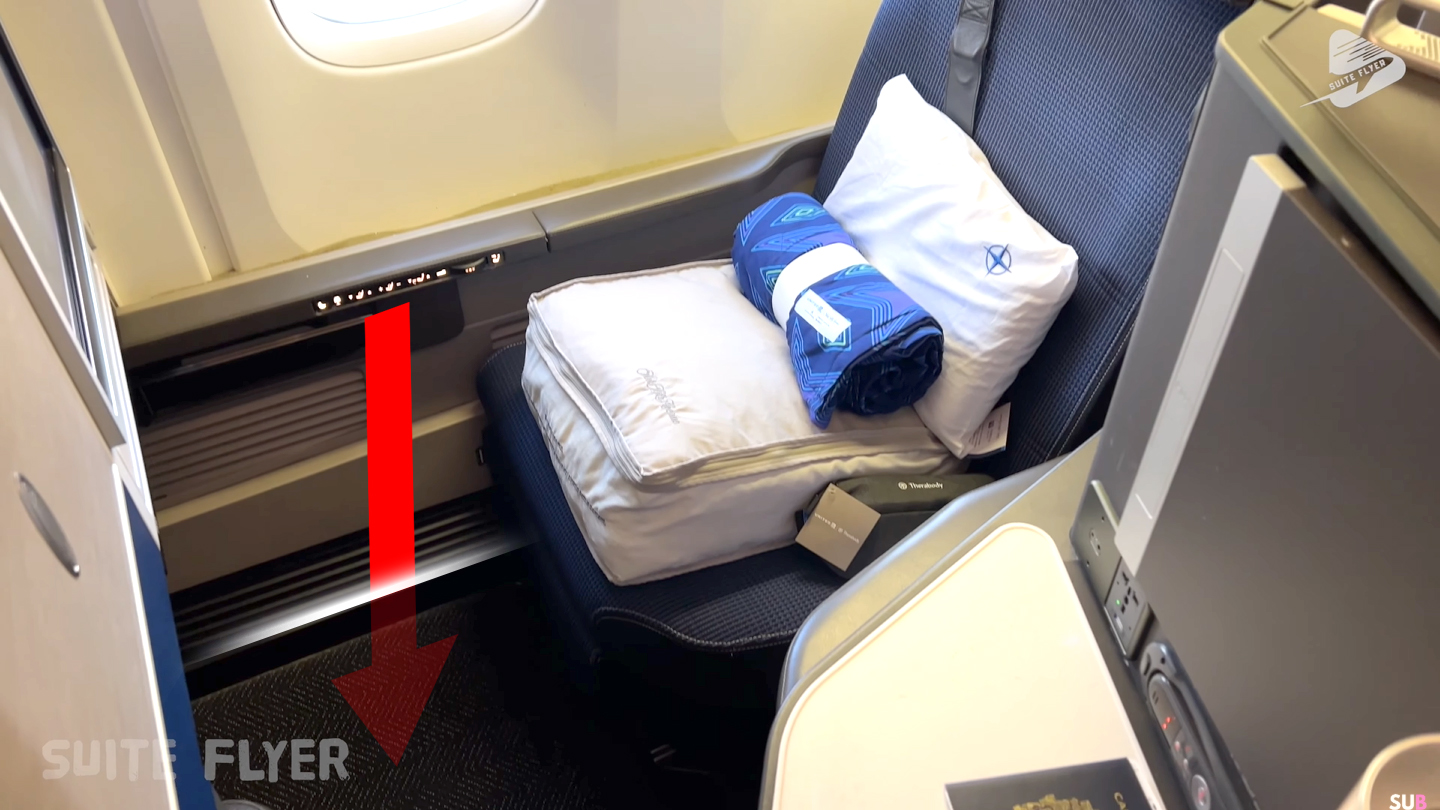
This is a problem because this area is not accessible to the crew, and as the pilot noted in the ATC call from the October incident, the area is not covered by fire suppression equipment. If the laptop were to get crushed or overheated, the crew can’t reach the battery.
Depending on the aircraft type and where the device got stuck, the device might require the aircraft maintenance crew to remove seats and possibly even a wall panel to get to the lost device. Thankfully, as I noted above, the retrieval process and the inspection afterwards usually take only a few hours, so this is a cause for a delay rather than a full flight cancellation, but it’s still an involved and expensive process for the airline. This video tours the tiny sort of studio that you get on United Polaris Business Class on a Boeing 767:
Because of this, United flight crews have reportedly been asking Polaris Business Class passengers to refrain from using the foam blocks beside their seats as shelves.
What’s also interesting is that these three incidents may not be the first time this has happened. United Airlines customers on Reddit claim there have been times in the past when this has happened, and that does make sense. The Polaris interiors have been around for a while. United isn’t alone here. Last year, an Air France Boeing 777 had to divert when a passenger dropped their phone, and it couldn’t be found anywhere in the passenger cabin.
Sadly, even after three of these events happening, we don’t have images of what the side of the Polaris seat or what the pit under the cabin floor looks like.
Flying Remains One Of The Safest Way To Get Around

It’s unclear what United may end up doing to reduce the occurrence of this issue. The good news is that, again, this sort of event is incredibly rare and is unlikely to be anything more than an inconvenience.
There are roughly 45,000 flights per day in America, and in these recent months, only one United flight in October, November, and January had a reported issue with a device falling into an inaccessible crevice. Even the statistic of two battery thermal runaway events a week makes these incidents rather rare compared to the sheer number of flights every single day. That’s great! It’s just another example of how safe flying is, and a great example of how seriously issues are taken in commercial aviation, even if the incident rate is low.
But the next time you’re flying on any aircraft from any airline, think twice before setting your laptop down, make sure it’s not going to get crushed by your seat, or possibly fall into a crack. If anything, you don’t want to be the person to delay a flight for hours. Otherwise, don’t be afraid to thank your flight crews; they’re a huge reason why flying commercial remains one of the safest ways to travel!
Top graphic image: Acroterion – CC BY-SA 4.0



