
What is British Airways’ value proposition on short-haul flights? That’s the question I found myself asking after flying BA from London Heathrow to Malaga, and on a return from Gibraltar.
I’ve flown with BA quite a lot, but this particular experience left me more puzzled than ever as to what kind of airline it is trying to be.
My itinerary was actually booked through oneworld alliance partner American Airlines, and began at New York JFK with an overnight connection at Heathrow before I stepped foot on BA metal.
American was able to check me in for its own leg of the journey, but I was unable to retrieve a boarding pass or even select a seat for my BA flight in part because the BA connection was more than 24 hours out from check-in time.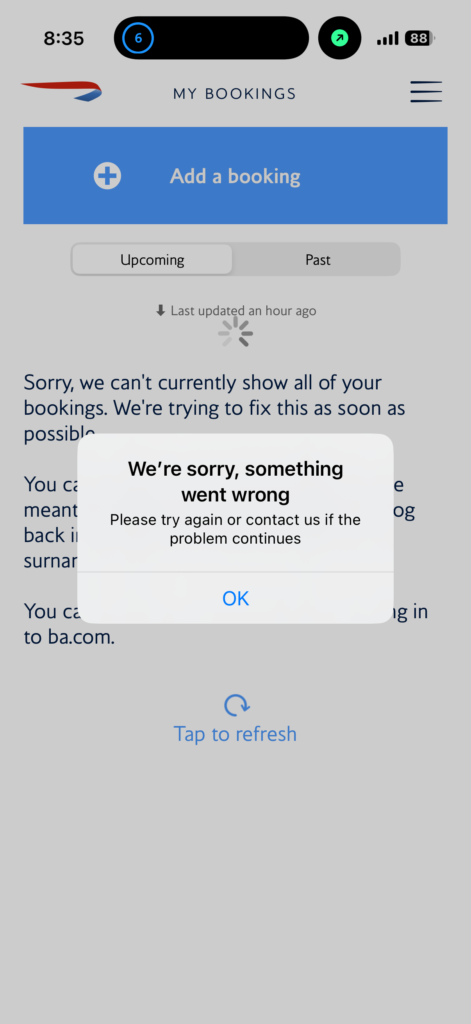
Oddly, even on the day of travel with American, I was unable to check-in or select a seat for my BA flight.
I hadn’t paid the $35-$53 for a seat assignment in advance, but was quite unhappy about not being able to select a seat even within the 24-hour window where it should be free.
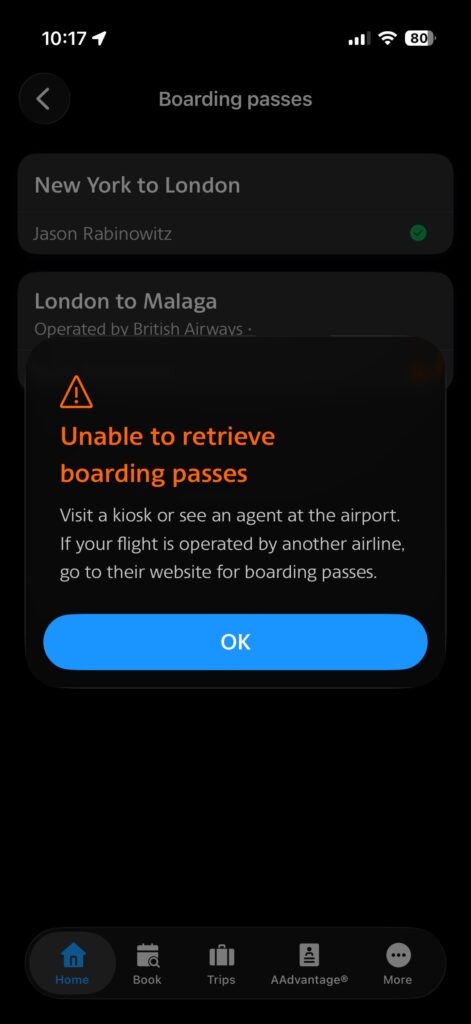
Thankfully, I was able to find a lone BA employee at JFK who was able to both provide me with a boarding pass and assign me one of the few remaining seats towards the front of the aircraft.
Rested and refreshed when I arrived at Heathrow the next morning (as I had flown American’s eastbound daytime flight the day earlier), I proceeded quickly through security and tried to piece together a puzzle concerning the whereabouts of the aircraft operating my flight to Malaga.
The BA app was functionally useless, which alas is my usual experience. More often than not the iOS app won’t even load for me, let alone show me any useful information. I know BA isn’t known for its IT prowess, but its passenger-facing tech is simply not up to the task of powering a modern airline, in my opinion.
I used the iPhone app Flighty to figure out which gate the Airbus A321neo was parked at, but for some reason BA had the flight departing from a nearby bus gate.
A good few minutes past the posted boarding time, passengers were crammed onto buses and driven two gates down to the waiting aircraft parked at a contact gate with a jet bridge attached.
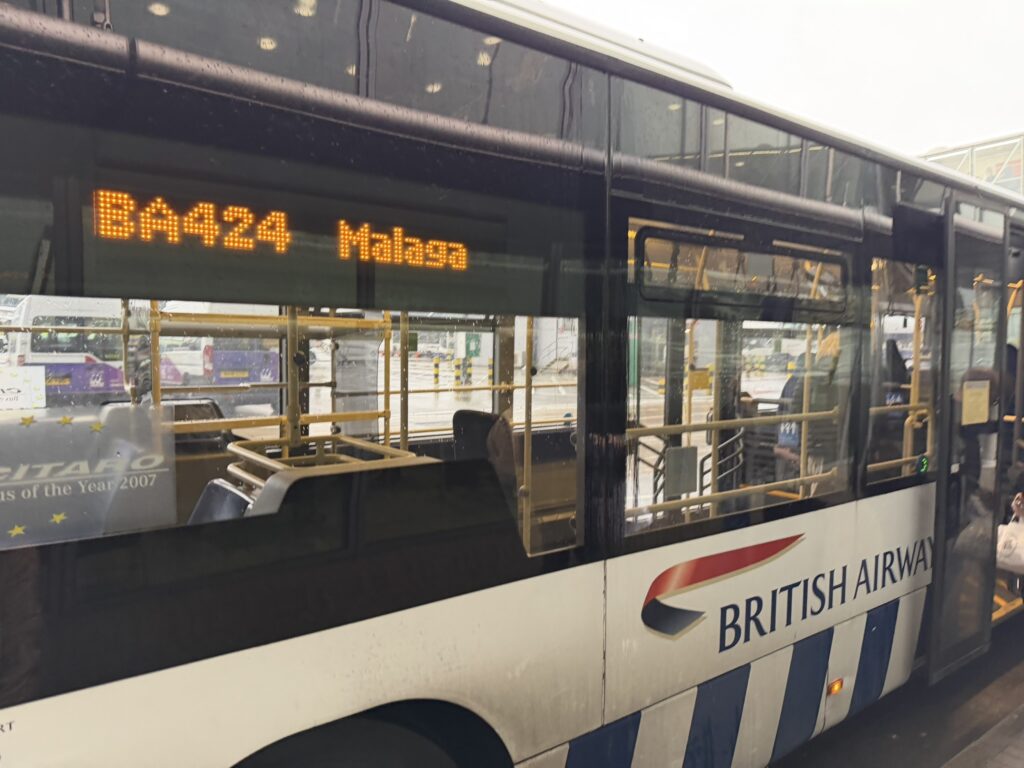
Puzzled by this, I inquired with the cabin crew who were surprised that the ground staff hadn’t explained the situation. The elevator at the gate was out of service, so for accessibility reasons the gate was functionally closed. That didn’t explain how wheelchair passengers were then supposed to board using the air stairs from the ramp. Baffling.
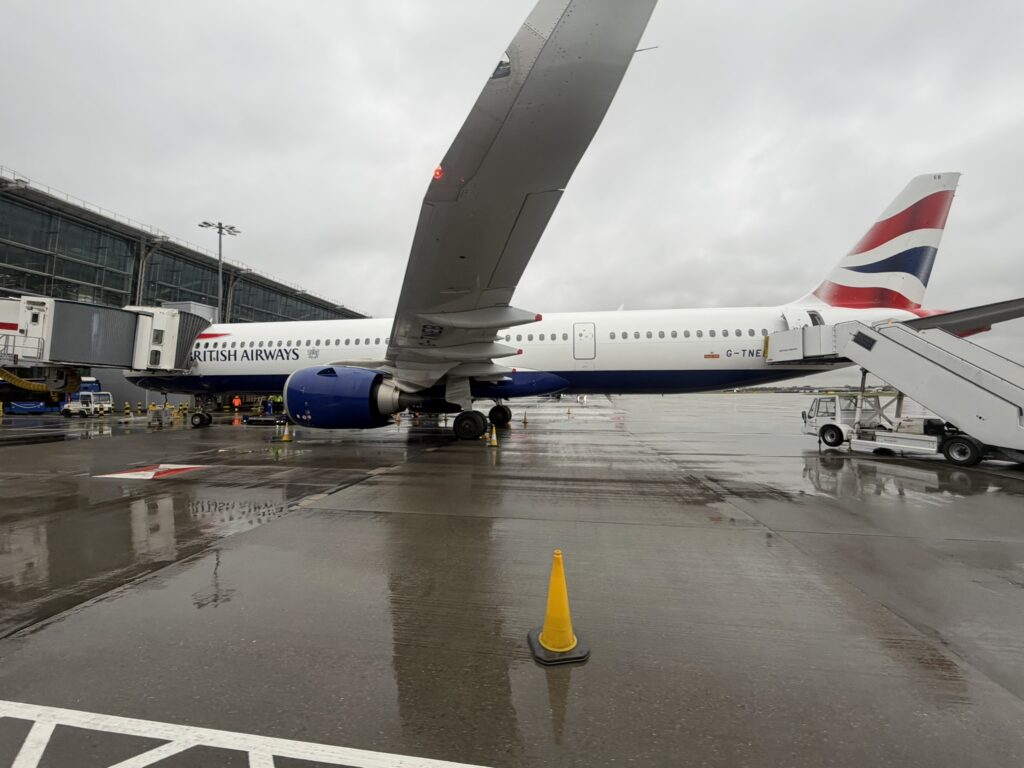
Finally on board the A321neo I settled into my seat in row 19 and was quickly reminded that this particular aircraft was spec’d at a time when passenger comfort apparently wasn’t on the mind of BA’s designers.
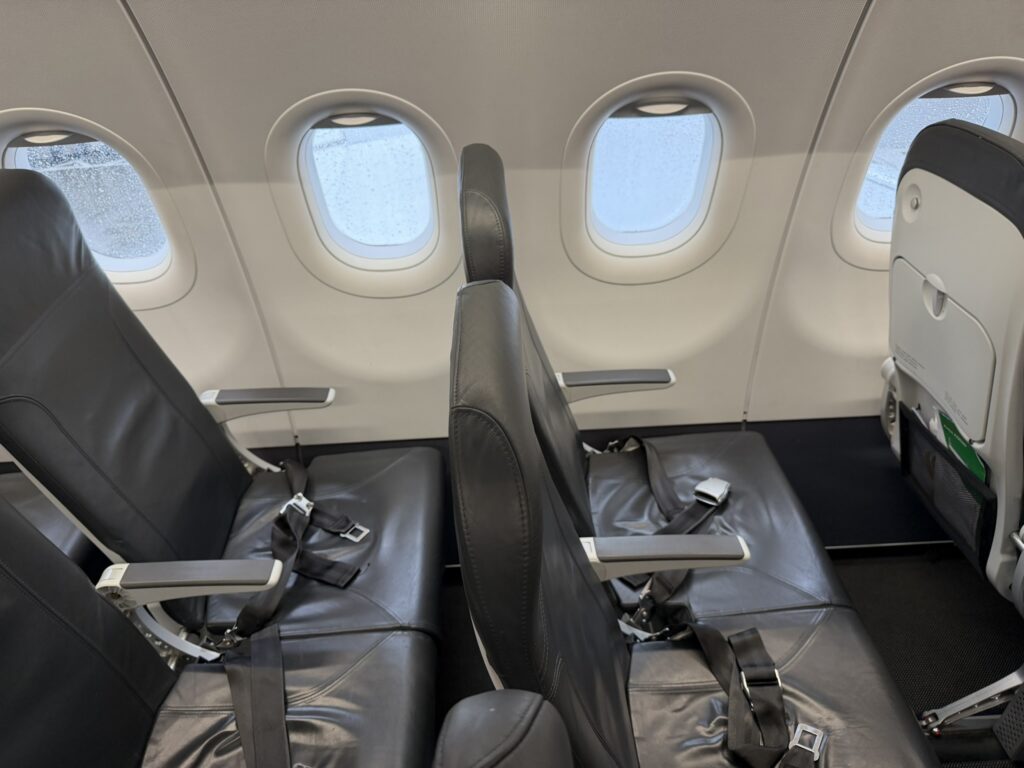
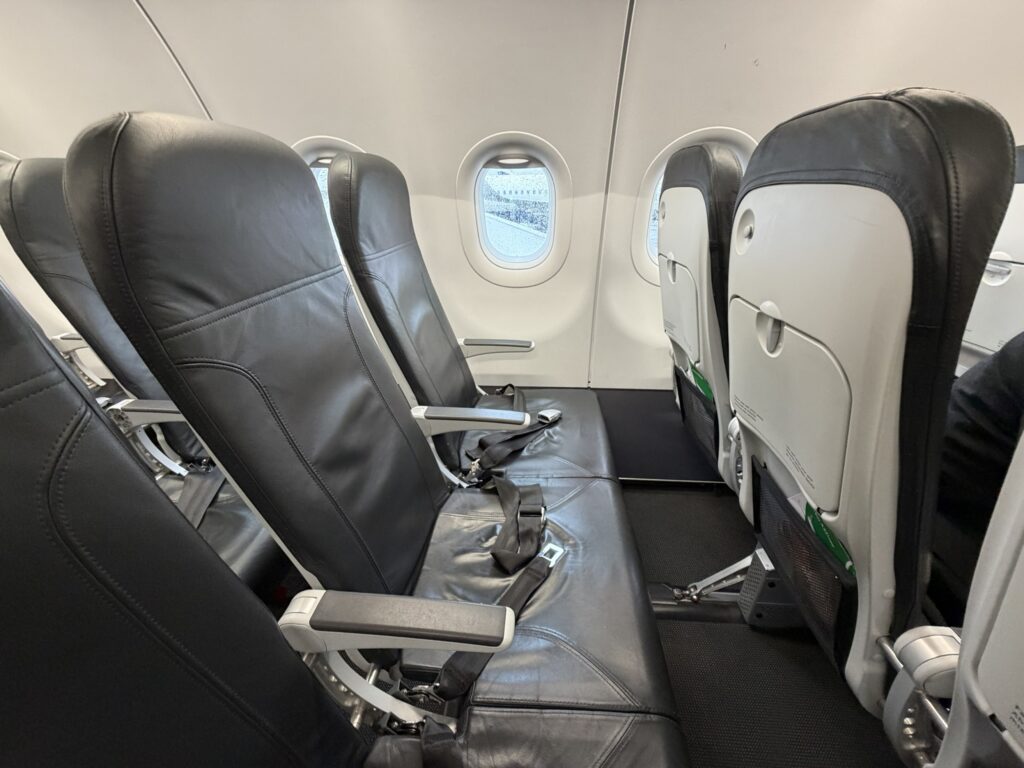
The Recaro economy class seats on board offered little in the way of comfort options. They were only a small step above the most basic ULCC seat, with no movable headrest, personal device holder or recline of any sort. At least a USB-A port was present under the seat.
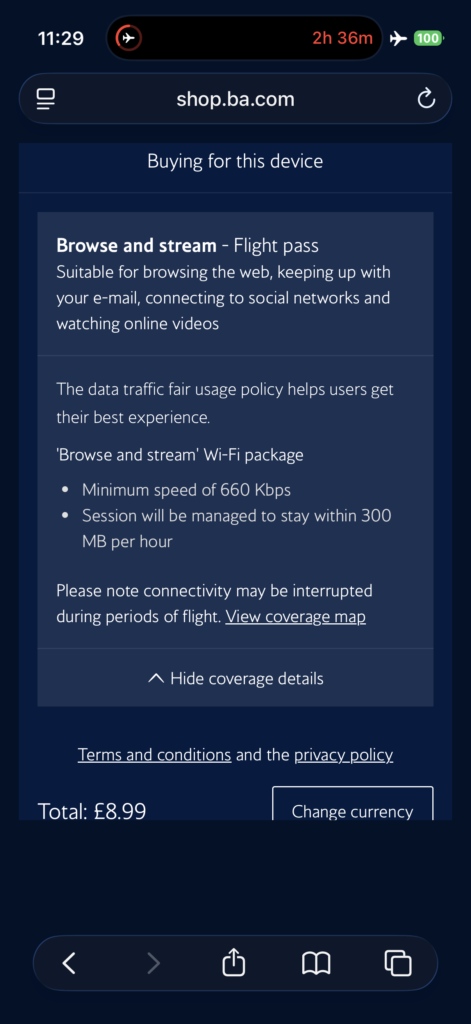
BA’s inflight Wi-Fi portal offered no entertainment options, while the European Aviation Network (EAN)-powered connectivity system offered a full-flight “browse and stream” package for £8.99.
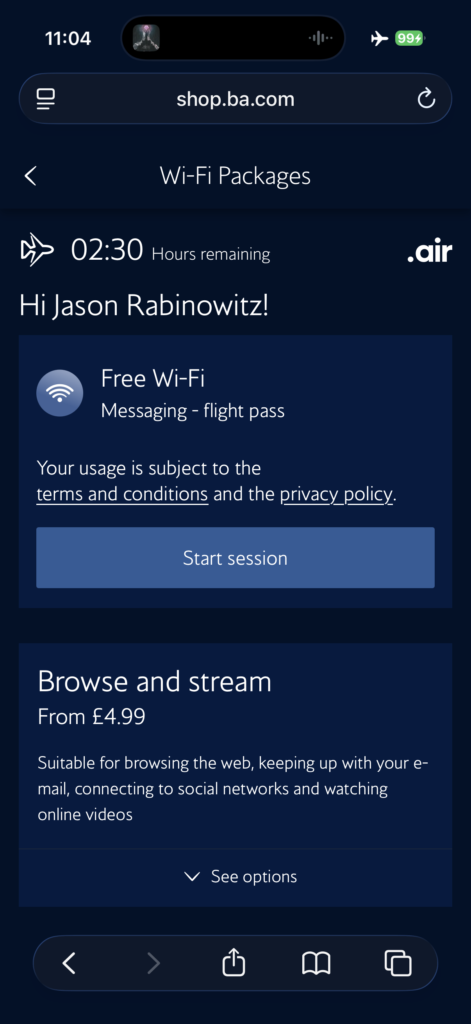
I attempted to use the free messaging option but I was never able to start the session. Every time I logged in and tried to enable messaging I was instead prompted to pay for access. This behavior repeated itself on my return flight. Par for the course of disappointment.
My return flight departed from the delightfully weird British Overseas Territory of Gibraltar. It was fascinating to see how the entire airport came to life for this one afternoon BA departure.
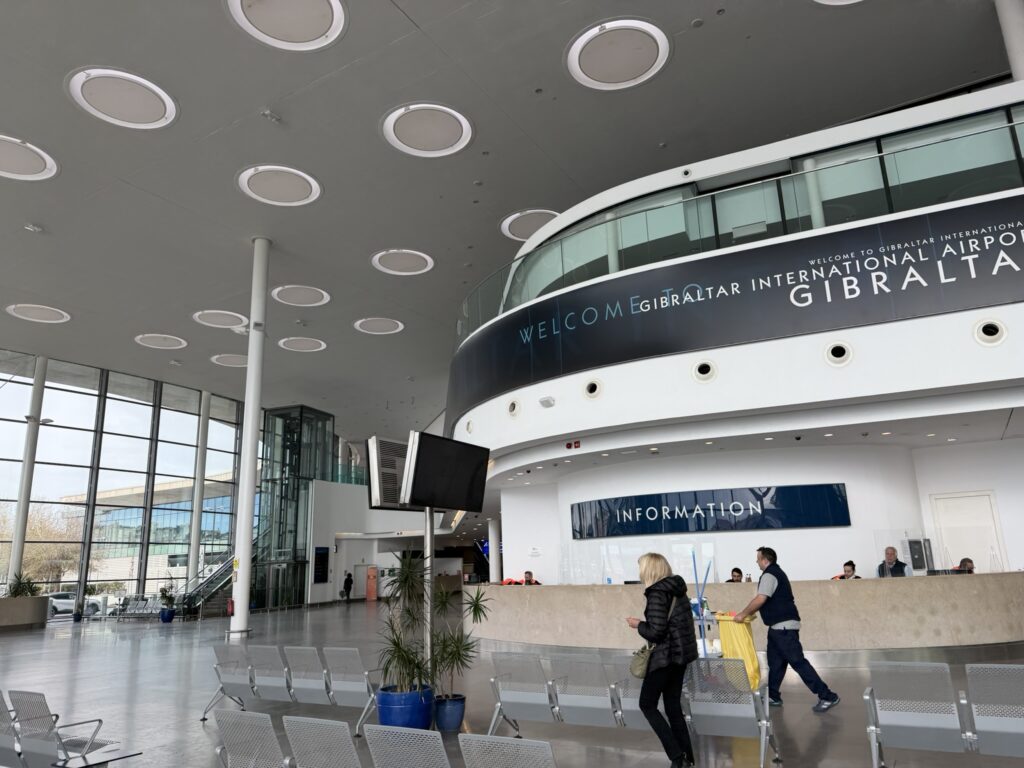
This flight was operated with a much older Airbus A320, and this time I was able to check-in using BA’s app and even select a seat in the first row of economy. I would later regret this decision.
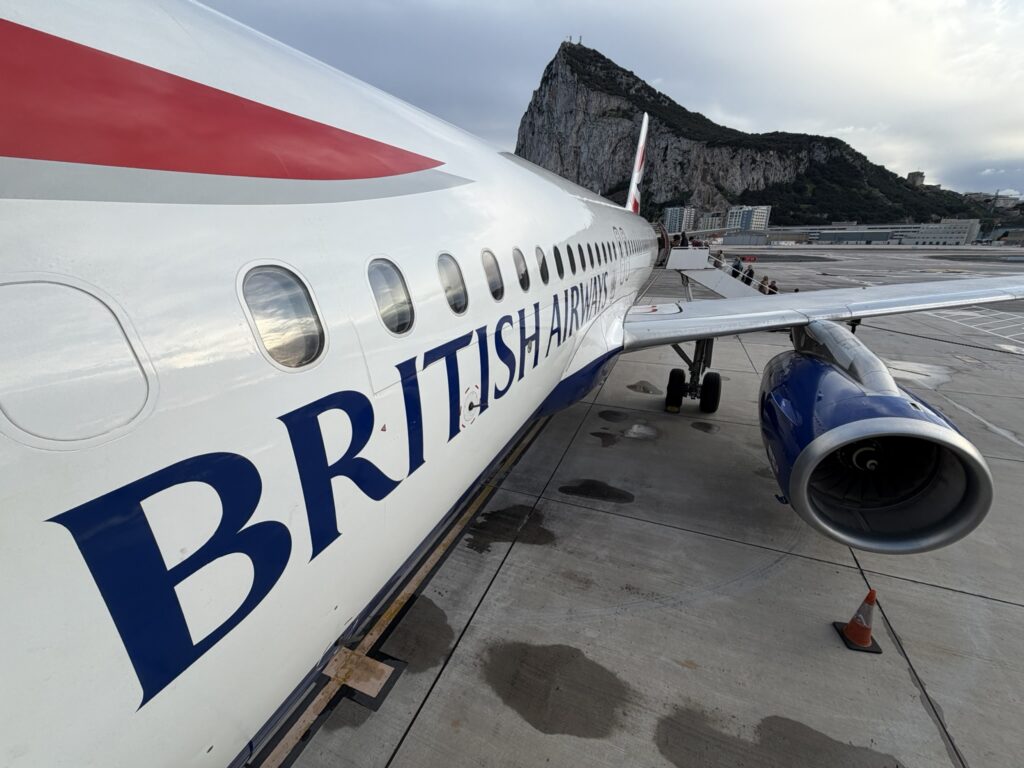
This older aircraft was fitted with the Collins Aerospace Pinnacle seat, complete with actual headrests and the ability to recline. Waiting for me in my seat, however, was a dangling curtain that would later be used to separate the Club Europe and Euro Traveler cabins.
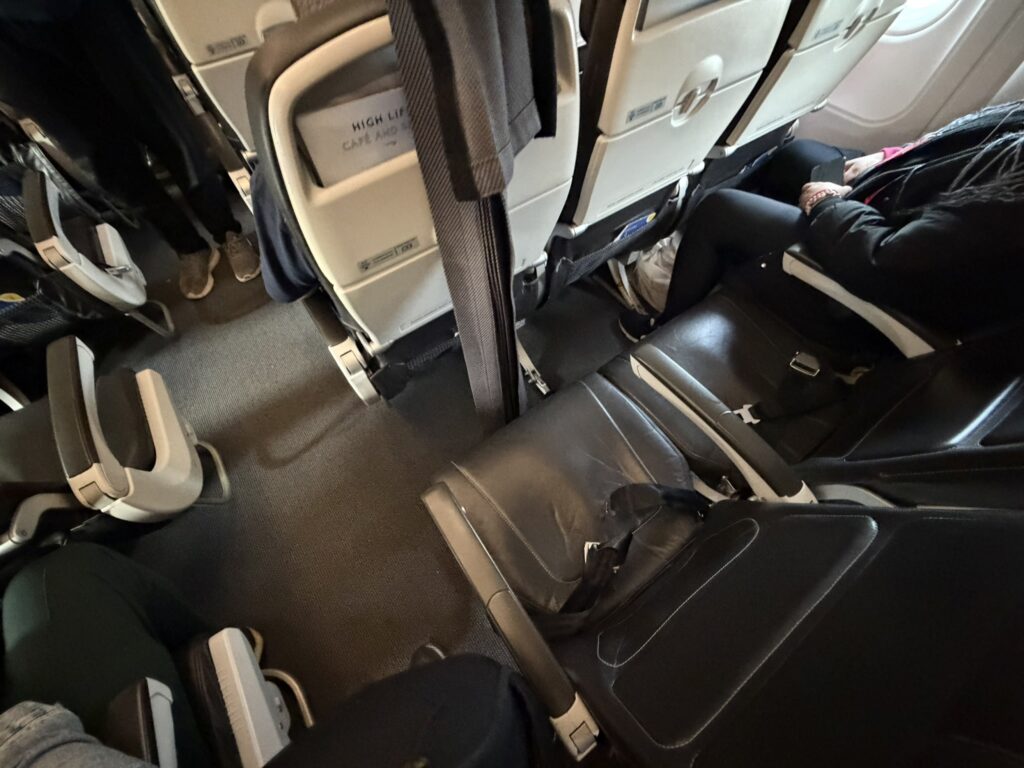
I had to sit with the curtain between my legs and dangling in my face for the duration of boarding, taxi out, takeoff, approach, landing, and taxi in.
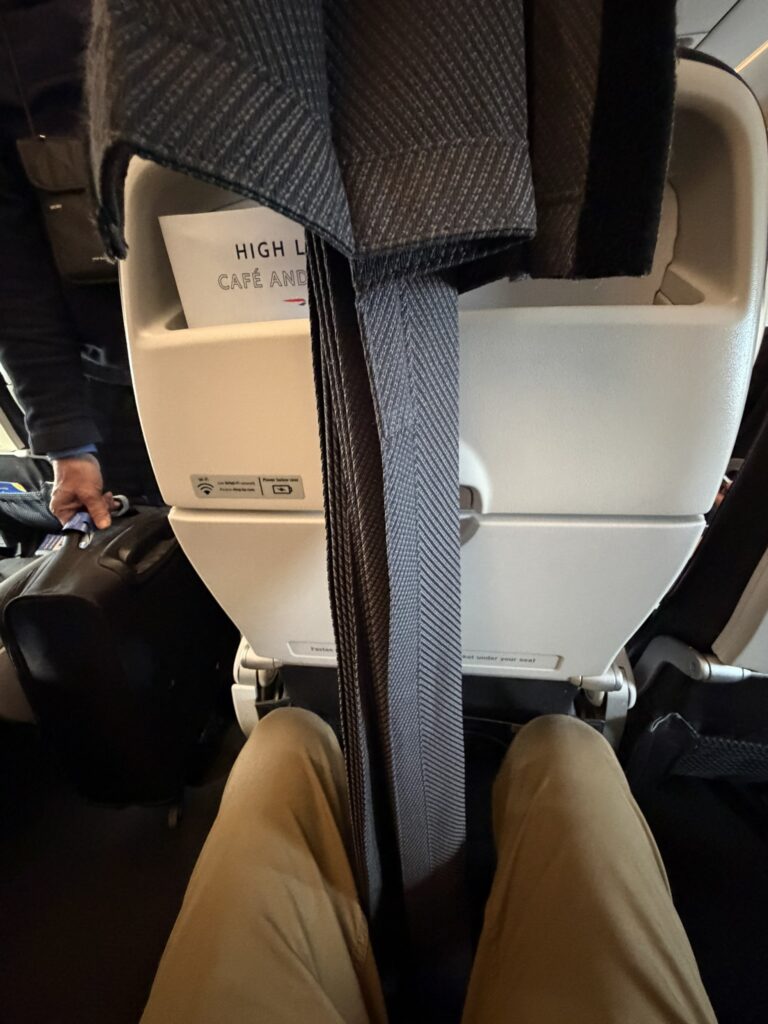
While in flight the curtain was deployed and transformed into quite an imposing wall directly in front of me.
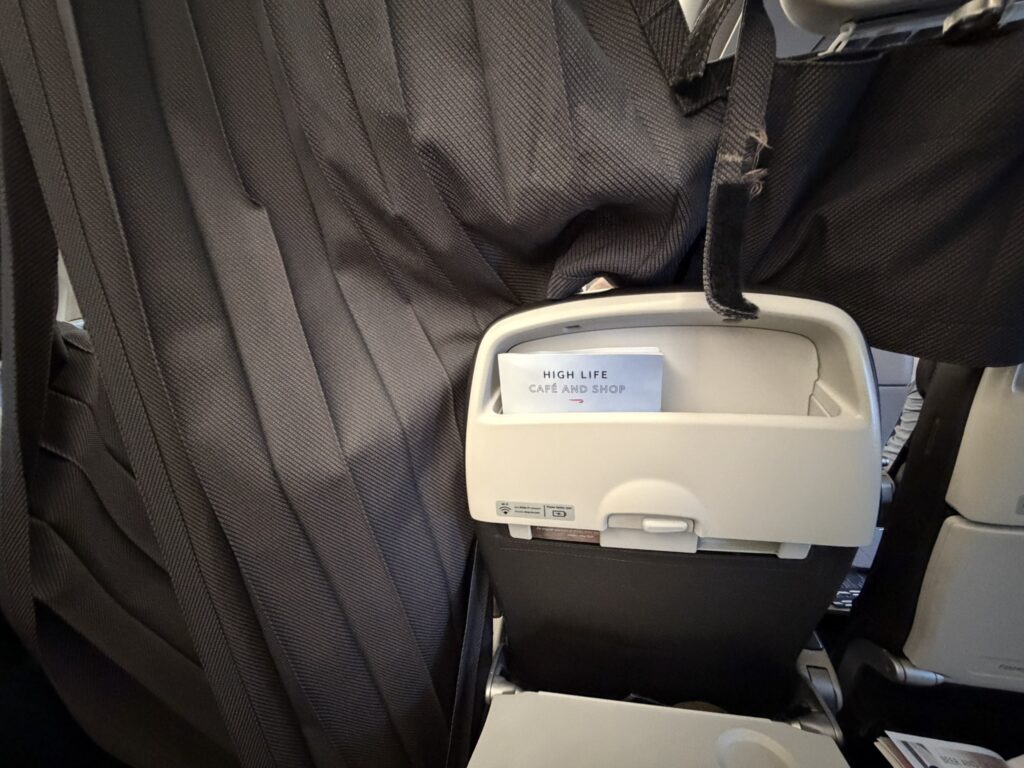
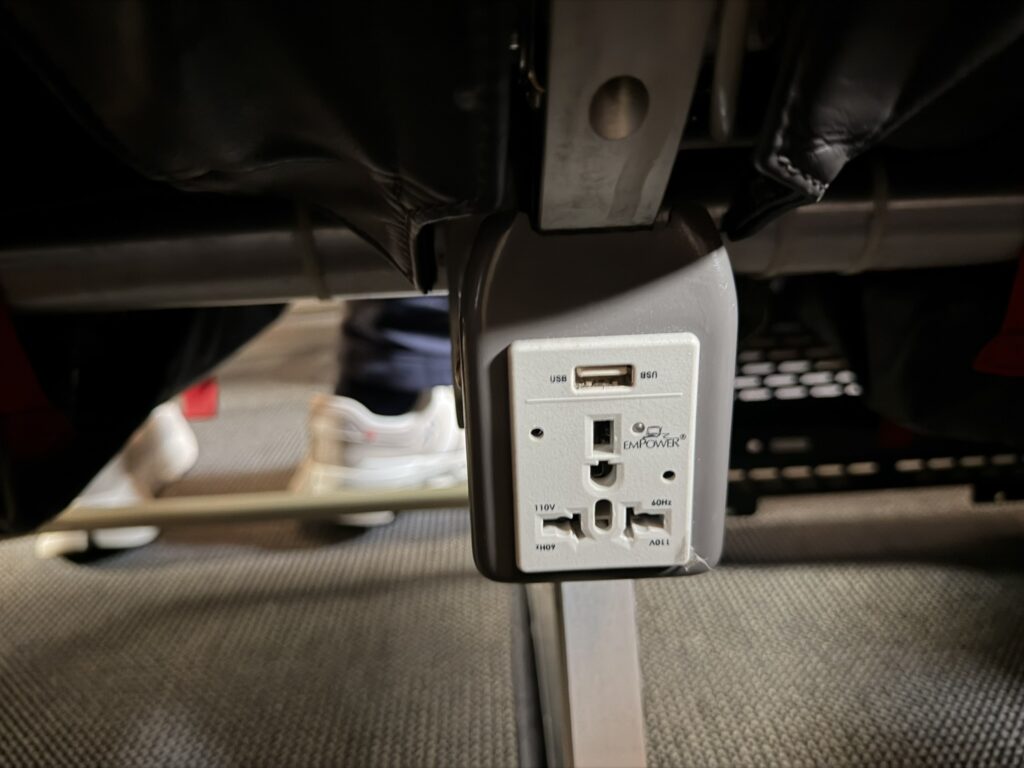
This was ridiculous, and I reckon no passenger should be allowed to occupy a seat with such an obstruction quite literally in their face. Hey, at least these older aircraft have an AC power outlet in addition to the USB-A port.
BA flights from Gibraltar operate to/from Heathrow’s Terminal 3 rather than Terminal 5, a pain if you have a connection but I was once again staying overnight before my next flight.
Not only was this flight relegated to Terminal 3, it also arrived at a bus gate. I was thrilled that the flight blocked in 20 minutes early, but that joy was squandered as there was no ground crew ready to meet our aircraft until our scheduled arrival time.

Frankly, there wasn’t much positive to say about this entire experience. I got where I was going more or less on time, but was reminded just how good US-based travelers actually have it.
Americans are spoiled for choice across a wide spectrum of #PaxEx offerings, but the Brits seem to be locked in to the lowest common denominator. BA may be able to shine once it overhauls its woefully inadequate tech stack and rolls out more premium interiors as it is doing on newer A321neo deliveries, but its past decisions to deliver a basic experience may stick around for many years to come.
Related Articles:
All images credited to the author, Jason Rabinowitz


