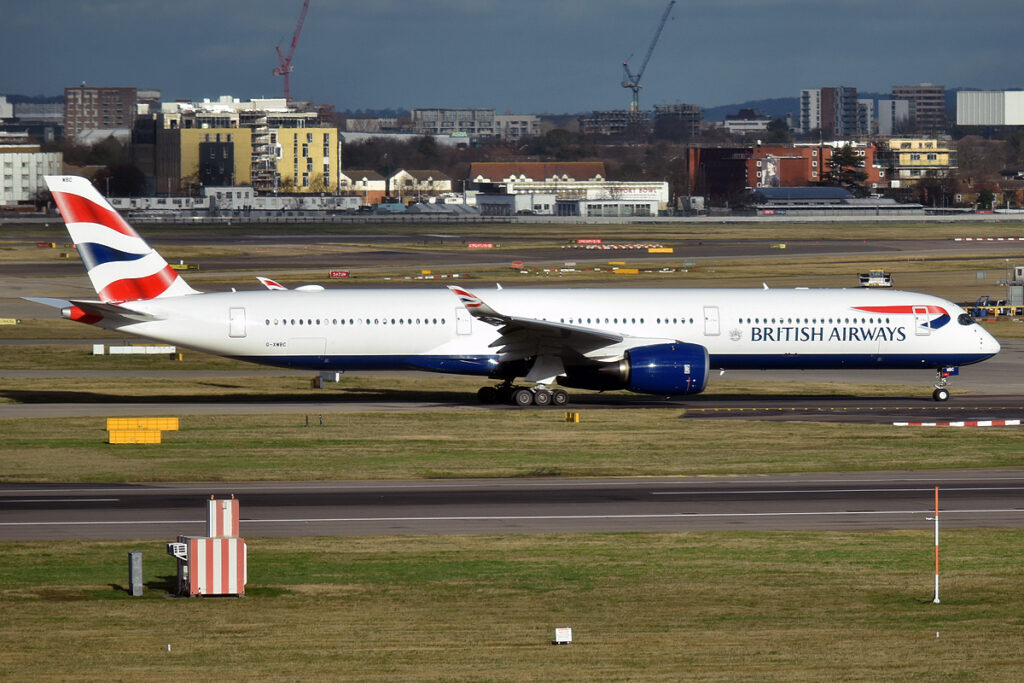
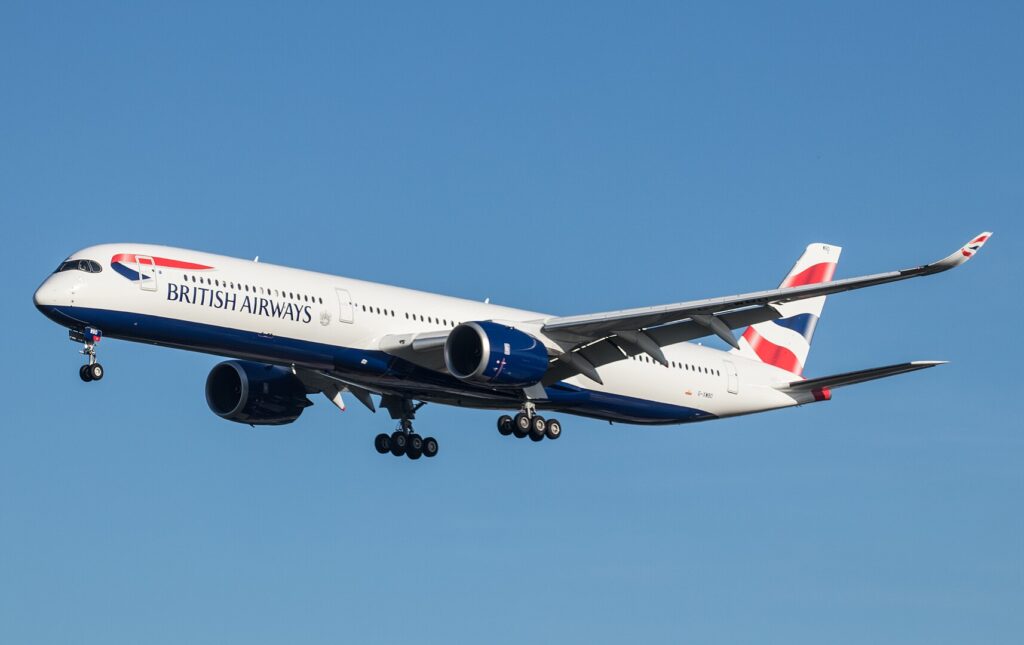
LONDON- British Airways (BA) flight BA274 from Las Vegas Harry Reid International Airport (LAS) to London Heathrow Airport (LHR) experienced an in-flight technical concern over the North Atlantic.
The Airbus A350-1041 was cruising at 39,000 feet when ACARS data referenced a message regarding a fire switch, prompting a descent before the aircraft later climbed back to cruising altitude.
British Airways A350 Emergency
British Airways BA274, operated by an Airbus A350-1041, was en route from Las Vegas (LAS) to London Heathrow (LHR) when a cockpit message was transmitted via ACARS. The message included the text: “Is there anything EGGX should be aware of regarding your fire switch?”
EGGX refers to Shanwick Oceanic Control, which manages a large portion of North Atlantic airspace. The reference to a fire switch typically relates to engine fire protection systems. On modern aircraft, the engine fire switch is used to isolate and shut down systems in the event of an engine fire or severe malfunction.
Flight tracking data shows the aircraft descended from 39,000 feet to approximately 22,000 feet over 30 minutes, averaging about 500 feet per minute. After stabilizing at the lower altitude, the aircraft climbed back to 39,000 feet within roughly 15 minutes at an average climb rate of 1,000 feet per minute.
Such altitude changes can indicate troubleshooting procedures, system checks, or precautionary measures taken by the flight crew. A controlled descent allows pilots to manage engine performance, monitor system parameters, and remain within safe operating limits if thrust capability is reduced.
Possible Engine Shutdown and Restart
Unconfirmed radio discussions suggested that the crew may have experienced an engine-related issue and subsequently managed to restart it. In commercial aviation, engine shutdowns in flight are rare but are addressed through established checklists and procedures.
If an engine is shut down as a precaution, crews assess performance, fuel burn, and diversion options. Modern twin-engine aircraft such as the Airbus A350 are certified to operate safely on a single engine if required. However, crews continuously evaluate whether to divert to the nearest suitable airport.
Halifax Stanfield International Airport (YHZ) in Nova Scotia is commonly used as a diversion point for transatlantic flights. While there was speculation about a potential diversion, the aircraft ultimately returned to cruising altitude, indicating that the situation was assessed as stable.
ALSO READ: British Airways Boeing 777 Crew Members Hospitalized at London Gatwick

Aircraft and Operational Context
The aircraft involved, registered G-XWBR, is an Airbus A350-1041. At the time of the altitude changes, the flight was approximately four hours into its journey, cruising at a ground speed near 499 knots.
A request to return to Flight Level 390 suggested the crew sought to maintain operational flexibility after regaining normal performance parameters. Maintaining cruise altitude can help optimize fuel efficiency and keep diversion options open as the aircraft progresses eastbound.
There were also references to a previous incident involving BA274, when a wheel was reportedly lost after takeoff on an earlier rotation. There is no confirmed link between that event and the in-flight engine-related concern on this sector.
British Airways has not publicly confirmed the specific nature of the technical issue. However, the flight’s continued operation at cruise altitude indicates that standard safety protocols were followed and that the aircraft remained within certified performance limits.
Stay tuned with us. Further, follow us on social media for the latest updates.
Join us on Telegram Group for the Latest Aviation Updates. Subsequently, follow us on Google News