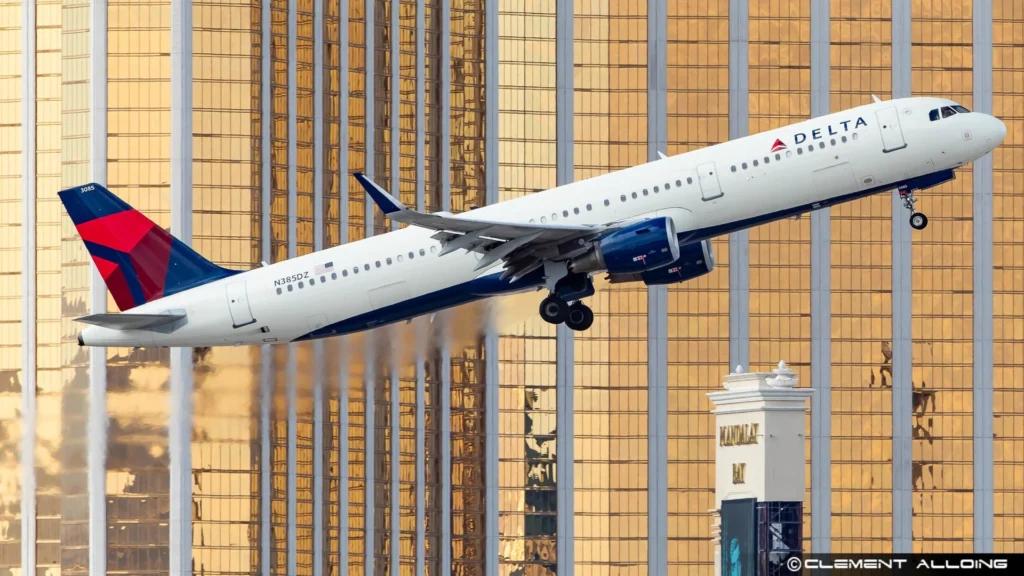
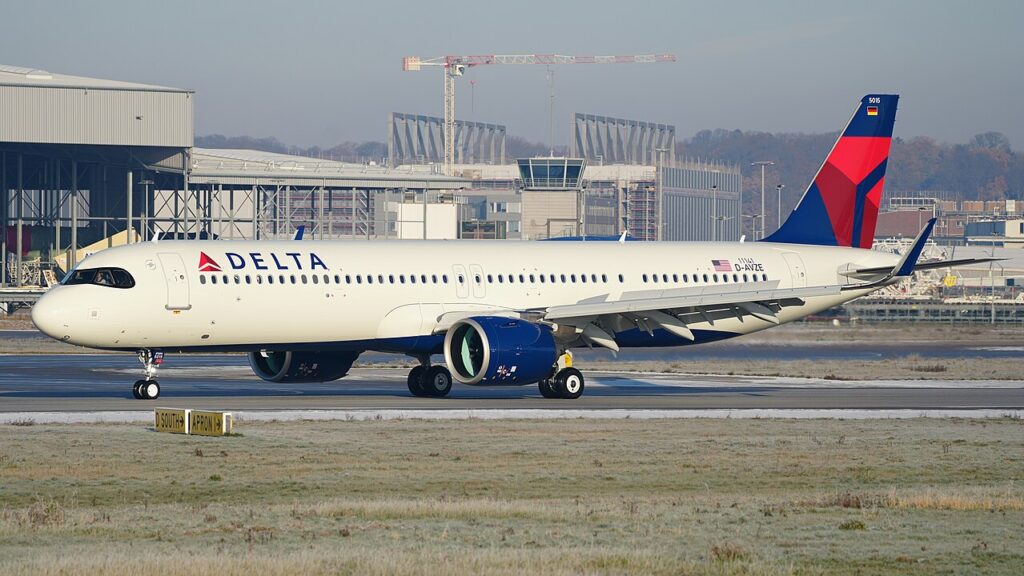
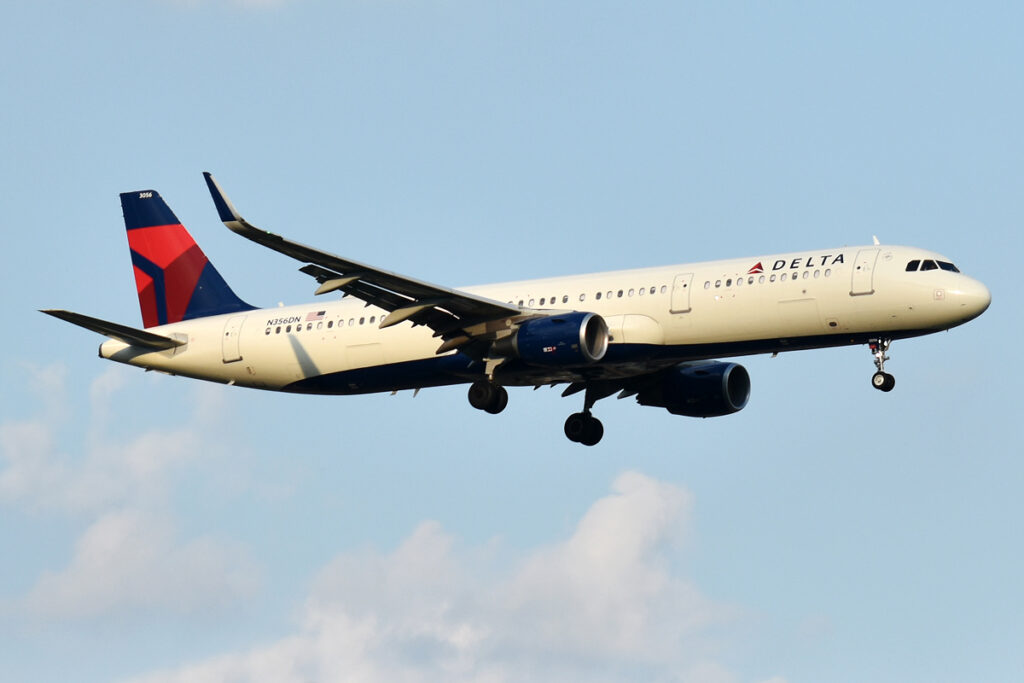
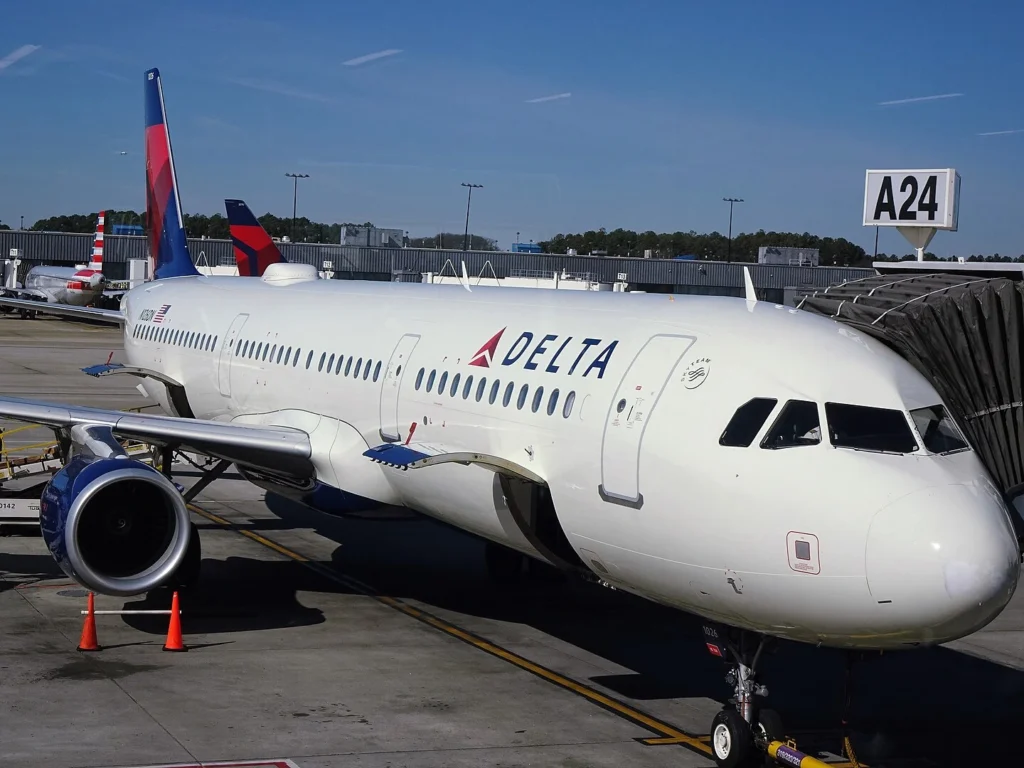
ATLANTA- Delta Air Lines (DL) will deploy a uniquely configured Airbus A321neo featuring 44 First Class seats on select transcontinental routes.
The aircraft will operate from Hartsfield–Jackson Atlanta International Airport (ATL), beginning in mid-2026.
Flights are scheduled from ATL to Los Angeles International Airport (LAX), San Diego International Airport (SAN), San Francisco International Airport (SFO), and Seattle–Tacoma International Airport (SEA).
The temporary layout addresses certification delays affecting the airline’s new lie-flat business class seats.
A321neo Premium Subfleet And Interim Configuration
Delta plans to introduce 21 Airbus A321neos dedicated to premium transcontinental operations. The intended configuration includes:
- 16 lie-flat business class seats
- 12 premium economy seats
- 54 extra legroom economy seats
- 66 standard economy seats
This totals 148 seats in a high-premium layout.
However, certification issues involving the new business class suites have delayed entry into service.
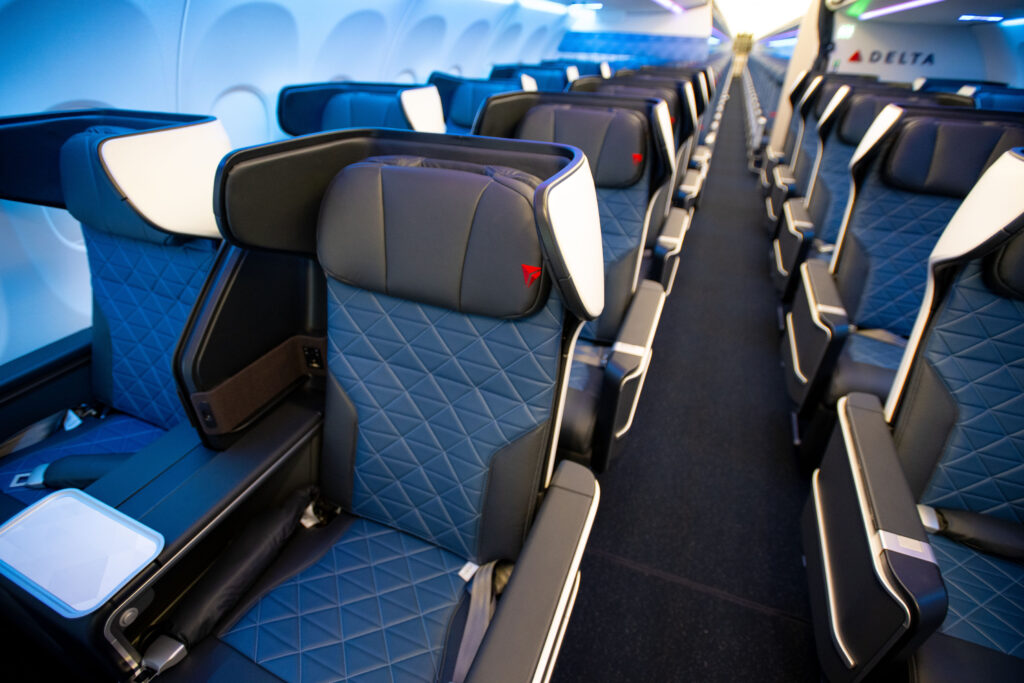
Several aircraft delivered beginning in October 2024 have remained in storage. Rather than keep these jets parked for an extended period, Delta will temporarily install additional recliner style premium seats.
The interim configuration increases total capacity to 164 seats, consisting of:
- 44 First Class seats
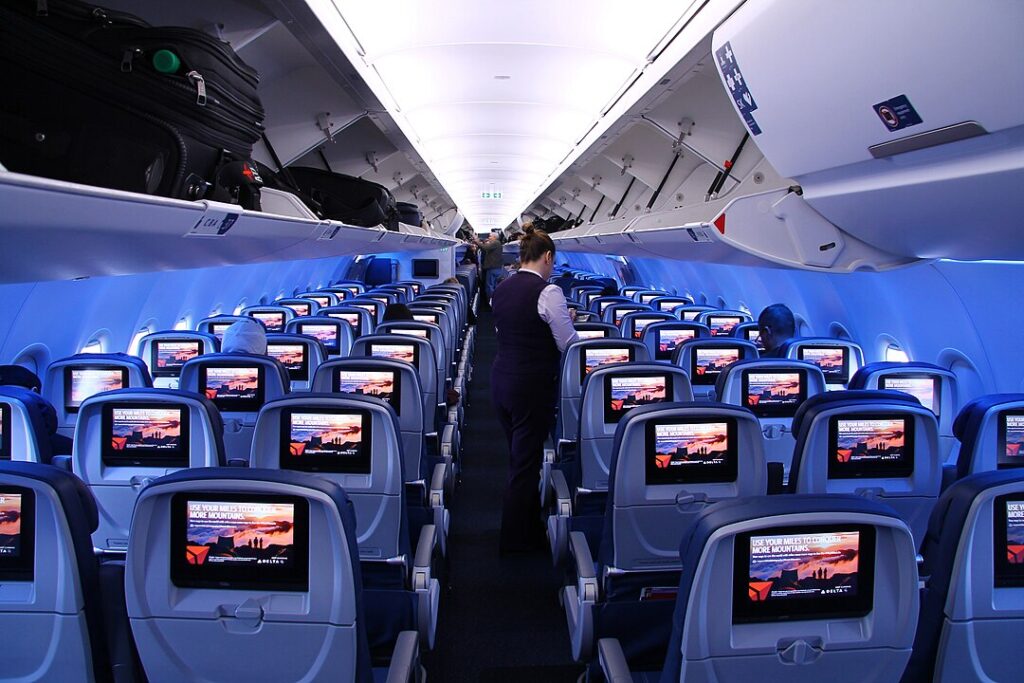
- 54 Delta Comfort seats
- 66 Main Cabin seats
The 44-seat First Class cabin results from replacing the planned 16 lie-flat suites with 32 additional premium recliner seats.
The premium economy seats originally designed for the aircraft are comparable to domestic First Class seats, enabling this substitution.
Seven aircraft are currently expected to receive this temporary layout.
According to OMAAT, seat maps for this configuration are now published and flights are available for purchase.
Comparison With Standard Delta A321neo Layout
Delta’s standard A321neo configuration features:
- 194 total seats
- 20 First Class seats
- 60 Delta Comfort seats
- 114 Main Cabin seats
The temporary 164-seat layout reduces overall capacity while more than doubling the size of the First Class cabin. This represents a significant shift toward premium inventory compared to the carrier’s typical narrowbody setup.
Cabin Specifications And Operational Considerations
Seat Pitch And Comfort
First Class seats offer 38 inches of pitch, slightly exceeding the pitch found on most Delta domestic narrowbody aircraft. This provides incremental additional legroom.
Lavatory Allocation
Only one forward lavatory serves 44 First Class passengers. This may require some passengers to use mid-cabin facilities during busy periods.
Catering Capability
The aircraft includes an additional oven compared to the standard domestic layout. This supports expanded hot meal service for the enlarged First Class cabin.
Route Deployment And Service Timeline
Flights are officially scheduled from June 7, 2026, with possible entry into service in May 2026.
The aircraft will operate select frequencies between Atlanta (ATL) and:
- Los Angeles (LAX)
- San Diego (SAN)
- San Francisco (SFO)
- Seattle (SEA)
On peak ATL–LAX services, Delta will continue operating aircraft equipped with Delta One suites and Premium Select cabins for passengers seeking flat-bed seating and enhanced recline options.
Mauricio Parise, Vice President of Customer Experience Design, stated that supply chain constraints prompted a creative solution to ensure customers could access newer aircraft ahead of the summer travel season.
Certification Delays And Strategic Implications
The first of these aircraft was delivered in October 2024. With entry into service planned for summer 2026 using modified interiors, some jets will have remained idle for nearly two years.
The prolonged certification process for the new lie-flat business class seats has significantly affected deployment timelines.
Delta would not likely invest in a temporary reconfiguration unless approval delays were expected to extend well beyond late 2026.
This situation has raised broader questions about future fleet programs, including the planned introduction of Airbus A350-1000 aircraft equipped with a new business class product. Continued certification challenges could influence long-term growth strategy.
Parking new aircraft for extended periods generates financial inefficiencies. By installing temporary premium seating, Delta can generate revenue while preserving flexibility.
Once business class certification is secured, the interim seats can be transferred to newly delivered A321neos, and the intended lie-flat product can be installed.
This approach balances operational pragmatism with long-term premium ambitions.
Bottom Line
Delta will introduce a 164-seat Airbus A321neo configuration featuring 44 First Class seats due to ongoing certification delays affecting its new lie-flat business class suites.
Rather than keeping aircraft in storage, the airline will deploy a temporary premium heavy layout on key transcontinental routes from Atlanta.
The strategy increases premium seat availability while regulatory approval issues are resolved, though the extended timeline underscores the complexity of modern aircraft interior certification.
Stay tuned with us. Further, follow us on social media for the latest updates.
Join us on Telegram Group for the Latest Aviation Updates. Subsequently, follow us on Google News


