Vespa rides into blood-orange sunsets, soft pistacchio gelato on the stone pier, as you watch the ebb and flow of swimmers and boats along the marina, the incessant chant of cicadas up the olive tree hills…
Say what you will, other poor excuses of seas can’t hold a candle to the Mediterranean.
I’m not talking Instagrammer-hellhole Mykonos, Mallorca and its the jam-packed calas, or Capri with the invitation-only beach bars selling $21 Aperol: no, malaka.
I’m talking the wine-dark sea, the home of gods and titans, ancient tides that inspired myth and poetry, and hugged rising and falling empires over millennia.
Mare Nostrum.
This summer, you can bet your sorry behind I’ll be island-hopping in the Med again, but not in the touristy, American-dominated side of it. Americans, I love you, we love you, but Santorini’s just not it.
Find me instead in these 5 quintessential Mediterranean islands everyone should visit at least once in their lives:
PLUS: We’ve created a quiz for you at the end to find which one is perfect for you, so stick around!
5 Must-Visit Islands In The Mediterranean
Corsica, France

We’re kicking this off with a banger: a fairly-large island for the surprisingly-low number of visitors it receives, Corsica is the heart of Mediterranean France, and a place where Italian and French cultures converge to form something… unique.
Locals speak Corsican, an Italian-esque dialect with heavy French inflections. They feel Corsican first and foremost, and instead of the French tricolor, it’s a stark white flag with the black Moor’s head in a bandana flying from the highest masts.
Corsica exists in a world apart from the wider country, in a way:
It’s best-known for the virtually-deserted white-sand beaches, turquoise waters that could be easily be mistaken for the Caribbean, and coastal towns where life unravels at a deliciously-slow pace.

Ajaccio is the vibrant coastal capital, distinguished by its busy marina and for being Napoléon’s birthplace—you can even visit Maison Bonaparte and see the baptistery where the then-infant emperor was baptized at Ajaccio Cathedral.
Still, Corsica’s true charm lies in its smaller villages:
Bonifacio, in the very south, is a medieval cluster of rock-hewn houses clinging to vertiginous limestone cliffs, staring straight across at Sardinia. It practically filed the word “storybook” with the Oxford dictionary.
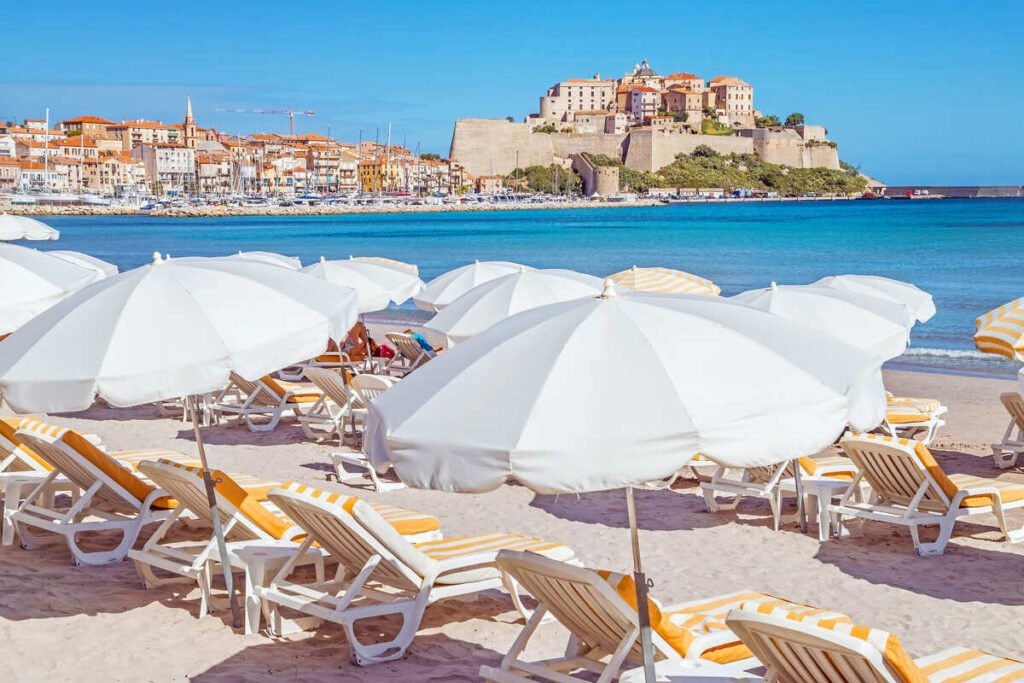
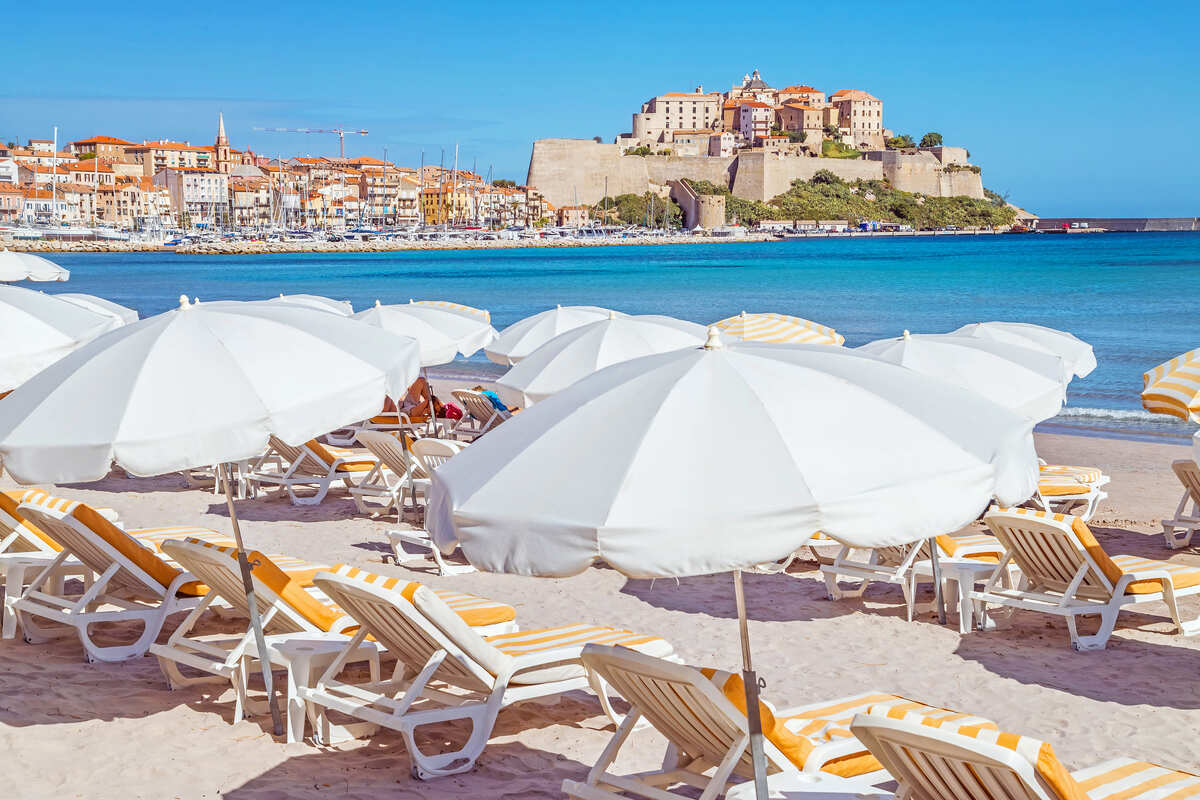
Palombaggia has fine white sand, umbrella pines, and absurdly clear seas. Over in Calvi, a long coastal promenade leads up to a brooding Genoese citadel. You know, real Old World stuff.
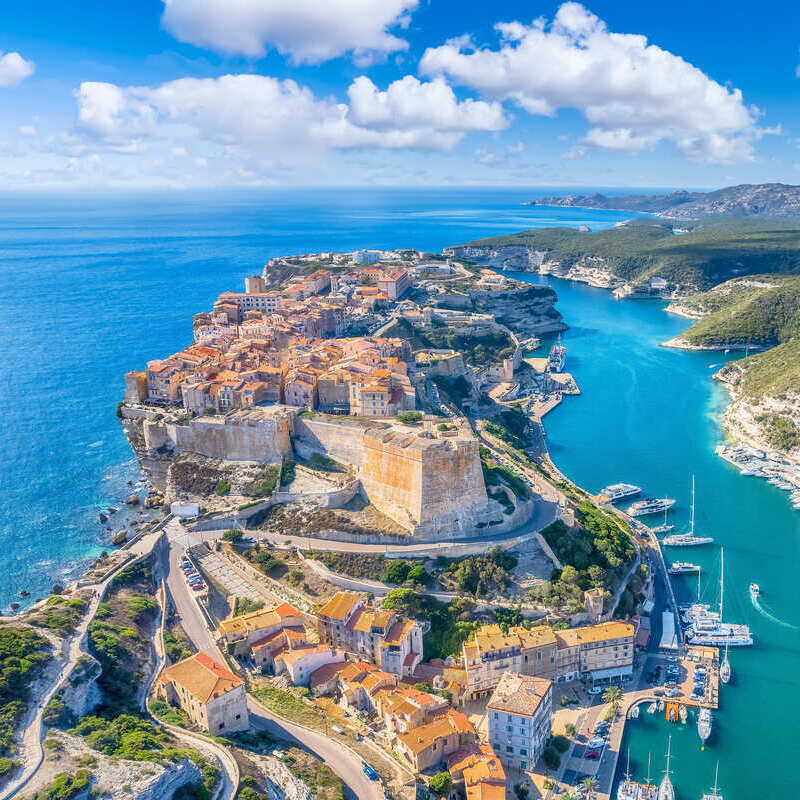
The Vibe: France meets Italy in a paradisiacal island
Perfect For: experiencing a different side of France than Paris or Lyon
The ‘Don’t Miss’ Experiences:
- Ajaccio Cathedral: a landmark Baroque cathedral where Napoléon was baptized
- Bonifacio: the most beautiful medieval town in Corsica, with rock-hewn houses perched on coastal cliffs
Kalymnos, Greece
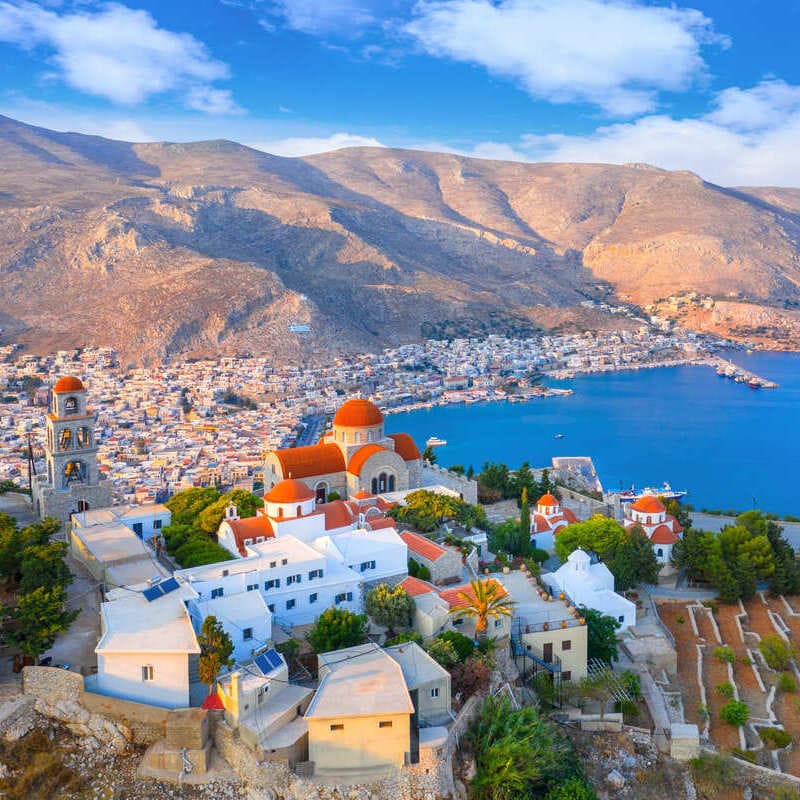
Let’s check how our Greek friends are doing, shall we. Not the loud, half-cut lot over at Cavo Tagoo Mykonos, but a quiet, unassuming Kalymnos, out in the wild, largely unexplored Dodecanese.
About 15 miles off the Turkish coast, Kalymnos is one of those hard-to-reach Greek islands that doesn’t have an airport.
The easiest way to rock up is either by hopping on a long overnight ferry from Athens or, schedule permitting, via the nearest major island with an airport (that would be Kos, a half-hour crossing away). Somewhat of a Homeric journey, granted, but totally worth it once the boat pulls up to Pothia.
The main settlement on the island, it is a picturesque port town peppered with Neoclassical houses, cafés and family-owned tavernas dishing out homemade Greek fare—for grilled fish and fresh salad, nip over to our good friends at Manias Fish Tavern.
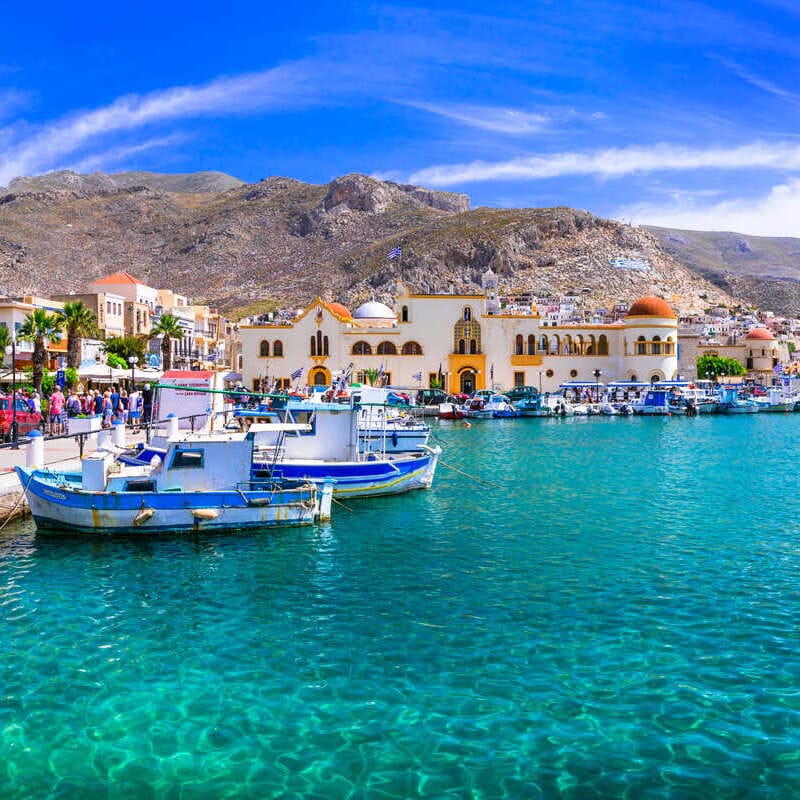
A short 10-minute drive from Pothia, Vlychadia Beach is possibly one of my favourites in all of the Greek islands: a picturesque bay with translucent waters, it has none of the usual beach-bar humdrum, just small, cosy tavernas and a relaxed, villagey vibe.
An equally short 15-minute drive uphill from Pothia, in the hilly Kalymnos inland, Chora is a traditional town criss-crossed by cobbled alleys at the foot of an imposing acropolis.
Meanwhile, Vathy is that sleepy beach town, some 6 miles southwest of the capital, at the mouth of a narrow, deep gulf, with traditional storage sheds, stone houses with colourful shutters, and a scenic pebbly beach to call its own.
If you’ve been looking for the authentic side of Greece without the crowds, you’ve just found it.
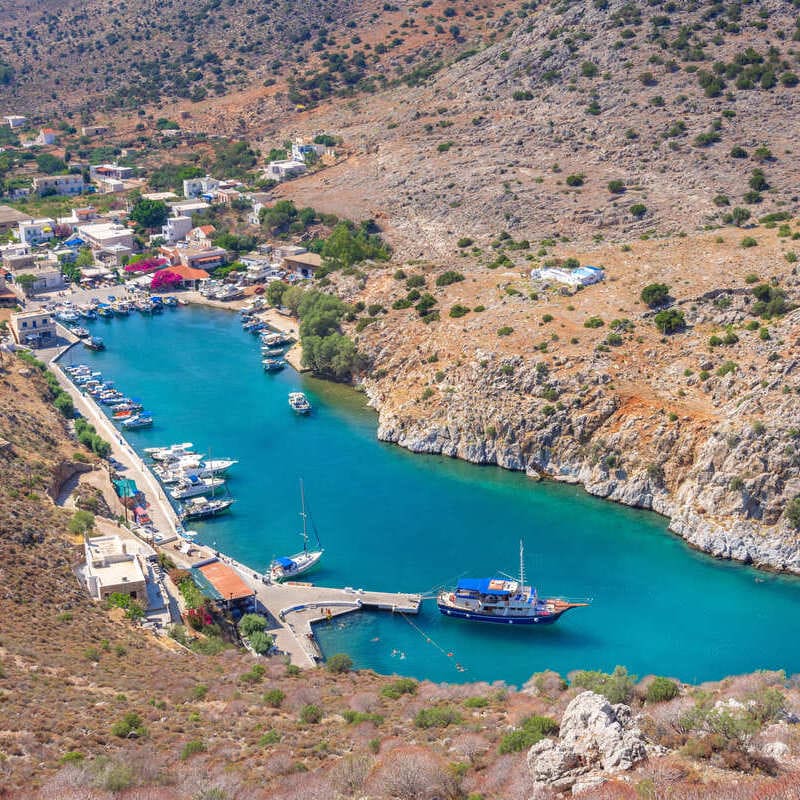
The Vibe: Mamma Mia summer minus the crowds
Perfect For: laid-back beach-hopping
The ‘Don’t Miss’ Experiences:
- Pothia: a lively port town full of family-owned tavernas
- Vlychadia Beach: a scenic white-sand-and-gravel strip with waterfront bars and shallow waters
Pantelleria, Italy

Speaking of remote, Pantelleria is one of the most isolated islands in Italy: basically halfway between Sicily and Tunisia, it has no sightable neighbours for miles, and it’s actually a touch closer to North Africa than to Europe, proper.
The whole island is volcanic rock, with dramatic cliffs, unique lava formations, and hot springs, much of which can be explored by bike or scooter—or, if you don’t shy away from a proper leg-busting day, even on foot:
Pantelleria is roughly 15 miles across, after all.
The most noteworthy features here, other than the trademark dessert wines made from sun-dried Zibibbo grapes, are the historic dammusi.

These traditional stone houses fortified with thick walls and domed roofs were designed by Pantelleria’s native inhabitants to stay cool in the scorching-hot summer months, and they can be found all around the sparsely-populated island.
Bear in mind, there aren’t exactly beaches on Pantelleria—more like solid-rock platforms and natural pools at the foot of small coastal cliffs—so if you’re here for a swim, Cala Gadir and Cala Levante are top-notch protected coves with calmer waters and reliably clear conditions.
To sum it up, you wouldn’t come here unless you’re chasing that “off the map” feel:
Pantelleria is less about sightseeing and postcard-ready moments, and more about slowing it down, breathing in the fresh sea air, hitting up a winery or two, and soaking up the Mediterranean sun for a long weekend.

The Vibe: remote volcanic island with no neighbors in sight
Perfect For: truly slowing it down and soaking up the Mediterranean sun
The ‘Don’t Miss’ Experiences:
- Arco dell’Elefante: an elephant-trunk-shaped rock formation plunging into the sea
- Specchio di Venere: a volcanic crater lake famous for its mineral-rich water and mud baths
Gökçeada, Turkey
Or Imbros

Not to give you the full run-down of History, Imbros was originally a Greek island. It got ceded to Turkey in 1926. It’s been renamed Gökçeada since the 1970s.
Having acknowledged that, I’ll be using the new, official name from now on. To the angry Greek ethno-nationalist keyboard warrior, save your verrborhea, or take your complaints to the Turkish Foreign Ministry.
We know.
On Gökçeada itself, what an absolute stunner of an island. Picture a rugged coast, olive groves, pine forests, and bright-blue waters yet to be mobbed by foreign crowds. Most visitors are Turkish, or nostalgic Greeks with ancestral ties to the land, and it definitely helps keep things low-key and chilled-out.

The main settlement, Gökçeada Town, is your typical Turkish harborside hub, with a boat-filled port, a chaotic bazaar, and a dense cluster of souvenir shops.
The island’s wild character, however, lives in tiny villages with stone houses and winding streets, like Aydıncık and Tepeköy, and in the countless ruined Greek windmills and Orthodox churches scattered around the mountainous landscapes.
In many of the towns, there’s a weekly pazar, or market day, when local farmers set up stalls, usually along a main thoroughfare or by the port, and sell local cheeses, honey, and fresh vegetables.
As far as beach-hopping goes, Yıldızkoy is the signature “Star Beach” on Gökçeada: the waters are turquoise, the sand is soft and silky to the touch, and despite the cracking scenery, it doesn’t draw huge crowds, even in summer.

The Vibe: Turkish island getaway with a strong Greek flair
Perfect For: village-exploring, bazaar shopping, unruffled sandy beaches
The ‘Don’t Miss’ Experiences:
- The Star Beach: for golden sands, crystal-clear seas, and minimal crowding
- Gökçeada Town: the island’s beating heart and an underrated cultural gem
Formentera, Spain
I’m sure you’ve heard of Ibiza, with its legendary Ushuaïa daytime parties, big-name DJs, and buzzing resort towns like Es Canar and Sant Antoni de Portmany.
Ibiza’s great—I’ve spent a couple of summers there myself—but what most tourists fail to realize is they can easily hop over to Formentera, its smaller, less-famous sister.
Just a short half-hour ferry away and, believe it or not, with no mega clubs or usual 5 am chaos, it is the hippy, no-frills alternative you didn’t know was on offer. I’m talking barefoot lunches, long beach walks, sunset wine, and bike rides through endless vineyards.

At only 12 miles long and about 1–2 miles wide, it is one of the most walkable and bike-friendly islands in the Med. Seriously, the whole island is crisscrossed with wooden boardwalks and bike trails, winding through the dusty interior and along the pristine coastline.
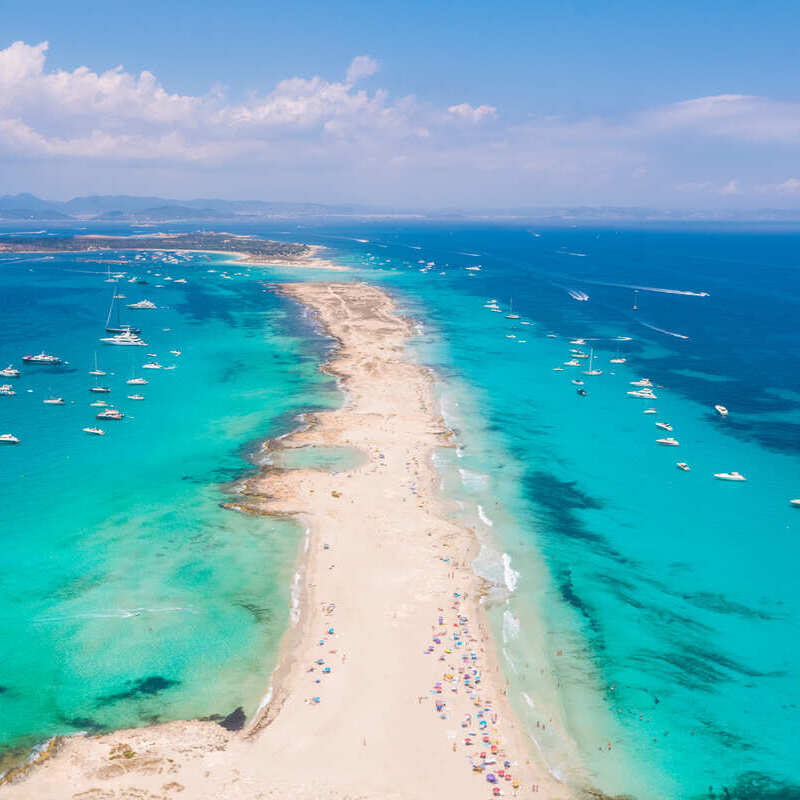
On beaches like Playa de Ses Illetes, the water is stupidly clear. Having been to the Caribbean, the North and South Atlantic, the Black Sea, and around Asia myself, I’ll go as far as saying I’ve never seen more beautiful, turquoise, ridiculously-pretty water in my life.
And it’s sand, you guys!!! Virgin-white sands you can actually bury your feet in, without beach shoes required. Forget those pointy Mediterranean shingles you have to carefully dodge on your way to the waterfront.
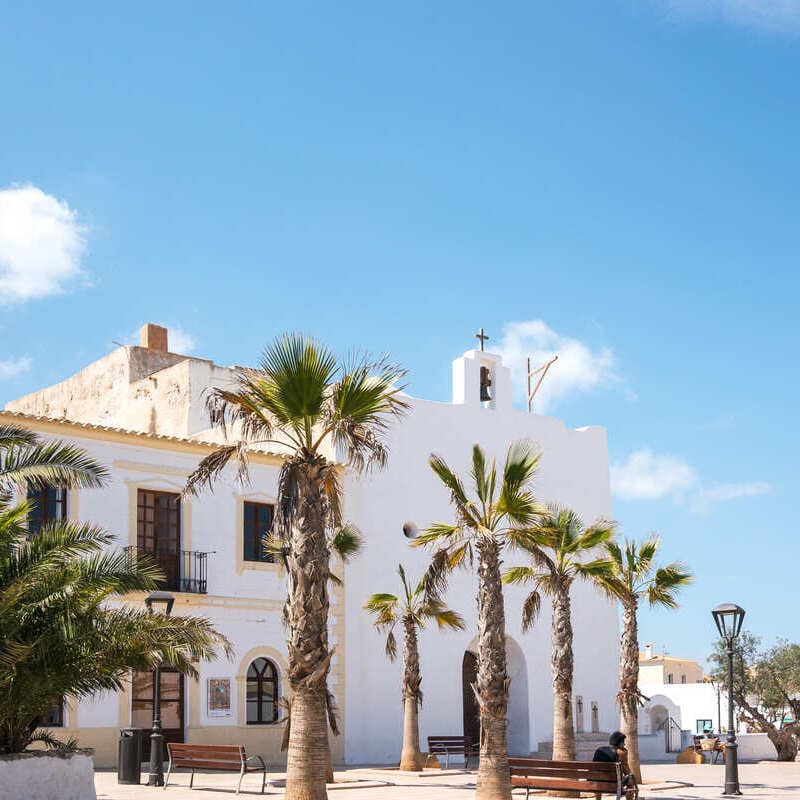
Bike up to Sant Francesc Xavier, the main town on the island, known for its minimalist chalk-white church and equally whitewashed buildings, Es Pujols, the closest to an Ibiza-style beachfront nightlife you get here (though at a much smaller scale), or El Pilar de la Mola, a landmark lighthouse perched atop a coastal cliff.
Formentera is still boho—come on now, this is still the Balearics—but it doesn’t feel flashy, know what I’m saying? Between a weekend of day-drinking in IBZ and relaxed beach time in Formentera, it’s Formentera all the way.
Can we fast-forward to spring yet?

The Vibe: Ibiza-like paradise without the flashy attitude
Perfect For: biking through dusty roads, hitting up deserted beaches, and slow-paced village life
The ‘Don’t Miss’ Experiences:
- Playa de Ses Illetes: Caribbean-like white sands and bright turquoise waters
- Sant Francesc Xavier: cute whitewashed town with pedestrian-friendly lanes and a historic church
Now for the fun part! Take the quiz below to find your perfect Mediterranean getaway!

The Travel Off Path Advantage: Your Travel Toolkit
Subscribe To Our Latest Posts
Enter your email address to subscribe to Travel Off Path’s latest breaking travel news, straight to your inbox.