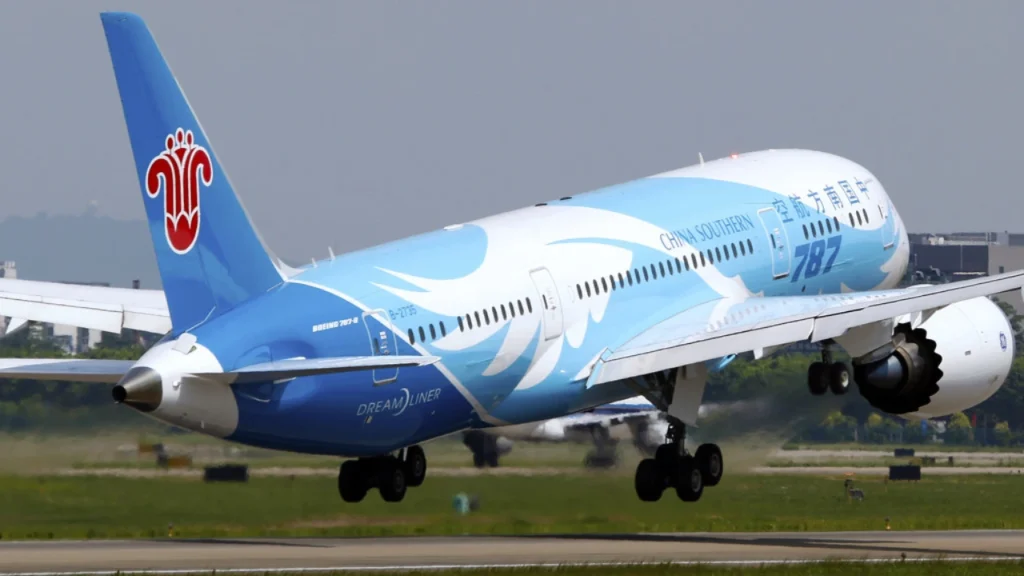
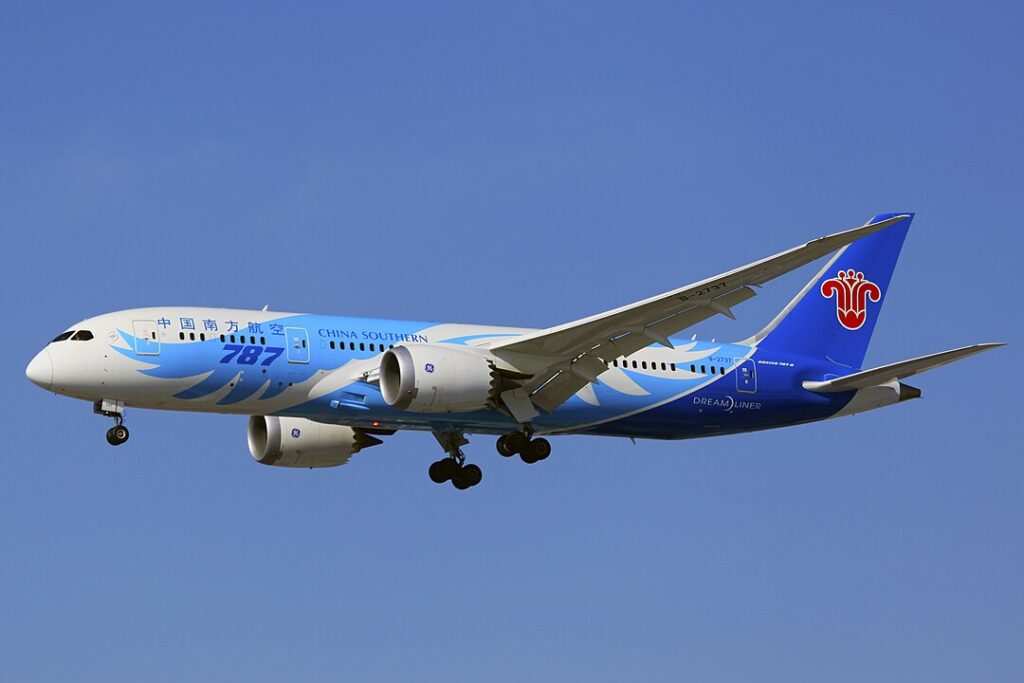
GUANGZHOU- China Southern Airlines (CZ) has agreed to sell its entire fleet of 10 Boeing 787-8 aircraft through an online auction process. The aircraft, averaging over 12 years in age and primarily based at Ürümqi Diwopu International Airport (URC), were delivered in 2013 and 2014.
Thai Airways (TG) is widely expected to lease these same Boeing 787-8 jets, with planned deployment from Bangkok Suvarnabhumi Airport (BKK) as part of its accelerated widebody expansion.
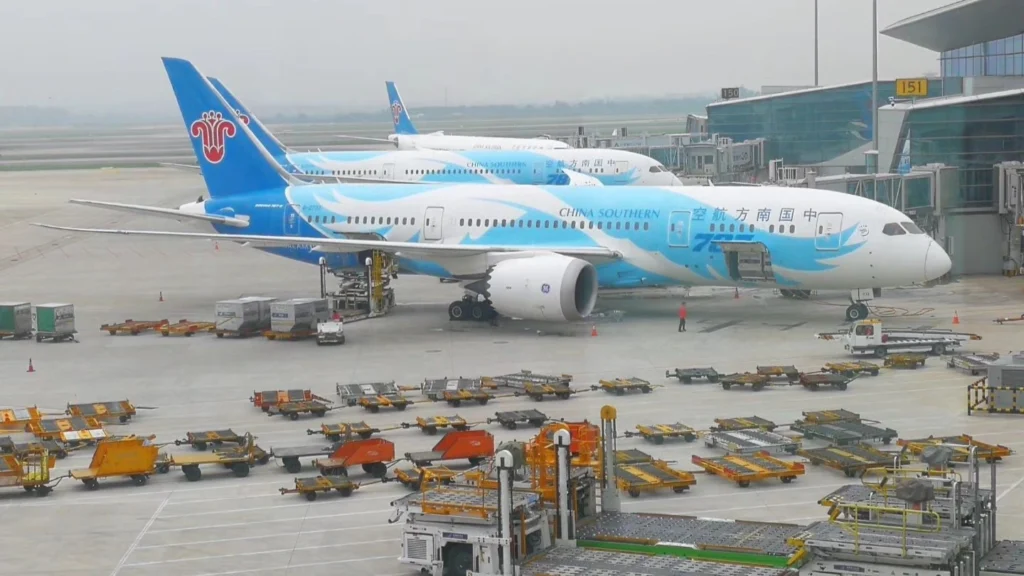
China Southern Boeing 787-8 Auction
China Southern operates nearly 700 aircraft, making it China’s largest airline by fleet size. Within that portfolio, the 10 Boeing 787-8 aircraft formed a small and aging subfleet. Each jet is configured with 266 seats, including 18 in business class and 248 in economy class.
The airline has expressed dissatisfaction with the aircraft type. Management intends to concentrate on larger widebody aircraft with higher passenger capacity.
Although the 787-8 offers strong range performance, China Southern’s units do not feature the updated maximum takeoff weight available on newer variants. This reduces payload flexibility compared to more recent deliveries.
In 2024, the airline launched a disposal initiative to further optimize its fleet structure. The process was suspended in early 2025 due to tariff related uncertainty affecting cross border aircraft transactions.
After several months, the sale resumed under a strict condition: the aircraft would be sold only as a complete package.
The offering included all 10 aircraft plus two spare GE Aerospace GEnx-1B engines under an all or nothing structure.
The airline chose an online auction format, an unconventional approach for widebody aircraft transactions of this scale. The strategy required securing a single buyer willing to assume the entire portfolio.
On February 27, 2026, Bohai Leasing signed a Master Sale and Purchase Agreement through its subsidiary Avolon for the 10 aircraft and two spare engines.
The estimated market value is approximately $532 million, with the final price determined through the exchange bidding mechanism.
According to OMAAT, the structured auction reflects a decisive move toward fleet simplification and cost efficiency.
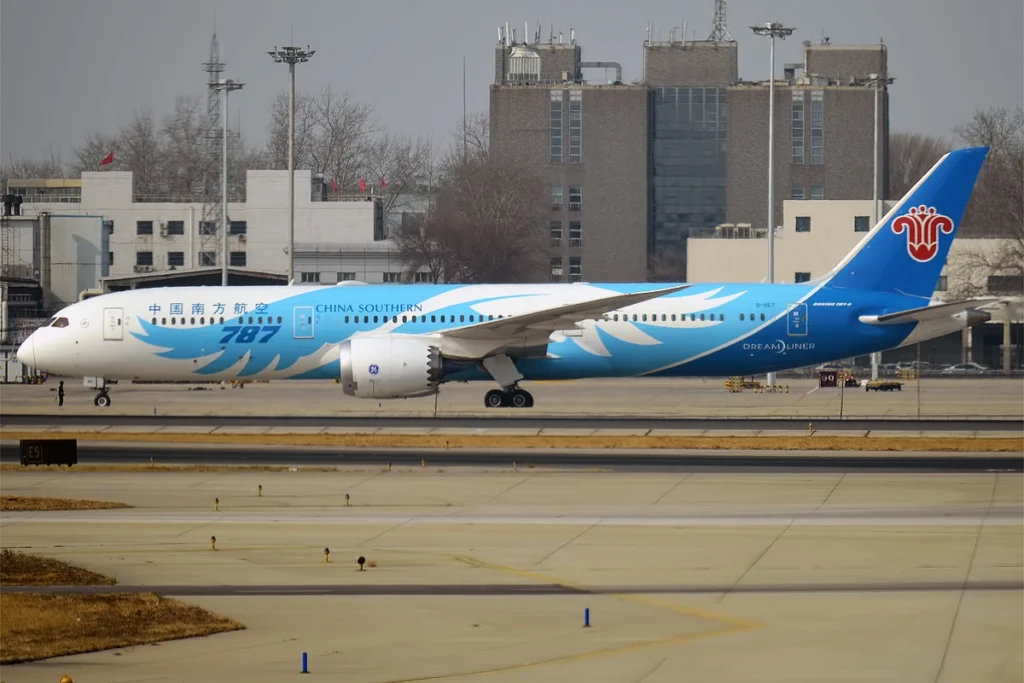
Fleet and Operational Background
China Southern’s Boeing 787-8 aircraft have primarily operated from Ürümqi (URC) in western China. Despite its global scale, the airline’s fleet remains heavily weighted toward narrowbody aircraft.
Its widebody fleet, excluding the 787-8, includes:
- 22 Airbus A330-300
- 19 Airbus A350-900
- 15 Boeing 777-300ER
- 20 Boeing 787-9
The removal of a small subfleet reduces maintenance complexity, training requirements, and spare parts inventory.
Larger widebody aircraft deliver improved seat economics on high demand trunk routes, aligning with the airline’s network priorities.
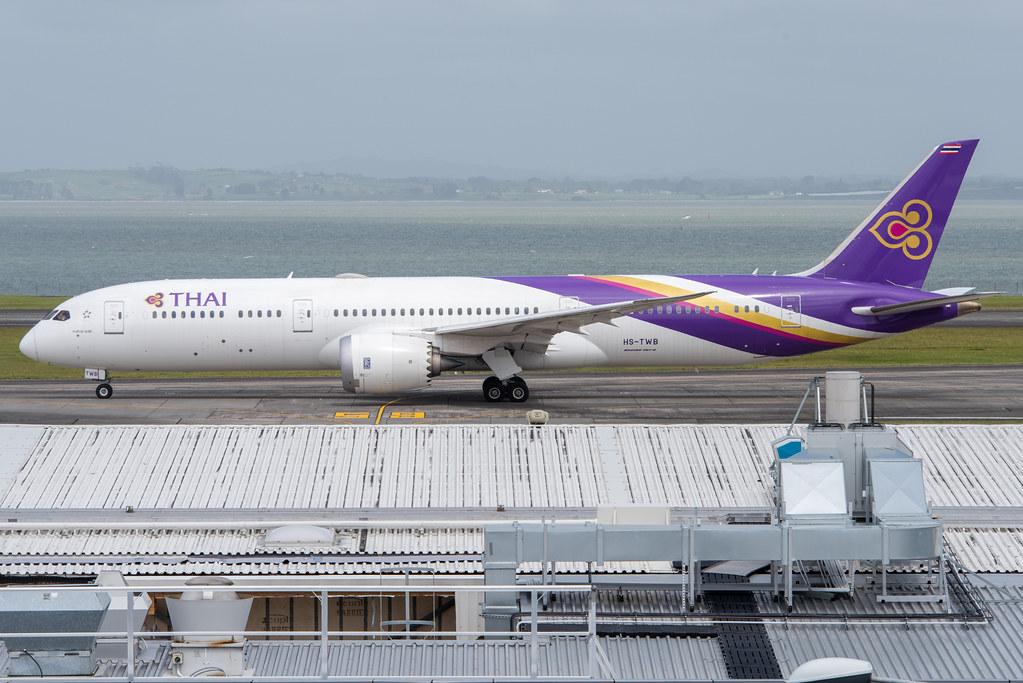
Probable Transfer to Thai Airways
When China Southern first announced the sale, industry observers questioned who would acquire mid life 787-8 aircraft.
Aircraft manufacturers continue to face delivery delays, and many airlines report capacity shortages.
However, secondary market widebody sales often attract limited interest despite supply constraints.
Initial speculation included possible interest from carriers such as Qatar Airways (QR) or even unconventional scenarios involving Southwest Airlines (WN) entering long haul markets. Those possibilities did not materialize.
Instead, evidence strongly points to Thai Airways as the ultimate operator.
The Star Alliance member has publicly confirmed plans to lease 10 Boeing 787-8 aircraft through a leasing company, with deliveries expected in the coming months. If unrelated, the timing would represent a significant coincidence.
Thai Airways continues rebuilding capacity following aircraft decommissioning during the pandemic period.
While the airline has dozens of factory fresh Boeing 787-9 aircraft on order, those deliveries will occur gradually over several years.
Leasing mid life 787-8 aircraft provides immediate widebody capacity without waiting for production slots.
The airline has historically incorporated secondhand aircraft from various operators. Significant cabin reconfiguration is unlikely, as product consistency across the fleet has not been a primary focus.
Operational deployment is expected to center on regional and long haul routes from Bangkok Suvarnabhumi Airport.
Industry and Market Implications
This transaction highlights two parallel industry realities. First, major airlines continue to streamline fleet types to enhance operational efficiency and reduce unit costs.
Second, growth oriented carriers leverage leasing markets to secure near term capacity amid constrained new aircraft supply.
China Southern’s all or nothing auction model ensured a clean exit from a non core subfleet once a qualified buyer emerged. Thai Airways gains immediate widebody lift at a time of strategic expansion.
By connecting the confirmed leasing announcement with the completed sale agreement, the aircraft’s future operator becomes clear.
The deal demonstrates how secondary market aircraft can rebalance capacity between restructuring and growth focused airlines.
Stay tuned with us. Further, follow us on social media for the latest updates.
Join us on Telegram Group for the Latest Aviation Updates. Subsequently, follow us on Google News


