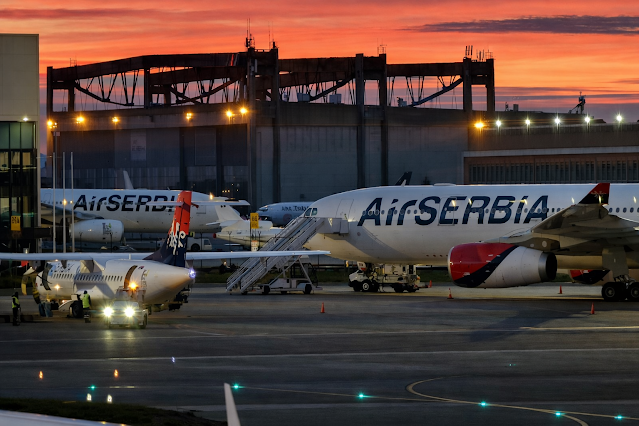

Air Serbia will launch nine new routes this year, marking its largest network expansion since 2023, when it reinstated numerous services suspended during the Covid-19 pandemic. The carrier sees further room for growth despite serving over 100 scheduled and charter destinations. Speaking at the ERA Regional Airline Conference, Air Serbia’s CEO, Jiri Marek, said, “Our growth strategy will remain primarily organic. At times, we may pursue more ambitious expansion, particularly given the advantages of operating a hub. There are also clear opportunities across the wider Balkan region, including markets such as Bulgaria and Romania, which are still not fully connected to our hub. While there is further room for growth, we believe we have already reached a solid critical mass”.
Commenting on the airline’s position in Belgrade, Mr Marek said, “We currently hold a market share of over 50%, which we consider a healthy level, particularly as competition remains essential to a well-functioning market. We have no ambition for Air Serbia to significantly exceed this level, and it is unlikely we would ever surpass 60%. Looking at comparable hub carriers, such as in Vienna, a home airline’s market share of between 50% and 55% is generally seen as optimal, as it both ensures scale and encourages competition”
Air Serbia has a rolling five-year strategy, which is adjusted based on evolving market conditions. “Long-term planning has become increasingly challenging due to the pace of global change. What remains clear, however, is that we will continue to grow as long as demand remains stable. Demand for air travel typically follows GDP growth, which is strong in our home market”, Mr Marek said. He noted the carrier plans to grow at around 5% per year. “Our ambition is to grow at around 5% annually, which would translate into the addition of at least two to three aircraft per year. At the same time, we are replacing existing aircraft in the fleet. Wet-leasing has proven particularly effective in the current environment, especially given the uncertainty surrounding the situation in the Middle East. Compared to an eight-year dry lease, a two-year wet lease provides significantly greater flexibility to manage risk and align capacity with demand”, the CEO added.
Commenting on the upcoming summer, Mr Marek noted, “At present, we expect stronger demand for European destinations this summer. This outlook has influenced network decisions, including the introduction of Brač, as we anticipate high interest in markets such as Greece, Spain, Italy and the Adriatic coast”.



