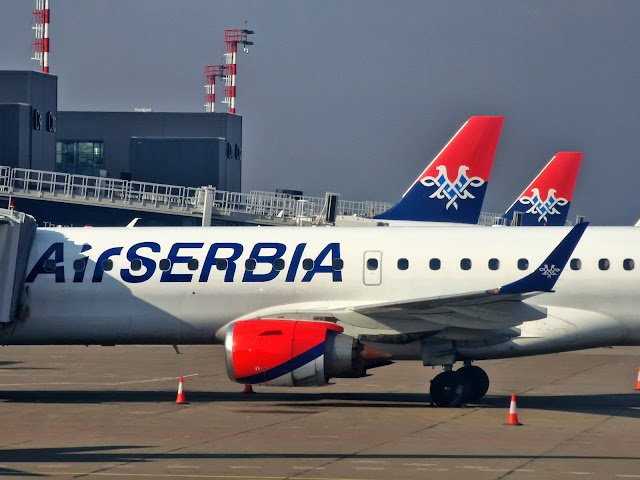

Air Serbia is looking to grow its Embraer fleet while retaining a mix of ATR turboprops, Airbus jets and regional aircraft, noting that the ongoing war in the Middle East could prompt it to seek newer models sooner rather than later.
Speaking at the ERA Regional Airline Conference last week, the carrier’s CEO, Jiri Marek, said, “While it remains uncertain how long the conflict in the Middle East will persist, the business case last year did not justify new aircraft acquisitions, as the higher ownership costs were not offset by fuel savings. However, with fuel prices now significantly higher, and with uncertainty over how long they will remain at these levels or continue to rise, the economics have shifted considerably. That said, the situation remains fluid. Aviation is a constantly evolving industry, and we must remain adaptable. At present, market conditions are favouring aircraft manufacturers. New-generation aircraft deliver meaningful fuel savings, and as fuel prices increase, so too does demand for more efficient equipment. Our main strategy is not to take aircraft when we need them, but when there is a good deal and we have communicated that to lessors”
Commenting on its Embraer fleet, Mr Marek, noted, “There will be a significant number of E1 aircraft available on the market, and we are looking to further expand our fleet in that segment. Over time, we could transition to the E2 or potentially consider the A220 if Airbus presents a compelling case. At present, several carriers, including Azul and JetBlue, are phasing out E1 aircraft, while LOT Polish Airlines is set to transition to the A220, creating favourable market availability. For us, this represents an ideal opportunity. This type allows us not only to further increase frequencies, but also to sustain routes year-round. Given the strong seasonality in our network, such aircraft enable us to maintain most destinations during the winter season as well”.
Mr Marek noted the airline is in need of an aircraft to fill the gap between its 72-seat turboprops and the 118-seat Embraer E195s. “For us, a 90-seat turboprop would be highly beneficial. Embraer was moving in that direction, but unfortunately discontinued the project, and that is precisely the segment we need. On many ATR-operated routes, load factors are already strong, but introducing a jet would result in a significant increase in operating costs. An aircraft in the 70- to 100-seat turboprop category would be an ideal solution for our network”.
 |
| Embraer’s next-generation turboprop concept |
Outlining the airline’s fleet strategy, Air Serbia’s CEO said, “For us, the ATR performs very well within the region, particularly in the current fuel price environment, making it the most suitable aircraft for regional markets. We see greater value in increasing frequencies rather than capacity. Instead of deploying a single jet, we can operate two or three ATR flights, which significantly improves connectivity”. He added, “We will continue to rely on Airbus aircraft, most likely the A320ceo, as we expect a number of these units to return to the market over the next few years at favourable prices”.



