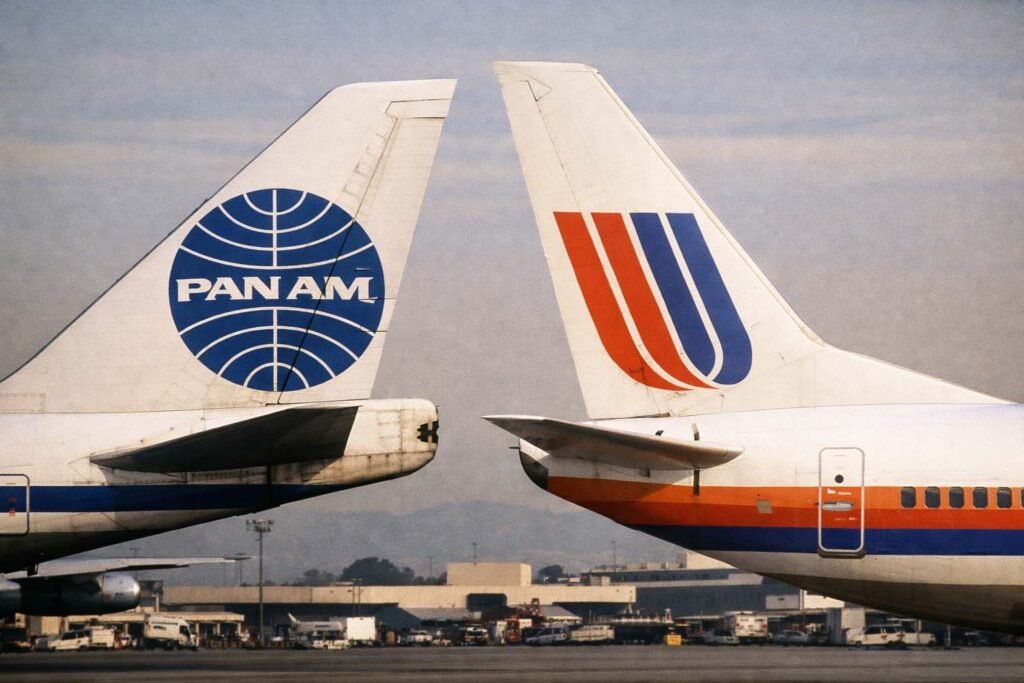
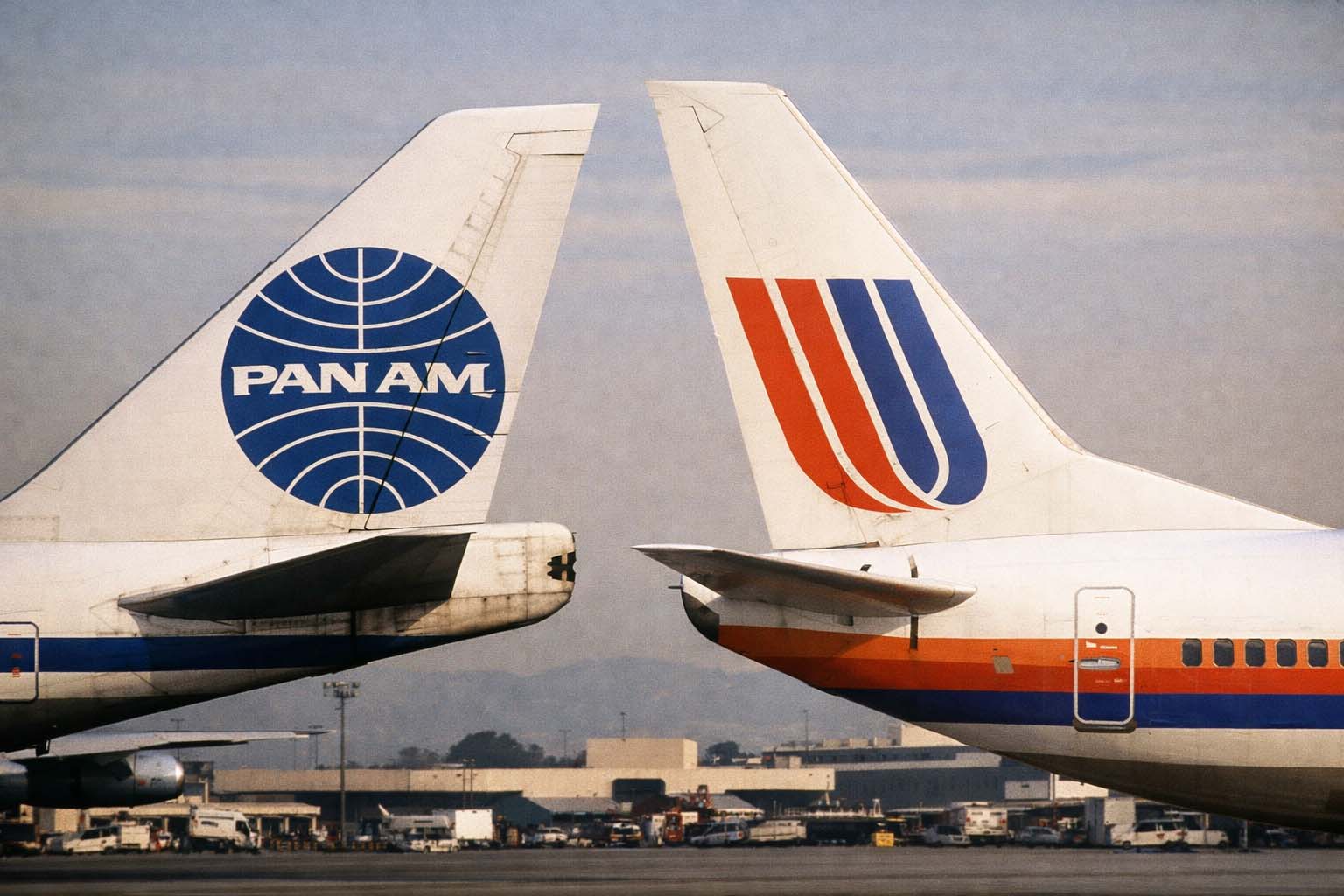
There was a time when Pan Am represented the pinnacle of global aviation, a carrier so dominant internationally that it became synonymous with air travel itself. But listening to United Airlines’ head of global network planning this week, it is clear that the modern reality has quietly surpassed that legacy.
At a media briefing earlier this week, United’s Patrick Quayle, SVP of Global Network Planning and Alliances, made a striking comparison that caught me by surprise:
“Our global network is four times larger than Pan Am in their international heyday.”
Now Pam Am’s heyday occurred before I was even born, but his statement was a reminder of how much the airline industry has changed, and how quietly United has built something unprecedented in scale.
Pan Am, for all its mythology, operated in a very different world. It dominated longhaul flying at a time when international travel was limited, heavily regulated, and far less accessible. Routes were fewer, frequencies were lower, and competition was constrained.
United, by contrast, is operating in a fully liberalized, hyper-competitive global market. And yet, it is not just competing…it is building a network that dwarfs anything that came before it.

This Is Not Just About Size, But Structure
It is tempting to dismiss this as a simple numbers game, but that would miss the more interesting point.
United’s network is not just bigger, but built in a competitive world in which longhaul routes were not carved out like colonial empires dividing spoils.
Quayle outlined a system built around what he described as “patterns, gauge, and premium.” That sounds like consultant language, but the execution is clear when you look at how United has organized its hubs.
Newark has become the airline’s primary longhaul gateway across the Atlantic, now serving 42 destinations in that region alone and 88 international destinations overall. Houston has grown into a powerhouse for Central and South America, with more connectivity than even Miami to Central America. Denver, once an afterthought for longhaul flying, is now the fastest-growing hub in the country with three times more European flying than in 2019. Chicago remains a massive connectivity engine, with more than 200 destinations and a growing longhaul footprint.
This is not random growth. It is specialization that has been years in the making. Each hub has a role, and together they form a network that is both broader and more flexible than anything Pan Am ever operated.
Scale Is Being Built On Domestic Foundations
Another piece of this story that often gets overlooked is how United is feeding that global network.
Before the pandemic, roughly a third of United’s domestic departures were operated by single-class 50-seat regional jets. Today, that number has dropped to about 10%, with two-thirds of departures now on mainline aircraft.
Bigger planes mean more seats, more premium capacity, and more efficient feed into longhaul routes. It is part of a broader strategy that has already increased the number of premium seats in United’s schedule by nearly 40% compared to 2018.

Pan Am Had Prestige. United Has Reach.
None of this diminishes what Pan Am represented.
It was the flag carrier of an era when international travel still felt exclusive, when flying itself carried a certain glamour that has largely disappeared today. But that prestige was built in a constrained environment.
United is operating at a completely different scale.
It serves more cities than any other airline in the world, by a wide margin. It is adding destinations that would have seemed improbable even a decade ago. As United’s Chief Commercial Officer Andrew Nocella put it earlier this week, “the world is getting smaller for United,” a line that would have sounded trite not long ago.
And yet here we are, with routes stretching deeper into secondary and tertiary markets across the globe that make the Pan Am route network look small.
CONCLUSION
The comparison to Pan Am is about perspective, not nostalgia.
For all the focus on product tweaks, premium cabins, and onboard Wi-Fi, the most important story in U.S. aviation right now may be the sheer scale of what United has built (and indeed, what American Airlines and Delta Air Lines are also aiming to build).
A network that is not just larger than Pan Am’s, but structurally more complex, more connected, and arguably more powerful. Pan Am defined the golden age of international travel. Now United wants to define what comes after it.
> Read More: United Airlines May Restore Historic Pan Am Fifth Freedom Route
Finally, a note to my esteemed regular readers. I realize I’ve focused a lot on United Airlines this week and there is still more to share…a lot more, actually. My thoughts are that these sorts of pieces are unique to Live and Let’s Fly and you’d see the same focus and concentration of articles if I was invited to another airlines’s media day, as we saw when I covered Alaska Airlines’ first 787 delivery earlier this year. Thank you for reading!



