LONDON— British Airways (BA) is set to launch a double daily service between London Heathrow (LHR) and Bengaluru (BLR) from June 1, marking the first time the airline has exceeded a single daily frequency on this route. The move positions BA more competitively against Gulf carriers as it expands its India network to a record nine daily flights.
Virgin Atlantic (VS) has also scaled up on the LHR-BLR route, operating up to 13 weekly departures this year, intensifying competition and driving BA to strengthen its own offering on one of the fastest-growing India-UK city pairs, Simple Flying reported.
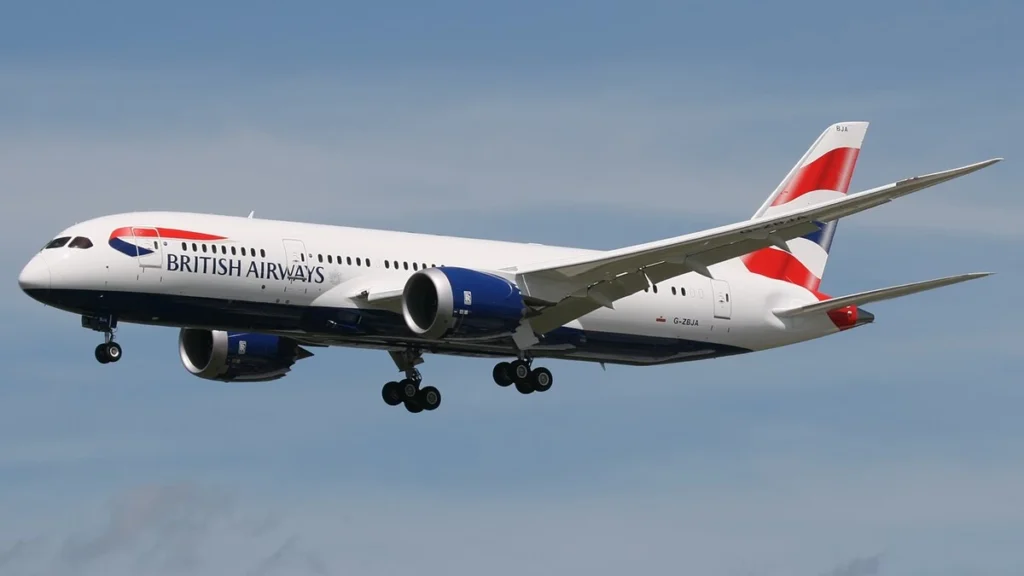
Wikimedia Commons
British Airways Doubles Flights to Bengaluru
BA has operated nonstop flights between London Heathrow (LHR) and Kempegowda International Airport (BLR) since 2005, making it the first airline to connect the two cities nonstop.
Kingfisher Airlines (IT) briefly operated the route in 2008-2009, followed by Air India (AI) from 2018, and Virgin Atlantic (VS) joining in 2024. Until now, BA had never surpassed a single daily service on this route.
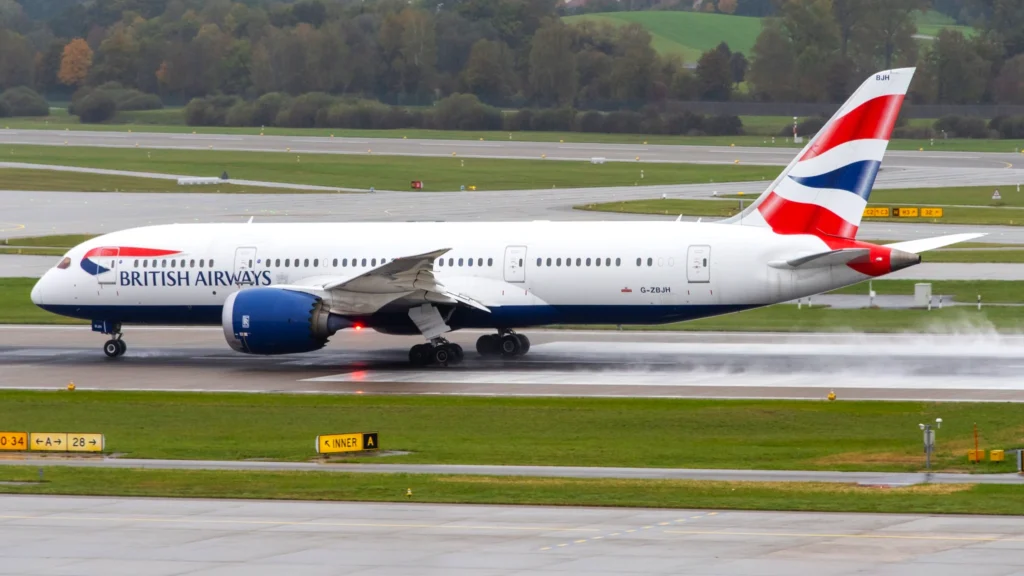
From June 1, two daily departures will operate in each direction using the Boeing 787-8, configured with 204 seats.
- The first departure from LHR departs at 9:55 am, arriving in BLR at 12:40 am the following day.
- The second departs at 2:00 pm, arriving at 4:50 am. From BLR, the two return flights depart at 2:40 am and 6:50 am, arriving at LHR at 8:55 am and 1:15 pm respectively.
The previously scheduled Boeing 777-200ER on the afternoon rotation has been replaced by the 787-8 on both new timings.
Strategic Importance: US Connectivity and Market Growth
The double daily schedule is not purely about the UK-India market. BA’s higher frequency on the LHR-BLR route is designed to capture a larger share of the United States-Bengaluru passenger flow, routing travelers through LHR.
Last year, over 75,000 BA passengers connected through Heathrow to reach the US from India. The top five US destinations by booking volume were New York (JFK), Dallas/Fort Worth (DFW), Austin (AUS), Chicago O’Hare (ORD), and Washington Dulles (IAD).
Gulf carrier capacity between the US and India remains significantly lower than pre-war levels, creating a competitive window for BA and other oneworld and non-Gulf airlines.
The staggered departure times across both BLR rotations help cover multiple US connection banks at LHR, giving BA a structural advantage in capturing transit traffic.

Why Bengaluru? Demand, Growth, and Yield Data
Bengaluru is the third-largest India-UK city pair by passenger volume from London. In 2025, approximately 320,000 round-trip passengers traveled between LHR and BLR, with traffic rising 24% year-over-year and 61% compared to 2023. These are among the strongest growth figures recorded for any Indian city in London.
Yields on the route are also notably strong by Indian market standards. The average one-way fare across all airlines and cabin classes on the LHR-BLR route stood at $837, compared to $671 for the longer LHR-Chennai (MAA) sector.
Premium cabin demand plays a key role in this dynamic, driven by Bengaluru’s large technology and multinational corporate sector.
When combined with Air India (AI) and Virgin Atlantic (VS), the three airlines plan 34 weekly departures between London and Bengaluru in June alone, representing a 62% increase over the prior record and offering up to five daily departures on the route.

BA’s Full India Schedule in June 2026
Across all five Indian cities it serves, BA plans nine daily departures from LHR during the first week of June. This is up 13% from the same week last year and 19% above pre-pandemic levels in June 2019.
The full schedule includes three daily flights to Mumbai (BOM), two daily to both Bengaluru (BLR) and Delhi (DEL), and one daily each to Chennai (MAA) and Hyderabad (HYD).
This makes India comfortably BA’s second most-served long-haul country by flight frequency. The expansion reflects a sustained push by BA to deepen its presence in the Indian market as bilateral demand grows and competition intensifies.
Stay tuned with us. Further, follow us on social media for the latest updates.
Join us on Telegram Group for the Latest Aviation Updates. Subsequently, follow us on Google News