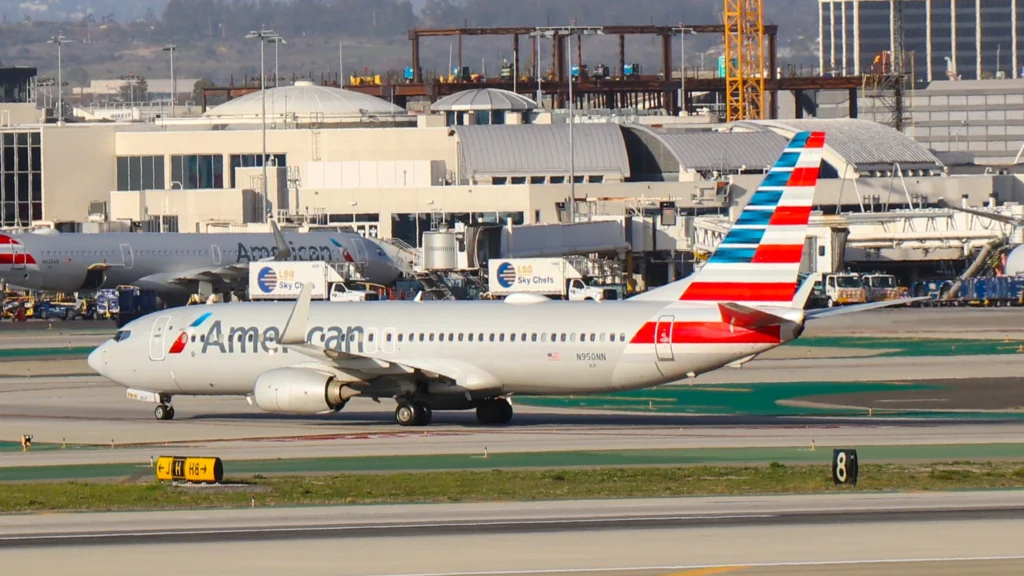
FORT WORTH- American Airlines (AA) operates major hub operations at Dallas-Fort Worth International Airport (DFW), where a carry-on baggage dispute escalated into a lawsuit involving arrest, injury claims, and a lifetime travel ban.
Passengers traveling from Evansville Regional Airport (EVV) to Phoenix Sky Harbor International Airport (PHX) allege wrongful denial of boarding, police escalation, and improper airline conduct following a disagreement over baggage rules.
American Airlines Carry-On Dispute
The lawsuit, filed in the Northern District of Texas, involves passengers Peter Williams and Mary Jane Williams, a married couple traveling on April 14, 2024.
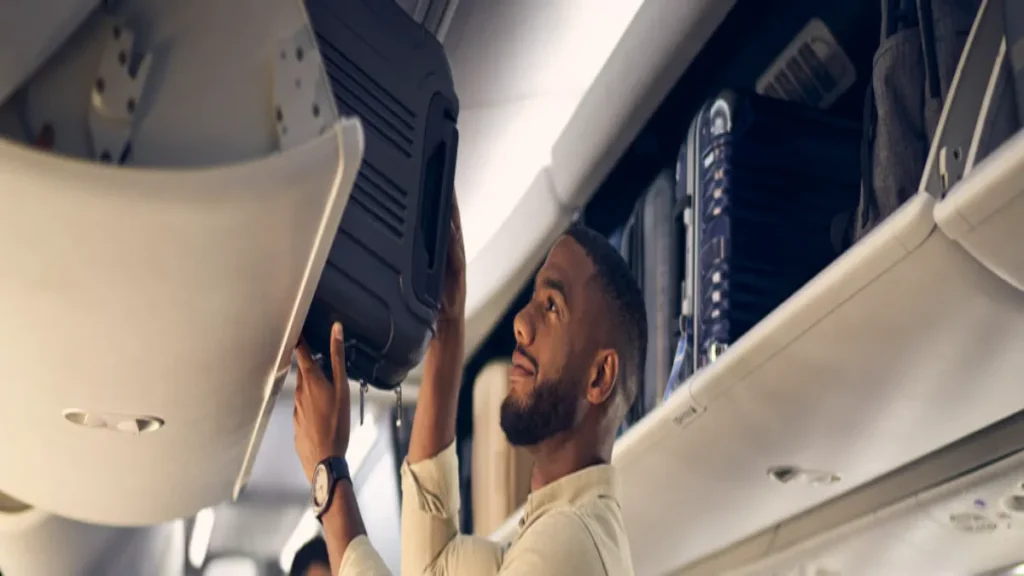
The dispute began when Mary Jane Williams was found carrying three items, exceeding the airline’s permitted carry-on allowance. Airline staff instructed her to check one item, but she refused.
Following the refusal, the airline denied boarding and involved airport police. According to the complaint, airline employees allegedly provided misleading or incomplete information, escalating a routine customer service issue into a law enforcement matter.
Police bodycam footage cited in the case shows repeated statements from officers such as “You’re denied boarding” and “This is not up for discussion.”
When Peter Williams questioned the basis of the decision and refused to leave, officers warned, “You need to walk with us or you’re going to be arrested.”
Officers later admitted uncertainty about the situation, stating that there was a “discrepancy” with airline staff and that instructions “maybe wasn’t clear.” One officer acknowledged, “I don’t know when the instructions were said,” indicating confusion during enforcement.

Arrest, Injury Claims, and Passenger Context
Peter Williams was forcibly arrested on charges including criminal trespass and resisting law enforcement.
During the arrest, officers noted visible injuries, stating, “You got two injuries right here.” The lawsuit highlights that the force used was excessive relative to the situation.
Bodycam footage also shows Williams expressing urgency, stating that the couple needed to reach Phoenix to care for their children, as their caregiver was unavailable. Despite this, officers proceeded with the arrest after repeated refusals to leave the gate area.
All charges against Williams were eventually dropped. However, the airline imposed a lifetime travel ban on both passengers, which the lawsuit argues exceeds the limits of the airline’s Conditions of Carriage.
Reported by View from the Wing, the case frames the incident as a failure of judgment and training, where poor communication contributed to unnecessary escalation.
Airline Authority and Contractual Rights
Under 49 U.S.C. § 44902(b), airlines have broad authority to refuse transportation to passengers deemed potentially disruptive or non-compliant.
In this case, refusal to comply with carry-on limits and failure to follow instructions may provide a legal basis for denial of boarding.
The airline’s Conditions of Carriage explicitly allow refusal of service to passengers who are uncooperative, refuse instructions, or engage in disruptive behavior.
The passengers’ refusal to check a bag and later to leave the boarding area strengthens the airline’s position under these terms.
Additionally, the Airline Deregulation Act limits the ability of passengers to bring state law claims related to airline services, including boarding and removal decisions.
Law Enforcement Role and Legal Causation
A central issue in the lawsuit is whether the airline can be held responsible for the arrest. In most cases, law enforcement decisions are considered independent.
Liability typically requires proof that airline staff knowingly provided false information that directly caused the arrest.
The plaintiffs allege that misleading statements were made, but establishing causation remains a significant legal challenge.
Courts generally require clear evidence of intentional misinformation to hold a private party accountable for police actions.
Comparative Cases and Industry Context
Legal precedent suggests that lawsuits against airlines for arrests are difficult to sustain. In one prior case, a passenger was wrongfully jailed for 17 days before charges were dropped due to mistaken identity.
Despite the severity, the court ruled that the airline had no duty to prevent the arrest when information was lawfully shared with authorities.
In another incident, a flight attendant called police on first class passengers during a dispute, but responding officers dismissed the situation upon arrival.
These examples show that law enforcement responses vary and are not always aligned with airline expectations.
This case differs significantly from the United Airlines (UA) passenger removal incident 2017, where a seated passenger was forcibly removed despite compliance.
In the current case, non-compliance with baggage rules and refusal to leave the gate area are central factors.
Customer Service vs Law Enforcement Escalation
The incident highlights a recurring concern in the aviation industry where customer service disputes are escalated to law enforcement instead of being resolved through de-escalation techniques.
While airlines have the authority to enforce rules, unclear communication and inconsistent instruction delivery can contribute to conflict escalation.
The bodycam footage suggests that instructions were not conveyed in a structured or clearly understood manner.
Passengers denied boarding have limited recourse at the moment of the incident. Disputes must typically be resolved later through formal complaints or legal action, reinforcing the importance of immediate compliance even in contested situations.
Bottom Line
The lawsuit presents a complex interaction between airline authority, passenger behavior, and law enforcement action.
While the passengers allege misconduct and excessive force, existing legal frameworks generally favor airline discretion and independent police authority.
The outcome will depend on whether the plaintiffs can prove that airline employees intentionally misled law enforcement, directly causing the arrest. Without such proof, the case faces significant legal barriers.
Stay tuned with us. Further, follow us on social media for the latest updates.
Join us on Telegram Group for the Latest Aviation Updates. Subsequently, follow us on Google News


