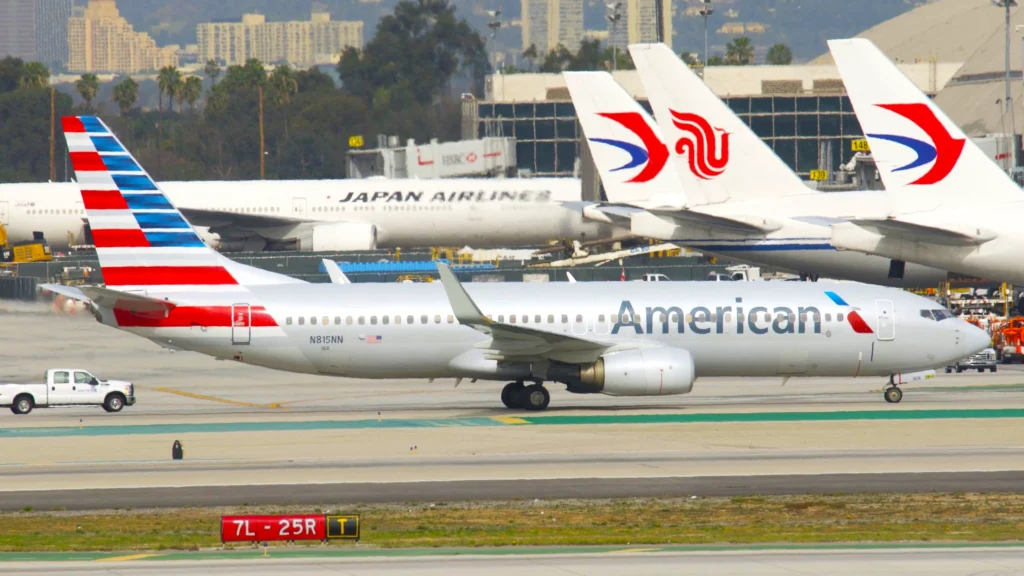
FORT WORTH- An American Airlines (AA) passenger was removed from a boarded aircraft at Dallas-Fort Worth International Airport (DFW) and rebooked on a later flight after a system error incorrectly showed them as not checked in, allowing a standby passenger to claim their seat.
The incident occurred on AA Flight 2324 operating from DFW to Austin-Bergstrom International Airport (AUS) on a Thursday evening.
The Executive Platinum member had scanned their boarding pass at the gate, answered exit row qualification questions, and taken their assigned seat before being told to deplane.
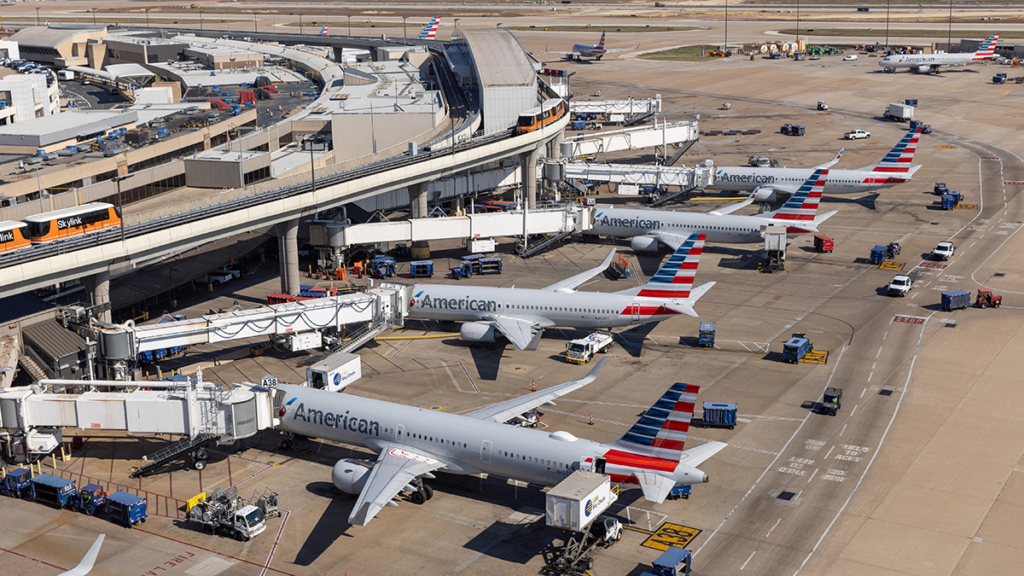
American Airlines Removes Boarded Passenger
The passenger boarded with Group 1 and was seated in an exit row when a standby traveler arrived claiming the same seat.
Flight attendants checked their iPad and found no record of the passenger in the check-in list, despite the passenger holding a valid, scanned boarding pass.
The gate agent, rather than boarding the aircraft to investigate, summoned the passenger to the door. She insisted the passenger had not checked in, a claim the passenger disputed by pointing out that the agent herself had asked them the exit row questions face-to-face at the gate.
Flight attendants on board acknowledged the situation was irregular and confirmed via their tablet that empty seats were available on the aircraft. Despite this, the gate agent refused to resolve the issue in the passenger’s favor.
She told the passenger that a $50,000 fine would result from a late departure, a claim aviation observers note has no regulatory basis. Gate agent performance metrics, not airline fines, would have been the actual consequence of any delay.
The passenger handed their car keys to a traveling companion, anticipating the outcome, and was removed from the flight. They were rebooked on the next available service to AUS, which was subsequently delayed twice.
The passenger arrived home at approximately 1:30 a.m., and because their companion did not wait, they incurred a $90 ride-share expense to get home from the airport, ViewfromtheWing reported.
What the Regulations Actually Say
The passenger’s removal appears to contradict both federal aviation regulations and American Airlines’ own Contract of Carriage.
Under 14 CFR 250.7, enacted following the 2017 David Dao incident, an airline cannot deny boarding or involuntarily remove a revenue passenger who has checked in before the deadline and whose boarding pass has been electronically scanned and accepted.
Exceptions exist only for safety, security, health, or verified disruptive behavior. None of those conditions applied here.
American’s own conditions of carriage separately state that the airline will not involuntarily remove a revenue passenger who has already boarded in order to seat another passenger.
The technical reason for the removal appears to be a system error. Once the passenger’s boarding pass was scanned, something in American’s system reverted their check-in status. When the gate agent reviewed the flight around 15 minutes before departure, the passenger appeared as a no-show.
The seat was released to the standby traveler, and the flight was closed out. At that point, the agent chose to remove the original passenger rather than reopen the manifest and correct the error.
Compensation Rules and Why They Don’t Apply Here
In standard oversale situations, American Airlines uses elite status and seat assignment to prioritize which passengers are bumped. An Executive Platinum member would not ordinarily lose their seat to a standby passenger under any normal circumstances.
However, because this removal stemmed from a system error rather than an oversale situation, the standard involuntary denied boarding compensation rules do not automatically apply.
In a confirmed oversale scenario, the airline would owe 400% of the one-way fare, up to $2,150. That specific trigger was not met here, even though the practical outcome for the passenger was the same.
The aircraft and crew were overnighting in Austin, meaning there was no downstream scheduling risk that would have justified urgency in closing the flight. The empty seats confirmed by flight attendants made the decision to remove the passenger even more difficult to justify operationally.
Stay tuned with us. Further, follow us on social media for the latest updates.
Join us on Telegram Group for the Latest Aviation Updates. Subsequently, follow us on Google News


