Etihad Airways has been on quite the expansion kick lately, as the airline is trying to grow its destinations at a record pace. We’ve seen the airline add quite a few new routes in recent months, though here’s perhaps the single most concentrated regional expansion we’ve seen.
Etihad increases China from 28 to 35 weekly flights
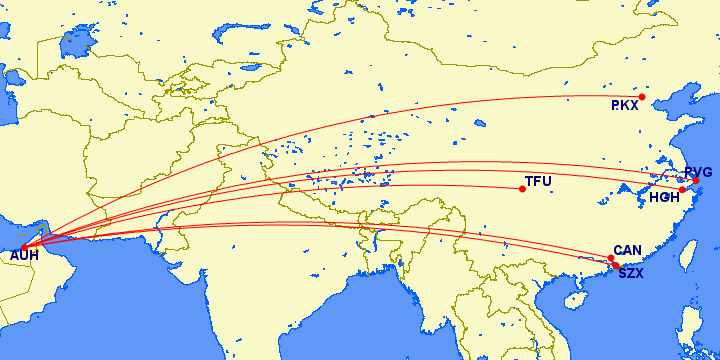
Etihad Airways has announced plans to massively increase its China service, as the airline will go from seven weekly flights to one destination, to 35 weekly flights to six destinations. Etihad plans to launch the following five new routes from Abu Dhabi (AUH) to China, complementing existing 7x weekly flights to Beijing (PKX):
- As of October 1, 2026, Etihad will launch 7x weekly flights to Shanghai (PVG)
- As of March 4, 2027, Etihad will launch 7x weekly flights to Guangzhou (CAN)
- As of March 4, 2027, Etihad will launch 5x weekly flights to Hangzhou (HGH)
- As of March 5, 2027, Etihad will launch 4x weekly flights to Chengdu (TFU)
- As of March 7, 2027, Etihad will launch 5x weekly flights to Shenzhen (SZX)
The above is limited to mainland China, and doesn’t include services to Hong Kong (HKG) and Taipei (TPE).
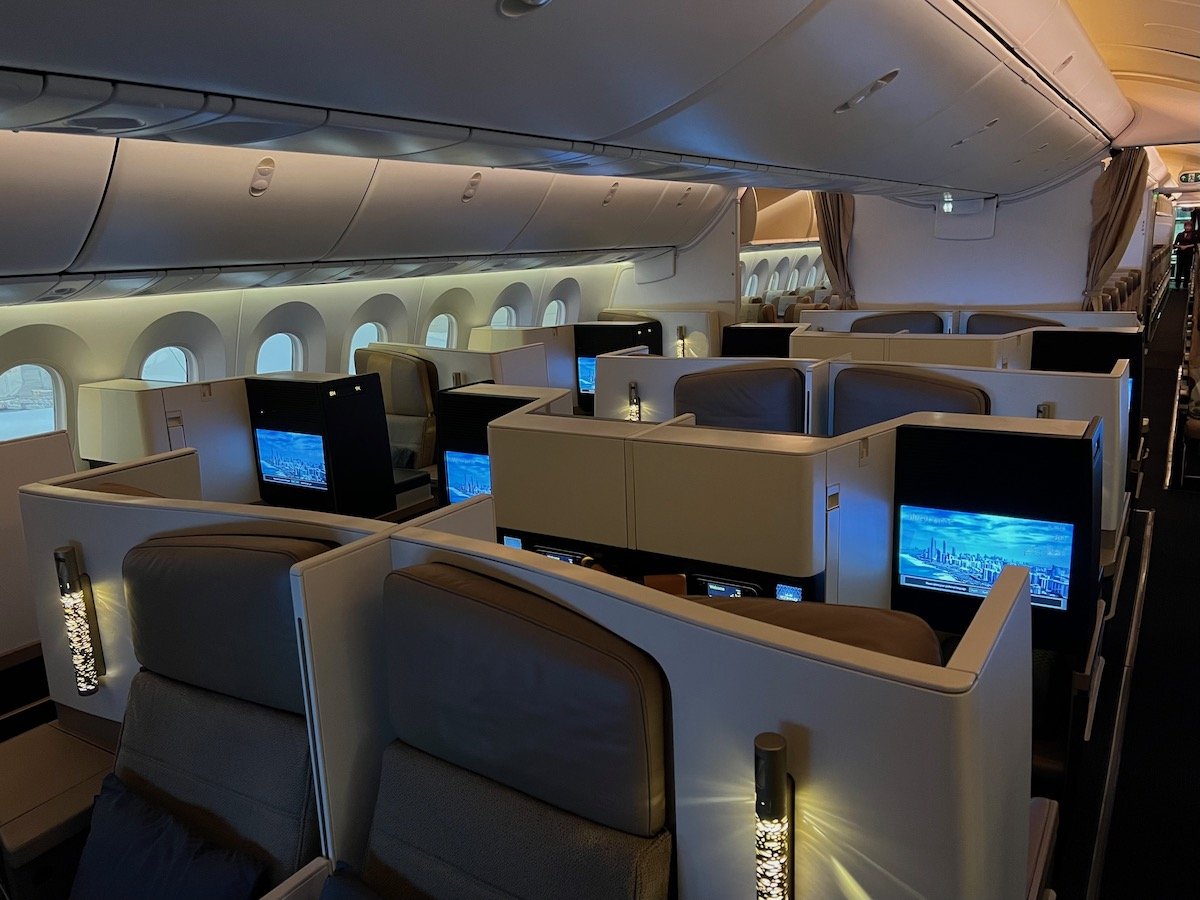
All routes will be operated by Boeing 787-9s, featuring 290 seats, including 28 business class seats and 262 economy class seats. As it’s described, this new service “reflects the growing strategic importance of the UAE–China corridor, strengthening links across trade, tourism and investment, while positioning Abu Dhabi as a key gateway between China and markets across the Middle East, Africa, Europe and North America.”
The expanded network is intended to “significantly enhance the movement of passengers and goods between the two countries, while increasing access to China’s major commercial, industrial and technology centres.” All routes are part of Etihad’s joint venture with China Eastern, which provides coordinated services across key gateways, with China Eastern currently flying to the UAE from Shanghai (PVG), Kunming (KMG), and Xi’an (XIY).
Here’s how Etihad CEO Antonoaldo Neves describes this growth:
“China is a strategically important market for Etihad and a key pillar of our network growth. This expansion represents a significant increase in capacity and a clear signal of our long-term commitment to the market.”
“By adding five new destinations and increasing frequencies, we are strengthening connectivity across one of the world’s most important economic corridors. This will support growing demand for travel and trade, while creating new opportunities for cargo, business and tourism. At the same time, we are strengthening Abu Dhabi’s role as a key destination and gateway for travel and trade, supporting the emirate’s long-term economic ambitions.”
What’s driving this sudden expansion in China?
It’s interesting to see an airline go from one to six route to a country in a short period, and Etihad even describes this as one of its biggest single market increases in history. What’s driving this expansion, and to what extent does the Iran conflict factor into this growth?
First, we have seen a recent expansion of bilateral air rights between the United Arab Emirates and China, so the level of growth is only possible thanks to that (though prior to this, there were some bilateral slots not being utilized).
But I can’t help but find five new routes to one country to be quite the announcement. While Etihad is currently growing at a fast pace, most of that growth is with newly delivered Airbus A321LRs, so this added China service requires a lot of wide body capacity.
China is an international market that has cooled off considerably in recent years. International demand to and from China is down materially, and Chinese airlines have struggled to restore their pre-pandemic capacity. So yields on these routes are unlikely to be great.
I suspect that Etihad feels like it can get a leg-up over its two Gulf rivals in China, given that the airline otherwise doesn’t have any markets where its network is fully competitive with Emirates and Qatar.
I’m also curious to what extent the current conflict, and long term implications, might impact Etihad’s growth strategy. After all, adding long haul service to China will come at the expense of adding long haul service elsewhere.
Bottom line
Etihad is massively growing its service to mainland China, as the airline is going from one route to six routes, and from 7x weekly flights to 35x weekly flights. This is possible thanks to a boosted bilateral agreement between China and the UAE, plus it’s also a priority because of the China Eastern joint venture. Growing so much in China right now counters the industry trend, so I’m curious if the airline follows through on all of this as planned.
What do you make of Etihad adding so many China routes?


