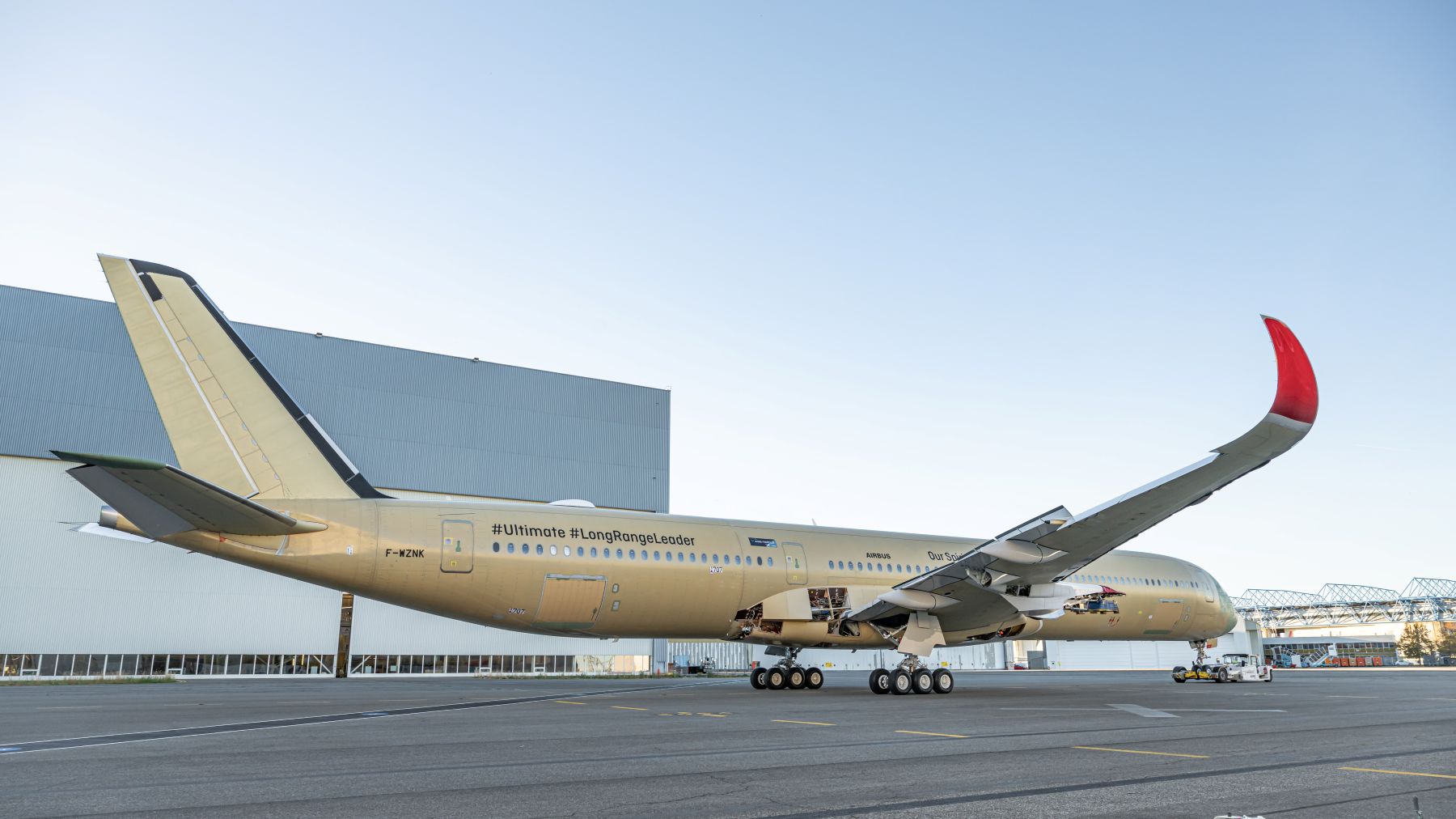
Qantas’ first A350-1000ULR this week received its new Rolls-Royce engines, marking another major milestone for the airline’s long-awaited Project Sunrise programme. From 2027, the aircraft is set to operate non-stop flights from Australia’s east coast to both London Heathrow and New York JFK, redefining ultra-long-haul travel.
The airline has a total of 12 A350-1000ULRs on order for Project Sunrise, alongside 12 additional A350-1000LRs and Boeing 787-9s and 787-10s under Project Fysh, aimed at replacing its older Airbus A330 and Airbus A380 fleet. Here’s what travellers can expect from Qantas’ new dawn of long-haul travel.
How is Qantas’ A350-1000ULR different from the standard A350-1000?
Bearing test registration F-WZNK, Qantas’ first A350-1000ULR rolled out of the hangar in Toulouse this week. Fitted with two Rolls-Royce Trent XWB engines, the aircraft is ready to commence final ground checks and a two-month flight testing period. The second ULR airframe commenced production in February 2026.
Airbus has modified its A350-1000 to enable the ultra-long-haul travel Qantas requires for its Project Sunrise mission. The changes made to the aircraft are internal and have been made without stretching the existing airframe.
Modifications are internal to increase range and fuel efficiency
The most significant modification is a new rear centre fuel tank, which brings total fuel capacity to 130,700 kilograms, which is 6,000 kilograms more than the standard -1000. Combined with aerodynamic improvements, including taller wingtips that reduce drag and improve fuel efficiency, the ULR is expected to exceed a range of 18,000 kilometres. The increased range is more than 1,000 kilometres, more than the -1000’s range of 16,700 kilometres, enabling non-stop flights between Sydney, London, and New York.
To be able to carry the extra fuel weight, the aircraft will fly with fewer passengers than a standard -1000. Qantas has configured its ULR’s with 238 seats, significantly lower than the 350 or more seats found on a typical -1000. The lower seat count is not a mistake but an engineering calculation that makes ultra-long-haul missions possible.
From the outside, the -1000ULR looks identical to the standard variant. The fuselage remains 73.7 meters, the wingspan stays at 64.6 meters, and both aircraft cruise at Mach 0.85 (1,049 kilometres per hour). The Rolls-Royce Trent XWB-97 engines fitted to Qantas’ new ULR are the same found on the -1000.
What to expect onboard Project Sunrise
Flight times from Sydney to London are expected to top 22 hours, witnessing two sunrises. Considering the long flight time, Qantas has designed its new Airbus A350-1000ULR with wellbeing as a priority. Aircraft will feature a Wellbeing Zone: a space dedicated to movement, along with a selection of healthy snacks and refreshments. The A350 will feature 12 lighting scenes, including Sunrise, Sunset, and Awake, which will aid passengers’ circadian rhythm to help adjust to time zones and reduce jet lag.
Aircraft cabins and seating are to be designed by industry leaders Caon Design, Neil Parry, and the University of Sydney to maximise comfort and wellbeing during flight. Each aircraft will be configured with 238 seats, with more than 40% of seats in premium cabins, representing Qantas’ most premium-focused aircraft to date.
-
Six First Class suites with an 80-inch lie-flat bed and a separate reclining armchair.
-
52 Business Class suites with an 80-inch lie-flat bed, a sliding privacy door, and an innovative design to deliver exceptional comfort.
-
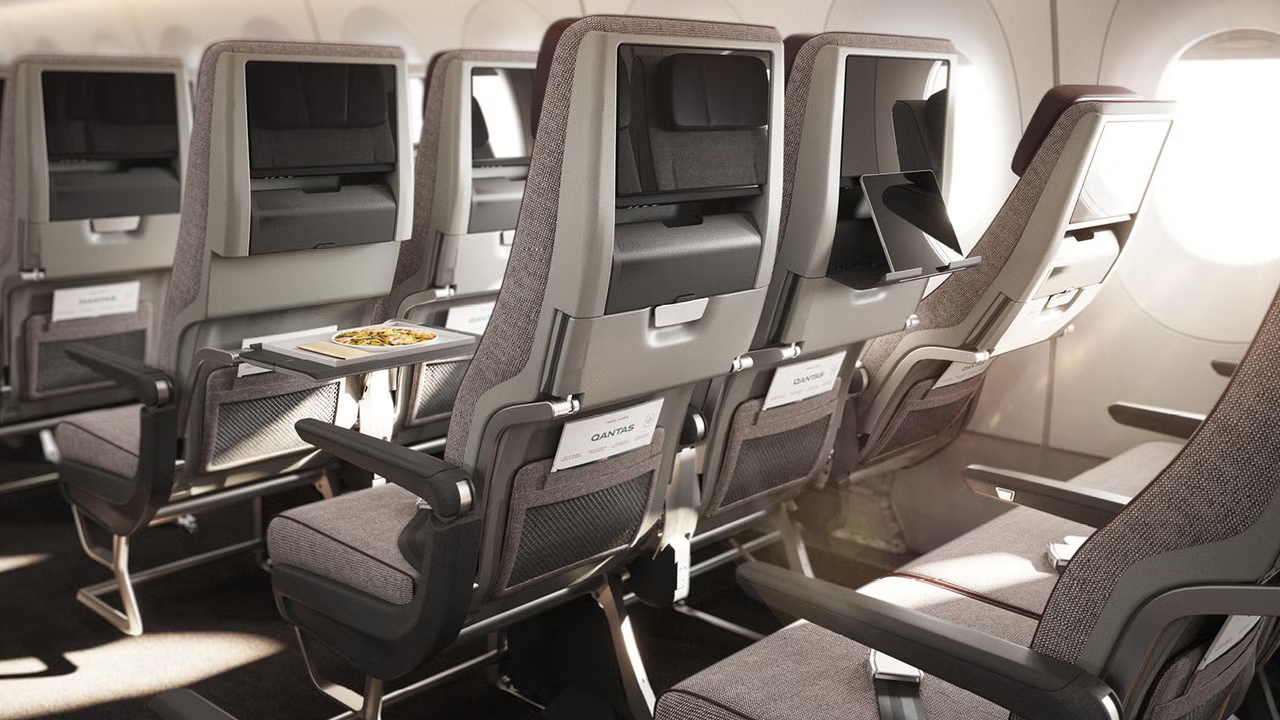
40 Premium Economy seats with 40 inches of pitch, adjustable winged headrest, calf and leg rest, and a 13.3-inch touchscreen.
-
140 Economy seats arranged in a 3-3-3 configuration, each with 33 inches of pitch, adjustable headrest, calf rest, and Bluetooth headphone connectivity.
Project Fysh: replacing Qantas’ core fleet
Named after the co-founder of Qantas, Sir Hudson Fysh, the project’s mission is to renew the airline’s core fleet alongside Project Sunrise. The order consists of 12 Airbus A350-1000’s and 12 Boeing 787 Dreamliners, with deliveries beginning from 2027.
Collectively, the new aircraft will start to replace Qantas’s aging Airbus A330’s and its ten A380’s from 2032 onwards. The deal with Airbus also includes access to 500 million litres of sustainable aviation fuel per year from 2028, which is enough to meet up to 90% of the airline’s fuel requirements.
Qantas is a Seven Star Safety Rated airline
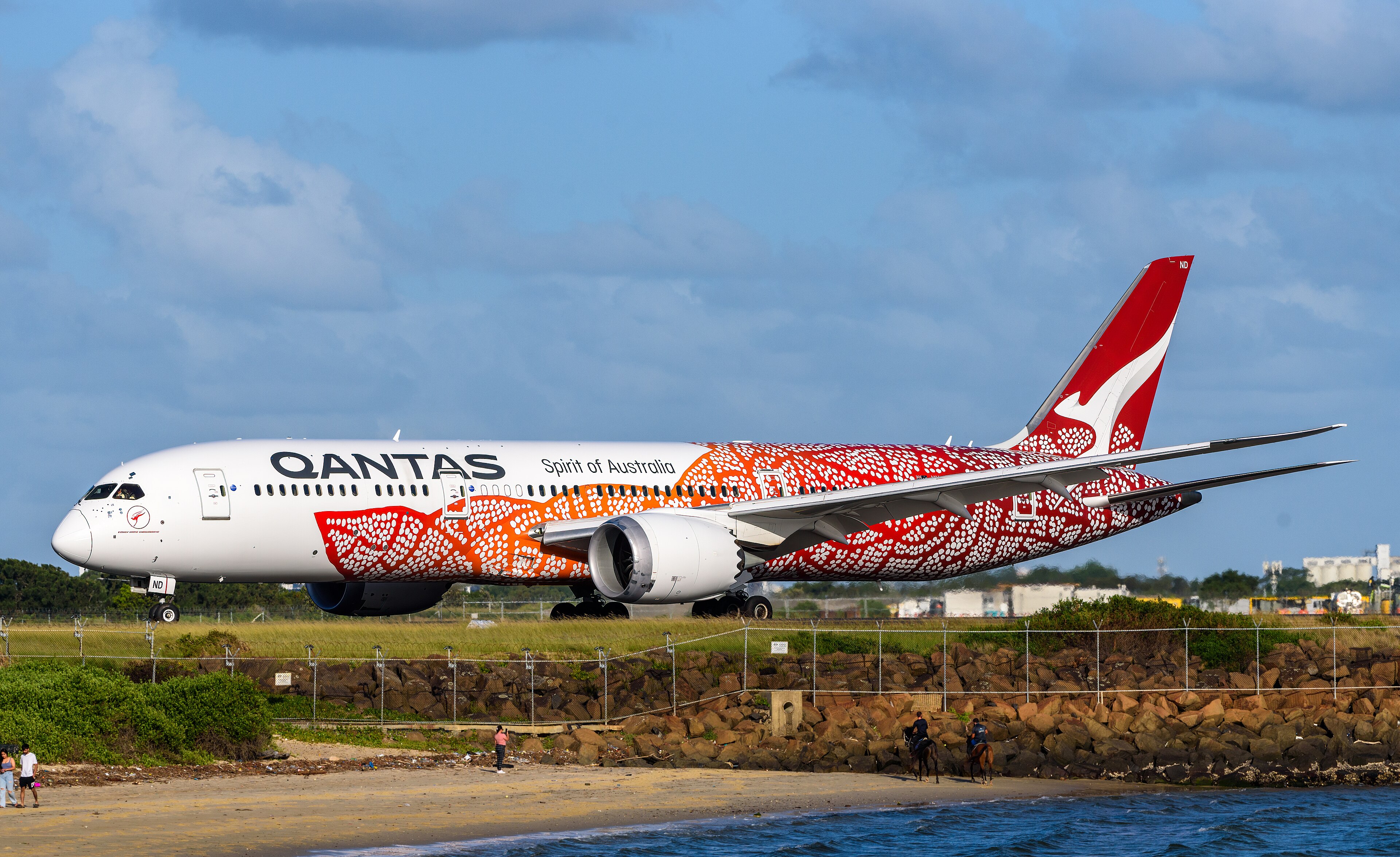
As part of AirlineRatings’ assessment of over 320 global airlines, Qantas retains a Seven Star Safety Rating. The airline has not had a fatal crash in over fifty years, maintains a strong and robust safety culture, and is regarded as one of the leading airlines in terms of safety.
READ: AirlineRatings’ World’s Safest Airlines 2026.
The path to Project Sunrise’s commercial service
Qantas launched the Kangaroo Route on December 1, 1947, using a Lockheed L-749 Constellation, taking five days with multiple stops between Sydney and London. Over the decades, the route has developed with the airline now using an Airbus A380, with a single stop in Singapore.
Announced in August 2017, Qantas’ Project Sunrise aims to push aviation to the limits in terms of aircraft range. When the new direct route commences in 2027, Sydney to London will become the longest non-stop commercial flight in history, the final chapter of a journey that started 80 years ago.
The engines fitted to Qantas’ first A350-1000ULR mark the first step in pioneering aviation history.


