South Korea’s Incheon International Airport, voted the world’s second-best airport after Changi Airport in the 2026 Skytrax awards, is facing intensifying competition from regional rivals in China, Japan and Singapore, prompting calls for further expansion.
According to data from the Airports Council International, Incheon handled 73.55 million international passengers last year, naking it the third busiest airport globally just after Dubai International Airport in the UAE and London Heathrow Airport in the U.K.
Kim Bum-ho, acting president and CEO of Incheon International Airport Corporation, credited strong government backing and workforce efforts for transforming Incheon International Airport into a global hub, according to Maeil Business Newspaper.
The airport handled 19.78 million passengers in the first quarter, up 7% year-on-year.
The growth was largely driven by sustained travel demand to Japan and a surge in Chinese visitors, following the extension of visa-free entry policies for Chinese group tours, Korea Times reported.
Industry experts warned that further capacity expansion is becoming increasingly urgent as neighboring countries accelerate infrastructure investment, Maeil Business Newspaper reported.
 |
|
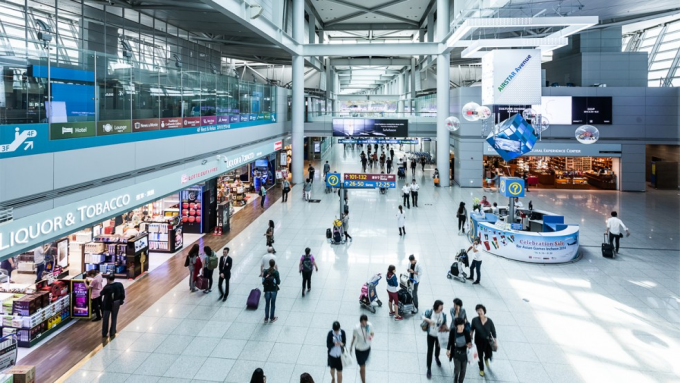
Incheon International Airport in South Korea. Photo by Skytrax |
Incheon Airport completed its fourth-phase expansion in November 2024, increasing annual passenger capacity to 106 million and strengthening its position as a Northeast Asian hub.
However, a third passenger terminal and a fifth runway to support low-cost carriers and additional international services is under review.
Japan’s Narita International Airport plans to begin operating its newly added and expanded runways in March 2029, increasing annual takeoff and landing capacity from 300,000 to 500,000, Japan’s Mainichi newspaper reported.
China has also unveiled plans to develop multiple international and regional hubs, including Beijing, Shanghai and Guangzhou, intensifying competition.
Beyond Northeast Asia, Hong Kong International Airport is set to open an expanded Terminal 2 next month, while Singapore Changi Airport has begun construction of Terminal 5.
Experts warn that airports failing to expand in time risk losing competitiveness and becoming feeder hubs, citing the case of Heathrow Airport losing ground to Charles de Gaulle Airport in the 2010s.


