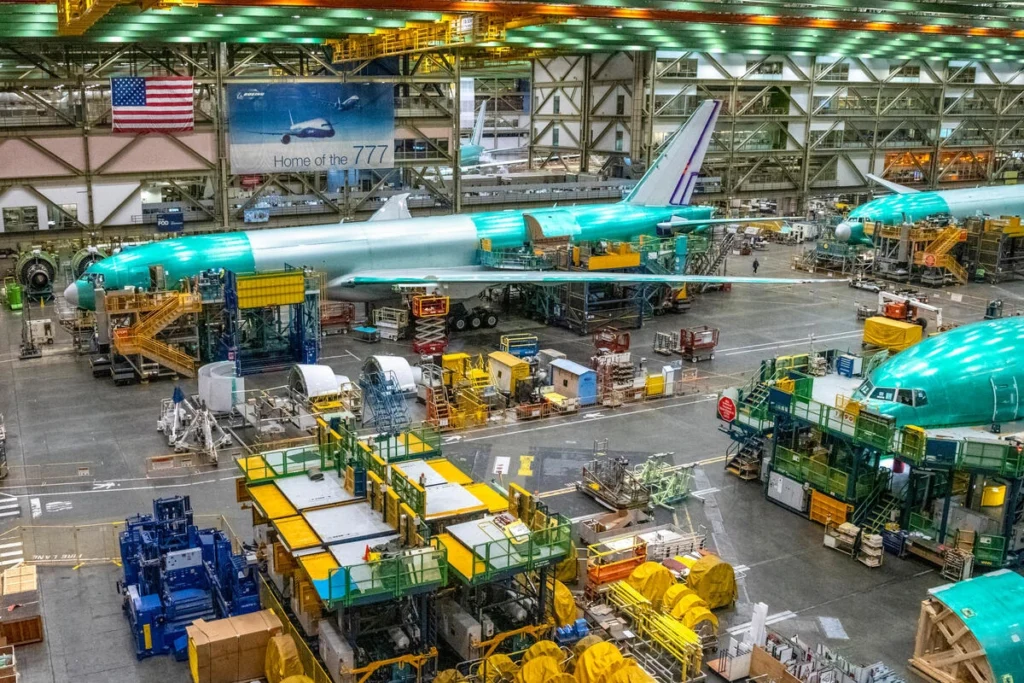
SEATTLE- Boeing has disclosed that approximately 30 early-production 777X widebody jets will require modifications before they can reach customers.
The airframer revealed the scale of the rework during its Q1 2026 earnings call on April 23, as the 777-9 variant continues to progress through Federal Aviation Administration (FAA) certification testing.
Boeing still targets first delivery in 2027, with Lufthansa (LH) at Frankfurt Airport (FRA) expected to serve as the launch operator.
The modification effort adds another layer of complexity to a program that has slipped roughly six years behind its original schedule.
CEO Kelly Ortberg described the change incorporation process as a consequence of building aircraft early to capture manufacturing insights before the design was fully locked.
GE Aerospace (GE), the exclusive supplier of the GE9X engine that powers the 777X, is simultaneously working on a fix for a mid-seal durability issue discovered in January 2026 during a shop visit.
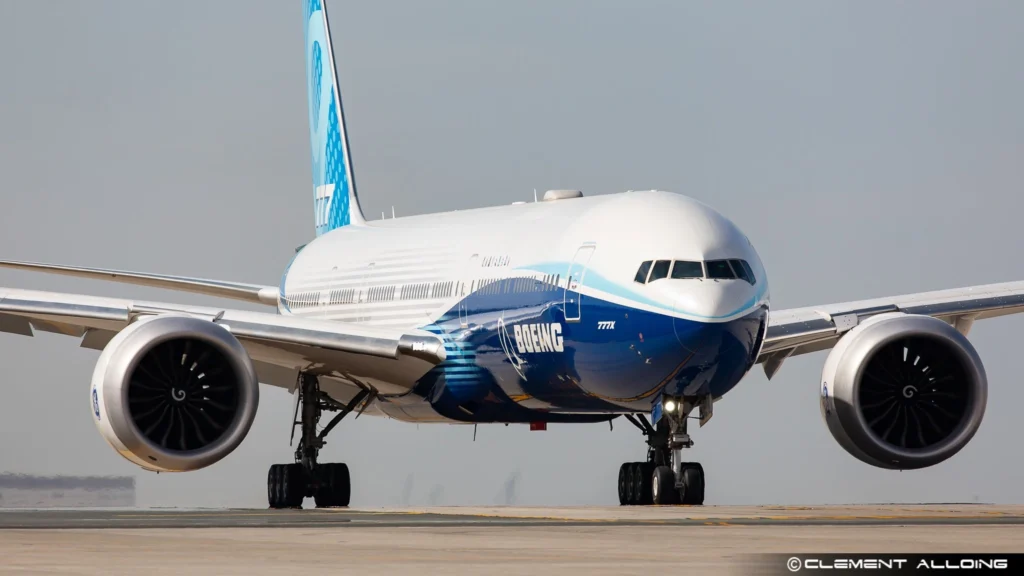
Why do 30 Boeing 777X Aircraft Need Rework?
Boeing built these aircraft over several years while the 777X program navigated repeated certification delays, design changes, and production improvements.
Each jet now requires updates to incorporate modifications that emerged during flight testing, FAA certification activities, and manufacturing process refinements, FlightGlobal reported.
Ortberg explained that the company will bring all affected aircraft down to a common configuration level before applying the final changes, calling this approach the most efficient path forward.
The scope of work varies by airframe age. Older aircraft demand more extensive modifications, including structural changes, while newer jets only need minor upgrades.
Boeing has established a dedicated team within its commercial aircraft division (BCA) to manage this process. Each aircraft carries a unique work scope, and the team is currently defining the full statement of work for every jet in the queue. The entire change incorporation process will stretch over several years.
Ortberg addressed investor concerns directly during the earnings call, clarifying that “change incorp” covers updates resulting from certification findings, productivity improvements, and process changes accumulated since each aircraft was originally assembled.
The work includes both structural and systems-level modifications depending on the build date of each airframe.
Certification Progress: TIA Phase 4A and the Road to Phase 5
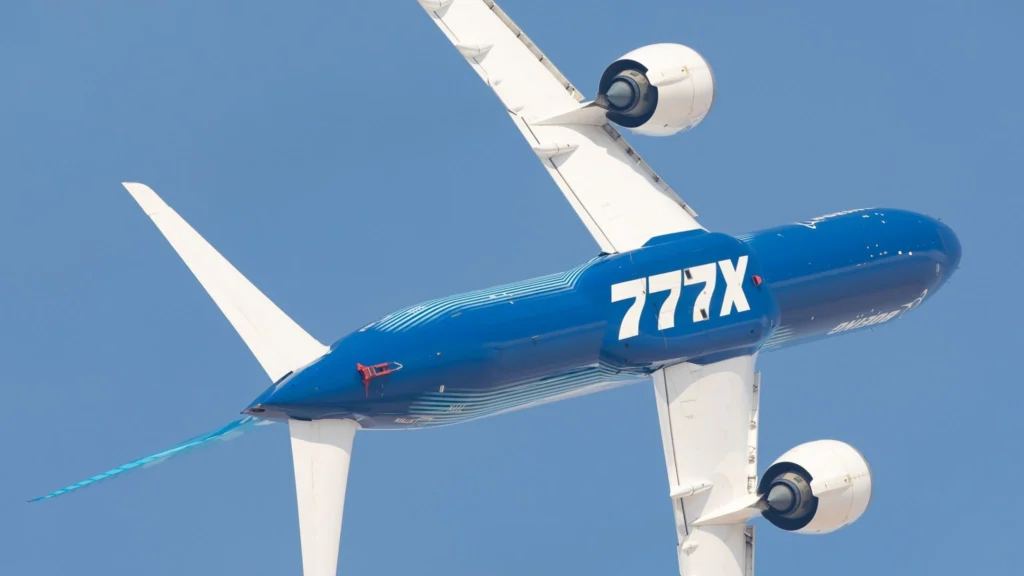
The 777-9 certification program has advanced to Type Inspection Authorization (TIA) Phase 4A, which the FAA approved on March 17, 2026. This phase focuses on natural icing tests, and Boeing prioritized completing this work while suitable icing conditions remained available in Alaska.
Ortberg noted the importance of capturing this seasonal weather window to avoid delays in searching for icing conditions later.
TIA Phase 4 is split into two sections. Phase 4A, which Ortberg described as “not a super-large package,” centers on icing evaluations. Phase 4B, expected “very soon,” represents a significantly larger block of tests and will be critical for continuing the flight test campaign.
Together, Phases 4A and 4B account for roughly the same volume of testing as the earlier Phase 3, which began in November 2025 and focused on avionics and primary flight control systems.
After completing Phases 4A and 4B, the program moves into Phase 5, the final TIA stage. That phase will be followed by Functionality and Reliability (F&R) testing and Extended Operations (ETOPS) trials before the FAA can grant type certification.
Boeing has accumulated more than 4,000 hours of 777-9 flight testing across four dedicated test aircraft (WH001 through WH004), though not all hours qualify for certification credit.
GE9X Engine Durability Issue and Its Impact on the Program
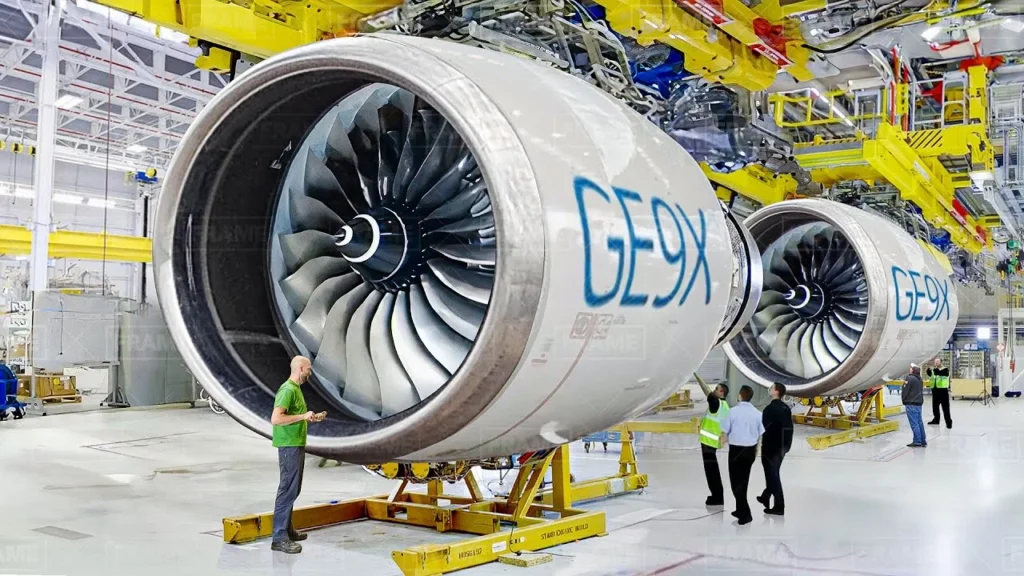
GE Aerospace identified a durability concern in the mid-seal component of the GE9X engine in January 2026 during a routine shop visit involving a flight-test engine. Mid seals balance temperature and pressure between turbine stages inside the engine core, and a crack in one seal prompted a full investigation.
GE CEO Larry Culp confirmed during the company’s Q1 2026 earnings call on April 21 that engineers have identified the root cause and are ramping supplier production for the redesigned component. Despite the issue, Ortberg stated that the engine problem is “not impacting” the flight-test program.
Boeing is conducting periodic inspections and incorporating them into operations to keep the test aircraft flying.
Boeing and GE Aerospace are working with the FAA to fold the engine fix into the broader certification plan. Both companies maintain that the resolution will not push the 777-9 certification beyond the current 2027 delivery timeline.
The GE9X, which received its FAA type certificate in September 2020, remains the largest and most powerful commercial turbofan engine ever built.
What This Means for Airlines Waiting on the 777X
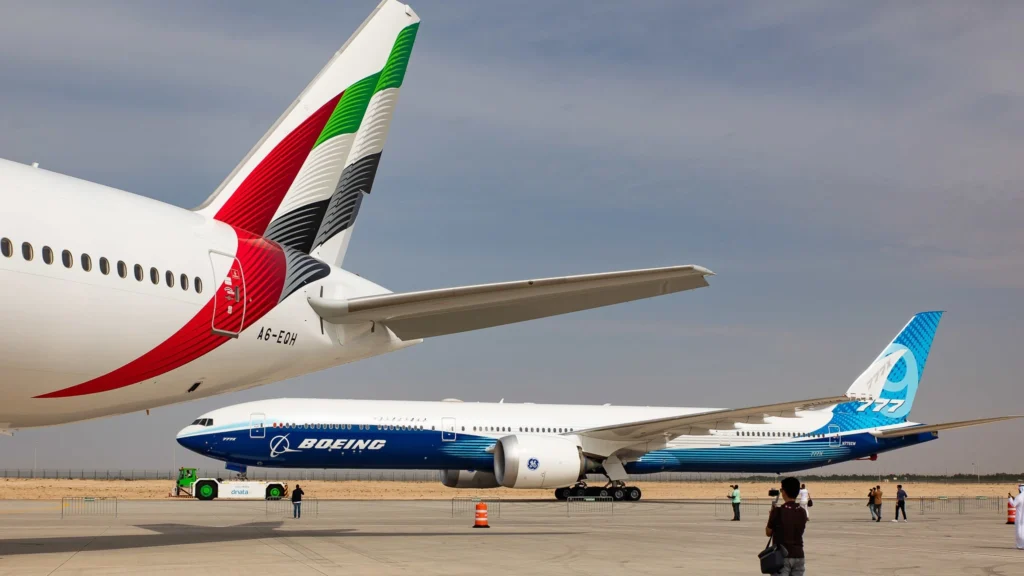
The 777X order book includes commitments from several major carriers. Emirates (EK), the largest customer with 270 aircraft on order, has launched a large-scale retrofit program across its existing Boeing 777 and Airbus A380 fleets to manage capacity during the extended wait. Lufthansa (LH) remains positioned as the launch operator for the 777-9.
The program’s delays have forced airlines to extend operations of older widebody types, including the Boeing 747-8 and 777-300ER.
Boeing delivered 143 commercial aircraft across all programs in Q1 2026, its highest first-quarter total since 2019. Commercial aircraft revenue rose 13% year-over-year to $9.2 billion for the quarter.
Boeing posted an adjusted loss per share of $0.20 for Q1, outperforming analyst expectations.
The company also secured FAA certification for increased maximum takeoff weight on the 787-9 and 787-10 during the quarter, providing additional value to operators of those widebody platforms while the 777X program continues its path toward service entry.
Stay tuned with us. Further, follow us on social media for the latest updates.
Join us on Telegram Group for the Latest Aviation Updates. Subsequently, follow us on Google News


