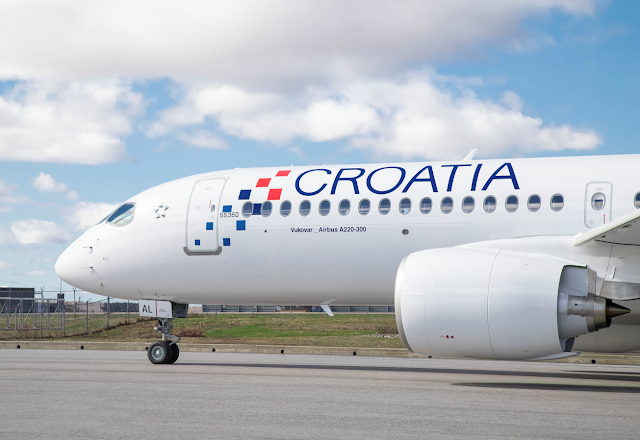

Croatia Airlines has registered a net loss of 29.9 million euros during the first quarter of 2026, almost double the 15.9 million deficit recorded a year earlier. Its financial performance deteriorated despite a solid increase in passenger traffic, as a surge in costs significantly outpaced revenue growth. Although total revenue rose to 50.6 million euros, up 6% year-on-year, the improvement was insufficient to offset a steep rise in expenditure. Operating costs climbed 26% to 80.5 million euros, pushing the airline to an operating loss of 22.1 million, compared to 15.4 million in the same period last year. The gap between income and spending has widened notably.
Much of the cost increase came from external factors. Fuel expenses rose as a result of geopolitical tensions and the escalation of conflict in the Middle East, which drove up the price of jet fuel at a pace exceeding that of crude oil. At the same time, the carrier faced higher charges for airport and air traffic services, while maintenance costs increased alongside the growing complexity of its fleet. Depreciation expenses also rose with the introduction of new Airbus A220 aircraft. “Business in the first quarter of 2026 took place in a complex environment where both the effects of the fleet transition cycle and unfavourable external developments were present. These factors had a cumulative effect on operations”, Croatia Airlines said. The situation was further worsened by currency movements, with exchange rate losses linked to the stronger US dollar adding over six million euros to the overall loss.
Croatia Airlines remains in the middle of an extensive fleet renewal programme, which is placing additional strain on its short-term financial performance. The transition to A220 aircraft is intended to improve efficiency over the long run, but in the near term it is generating overlapping costs, including crew training, maintenance reserves and the simultaneous operation of different aircraft types. Delays in aircraft deliveries have further complicated the process, forcing the airline to retain older jets longer than planned and absorb additional leasing and maintenance expenses.