Singapore Airlines has confirmed Starlink as its new in-flight Wi-Fi provider, with rollout planned from 2027 across A350 LH, A350 ULR and A380 aircraft.
Following its earlier confirmation that Low Earth Orbit (LEO) satellite Wi-Fi was on the way, Singapore Airlines has now formally named Starlink as its chosen provider, with installations beginning in early 2027 and a rollout on selected aircraft expected to wrap up by the end of 2029.
It’s the answer most of us were expecting, since Starlink has been the runaway winner among recent airline tenders for LEO satellite connectivity, but the press release also reveals some interesting details about which aircraft are getting the kit, and importantly, which ones aren’t.
The official details
Here’s what SIA has confirmed in its press release:
- Provider: Starlink (SpaceX)
- Rollout starts: Q1 2027
- Rollout completes: End of 2029
- Aircraft included: Airbus A350 Long Haul, Airbus A350 ULR, and Airbus A380
- Speed: Up to 1 Gbps per antenna using Starlink’s Aero Terminal
- Pricing: Free for all customers, but the existing KrisFlyer membership requirement is retained for Premium Economy and Economy passengers

“Fast, seamless connectivity is, today, an essential part of the travel experience. Singapore Airlines already offers the world’s most comprehensive complimentary in-flight Wi-Fi across our entire fleet. Starlink will take this to the next level by delivering next-generation high-speed connectivity, enabling customers to stay entertained, connected, and productive throughout their journey, with a smoother and seamless experience from take-off to landing.”
Yeoh Phee Teik, SVP Customer Experience, Singapore Airlines
Which aircraft miss out?
Here’s where it gets interesting.
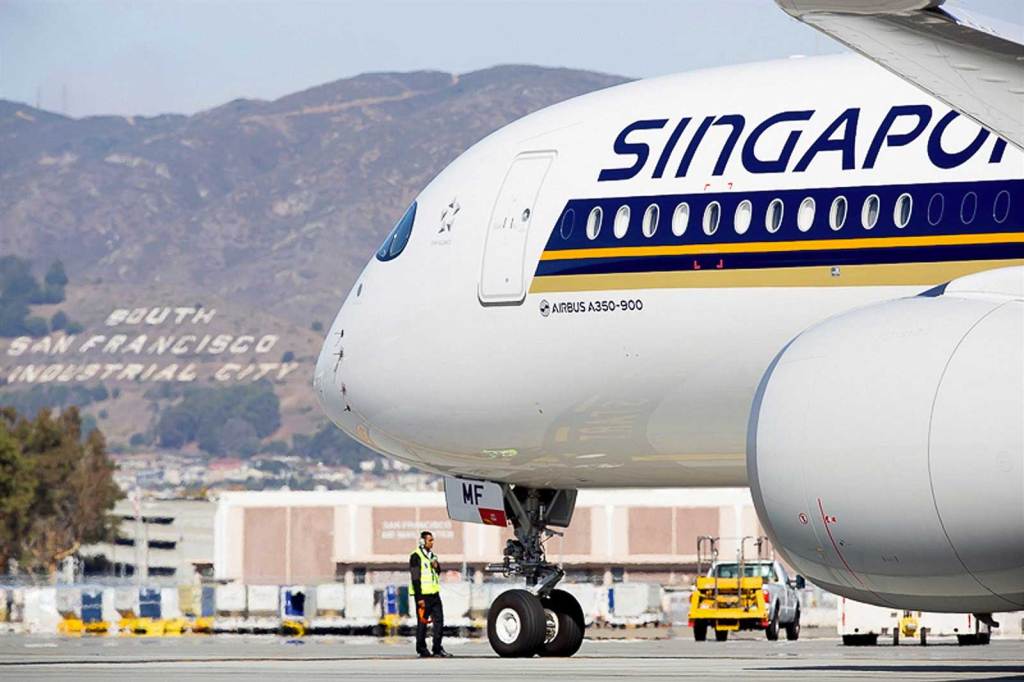
The Starlink rollout is confirmed for three aircraft types in the SIA fleet, the A350 LH, A350 ULR, and A380, but that leaves several aircraft types out in the cold, at least for now.
| SIA Starlink Wi-Fi refits | |
| Aircraft Type | Starlink? |
| A350 Long Haul | Yes |
| A350 Medium Haul | No |
| A350 ULR | Yes |
| A380 | Yes |
| 737-8 MAX | No |
| 777-300ER | No |
The omission of the Boeing 777-300ER fleet isn’t a huge surprise.
These aircraft are on borrowed time, and will be replaced by the brand new Boeing 777-9s from 2027, which we’d expect to arrive Starlink-equipped from the factory (though SIA hasn’t confirmed this yet).
The other exclusions are more curious.
The Boeing 787-10 fleet is still relatively young, with deliveries continuing, and the 737-8 MAX likewise. The A350 Medium Haul aircraft, used on regional and shorter long-haul routes, are also missing from the list.

(Photo: Shutterstock)
Whether these aircraft will eventually be added to the rollout, or whether SIA is content to keep its existing GX Aviation (SITAOnAir) Ka-band / Panasonic Ku-band Wi-Fi for shorter flights, remains to be seen.
For passengers, this means the cabin product on a trip to Tokyo, Mumbai or Sydney could deliver a markedly different connectivity experience, depending on which aircraft type is operating your flight.
Let’s hope that future Starlink rollout announcements for these other members of the fleet is planned in future.
The KrisFlyer catch remains (for some)
One thing that won’t be changing is SIA’s policy of requiring KrisFlyer (or PPS Club) membership for free Wi-Fi access in Premium Economy and Economy.
Suites, First and Business Class passengers, plus PPS Club members in any cabin, get unlimited free Wi-Fi automatically. Premium Economy and Economy customers must enter their KrisFlyer membership at booking or check-in to unlock the same benefit. Non-members can sign up for free online or in-flight via KrisWorld.com on their personal device.
It’s worth noting this is a slightly less generous approach than British Airways recently announced, where Starlink will be offered free to all passengers regardless of loyalty status.
United Airlines also requires MileagePlus membership as far as we know, so SIA isn’t alone here, but with British Airways setting a new bar, this is something SIA may eventually want to revisit.
That said, KrisFlyer membership is free and easy to sign up for, including in-flight, so for most f our readers this is unlikely to be an issue.
What Starlink will actually deliver
For those who haven’t yet experienced Starlink in the air, the difference compared to existing in-flight Wi-Fi is dramatic:
- Gate-to-gate connectivity: No more waiting for the aircraft to climb above 10,000 feet
(selected countries, like Japan, prohibit ground-based access) - Speeds of up to 1 Gbps per antenna: Faster than most home broadband
- Low latency: Enabling video calls, gaming and live streaming
- HD video streaming: Netflix, YouTube, and similar services work normally
- Large file uploads: Possible without the connection timing out

The current GX Aviation Ka-band system on SIA’s A380s, which is the airline’s fastest at present, is comfortably outclassed by Starlink.

“We are excited to bring Starlink on board Singapore Airlines. Customers and crew will soon experience seamless, low-latency connectivity as they travel. Whether flying long-haul or ultra-long-haul distances, Starlink is redefining what is possible for leisure and business travellers alike – making every flight more enjoyable and infinitely more connected.“
Jason Fritch, Vice President Starlink Enterprise Sales, SpaceX
Real-world speed tests on Qatar Airways’ Starlink-equipped 777s have shown well over 100 Mbps, with some users reporting north of 200 Mbps. Compared to the typical experience on SIA today, which is fine for messaging and email but a struggle for anything more demanding, it’s a significant step change.

(Photo: Head for Points)
Alternative LEO Wi-Fi options for Singapore Airlines included OneWeb by Panasonic and Amazon Leo, but Starlink is by far the largest provider to date and has a proven track record across recent carrier adoptions, including Qatar Airways, Air France, SAS, United Airlines and British Airways.
Rollout timeline
SIA’s stated rollout window, from Q1 2027 to the end of 2029, covers nearly three years.
Given that Starlink installations can be completed in as little as two days during routine maintenance, and the limited rollout in the fleet, the obvious question is why so long?
Qatar Airways, for example, has rolled out Starlink on a much larger fleet so far, in a shorter timescale.
Only around 53 aircraft (34 A350 Long Haul, 7 A350 ULR and 12 A380s) will need to be refitted, but in the case of the A350s this will probably tie in with the aircraft’s cabin refurbishment programme, rather than simply wheeling each aircraft into the hangar just for a Starlink upgrade alone.

(Image: Singapore Airlines)
It is also likely to tie in with an all-new KrisWorld in-flight entertainment system, set to be part of the cabin upgrades on Airbus A350 LH and ULR jets in the coming years.
The first Starlink-equipped SIA flights should appear in early 2027, though SIA hasn’t yet confirmed which aircraft or routes will be first.
Our guess would be the A350 ULRs operating the Newark, New York and selected California services, where the long flight times and business-heavy passenger profile will make the upgrade most useful for customers.
Q1 2027 ties in nicely with refitted A350 ULR introduction, set to feature all-new First Class and Business Class cabins, and we’ve already predicted Los Angeles as the likely initial route for that one.
(Photo: Singapore Airlines)
Interestingly the Airbus A350 Long Haul cabin refits are due to rollout from this quarter (Q2 2026), but it sounds like Starlink won’t be included at first, which is a little surprising.
SIA’s current Wi-Fi offering
Singapore Airlines already offers free unlimited in-flight Wi-Fi across its entire fleet, thanks to the recent retirement of the Boeing 737-800s, for First and Business Class passengers plus travellers in Premium Economy and Economy Class who are KrisFlyer members.
However, this is still currently the slower Ku-band or Ka-band Wi-Fi, typically capable of 4-9 Mbps depending on the system type, number of concurrent users and geographical location.
‘Ping’ times or latency (delay) is also significant with these older installations, which is what makes browsing sometimes feel like ‘slow motion’ to the end user. Check out our full guide to the airline’s existing offering.

It’s the answer we expected, but a welcome confirmation nonetheless.
Singapore Airlines has joined the growing list of premium carriers committing to Starlink, with a rollout that will eventually cover the bulk of its long-haul fleet.
The exclusion of several aircraft types, most notably the Boeing 787-10 and Airbus A350 Medium Haul, is a slight disappointment, and the retention of the KrisFlyer requirement for free access in Premium Economy and Economy looks a touch behind British Airways’ fleet-wide free approach.
But these are minor quibbles when the headline news is that home-broadband-speed Wi-Fi is finally coming to SIA’s flagship aircraft, with gate-to-gate connectivity on most routes, where regulations permit.
For frequent travellers, particularly those flying ULR routes to the US, the Starlink upgrade can’t come soon enough. Thankfully, 2027 isn’t far away.
(Cover Photo: Shutterstock)


