MONTREAL- Air Canada (AC) has removed all Airbus A321XLR flights from its Toronto Pearson (YYZ) to London Heathrow (LHR) route.
The carrier, which recently took delivery of its first A321XLR, had planned to operate the single-aisle aircraft on the transatlantic route between August 31 and October 22, but widebody jets will now serve the route instead.
The Heathrow cancellation is part of broader XLR schedule changes across Air Canada’s network. Several other routes, including Montreal (YUL) to Los Angeles (LAX), have also lost XLR service.
The route from Quebec City (YQB) to Porto (OPO) will now begin later than previously scheduled, while XLR flights from Montreal (YUL) to Berlin (BER) will end sooner than anticipated. However, the airline has expanded XLR operations from Toronto (YYZ) to Copenhagen (CPH) and Montreal (YUL) to Toulouse (TLS).
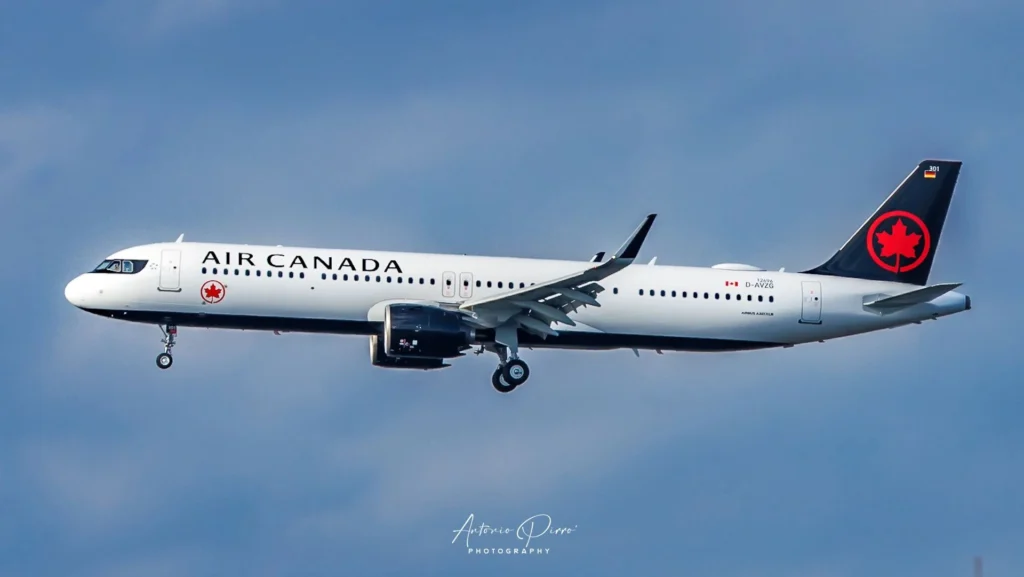
Air Canada Drops Narrowbody Operations to Heathrow
Each week, airlines around the world submit schedule changes to Cirium Diio and OAG. These updates can include new routes, cut routes, equipment swaps, different operating periods, and revised timings.
In the latest submission, Air Canada revealed that it has removed all A321XLR flights to London Heathrow.
London Heathrow is known for its limited slot availability and very high fees and charges. A less well-known factor is that the airport’s pricing structure incentivizes airlines to operate larger aircraft.
Against this backdrop, Air Canada was set to become Heathrow’s first and only long-haul operator of the A321XLR, but the airline has now reversed that plan.
Aer Lingus (EI) and Iberia (IB) both use the XLR at Heathrow, but only on shorter European routes connecting from their respective hubs.
Canada’s largest airline had planned to fly the single-aisle equipment on a time-limited basis to the UK’s busiest airport.
The first departure was scheduled to leave Toronto on August 31, with operations running through October 22. The planned schedule is outlined below.
The daily service was set to depart Toronto at 9:05 PM and arrive at Heathrow at 9:35 AM the next day, with a block time of seven hours and 30 minutes.
The return flight was scheduled to depart Heathrow at 12:05 PM and arrive in Toronto at 3:45 PM, with a block time of eight hours and 40 minutes.
Block time includes taxi time at both airports, actual flight time, and a buffer for short delays. Narrowbody aircraft typically cruise at slower speeds than widebodies, which accounts for the longer westbound flight time.
As reported by Simple Flying, all services on the 182-seat A321XLR have now been removed from the route.
The latest schedule shows the 300-seat Boeing 777-200LR will operate between August 31 and September 30.
The 255-seat Boeing 787-8 and the 298-seat Boeing 787-9 will then take over from October 1 through October 22, with the 787-9 handling 19 of those departures.

Air Canada’s Long-Term Vision for the XLR at Heathrow
In September 2025, Mark Galardo, Air Canada’s Executive Vice President and Chief Commercial Officer, discussed the potential role of the A321XLR on the Heathrow route.
He stated that the aircraft would initially not be deployed on the specific flights that the carrier believes make the most sense. This may explain the removal, although delays in aircraft deliveries could also be a factor. The airline has been contacted for comment.
Air Canada’s real intention for the XLR at Heathrow is to operate daytime transatlantic service to the UK’s busiest airport.
The airline last offered such flights six years ago, when the Boeing 787-8 was used. Multiple other widebodies also served the route in the past. In early 2020, those services departed Toronto at 8:40 AM and arrived in London at 8:35 PM local time.
Galardo said the XLR would help Air Canada restore the daytime Toronto to Heathrow operation, describing it as bringing back the “day tripper” service.
Daytime flights across the North Atlantic remain rare, although WestJet (WS) recently launched its first such operation.
For daytime transatlantic flights to work, there must be strong local traffic and relatively few timezone changes.
Air Canada services from Toronto would meet both conditions. Restoring this specific operation would carry far less financial risk on the smaller XLR than on a widebody.
However, slot availability at Heathrow remains a major obstacle, and it is unclear what has happened to Air Canada’s slots.
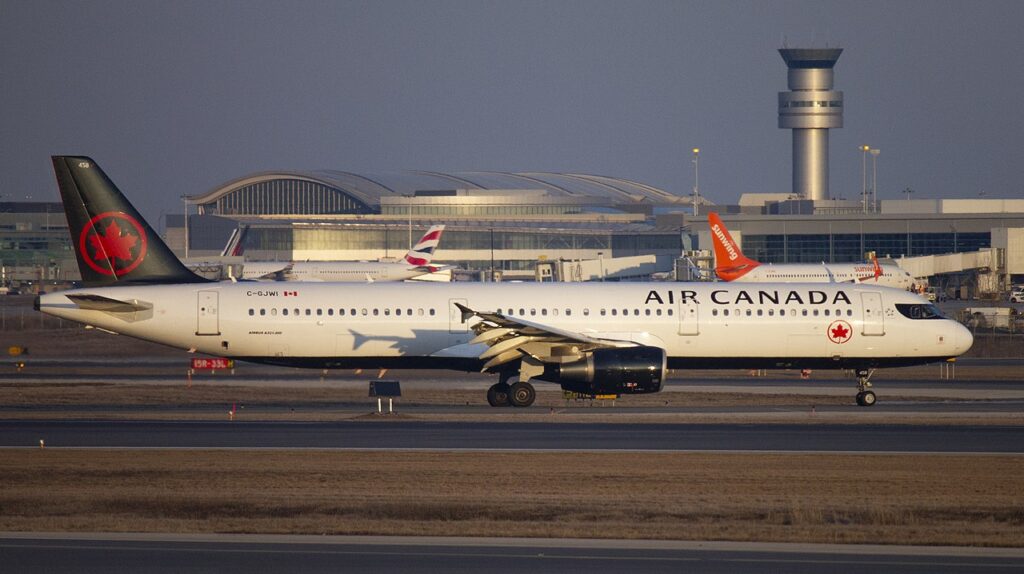
Air Canada’s Updated Network
Air Canada’s latest schedule submission shows the A321XLR entering commercial service on June 15 with the Montreal to Toulouse route. This timeline is unchanged from prior weeks.
The removal of the type from the Heathrow route has pushed back the first XLR departure from Toronto significantly, from August 31 to October 25.
On that date, XLR flights to both Manchester (MAN) and Tenerife South (TFS) are scheduled to launch. Tenerife South represents a completely new market from Canada.
The airline currently has 12 XLR routes scheduled between June and December. Two are domestic, and ten serve European destinations.
This schedule reflects information available as of May 5 and is likely to change. The A321XLR has already been pulled from routes to Dublin (DUB), Edinburgh (EDI), Heathrow (LHR), Los Angeles (LAX), and Palma de Mallorca (PMI).
However, most of those routes had only a limited number of XLR services planned.
Stay tuned with us. Further, follow us on social media for the latest updates.
Join us on Telegram Group for the Latest Aviation Updates. Subsequently, follow us on Google News


