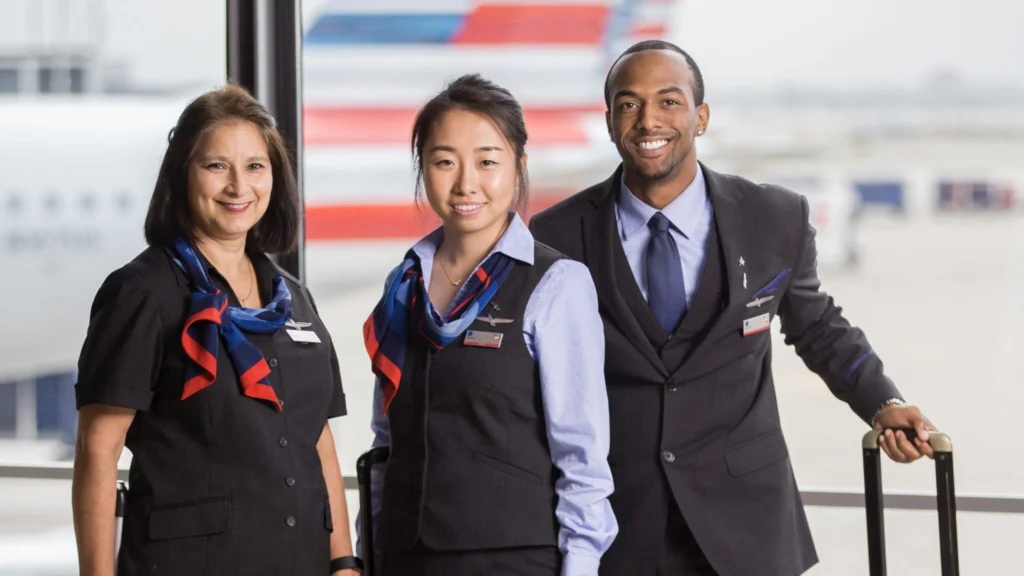
FORT WORTH- American Airlines (AA) is facing renewed scrutiny over inconsistent cabin service standards, as passengers report that flight attendants at the forward boarding door are routinely failing to greet customers as they step onto the aircraft. The issue surfaces at hubs including Dallas Fort Worth (DFW), Charlotte (CLT), and Miami (MIA).
The lapse stands in sharp contrast to industry peers such as Delta Air Lines (DL), Emirates (EK), and Singapore Airlines (SQ), where proactive passenger greetings during boarding remain a standard expectation. The pattern raises broader questions about cabin culture at the Fort Worth-based carrier as it attempts a premium repositioning across its network.

American Airlines Attendants Skip Greetings
American Airlines has rolled out a series of positive product updates in recent months, signalling an internal acknowledgement that the carrier trails Delta and United in financial performance and must move upmarket to compete. Executives have committed to investing in the onboard experience and narrowing the gap with rivals.
However, the airline appears to be struggling with the most basic elements of customer service. While capital-intensive premium upgrades require time and budget, a simple greeting at the boarding door does not.
The repeated absence of this basic courtesy points to a deeper cultural problem rather than a product or investment shortfall, OMAAT exclusively reported.
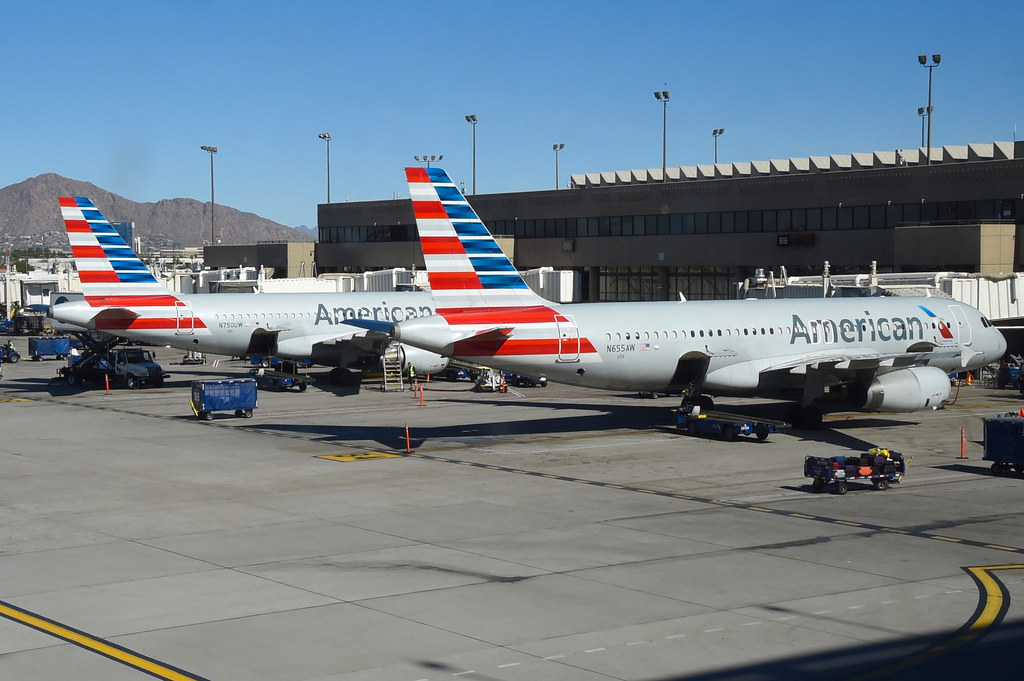
A Repeated Pattern Across Multiple Flights
The concern is not based on a single isolated incident. A frequent flyer reported three consecutive American Airlines flights on which the flight attendant stationed at the forward door failed to acknowledge boarding passengers.
On one such flight, the cabin held dozens of empty seats and boarding began on time, yet the lead crew member did not look up once during the boarding process.
After most passengers were seated, the same crew member spent roughly ten minutes in the forward galley chatting with a colleague before distributing pre-departure water. On another flight, audible galley conversation between two crew members included one declaring himself an “Airbus queen” while criticising the Boeing 737, all while passengers boarded without acknowledgement.
In each of these cases, the same flight attendants reportedly delivered acceptable service once the aircraft was airborne. This contrast suggests the issue is less about ability and more about whether crews view the boarding greeting as part of their job at all.
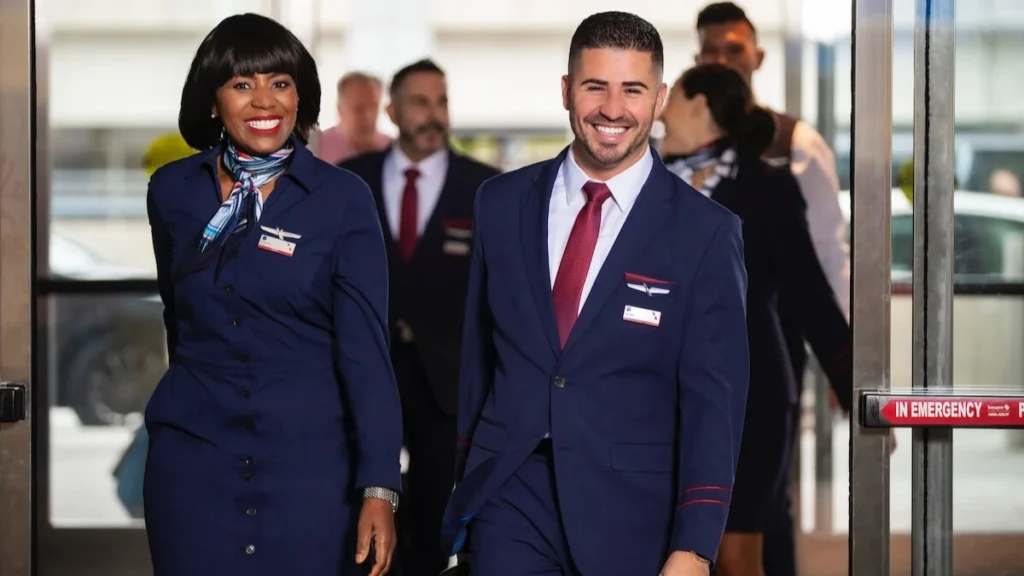
Why The Boarding Greeting Matters
First impressions disproportionately shape how passengers rate an entire flight. With self-service kiosks, online check-in, and biometric boarding gates reducing human touchpoints, the gate agent and the flight attendant at the door are now among the very few staff members a customer interacts with directly.
Net Promoter Score, a metric that airlines track closely, is heavily influenced by these early micro interactions. A warm welcome at the door costs the airline nothing yet sets a positive tone for the entire journey. A cold or absent greeting does the opposite and primes the passenger to view every subsequent service touchpoint negatively.
The hospitality industry follows the same principle. Most hotel guests form a subconscious judgement about their stay within five minutes of arrival, based largely on how the front desk staff receives them. Aviation operates under identical psychological dynamics.
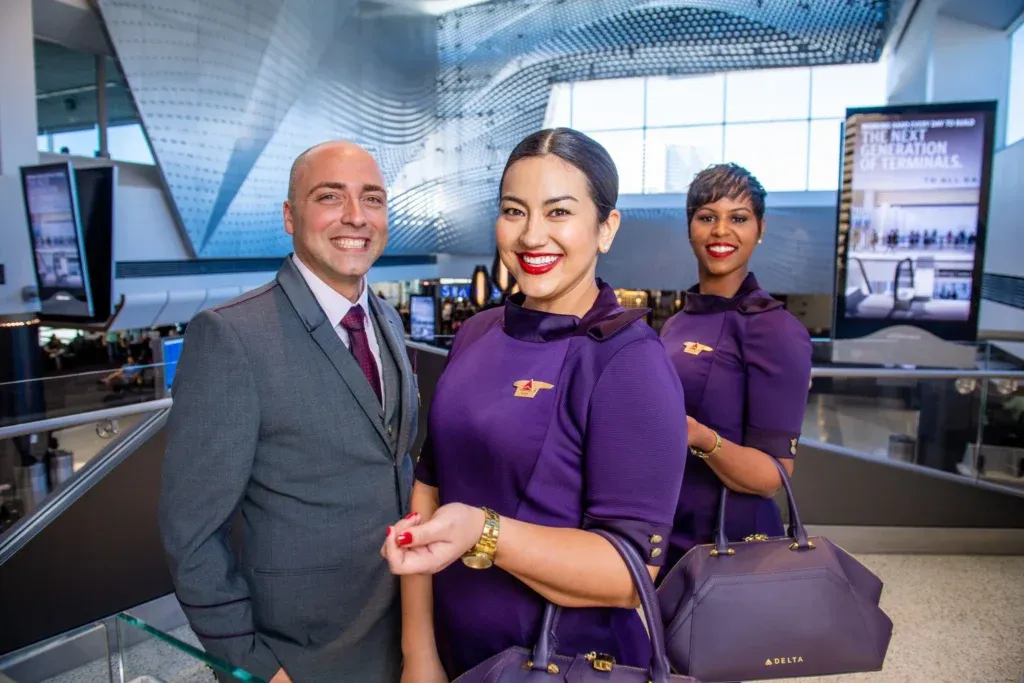
How Delta Sets The Benchmark
Delta Air Lines (DL) has built a reputation for consistent frontline warmth across check-in counters, Sky Club lounges, gate areas, and aircraft doors. Premium customers in particular report feeling acknowledged at every step of the journey on Delta.
This consistency is not accidental. Delta’s profit-sharing program has historically paid out substantially more per employee than American’s, giving frontline staff a direct financial stake in customer satisfaction outcomes. Employees who feel rewarded by company performance tend to project that ownership in their interactions with customers.
Leadership And Profit Sharing Concerns
American Airlines profit sharing has remained minimal in recent years, a direct consequence of the carrier’s weaker financial results compared with Delta and United Airlines (UA).
Without meaningful financial incentives or a clearly communicated service vision from leadership, frontline crews have little reason to go beyond contractual minimums.
The airline’s executives have outlined plans to invest in seats, lounges, and inflight products, but public commentary has remained largely silent on the cultural and service training side of the equation.
Until cabin crews are aligned with the premium strategy through clear standards, accountability, and incentives, product upgrades alone are unlikely to close the perception gap with competitors.
A greeting at the door is not a complicated training problem. It is the clearest available signal of whether an airline’s service culture is functioning, and right now at American, that signal is flashing red.
Stay tuned with us. Further, follow us on social media for the latest updates.
Join us on Telegram Group for the Latest Aviation Updates. Subsequently, follow us on Google News


