Air travel was a different beast back in the 20th century. No chaotic TSA lines. No ultra-low-cost budget carriers charging you for the privilege of printing out a physical boarding pass. No posing Vitruvian Man-style in a glass cylinder. Instead, there were free inflight meals and seats that didn’t require advanced-yoga levels of contortion to get ‘comfortable’ in. These were just a few of the charms of flying before it started to really suck.
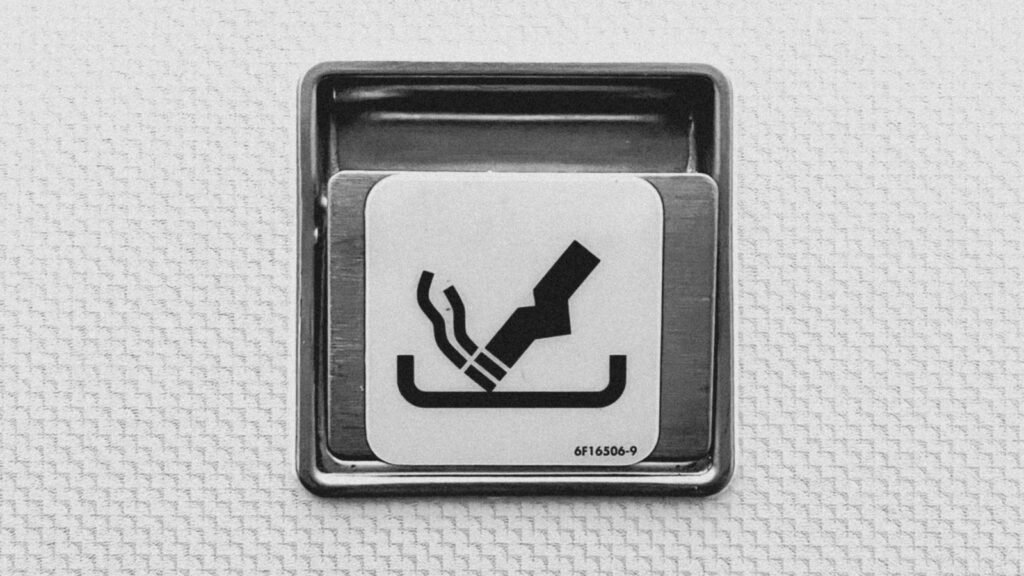
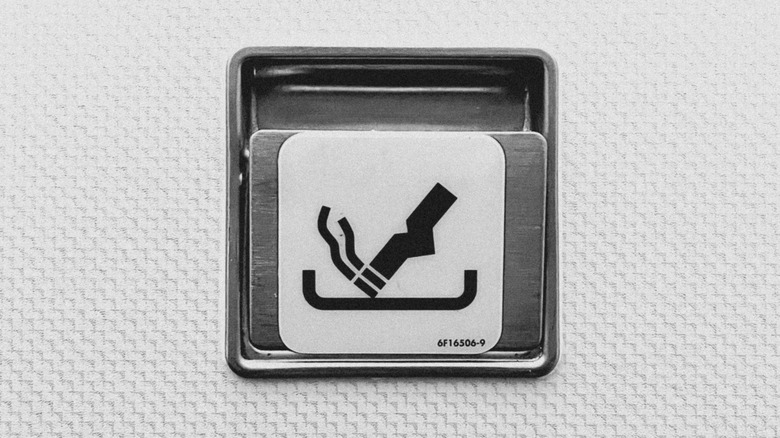
Of course, it’s true that a ton of aviation-biz changes have been helpful, necessary, and often life-saving. One of the most impactful (and mostly appreciated) evolutions in air travel over the past few decades is the “no-smoking” rule. Since 2000, lighting up a sweet, sweet coffin nail on passenger flights in FAA-controlled airspace has been verboten. So why, then, do modern airplane bathrooms still have ashtrays built in?
The reason for ashtrays in the lavs is, at its core, pretty simple: People will be people –- and people are kinda dumb and like to break rules sometimes. The ashtrays are still mandated just in case a nicotine fiend wants to sneak an illegal dart in the bathroom. Instead of tossing the cigarette butt into a trash filled with paper towels — or somewhere else flammable — the ashtray offers a safe place to dispose of a still-burning cigarette.
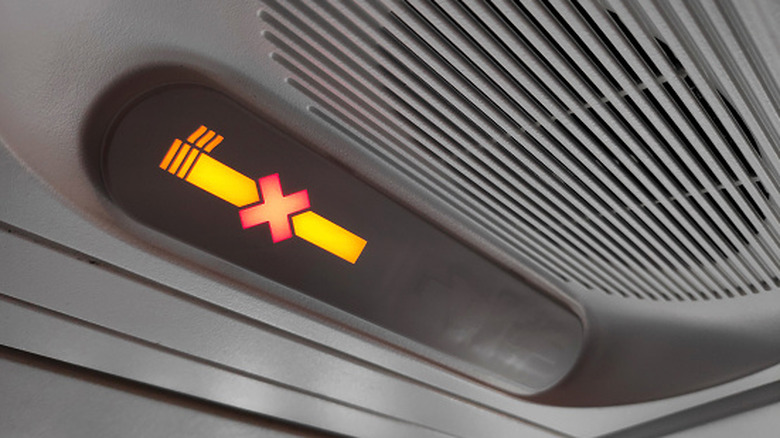
Ultimately, along with the near-universal use of smoke detectors and no-smoking signs, ashtrays are all about risk mitigation. While this might all seem overly cautious, there have been some pretty nasty instances where lavatory fires have led to devastating consequences.
Please refrain from blowing up the plane
In 1973, a Varig flight burned up near Paris, France after a fire started in an onboard bathroom, leaving 123 dead. The suspected cause? Lighting up in the lav. Two other fiery plane incidents -– a 1982 CAAC flight in China, and an Air Canada flight in 1983 –- led to dozens more deaths. In both cases, authorities believe that smoking in an onboard bathroom was the likely culprit.
These tragedies, as well as health concerns regarding secondhand smoke, led to full smoking bans around the world by various aviation regulatory bodies. For example, the U.N. International Civil Aviation Organization (ICAO) introduced a 1992 resolution that recommended a worldwide to ban smoking on flights. In 1997, a full smoking ban on EU-based airlines was enacted, and in 2000, the FAA barred smoking aboard any commercial flights in its jurisdiction.
What if you throw caution to the wind, and decide to smoke in the bathroom anyway? Well, if you’re caught, you’ll probably incur a hefty fine – up to $1,771, according to the FAA –- and you’ll likely catch some side-eye from your fellow passengers for the rest of your journey. Either way, the next time you’re 38,000 feet in the air in a pressurized aluminum tube, you can rest assured that, if someone smokes in an airplane bathroom, they’ll have a place to safely extinguish their shame. And while the plane might smell gross, at least you’ll still land in Topeka intact.


