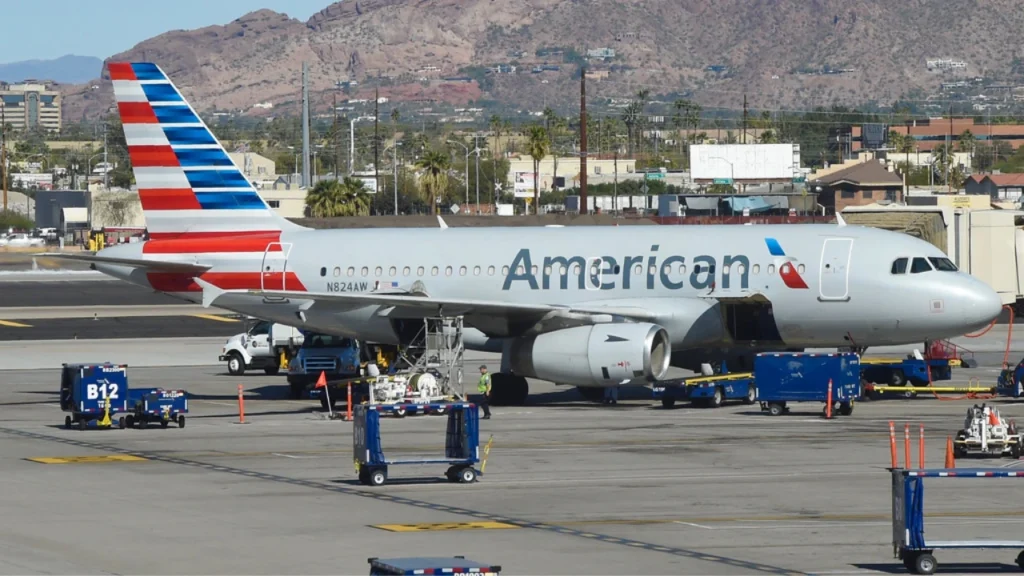
FORT WORTH- A federal appeals court has revived a wrongful death lawsuit against American Airlines (AA) after finding that reasonable questions remain about whether an onboard automated external defibrillator worked properly during the inflight medical emergency of a 14-year-old passenger.
The Fifth Circuit panel reversed an earlier decision and returned the case to a federal court in Fort Worth (DFW), where the carrier is headquartered.
The passenger, Kevin Greenidge, was returning to New York (NYC) from a summer family vacation in Honduras in 2022 when he lost consciousness shortly after takeoff on Flight 614.
The aircraft diverted for an emergency landing in Cancun (CUN), where Kevin was taken to a local hospital and pronounced dead. His mother, Melissa Arzu, filed suit as the administrator of his estate.
American Airlines Lawsuit Over Teen’s Death
The appellate ruling overturns a lower court decision that had ruled in the airline’s favor. According to the lawsuit, the flight crew struggled to operate the AED, and the device failed to deliver an electrical shock to restore Kevin’s heart rhythm.
Darren Nicholson, one of the attorneys representing Ms. Arzu, said the appellate court noted that the doctor and nurse who attended to Kevin during the emergency, along with other witnesses, agreed that no shock was delivered. Hannah Crowe, who also represents Ms. Arzu, said the legal team is pleased the case will now move forward, nearly four years after Kevin’s death. Both attorneys are with the law firm Burns Charest LLP, which was retained after the case moved to Texas.
The appeals court did not decide who was at fault. It found only that the question of whether the defibrillator functioned correctly is a genuine dispute that a jury, not a judge, must resolve at trial.

What Happened on Flight 614
Kevin became unconscious and unresponsive soon after the aircraft departed for the return trip to New York. Flight attendants found him in his seat and called for medical help from other passengers. A doctor and a nurse on board responded and assisted with the emergency.
The crew faced difficulty removing Kevin from his seat, which required help from multiple passengers. He was moved to the galley, where two responders, identified in court records as Amador and Thatcher, began administering CPR.
The crew also brought a medical kit and the AED, and the captain diverted the flight to Cancun so Kevin could reach a hospital faster. Despite these efforts, he could not be revived.
District Court Had Ruled for the Airline
Before the appeal, a federal district court in the Northern District of Texas, Fort Worth Division, granted summary judgment to American Airlines on all three of Ms. Arzu’s claims on May 8, 2025. Those claims were a Montreal Convention claim, a loss-of-consortium claim, and a breach-of-contract claim.
Summary judgment is a ruling that ends a case or claim before trial when a court decides there is no real dispute of fact for a jury to settle.
The Fifth Circuit’s reversal means at least part of that ruling was incorrect, and the case must now proceed.
The Montreal Convention and the Meaning of “Accident”
The central legal issue is the Montreal Convention, an international treaty that governs injuries and deaths on international flights. Under Article 17, an air carrier faces strict liability when a passenger dies or is injured, but only if the death or injury was caused by an “accident” that took place on board the aircraft.
The treaty does not define “accident.” The U.S. Supreme Court, in Air France v. Saks, described an accident as an unexpected or unusual event that is external to the passenger. Courts apply this test flexibly after looking at all the circumstances of an injury.
Two later cases shaped the dispute. In Olympic Airways v. Husain, a flight crew refused three times to move an asthmatic passenger away from a smoking section, and the courts found that the conduct was an accident. In White v. Emirates Airlines, the Fifth Circuit found that a flight crew’s imperfect response to a medical emergency does not by itself amount to an accident.
The Four Alleged Failures in the Crew’s Response
At the district court stage, Ms. Arzu argued that the crew’s response involved four failures tied to the American Airlines Inflight Manual.
First, she argued the crew did not contact the flight deck immediately, as the manual requires, and instead waited until Kevin had been moved to the galley, CPR had started, and the AED had begun analyzing his heart rhythm. Second, she argued CPR was not administered immediately because the crew waited for medically trained passengers and for Kevin to be moved from his seat. Third, she argued the crew never contacted the physician on call, a doctor specially trained to advise on inflight emergencies and diversion airports. Fourth, she argued the crew did not clearly establish required emergency roles, noting that one flight attendant acted as both runner and communicator.
The district court found that, even accepting these facts, the crew’s actions reflected concerted efforts to help Kevin rather than an accident. It concluded the situation resembled White more than Husain, and noted that Kevin’s pre-existing conditions, including asthma, obesity, sleep apnea, and diabetes, complicated the response and the difficult task of moving him from his seat.
The Defibrillator at the Center of the Dispute
While the district court grouped the AED with the broader crew response, the appellate court treated the device’s performance as a separate and unresolved question.
A defibrillator that fails to deliver a shock when it should is different from an imperfect human response, because a malfunctioning safety device can qualify as an unexpected event external to the passenger.
The press materials from the plaintiff’s attorneys state that the doctor, nurse, and other witnesses agreed that no shock was delivered. The Fifth Circuit found that this factual dispute about whether the AED functioned properly must be decided at trial.
Loss of Consortium and Breach of Contract Claims
The district court also dismissed two related claims. The loss-of-consortium claim was treated as derivative under Texas law, meaning it depended on the Montreal Convention claim succeeding, so it failed once the court ruled there was no accident.
The breach-of-contract claim concerned an advance payment. Ms. Arzu argued American Airlines owed at least 16,000 Special Drawing Rights, roughly 21,000 US dollars, as a mandatory minimum payment after a passenger’s death.
The district court read the airline’s Conditions of Carriage as discretionary, finding the carrier first had to determine that a payment was necessary before any minimum amount applied. On that reading, the court found no breach occurred. These rulings may now be reexamined as the case returns to the lower court.
Federal Rules for Aircraft Defibrillators
Automated external defibrillators have been federally required on all US passenger aircraft since 2004.
Federal Aviation Administration regulations require that these devices be properly labeled, regularly inspected for readiness, and maintained so they function correctly according to the manufacturer’s recommendations.
These standards are central to the dispute now headed back to trial, since the case will test whether the onboard AED met the required level of readiness during the emergency.
The Case
The matter is filed as Melissa Suzette Arzu, individually and as the Administrator of the Estate of Kevin Greenidge, Deceased, v. American Airlines, Inc., Case No. 4:24-cv-00433-P, in the U.S. District Court for the Northern District of Texas, Fort Worth Division. Ms. Arzu first filed the lawsuit in New York in 2022, but American Airlines moved to transfer it to Fort Worth, the location of its headquarters.
Stay tuned with us. Further, follow us on social media for the latest updates.
Join us on Telegram Group for the Latest Aviation Updates. Subsequently, follow us on Google News


