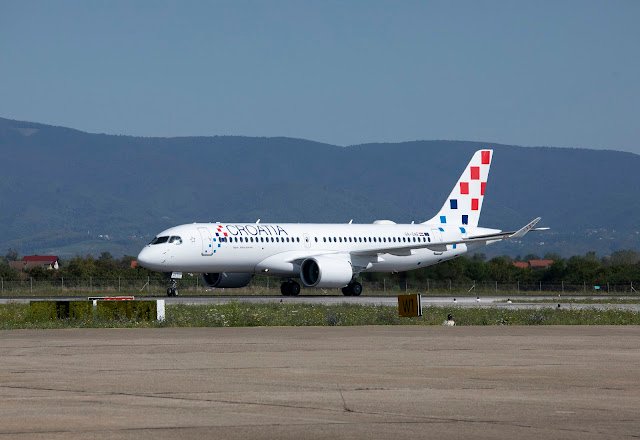

Croatia Airlines handled 569.415 passengers during the January – April period, representing an increase of 104.108 travellers compared to 2025, or growth of 22.4%. On domestic flights, the airline carried 140.292 passengers, up 11%, or by 13.887 travellers year-on-year. On scheduled international traffic, the carrier transported 424.437 passengers, representing an improvement of 26% or an additional 87.454 customers on the same period last year. In charter operations, the airline carried 4.686 passengers, up by 2.767 year-on-year. “The achieved results confirm the continuation of the company’s strong operational growth and the increase of Croatia Airlines’ market share within the Croatian aviation sector”, the company said.
The strong passenger growth was complemented by an increase in available seat capacity. The airline added 122.621 seats over the four-month period, representing an increase of 15%. This is despite the number of operated flights growing by just 2.7%. The capacity growth is the result of the airline’s transition to an all-Airbus A220 fleet. However, capacity growth is expected to slow, with the four-month period from May onwards showing the number of available seats increasing by 0.7% year-on-year, while the number of scheduled flights will decline by 0.4% after the airline trimmed its schedule in response to high fuel prices.
Commenting on its results during the first four months of the year, Croatia Airlines said, “The strong traffic growth during the first four months of 2026 is particularly important in the context of the pre-summer season, in which air connectivity plays a key role in boosting tourist arrivals and extending the tourism year. As a national carrier operating year-round, Croatia Airlines continuously contributes to the accessibility of Croatian destinations and the country’s connectivity with key European markets. In this way, the airline makes an important contribution to Croatian tourism, not only during the peak summer season, but also during periods when it is especially important for destinations to stimulate additional demand and ensure stable traffic flows”.



