We edge our stationwagon down a covered passageway and nose out into a Edinburgh street bustling with pedestrians, cyclists, other cars, even a tram.
It’s a nerve-wracking introduction to driving in Britain, but there’s really nothing for it but to dive right in.
This is day one of a 11-day driving holiday that will take us from the Highlands of northern Scotland down through England’s Lakes District and the Cotswolds to Gatwick Airport.
It’s a somewhat inauspicious beginning – the “small, manual” vehicle we’d paid for has been upgraded to a long, low Peugeot wagon.
It’s an automatic – yay! But it’s far from the nippy and compact vehicle I had expected. This is more of a mullet – all business up the front with its Peugeot-badged “cockpit” lit up in red, white and blue, and room for an endless party in the capacious rear.
Our suitcases all but skitter across the boot as we lob them in the back, shrug our shoulders and hit the road.
Here’s seven handy things we learned in the more than 2000 kilometres that followed.
Yes, cars are smaller in Britain – but not always
Smaller models are definitely more common on the roads here – perhaps reflecting their nimbleness on some of those narrow lanes and byways.
But bigger cars and SUVs also abound. If you’re a group or family travelling, you won’t have any trouble finding a vehicle with room for you and your luggage.
Read (all about) the manual
Australians with auto-restricted licences, or a definite preference for automatics, beware.
Manual cars seem to be standard at rental agencies across Britain. Autos are available, but you’ll have to specifically book one – and it will cost you more.
I’ve heard more than one story of a would-be young driver turning up to pick up their rental, only to find they can’t actually drive it.
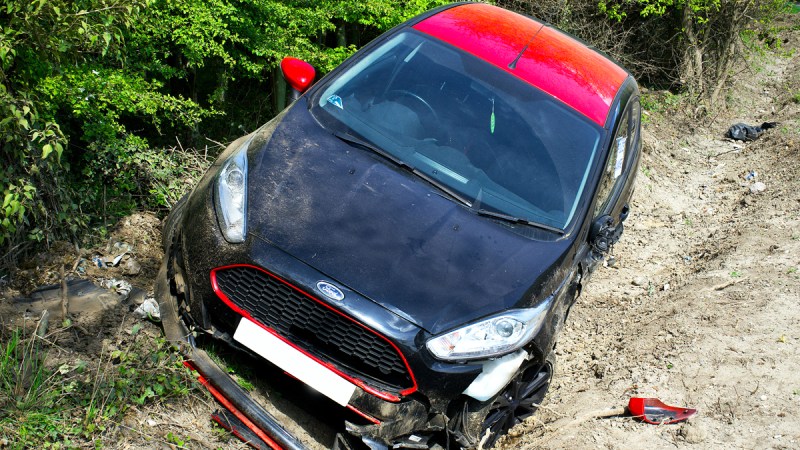
If this happens, you want an excess to be the least of your worries. Photo: Pexels.com
Other oversights
If you want more than one driver you will also have to specify that. And it will cost more.
Cheaper agencies may also restrict the number of kilometres (sorry, miles – see below) you can drive. If you want unlimited kilometres, that’s another detail to watch out and pay for.
While you’re checking, beware the insurance excess – ours ran to thousands of pounds. This is common worldwide, including in Australia, so shouldn’t shock anyone who has booked a rental before.
But, if you don’t want the potential of a hefty excess in an accident or even a minor mishap, consider paying for the rental company’s extra insurance. As an alternative, many travel insurance policies also cover these excesses – read the fine print to see if yours does.
Miles to go
While we’re on measurements, the Brits use miles and feet and miles per hour for road distances.
It’s a bit of a shift when calculating how far you are from your destination or next stop. It’s also a consideration for the driver, in keeping to the speed limit.
So it’s quite lucky that …
… The British are, by and large, courteous drivers. You might have to press your shiny rental into a hedge on a tiny single-lane road to allow someone to pass, but you’ll get a wave of thanks from the other driver for doing so.
On multilane roads, such as motorways, everyone – but everyone! – sticks left. They’ll switch into the middle or outside lanes to pass slower traffic and then pull back in as soon as they can.
It was a lesson for me, travelling in my comfy spot – the centre lane – to see a roadside LED sign warning “Don’t hog the middle lane”. Rightio.
The system works well and faster traffic is held up by slower vehicles only rarely.
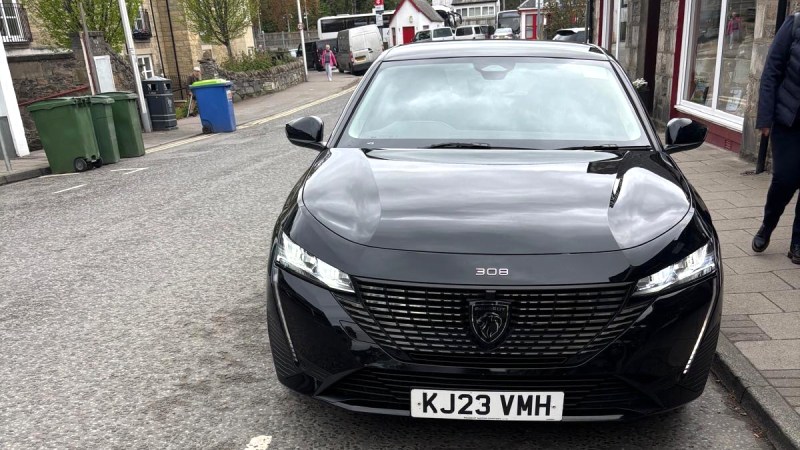
Our Peugeot enjoying some free street parking in downtown Aviemore, on the way to Inverness. Photo: Carley Olley
Round we go
You’ve probably heard all about the British love for roundabouts. It’s all true. They’re everywhere on highways and smaller roads.
We were less prepared for the roundabouts upon roundabouts (kind of like a motoring figure of eight) and the ones that had traffic lights in the middle of them – meaning more than a couple of abrupt stops mid-circle.
Parking can be infuriating
Council-run car parks are everywhere in British towns and villages. But almost none of it is free – and you’ll likely need upwards of half a dozen apps to pay for it.
That apparently includes much of the Lakes District, where we saw no alternative to paid parking to take in a scenic view, at the local information centre and for any number of playgrounds and gardens.
Most parking machines say they take cash, but some don’t – and most of those that did rejected our Australian cards. Frustrating.
On a positive note, where street parking is available, there’s a super flexible system. See a park, nip into it – regardless of whether it’s on your side of the street or not. If you fits, you parks – simple.
(Those courteous British drivers will let you back into the traffic on exiting, whichever way you’re going. Not least because they might want the spot.)
Rarefied air
We’d been warned that petrol was expensive in Britain. And it was.
I was less prepared to discover that it also cost to put air into our vehicle’s tyres when it developed what seemed to be a persistent slow leak. Only £3 ($A6) a time, to be sure – but it’s also only air.

If there’s room to park on the street, nab it. Photo: Unsplash
When the time came to bid farewell to our French steed, it was with some sadness.
It had taken us to places and opened up experiences we would have otherwise missed – but, on the other hand, all that parking stress, miles per hour business and lane-changing had taken a toll. Let’s not get started on the sat-nav.


