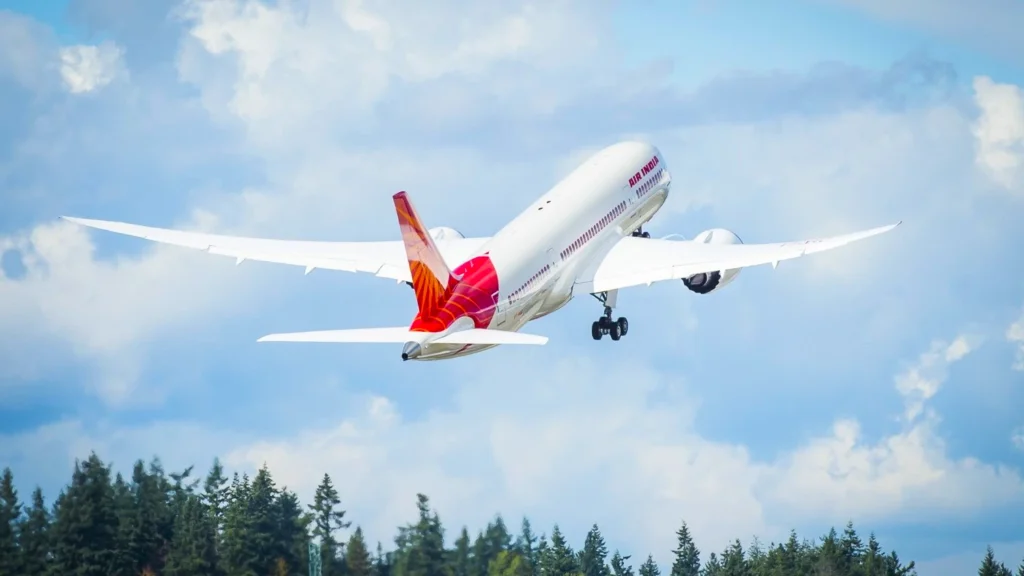
DELHI- Tata Group-owned Air India (AI) has confirmed the deployment of its newly delivered, line-fit Boeing 787-9 Dreamliner on the Mumbai–Frankfurt route starting February 1, 2026. The aircraft features the airline’s latest cabin interiors as part of its ongoing fleet renewal program.
The service is operated by Air India between Mumbai Chhatrapati Shivaji Maharaj International Airport (BOM) and Frankfurt Airport (FRA), strengthening connectivity between India and Germany with upgraded onboard comfort.
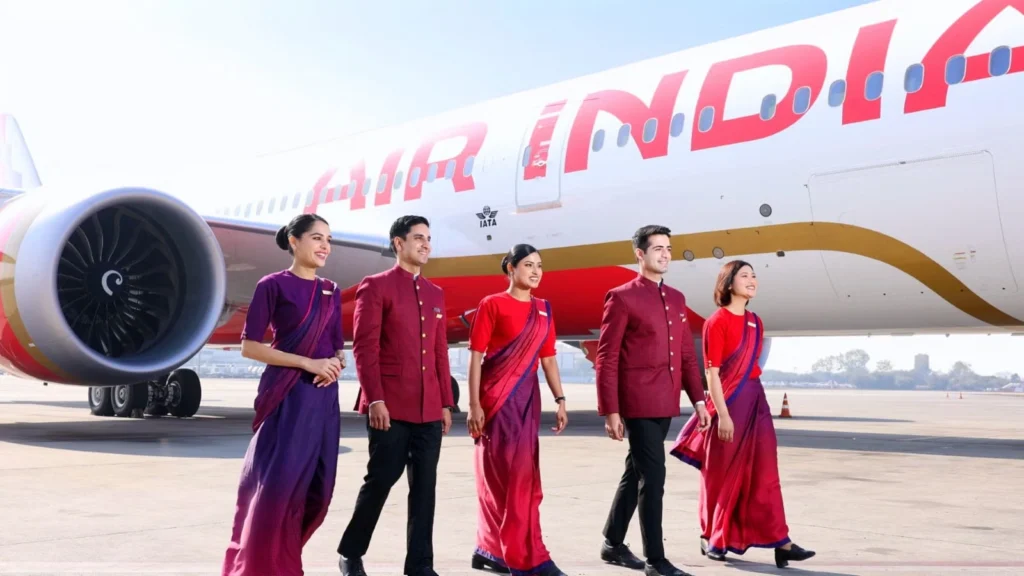
Air India 787-9 to Frankfurt
Air India currently operates five weekly flights between Mumbai and Frankfurt, connecting two major financial and commercial hubs. From February 2026, these flights will be served by the airline’s first line-fit Boeing 787-9 aircraft built specifically to Air India’s new interior standards.
With this deployment, all Air India services to Germany will be operated using new or upgraded widebody aircraft. This includes the airline’s Delhi–Frankfurt flights, ensuring a consistent long-haul product across its German network.
The introduction of line-fit aircraft marks a shift from interim refurbishments to factory-installed cabins. These aircraft are part of Air India’s broader transformation plan, which includes additional widebody deliveries and retrofits scheduled through 2026.
Here is a clean, publication-ready flight schedule table formatted for easy readability and reuse.
Mumbai (BOM) – Frankfurt (FRA) Flight Schedule
| Flight Number | Route | Departure Time | Arrival Time |
|---|---|---|---|
| AI2027 | Mumbai – Frankfurt | 12:35 hrs | 17:30 hrs |
| AI2028 | Frankfurt – Mumbai | 20:20 hrs | 09:00 hrs +1 |
All times are local. +1 indicates arrival on the next calendar day.
Air India’s widebody upgrade program is focused on modernizing a significant portion of its long-haul fleet.
The strategy combines new aircraft deliveries with cabin retrofits to improve passenger comfort, product consistency, and operational efficiency.
The Boeing 787-9 plays a central role in this plan, serving medium and long-haul routes across Europe, Asia-Pacific, and North America. The Mumbai–Frankfurt upgrade reflects the airline’s focus on premium international corridors with strong business and leisure demand.
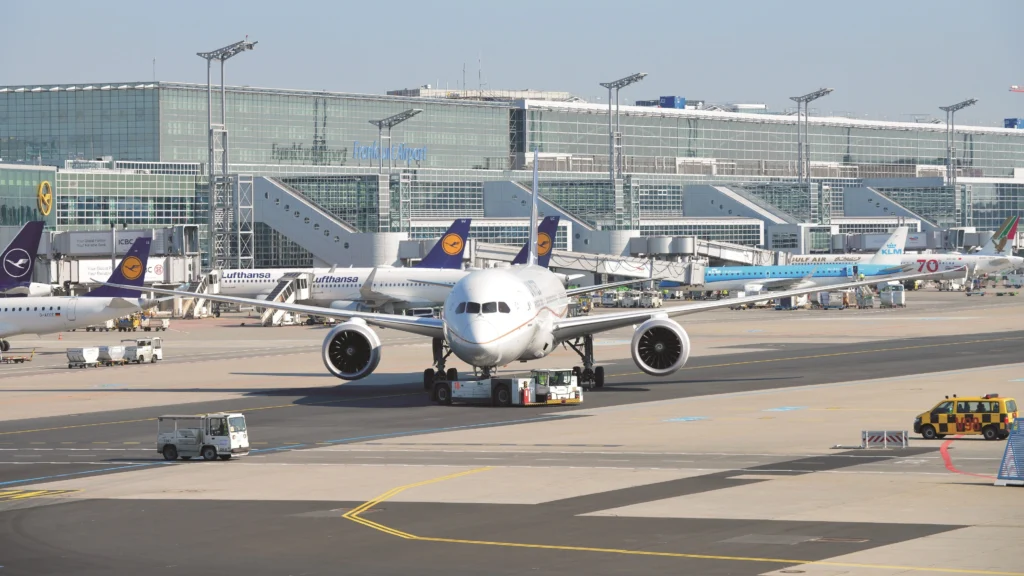
Lufthansa Codeshare Extends Reach Beyond Frankfurt
Air India continues to maintain an active codeshare partnership with Lufthansa. Through this arrangement, passengers traveling on Air India flights can connect beyond Frankfurt to 29 destinations across Europe, as well as select cities in North and South America.
The partnership enhances network flexibility and provides smoother onward connections for travelers using Frankfurt as a transit hub.
Air India continues to offer bookings for these flights through its website, mobile app, airport ticketing offices, contact centers, and authorized travel agents worldwide.
One-Stop Connectivity via India to Asia and Australia
Air India’s Europe-bound schedules are structured to support one-stop connections via Delhi and Mumbai to destinations across South Asia, Southeast Asia, and Australia.
Travelers from Frankfurt and other European cities can connect onward to key markets such as Bangkok, Bali, Colombo, Ho Chi Minh City, Kuala Lumpur, Manila, Phuket, and Singapore.
This network design supports both inbound and outbound traffic, catering to business travelers, tourists, and the Indian diaspora.
Frankfurt Travel Guide
Frankfurt is one of Europe’s most important financial hubs, yet it remains underestimated as a travel destination. Many visitors only experience its airport, missing the city beyond the terminals.
Behind the skyline lies a city shaped by imperial history, rebuilt neighborhoods, world-class museums, and green spaces. Frankfurt rewards travelers who slow down and explore.
A City Where History Meets Modern Europe
Frankfurt spent more than 500 years as the Free City of Frankfurt within the Holy Roman Empire, serving as a coronation site for emperors. Much of the historic core was destroyed during World War II, but careful restoration has preserved key landmarks and public squares.
Today, Frankfurt is one of Germany’s most international cities. About half of its residents have a foreign background, and the population reflects a mix of cultures, cuisines, and languages. This blend defines modern Frankfurt, where medieval churches stand beside glass towers.
Key Sights Worth Your Time
Frankfurt Cathedral (Dom St. Bartholomäus)
The red sandstone cathedral dates to the 14th century and once hosted imperial coronations. Its Gothic tower rises 95 meters and offers panoramic city views after climbing 328 steps. Entry to the cathedral is free, while tower access requires a fee.
Römerberg Old Town Square
Römerberg has been Frankfurt’s civic heart since the 9th century. Restored half-timbered houses, medieval buildings, and a 16th-century fountain create one of the city’s most recognizable scenes.
Städel Museum
Founded in 1815, the Städel Museum houses over 700 years of European art. Its collection includes works by Monet, Picasso, and German Renaissance masters. It remains privately funded and is among Germany’s most respected museums.
Green Spaces and Outdoor Escapes
Frankfurt City Forest
The city forest is Germany’s largest urban forest, with 450 kilometers of walking and cycling trails. Ponds, playgrounds, benches, and resting huts make it a popular escape for locals year-round.
Palmengarten Botanical Garden
Opened in 1871, Palmengarten spans 54 acres and features tropical, subtropical, and native plant collections. The garden hosts concerts, exhibitions, and guided tours throughout the year. Entry requires a ticket.
Neighborhoods and Nearby Detours
Sachsenhausen District
Located south of the Main River, Sachsenhausen is known for traditional cider taverns and riverside walks. It also hosts Museumsufer, a stretch of nearly 40 museums covering art, architecture, and Jewish history.
Bornheim Quarter
Bornheim preserves some of Frankfurt’s pre-war character. Berger Strasse, the city’s longest street, is lined with cafés, wine bars, and independent shops.
Offenbach am Main
Just east of Frankfurt, Offenbach offers a slower pace. Highlights include Büsing Palace, local markets, and museums dedicated to leatherwork and book art.
Museums Beyond the Classics
Senckenberg Natural History Museum
One of Germany’s largest natural history museums, Senckenberg displays dinosaur skeletons, fossils, and rare specimens. It holds more than 17,000 skeletons.
DialogMuseum
DialogMuseum offers guided tours in complete darkness, simulating life without sight. Visitors rely on sound, touch, and smell, guided by visually impaired hosts.
Deutsches Filmmuseum
Dedicated to German and international cinema, this museum explores film history, production techniques, and visual storytelling through interactive exhibits.
Practical Travel Notes
Safety
Frankfurt is generally safe, with low violent crime. Pickpocketing can occur in busy areas. Travelers should stay alert around Hauptbahnhof and major transit hubs at night. Emergency services can be reached by dialing 112.
Getting Around
Frankfurt has an efficient public transport system, including U-Bahn, S-Bahn, trams, and buses. Tickets are valid across all networks. Day passes and group tickets offer better value than single fares.
Best Time to Visit
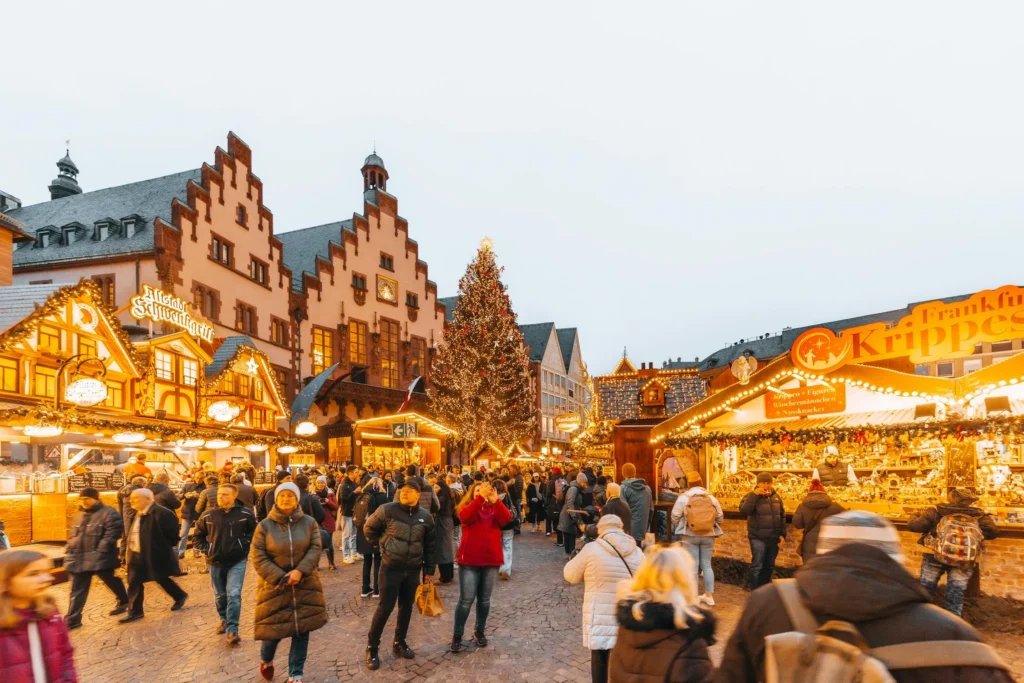
Summer brings festivals and warm weather, but higher crowds. Spring and autumn offer milder temperatures and fewer tourists. Winter is cold but popular for Christmas markets in November and December.
Stay tuned with us. Further, follow us on social media for the latest updates.
Join us on Telegram Group for the Latest Aviation Updates. Subsequently, follow us on Google News