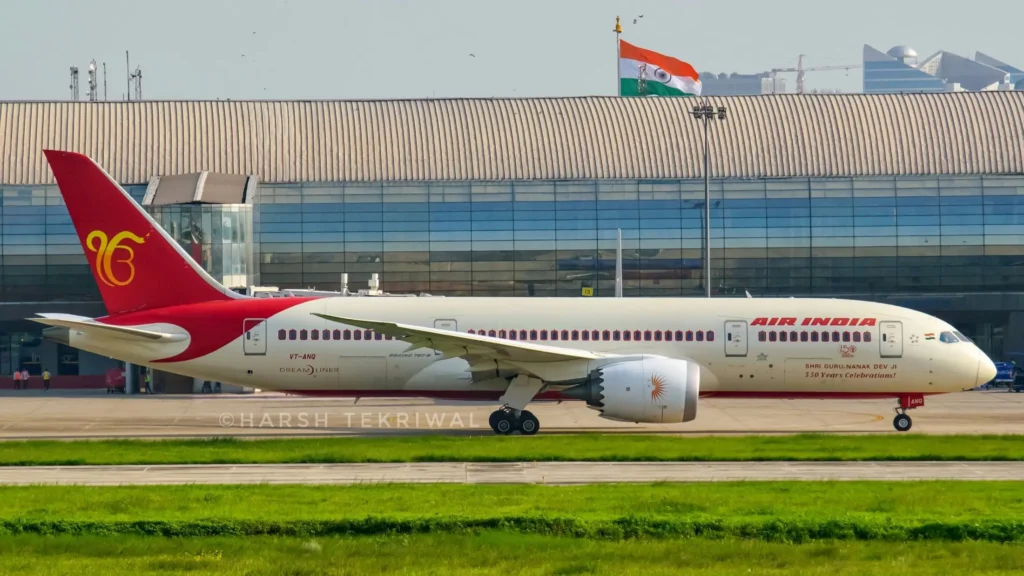
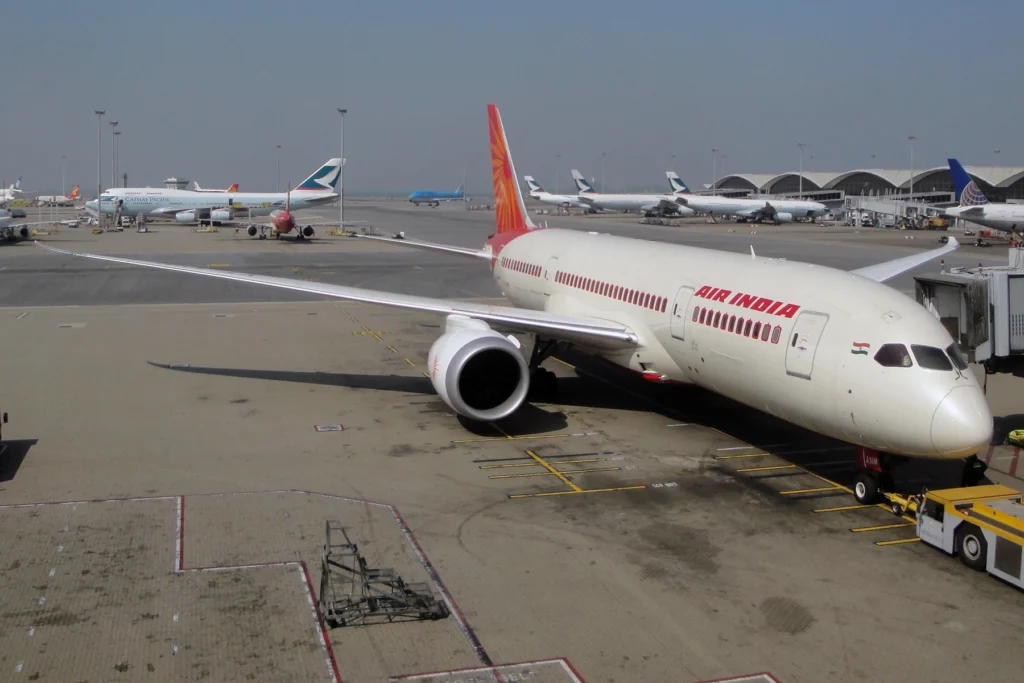
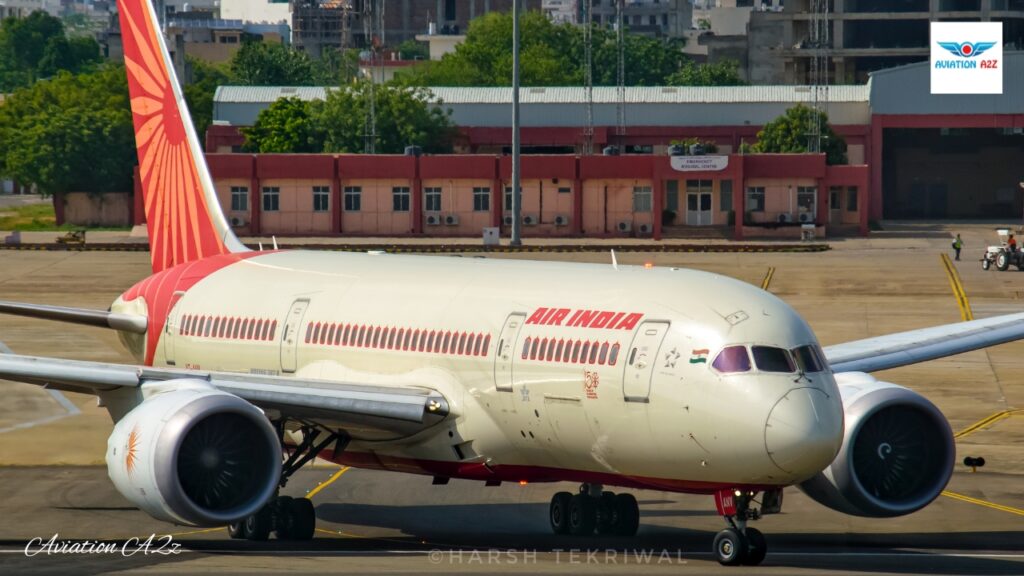
DELHI- Tata Group-owned Air India (AI) has begun modifying faucet control modules across most of its Boeing 787 Dreamliners following a US Federal Aviation Administration (FAA) directive. The order applies to Boeing 787-8, 787-9, and 787-10 aircraft.
The FAA directive affects Dreamliners operating globally, including those at Indira Gandhi International Airport, Delhi (DEL). The action targets water leak risks that could impact sensitive electronic equipment.
FAA Directive Targets 787 Water Leak Risks
The US Federal Aviation Administration issued an Airworthiness Directive on February 2 covering certain Boeing 787-8, 787-9, and 787-10 aircraft. This directive replaces an earlier order issued in January 2024 that required repetitive inspections of faucet control modules in lavatories.
The regulator acted after reports showed that undetected water leaks from the Faucet Control Module could migrate beneath the passenger cabin floor and enter electronic equipment bays during flight. Such leaks pose a safety risk because they can damage flight-critical systems.
According to the FAA, if the issue remains unaddressed, water intrusion could lead to the failure of multiple line replaceable units. In extreme cases, this could affect continued safe flight and landing.
The updated directive mandates the replacement of affected faucet control modules with an improved design that is not susceptible to leaking. This replacement serves as the terminating action for earlier required repetitive visual inspections, leak tests, and installation of moisture management devices.
CC BY 2.0, https://commons.wikimedia.org/w/index.php?curid=58290529
Air India’s Fleet and Compliance Measures
Air India operates 33 Boeing 787 aircraft, including 26 legacy 787-8 variants. Following the revised FAA directive, the airline has started modifying faucet control modules in the majority of its Dreamliners.
Sources indicate that more than half of the identified aircraft have already undergone the required modification. However, the exact number of completed upgrades has not been disclosed.
There has been no official statement from Air India or Boeing regarding the progress timeline. The modifications are being carried out to ensure full compliance with the FAA’s latest safety requirements.
From Inspections to Permanent Fix
The January 2024 directive required operators to conduct repetitive general visual inspections under lavatory washbasins to check for intermittent or active leaks at the faucet control module. Airlines were also instructed to perform on condition corrective actions when leaks were detected.
The February directive shifts the approach from monitoring to permanent rectification. By mandating the installation of a redesigned module, the FAA aims to eliminate the root cause of the leakage rather than relying on continued inspections.
This regulatory step underscores the importance of addressing water ingress risks in modern widebody aircraft, where electronic systems are densely integrated and critical to safe operations.
Stay tuned with us. Further, follow us on social media for the latest updates.
Join us on Telegram Group for the Latest Aviation Updates. Subsequently, follow us on Google News