MUMBAI– India’s budget carrier Akasa Air (QP) is positioning itself for a significant expansion by tapping into the forthcoming green-field airports at Navi Mumbai International Airport (NMI) and Noida International Airport (DXN).
The airline has been held back in India’s most lucrative markets — namely Chhatrapati Shivaji Maharaj International Airport in Mumbai (BOM) and Indira Gandhi International Airport in Delhi (DEL) — by limited take-off and landing slots.
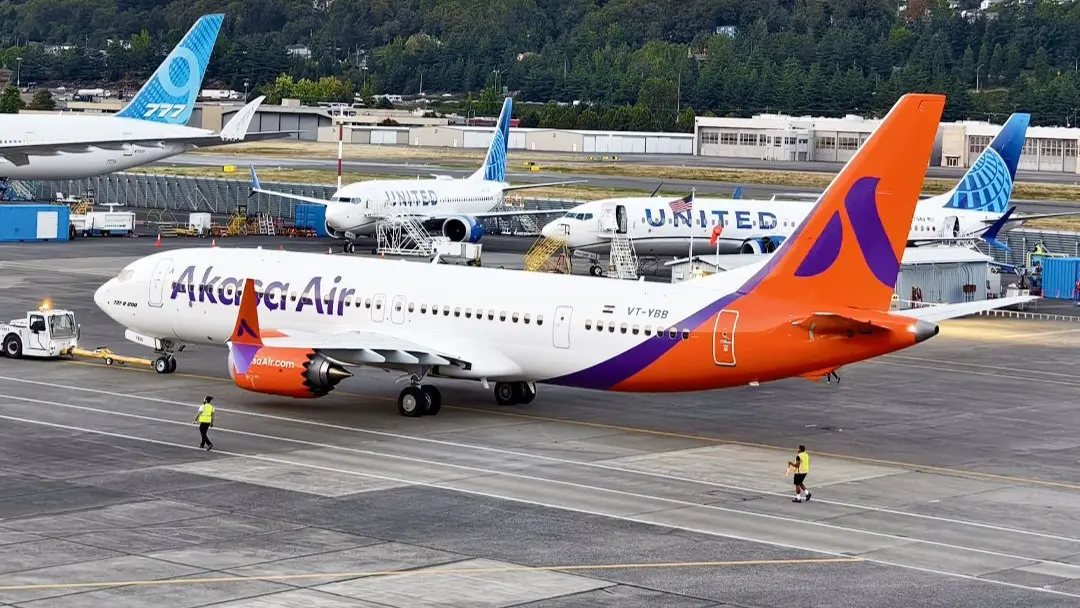
Slot Constraint Relief
The primary driver for Akasa’s push into Navi Mumbai and Noida is the severe slot shortage at BOM and DEL. High corporate demand and premium fares characterise these markets, but the dominance of legacy and low-cost carriers has made expansion difficult for newer entrants.
Akasa-Air’s Chief Commercial Officer, Praveen Iyer, described the upcoming airports as catalysts for growth and a way for the airline to compete more strongly in those cities.
By establishing operations at NMI and DXN, Akasa aims to bypass congestion at the legacy airports and access new catchment areas. The strategy aligns with the airline’s fleet delivery programme and its broader goal to build meaningful scale in India’s fastest-growing aviation market.
The new infrastructure frontier offers Akasa Air the chance to break that bottleneck and accelerate growth.
Akasa Air’s commercial team views the new hubs as “extensions” of the Mumbai and Delhi catchment zones rather than wholly separate bases. The airline currently operates about 31 daily departures from Mumbai and 24 from Delhi, The Economic Times reported.
Unlocking capacity at NMI and DXN could allow Akasa to leap ahead of its current operational constraints and further challenge dominant carriers in two of India’s top aviation markets.
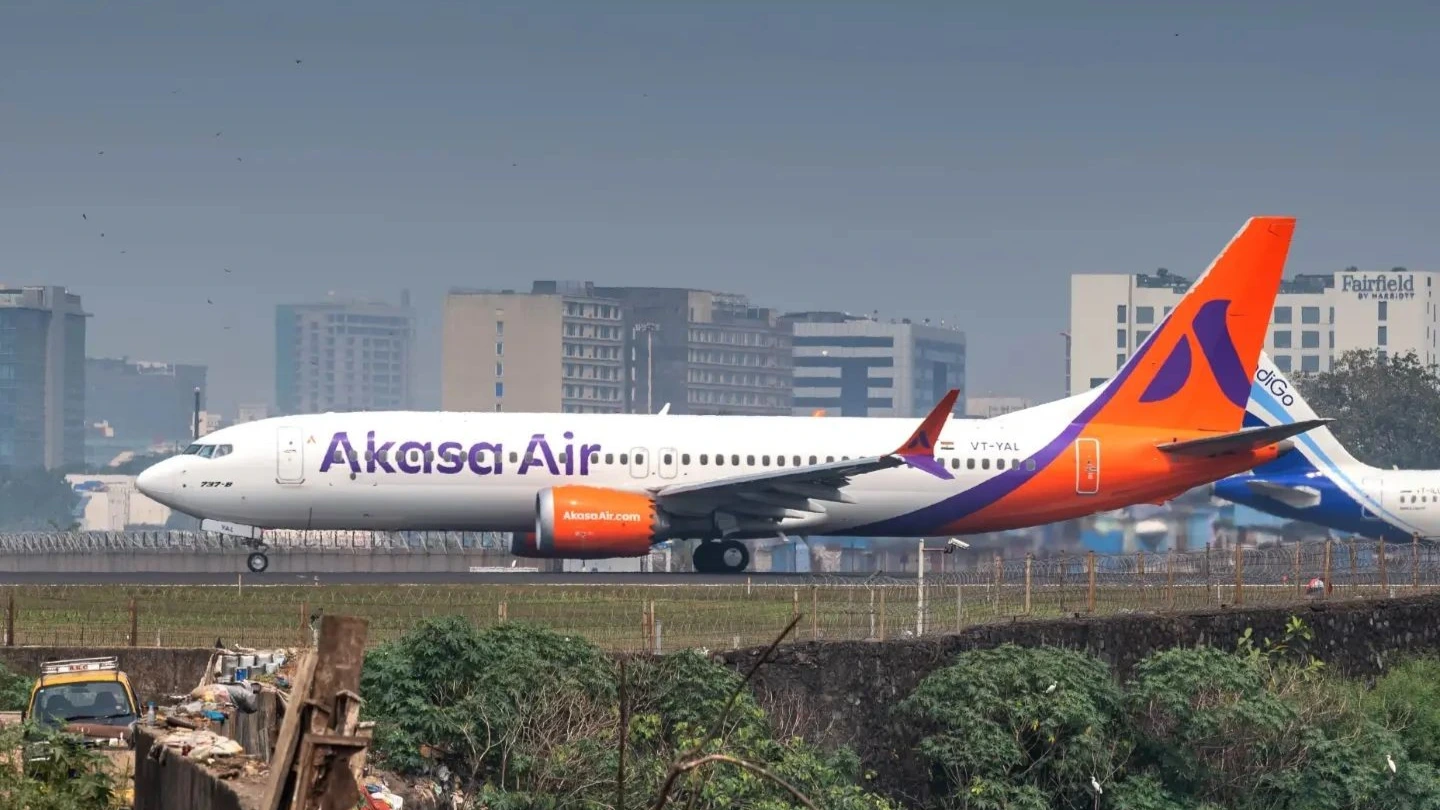
Growth Plans for New Hubs
At Navi Mumbai (NMI), Akasa plans to launch with around 15 domestic flights per day or more than 100 weekly departures. Over time, the airline expects to ramp to over 300 domestic flights and some 50 international weekly departures from the hub.
The airline is also in discussions to base a meaningful portion of its fleet at Noida (DXN) to serve the National Capital Region and further international gateways.
The airline currently operates a fleet of approximately 30 aircraft and has international services to six destinations, including Doha, Jeddah, and Abu Dhabi.
With its new bases, Akasa is targeting growth into regions such as Southeast Asia, Central Asia, and the Middle East, with destinations like Vietnam, Singapore, Kazakhstan, and Uzbekistan under consideration.

Implications for Market Competition
Akasa’s aggressive expansion into NMI and DXN signals a tangible shift in competition dynamics in India. These hubs will enable the airline to offer more departures, wider network reach, and enhanced connectivity for corporate and leisure travellers in the Mumbai and Delhi markets.
As it scales, Akasa could erode some of the market share held by the dominant carriers in those corridors by capitalising on capacity freed up by the new airports.
The move also reflects a broader trend of Indian carriers leveraging green-field airport developments as a strategic lever for growth. It underscores how infrastructure developments such as NMI and DXN are not just new airports but enablers of airline strategy, network expansion, and market disruption.

Bottom Line
Akasa Air’s strategic bet on the new Navi Mumbai and Noida airports represents a pivotal moment in its growth trajectory.
By escaping the slot restrictions at the legacy hubs and tapping new infrastructure, the airline stands to expand aggressively with hundreds of new flights and a broadened international reach.
Execution will depend on timely airport openings, aircraft deliveries, and regulatory approvals, but the groundwork appears firmly laid for Akasa to scale.
Stay tuned with us. Further, follow us on social media for the latest updates.
Join us on Telegram Group for the Latest Aviation Updates. Subsequently, follow us on Google News


