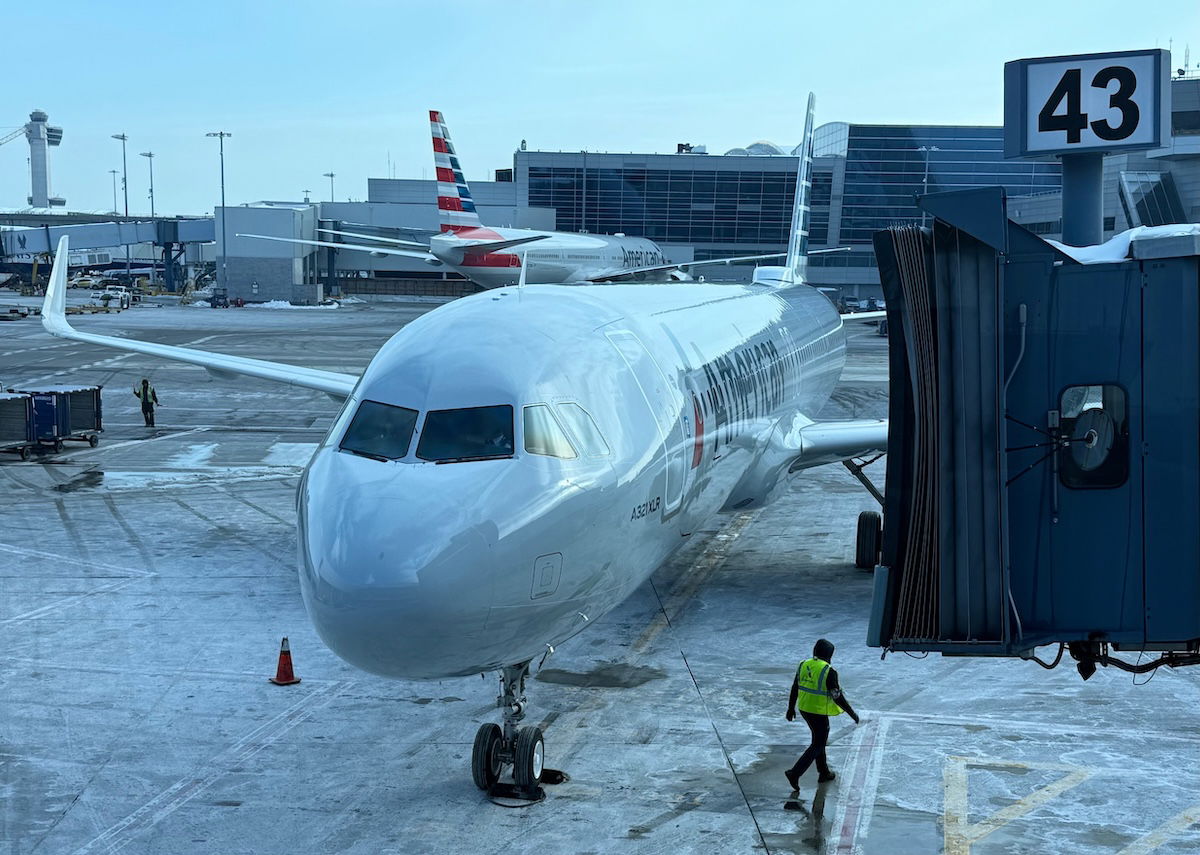
American Airlines recently introduced its new Airbus A321XLRs, which feature all-new cabins. These are supposed to be an exciting aspect of American’s attempt to move upmarket and better compete, as these planes will be used in lucrative markets, including on transcontinental flights and across the Atlantic.
Well, I just flew American’s A321XLR Flagship Suite business class from New York (JFK) to Los Angeles (LAX), and oh my, I don’t even know where to begin. While I’ve praised American’s new Boeing 787-9Ps and think they’re a great step in the right direction, these A321XLRs feel like they were designed in a board room, with no input from passengers or crew. And admittedly I kind of knew what to expect, but there were several little aspects to the product that really took away from the experience.
The brutal American A321XLR feedback I overheard
Before I even share my take on the product (as someone who lives and breathes airline passenger experience), let me share what’s perhaps most telling. Often when you fly a new first or business class product, you’ll hear people onboard gushing about how amazing and impressive it is. After all, premium airline seats have come a long way.
After the plane landed in Los Angeles and the seatbelt sign was turned off, business class passengers just started talking with one another. What were they talking about? Well, how much they hated these new seats:
- “This is the worst business class seat I’ve ever been in”
- “I can’t believe this is their new business class, what were they thinking?”
- “Who designed this seat, this is so tight?”
I’m not making this stuff up, these are the real comments I overheard between strangers. I didn’t hear a single person say a positive thing. Of all the airline products I’ve ever flown, I’ve never witnessed such a negative reaction all at once.
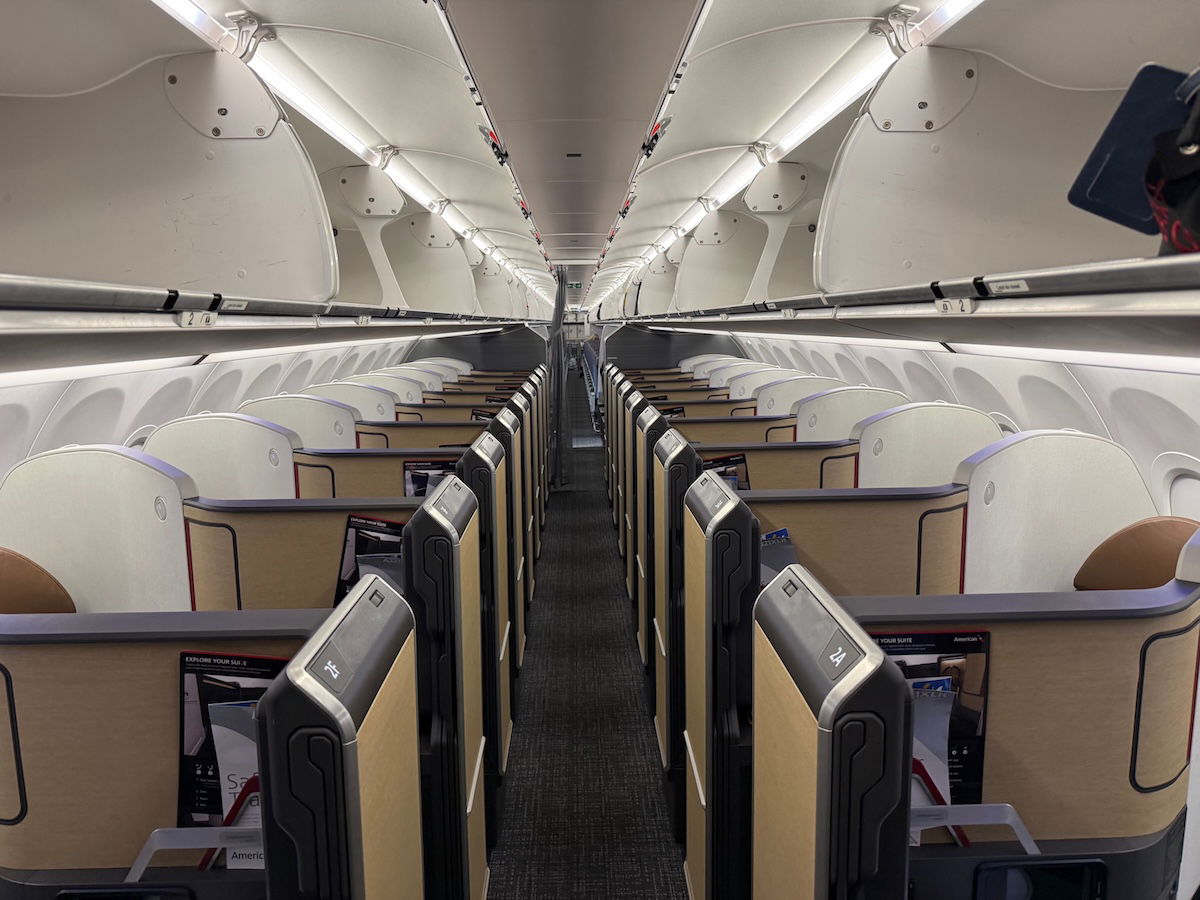
Even during boarding, as people walked back to economy, nobody had the usual comments about how “wow, look how nice these seats, I want to sit up here.” Instead, I heard:
- “Why are the seats facing away from the windows?”
- “It’s giving New York city cubicle” (he then proceeded to tell the whole business class cabin how his voice is raspy despite the fact he hasn’t hooked up with a guy in 11 days, and then said he hopes he ends up on TikTok — hey, I heard it, so you have to hear it as well)
- “This is what all the hype was about?”
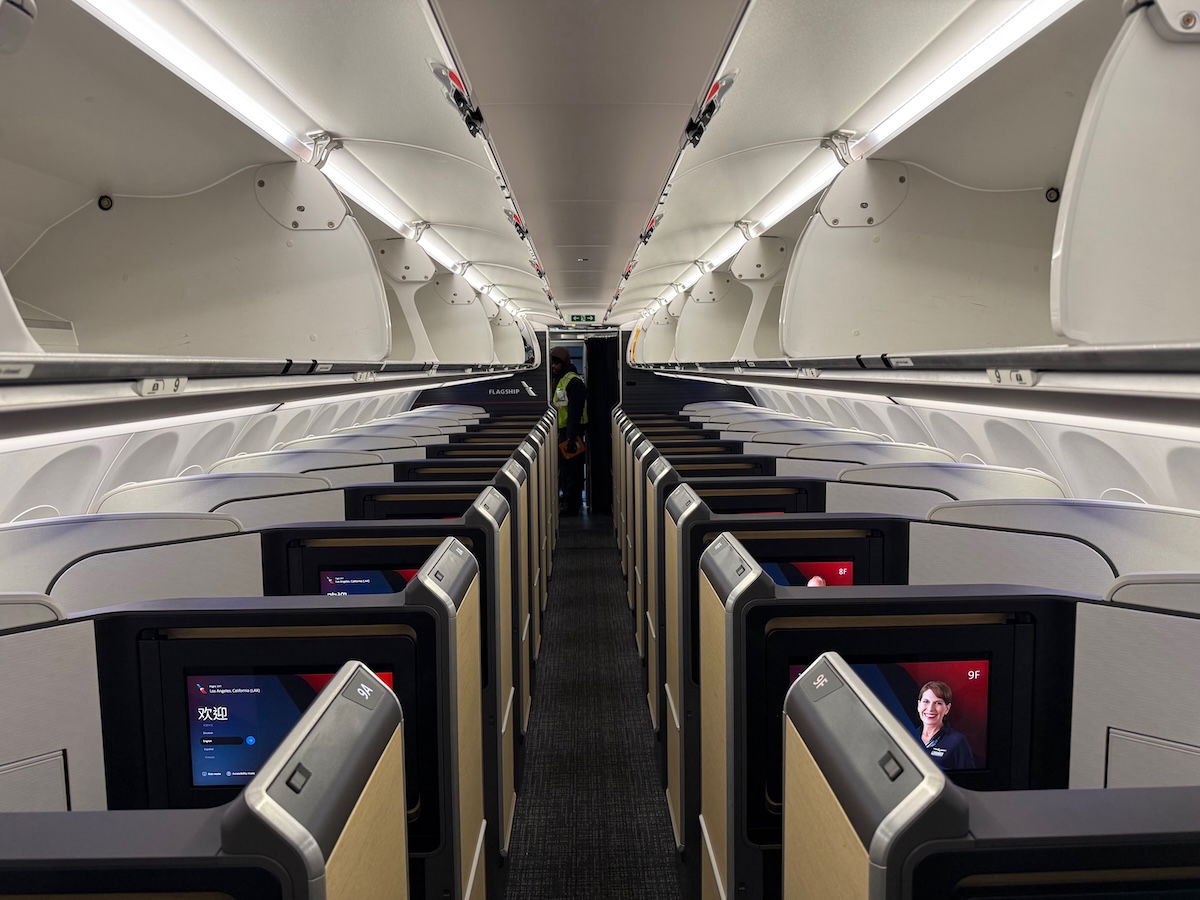
Is American’s A321XLR business class seat really that bad?
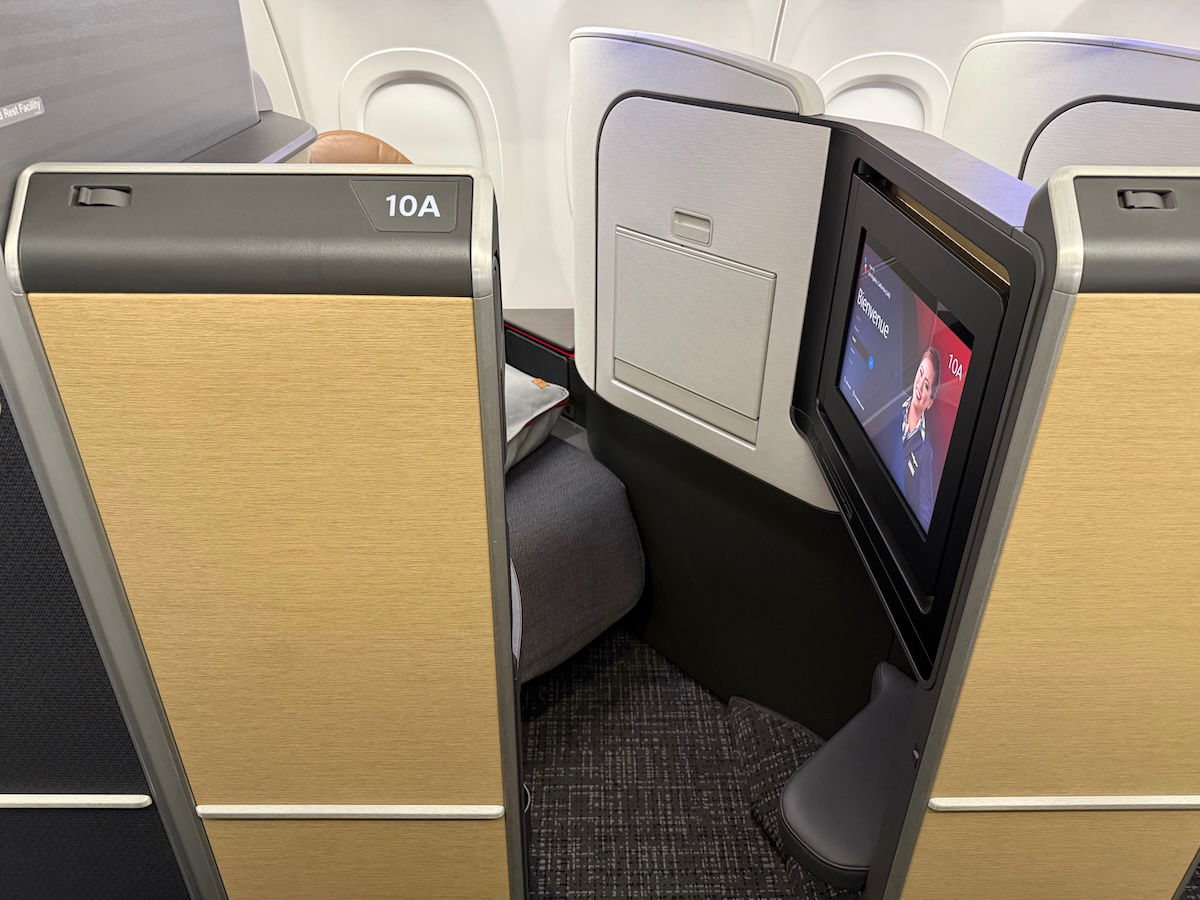
While I always enjoy hearing what others have to say, let me share my own take. American’s A321XLR business class is based on the Collins Aerospace Aurora platform, which is a herringbone product, meaning that passengers face away from the windows, and toward the aisle.
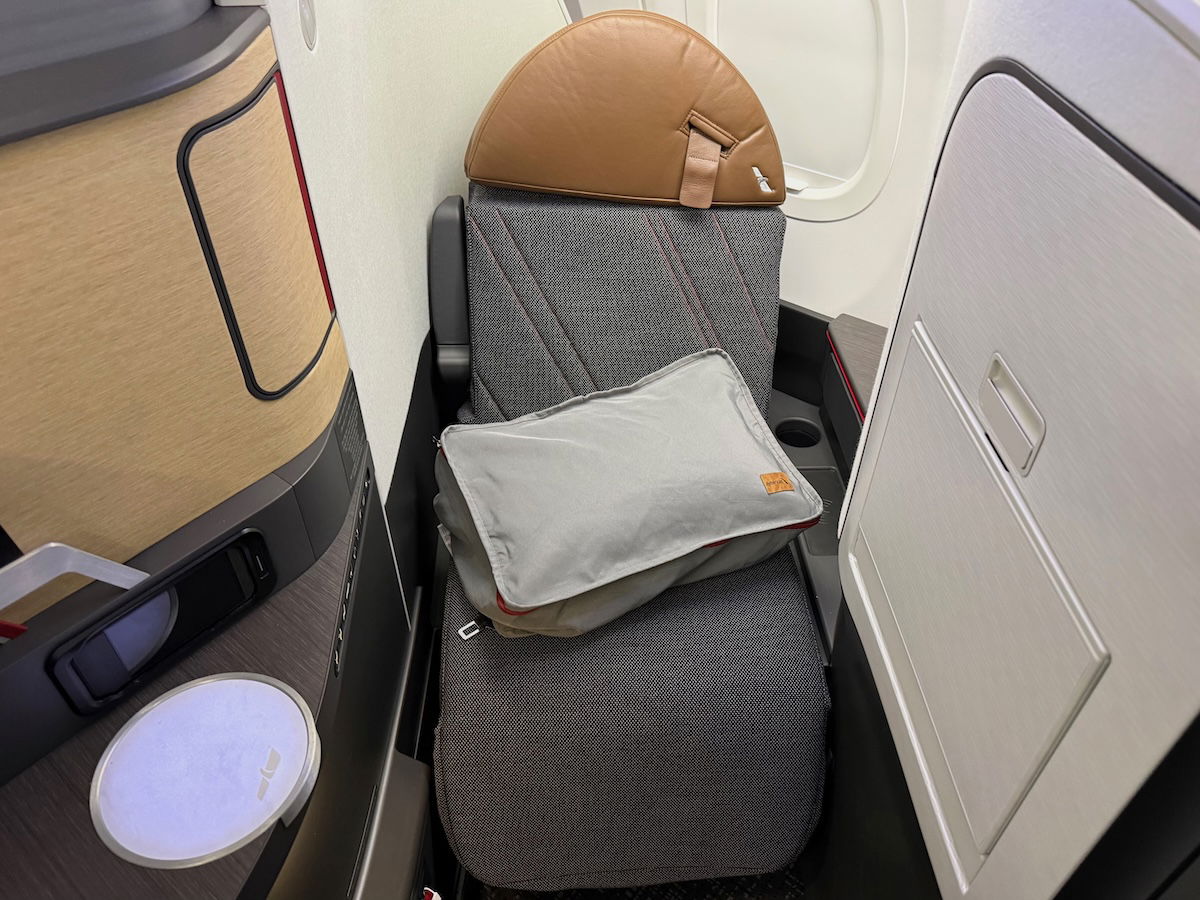
Now here’s the thing — American isn’t the first airline to have a product like this. We first saw these seats in the form of JetBlue’s A321LR Mint Suites, and this is also Iberia’s A321XLR business class. So is it fair to criticize American, when other airlines have this as well? Yes and no.
First, let me say that I think most of us aren’t fans of herringbone layouts, where you’re facing the aisle. It’s sort of awkward during boarding, and in general, you have to contort your body to look out the window. The seat also feels super tight, with walls on both sides, and the storage space is also so limited.
Herringbone seats were among the first flat bed seats we saw a couple of decades ago, so why are they making a comeback? The reality is that a herringbone configuration is more efficient than a reverse herringbone configuration, and on narrow body planes, space really comes at a premium, in order for the economics to work. So as narrow body planes increasingly fly longer distances, we’re seeing a return of these less spacious seats.
So, what’s the problem with American’s A321XLR business class, exactly? As I see it, there are a few things that make this marginally worse than other versions of the product:
- While American’s A321XLR business class seats have doors, they can’t yet be used, as they haven’t been certified; I don’t think that’s a huge deal, but it’s worth mentioning
- It’s my understanding that American’s A321XLR business class is pitched tighter than JetBlue’s A321LR business class, so the seat does feel a bit less spacious
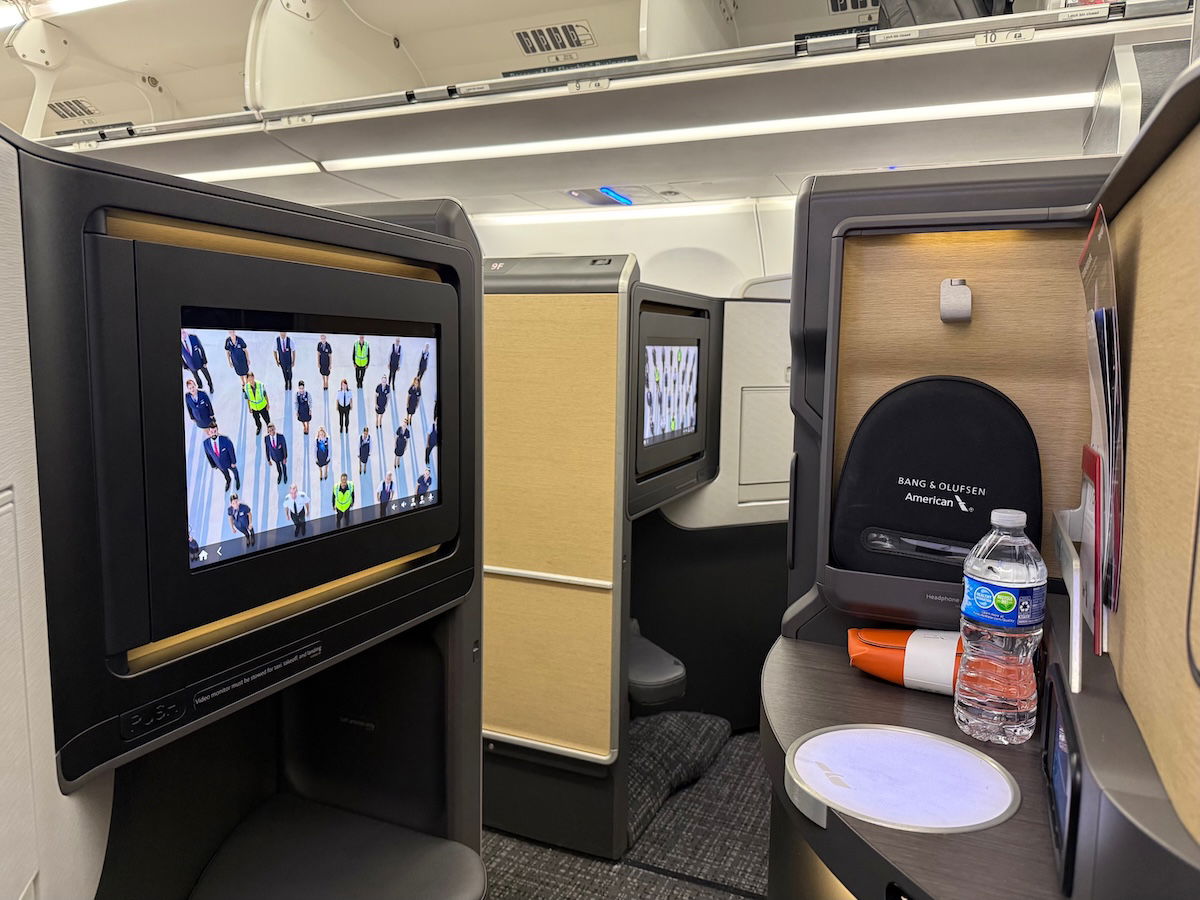
- Because of how tight the seat is, plus the TV swinging out in front of you, American’s policy is that the TV has to be stored during the meal service, so that the crew can serve passengers; when you step back, it’s absolutely mind boggling to think that a seat was designed where this needs to be the policy
- The tray table was super flimsy, and would just squeak and shake constantly; I was working on my laptop, and eventually just placed the laptop on my lap, since the noise of the tray table was so unpleasant
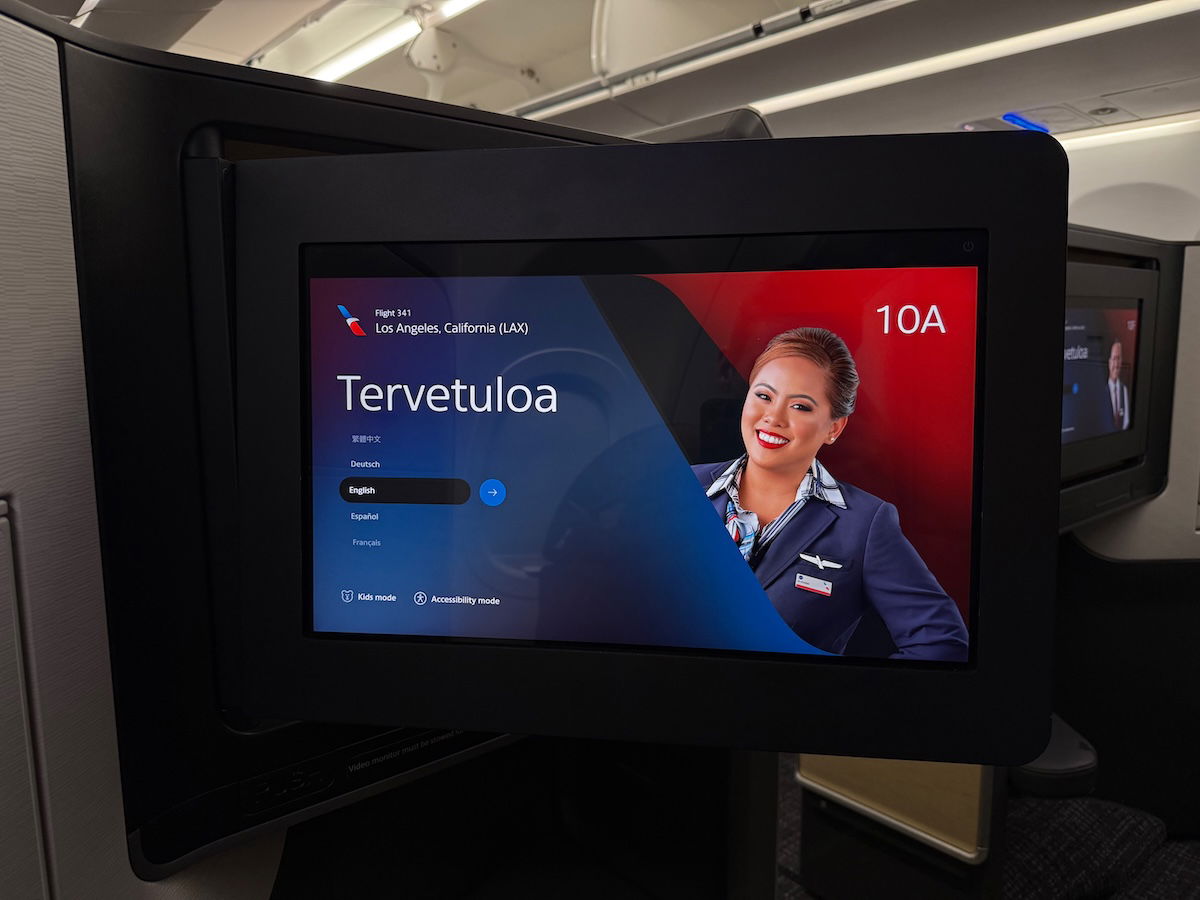
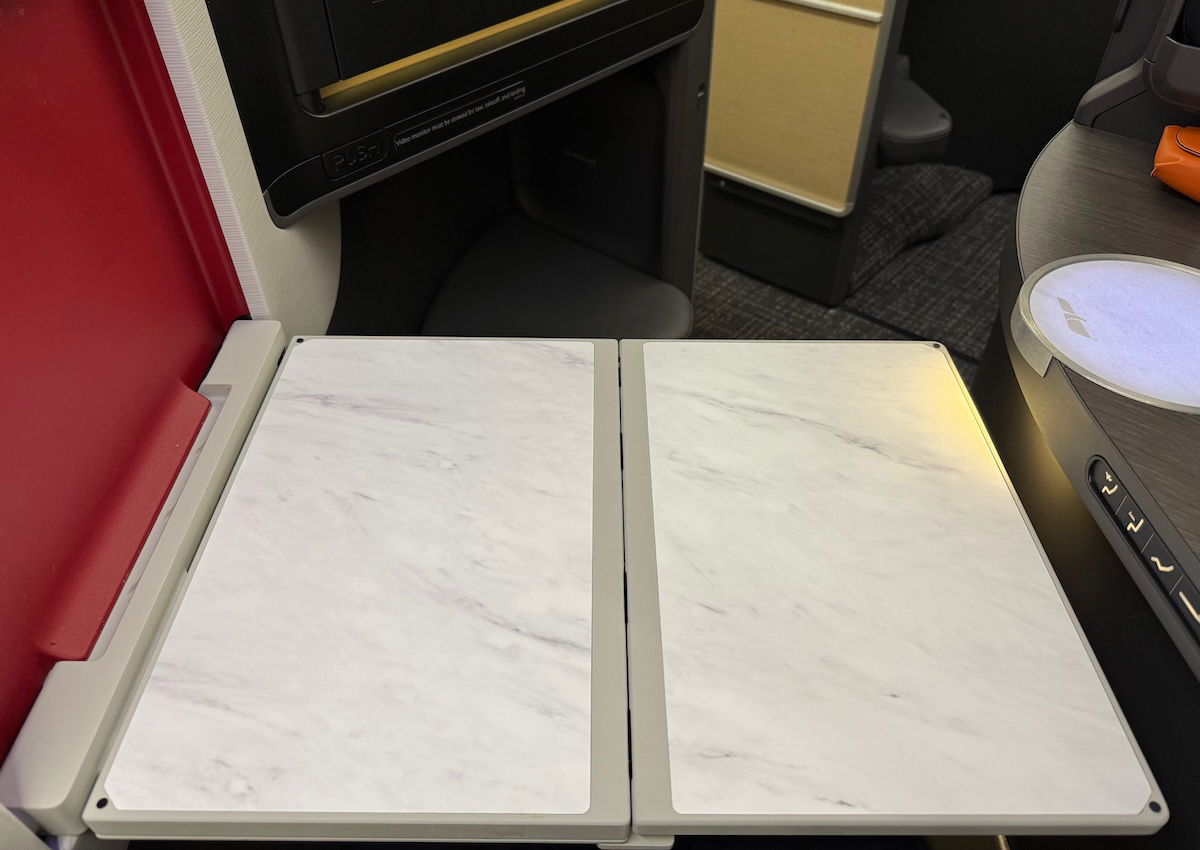
So as I view it, the new American A321XLR is only marginally worse than what you’ll find on JetBlue and Iberia. However, the hard product on neither of those airlines is particularly good to begin with, and then when you even make it a little bit worse, that’s not exactly ideal.
American’s A321XLR business class lavatory mess
If you ask me, the biggest issue with American’s new A321XLR is the extent to which this plane was designed with the sole focus on getting as efficient of a layout as possible.
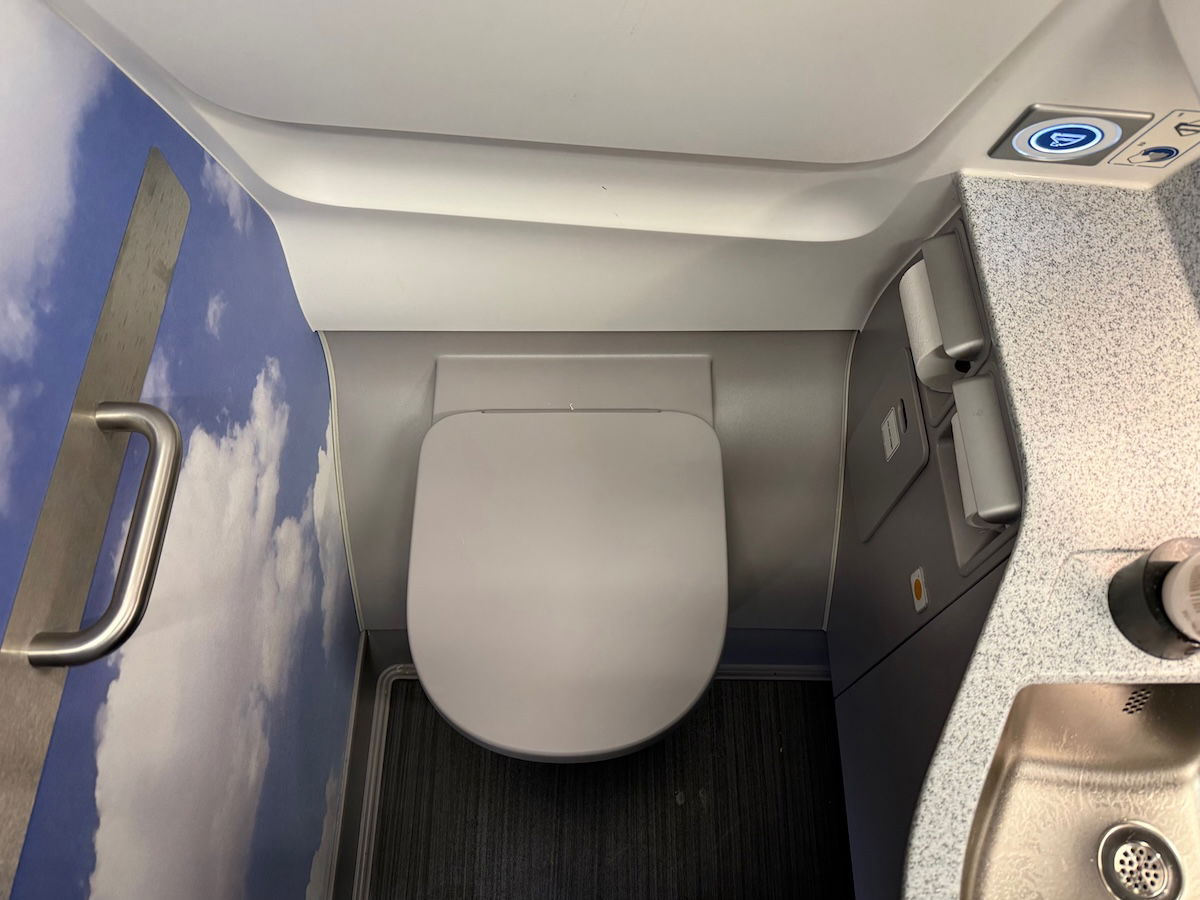
The American A321XLR has one lavatory in the front of the plane, and three lavatories in the back of the plane. The people who are worst off are premium economy passengers, since there’s no dedicated lavatory for premium economy, so they either have to go to the very front or very back of the plane.
This is where the issue arises. On domestic flights, American allows passengers to use any lavatory on the plane. So you have the one forward lavatory shared between the pilots, the 20 business class passengers, and (more often than not), the premium economy passengers. That’s a horrible lavatory ratio.
On international flights, American asks passengers to use the lavatories in their ticketed cabin, and for premium economy, the designated lavatory is in economy. Still, think about it. This plane will operate transatlantic flights, and almost everyone will want to use the lavatory before landing, after waking up.
How are 20 people, plus the pilots (who so often want to use the lavatory shortly before landing), supposed to share one lavatory? It’s going to be a disaster.
How does that differ from JetBlue and Iberia? JetBlue has 24 business class suites, but opted to install two lavatories at the front of the aircraft, and also doesn’t have premium economy. Iberia has only 14 business class seats, with one lavatory, and there’s also no premium economy.
Is this all just an indictment of the Airbus A321XLR?
I can totally see how we got to the point where American has an A321XLR with TVs that can’t be used during service, and a terrible premium lavatory ratio:
- Airbus is of course selling a plane that’s extra long range, and is highlighting to airlines how great the economics can be for long and thin routes
- Seat manufacturers want to create efficient seats for these types of planes, since that’s what airlines want, so that a sufficient number of seats can be on the plane for the math to work
- US airlines have very high labor and operating costs, and of course American wants to optimize the configuration, to maximize revenue potential
Individually all of that sounds fine, but then when you step back and look at the big picture, you’re left with a plane that has direct aisle access from every business class seat, yet leaves passengers really unhappy.
I’ve written in the past more broadly about the A321XLR, and whether it’s a long haul game changer or a plane to avoid. Here’s the thing — if you’re flying this plane in a transatlantic market where there otherwise wouldn’t be nonstop flights, many people would find it worthwhile to deal with the worse product for the convenience of not connecting.
I think American’s strategic blunder is also putting these planes on its most competitive, transcontinental routes, where there are a ton of options. Why would you subject yourself to this if you don’t have to?
Before I rag on American too much, though, let me note that United also has A321XLRs coming soon, and they’re likely to have nearly all the same problems that American has. They also have 20 herringbone business class seats and 12 premium economy seats, with one lavatory at the front of the plane.
Honestly, maybe Delta had the right idea by saying no to this plane, since this just doesn’t feel like the future, in terms of comfort. It’ll be telling to see whether passengers just complain about the product but continue to fly it, or if they actually vote with their wallet.
Even Qantas, which recently took delivery of A321XLRs with a much less premium configuration, is already starting to retrofit these planes, to add lavatories. Passengers just aren’t happy.
Bottom line
I had the chance to fly American’s new A321XLR business class, and unfortunately it’s a far cry from American’s new 787-9P business class. Now, that’s not really surprising to me, since I knew to expect herringbone seats, which are otherwise out of style.
However, American obviously had a heavy focus on efficiency, to the point that passengers can’t even view their personal entertainment screens head-on during the meal service. And that says nothing of the lavatory mess.
I’ve flown a lot of new products shortly after launch, but I’ve never witnessed such a negative reaction from other passengers in the cabin, especially without any sort of a prompting. I didn’t hear a single passenger on the plane say a good thing about the cabin or seats.
What’s your take on American’s A321XLR business class? Do you think passengers will vote with their wallets and avoid these planes, or just put up with it?


