Premium Economy has evolved from a minor cabin experiment into a core part of long-haul airline strategy. As Airlines search for ways to improve margins without relying solely on high-priced business class seats, this cabin has proven a compelling solution. It offers a clear upgrade in comfort and service while remaining accessible to a much broader segment of travelers.
For passengers, premium economy responds to a growing frustration with long hours in tightly packed economy cabins. Wider seats, extra legroom, improved dining, and added amenities create a noticeably better experience without the cost of business class. This balance of comfort and value explains why premium economy has expanded rapidly across international fleets.
Why Are Airlines Shifting Focus Toward Premium Economy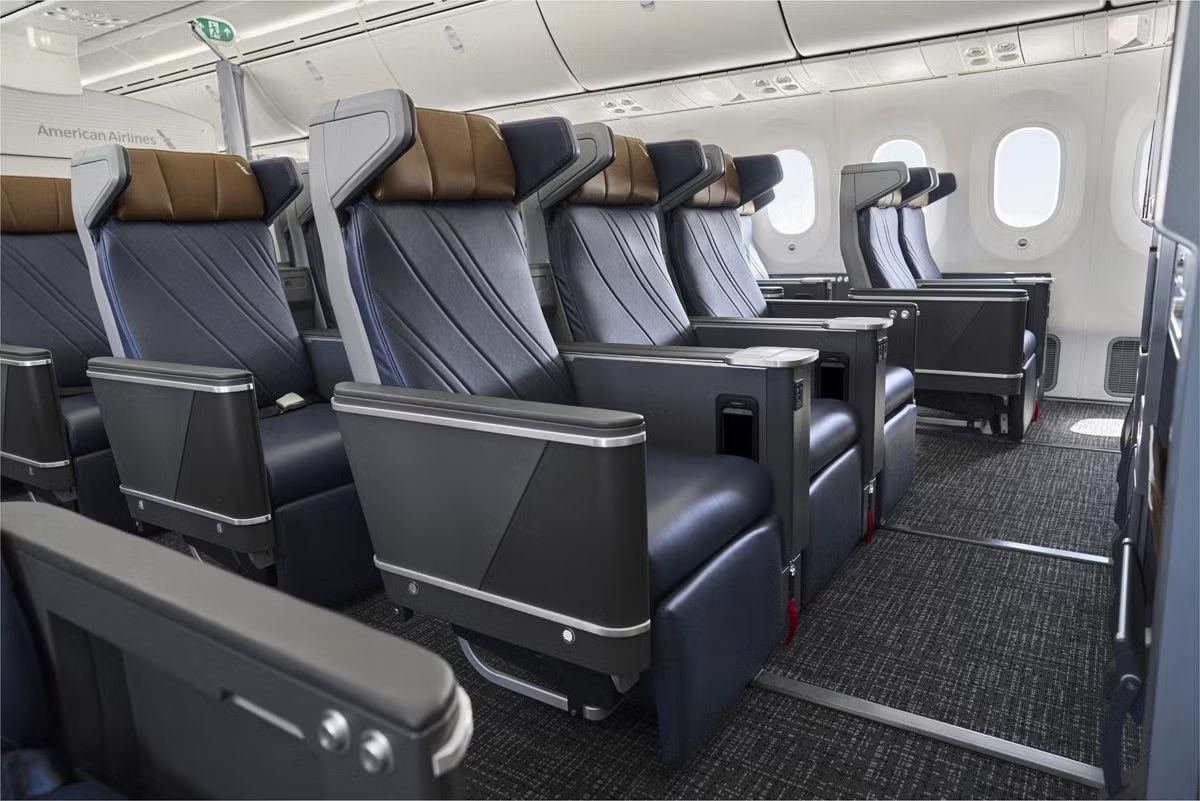
Business class remains the most profitable cabin for airlines because it generates a disproportionate share of total revenue while occupying relatively little cabin space. Corporate travelers and high-yield leisure passengers are willing to pay several times the cost of an economy fare for schedule flexibility, lie-flat seats, and premium service. These tickets often carry far higher margins than economy, especially on long-haul routes where demand for comfort is strongest.
At the other end of the aircraft, economy class is typically the least profitable cabin on a per-seat basis. Fares are highly competitive and price sensitive, while costs such as fuel, catering, and airport fees continue to rise. Business class pricing, however, is out of reach for many travelers, particularly on long flights. Premium economy fills this gap by offering airlines better margins than economy while appealing to passengers who want more comfort without the steep cost of business class.
Premium economy cabins achieve these higher margins in part through denser revenue per row. Airlines usually remove one or two economy seats per row to create wider seats and additional space. On the Boeing 777, a 3-4-3 economy layout typically becomes 2-4-2 in premium economy, while the 787 and A350 shift from 3-3-3 to 2-3-2. Aircraft like the 767 and A330 see similar adjustments, with just one seat removed, 2-3-2 and 2-4-2 become 2-2-2 and 2-3-2, respectively.
In many ways, premium economy mirrors domestic first class in the United States, but with refinements suited to long-haul travel. Seats are wider and offer greater recline, legroom, and support than economy, making extended flights far more tolerable. Enhanced meals, upgraded amenities, and priority services further differentiate the product, positioning premium economy as a meaningful step-up rather than a minor upgrade.
The Hard Product (Seat)

Premium economy seating is designed to address the physical limitations that define long-haul economy travel. Additional legroom reduces knee and lower back strain, while wider seats provide noticeably more shoulder and elbow space. The increased pitch and seat width together allow passengers to shift positions more naturally throughout a long flight.
Recline is also meaningfully improved compared with standard economy. Premium economy seats typically offer a deeper recline and a more supportive shell or cradle design, which helps maintain comfort without intruding excessively into the space of the passenger behind. This added recline makes resting and sleeping more realistic on overnight flights.
The overall seat environment is also upgraded. Larger seatback screens improve the inflight entertainment experience, while sturdier tray tables are better suited for working, dining, or using personal devices. Combined with higher-quality padding and materials, these improvements create a seat that feels purpose-built for long-haul comfort rather than a marginal enhancement of economy.

Cathay Pacific Airbus A350-1000 Economy Vs Premium Economy: Features Compared
How to decide whether to splash out on Premium Economy or stick with Economy on Cathay A350 long haul routes.
The Soft Product

Premium economy soft product benefits are more limited than those offered in business class, particularly in ground services. Lounge access is generally not included, as airlines reserve that perk for premium cabins and elite frequent flyers. That said, a small number of carriers make exceptions, with airlines such as ANA, JAL, SAS, and LATAM granting lounge access to premium economy passengers. Most airlines, however, offset this by including an additional checked bag compared with standard economy.
Onboard, the service experience is clearly elevated. Meals are typically upgraded in both quality and presentation, and many airlines provide dedicated amenity kits not available in economy. Alcoholic beverages are often included, and premium economy passengers usually receive priority check-in and, in some cases, priority boarding, reducing friction at the airport.
These soft product enhancements primarily apply to international long-haul flights. On domestic routes in the United States that offer a premium economy cabin, the experience is often scaled back. While the seats may be similar, the added amenities, dining upgrades, and service elements associated with international premium economy are usually not included.
Best Premium Economy Airline

Virgin Atlantic was named the World’s Best Premium Economy Airline in 2025 by Skytrax, reinforcing its long-standing reputation in this cabin segment. The airline has consistently invested in premium economy as a distinct product rather than a minor upgrade over economy. This recognition reflects both seat comfort and the overall passenger experience delivered on long-haul routes.
Virgin Atlantic’s premium economy service combines tangible comfort improvements with meaningful service enhancements. Passengers benefit from extra-large seats with additional legroom, along with two 23-kilogram checked bags included in the fare. The experience is further elevated with premium check-in, priority boarding, a welcome glass of sparkling wine onboarding, and the option to pre-order from a dedicated premium menu. These elements collectively create a product that feels intentionally positioned between economy and business class.
Virgin Atlantic also earned recognition for its premium economy catering. Meals are designed to be more substantial and thoughtfully presented than economy offerings, aligning closely with the cabin’s premium positioning. This focus on food quality helps reinforce premium economy as a complete experience rather than simply a better seat.
Shai Weiss, CEO, Virgin Atlantic, commented;
“In the last four decades, we’ve evolved from a challenger to a leader and a premium, long-haul flag carrier. We exist to make our customers smile, it’s that simple – obsessing over finding new ways to delight our guests, delivered by our amazing people, on our journey to become the most loved travel company. We are investing billions to fly the youngest fleet across the Atlantic; the first UK airline to have free, streaming quality, fleet-wide Wi-Fi; more premium cabins and a full retrofit of the 787 fleet; alongside a new app featuring the world of Virgin Atlantic in your pocket, all delivered by our amazing teams. The best is yet to come.”

British Airways Vs. Virgin Atlantic: Which Carrier Has More Boeing 787 Dreamliners?
Which UK airline dominates with the Boeing 787?
Best Premium Economy Airline Seat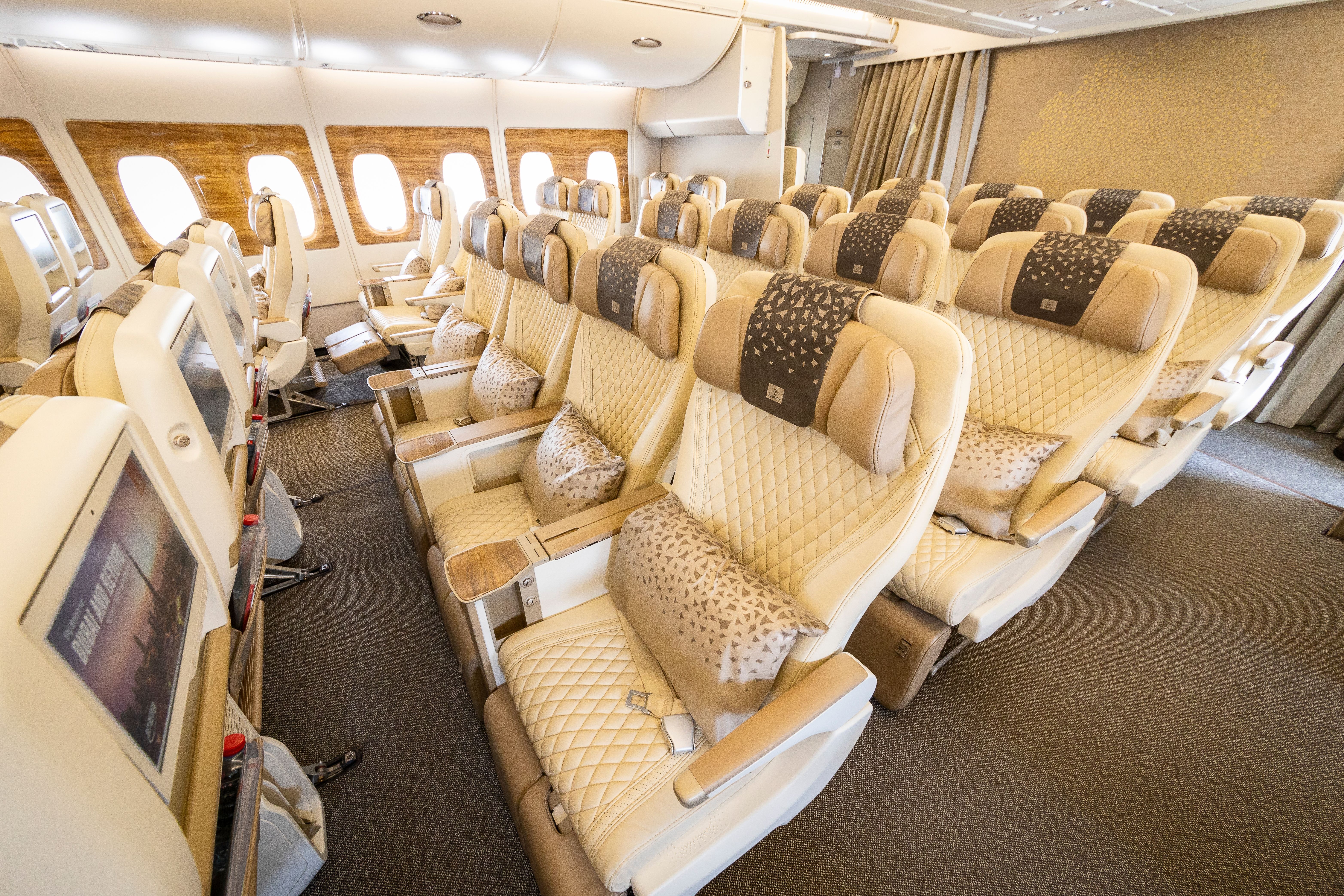
 Emirates is widely regarded by Skytrax as offering the strongest premium economy seat in the industry. The cabin features cream leather seats with a generous recline, a raised cushioned leg rest, and a six-way adjustable headrest that allows passengers to fine-tune their seating position. A polished woodgrain dining table, paired with a large pillow, reinforces the sense that this seat is designed for long-haul comfort rather than incremental improvement over economy.
The entertainment experience is equally well-developed. Emirates equips its premium economy cabin with a 13.3-inch HD screen running the airline’s latest inflight entertainment system. Passengers can choose from thousands of movies, television shows, and albums, and can connect their own headphones wirelessly via Bluetooth. On newer A380 aircraft, higher-speed Wi-Fi further enhances the onboard experience.
Dining in Emirates’ premium economy is deliberately positioned above standard economy service. Meals are drawn from regional monthly menus and served in generous portions on Royal Doulton china with stainless-steel cutlery, wrapped in linen. The woodgrain dining table folds neatly into the seat, complemented by a side table for drinks. Passengers can select from an extended beverage list that includes sparkling wine, select vintages from the business class offering, as well as chocolates and liqueurs.
“Sink into wider, cream leather seats and enjoy extra room to stretch out on raised cushioned leg rests. Adjustable headrests and a deeper recline help you get perfectly comfortable before you sleep under the stars of the overhead mood lighting. On the A380, our spacious Premium Economy seats are at the front of the aircraft giving you greater priority to exit when we land.” – Emirates
The Bottom Line

Wikimedia Commons | Simple Flying
Premium economy succeeds because it delivers meaningful improvements where they matter most on long-haul flights. The combination of a better seat, enhanced service, and improved dining transforms the onboard experience from something to endure into something closer to enjoy. For many travelers, it represents the most rational upgrade available.
From the airline perspective, premium economy has become a reliable revenue generator that sits neatly between two extremes. It attracts passengers who are unwilling to pay for business class but increasingly unwilling to tolerate standard economy. This balance makes the cabin financially attractive and operationally efficient.
As airlines continue to refine their offerings, premium economy is likely to become even more standardized and prominent across global fleets. What began as a compromise cabin has matured into a product with its own identity, clear benefits, and long-term strategic value for both airlines and passengers.