ARLINGTON- Boeing has already produced 26 Boeing 777-9 aircraft even before the certification, and the widebody will not enter service until 2027, with most units stored at Seattle Paine Field International Airport (SEA).
Airlines such as Emirates (EK), Qatar Airways (QR), and Korean Air (KE) await the aircraft’s launch as the program continues navigating certification delays.
Four aircraft support active test campaigns, while 22 remain in storage at Seattle (SEA), a facility that also handles limited commercial operations from Alaska Airlines (AS) and Frontier Airlines (F9).
According to Simple Flying, Boeing’s early production approach supports certification, stabilizes manufacturing, and prepares the company for rapid delivery once approval is secured.
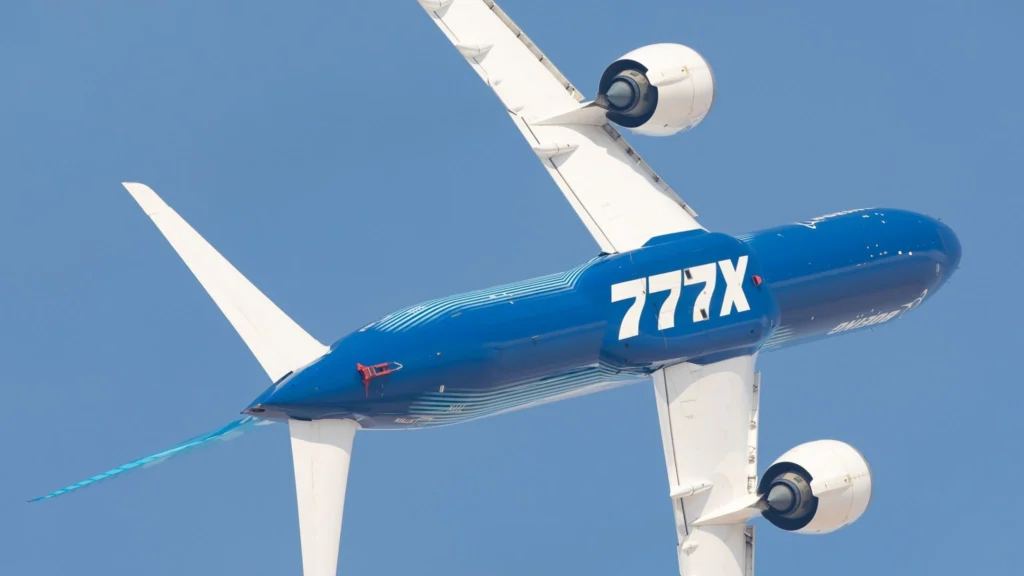
Boeing 777-9 Certification Delays
Boeing built 26 Boeing 777-9 units early to support the extensive certification program required by regulators. Testing requires production-standard aircraft, not only prototypes, to validate build quality, flight performance, and systems integration.
These aircraft support flight testing, ETOPS trials, functionality checks, reliability assessments, and manufacturing process validation to ensure the production line matches what regulators certify.
At Seattle Paine Field International Airport (SEA), four units are used for flight tests, while 22 remain parked nose-to-tail on the airfield with large blocks hanging from their wings instead of engines.
The storage process includes covering sensors, conducting periodic system runs, rotating tires, monitoring humidity, and preserving components.
Because the aircraft have not yet been fitted with engines, they require a modified preservation process focused on interior systems and airframe protection.
Maintaining active production also supports Boeing’s financial and operational stability. Stopping and restarting a widebody line is costly and disrupts workforce continuity, supplier flow, tooling availability, and quality management.
Early builds allow Boeing to identify structural, systems, or assembly issues well before service entry. The approach accelerates future deliveries but carries risks, including additional maintenance for stored aircraft and potential rework if certification changes occur.
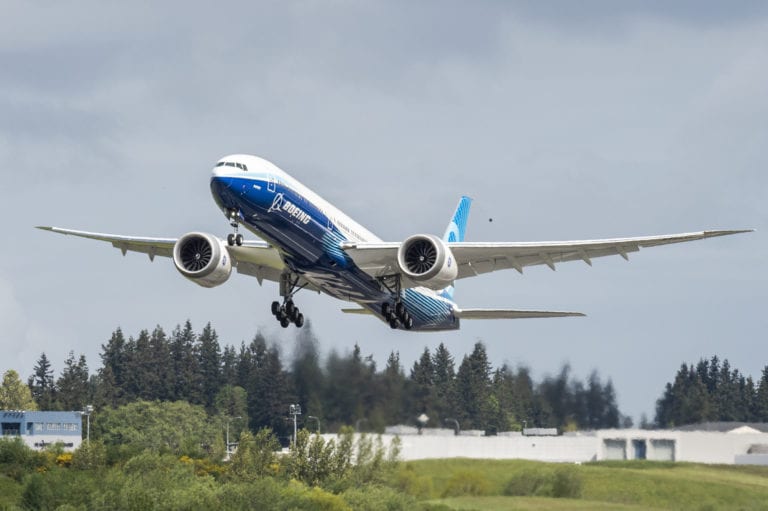
How Program Delays Shaped Production Decisions
The Boeing 777-9 was initially planned to enter service in 2020. The timeline slipped after a 2020 uncommanded pitch event during testing, which increased FAA scrutiny and pushed delivery estimates toward 2023.
A 2022 reassessment shifted entry into service to 2025, and Boeing paused much of the 777X production line through 2022 and 2023, incurring approximately $1.5 billion in added costs.
Further issues emerged in 2024 when a critical structural component between the engine and wing cracked during tests in Hawaii, grounding part of the fleet for inspections and repairs.
By 2025, Boeing delayed the first customer delivery again to 2027. The cumulative cost of delays has reached an estimated $4.9 billion, making the 777X one of the most prolonged and costly development cycles in recent commercial aviation history.
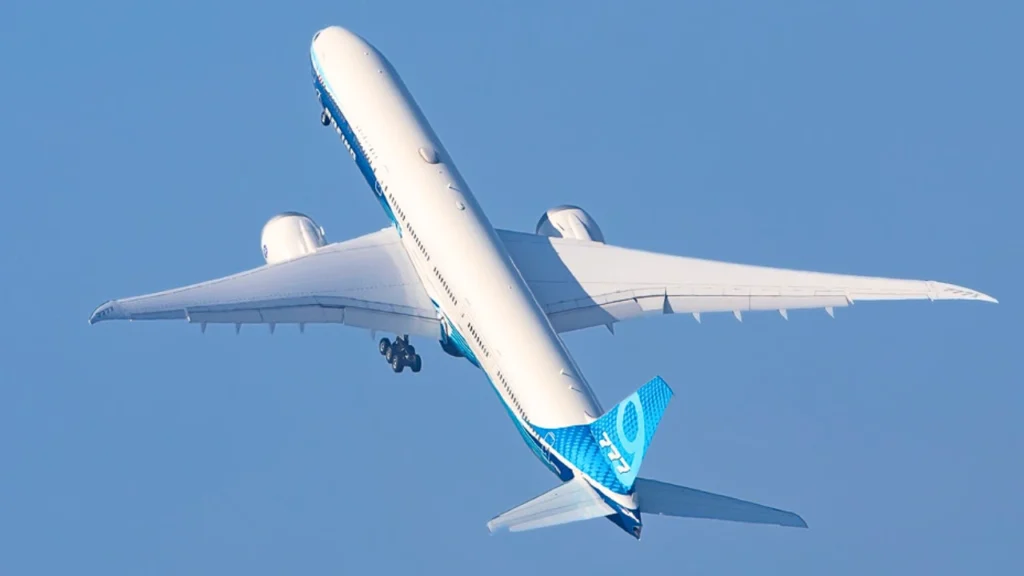
Technical Features
The Boeing 777-9 builds on the 777 family and integrates advanced fuel efficiency, greater range, and next-generation cabin comfort.
Its GE9X engines, the largest turbofans ever built, use composite materials, larger fan diameters, and improved thermodynamic efficiency to reduce fuel burn compared with the 777-300ER.
Cabin enhancements draw from Boeing’s 787, including larger windows, improved pressurization, and better humidity levels to support passenger comfort on long-haul flights. Airlines plan custom interiors with more spacious business-class cabins and upgraded amenities.
With typical seating above 400 passengers, the aircraft is designed for high-demand long-haul markets requiring efficient performance and robust payload capability.
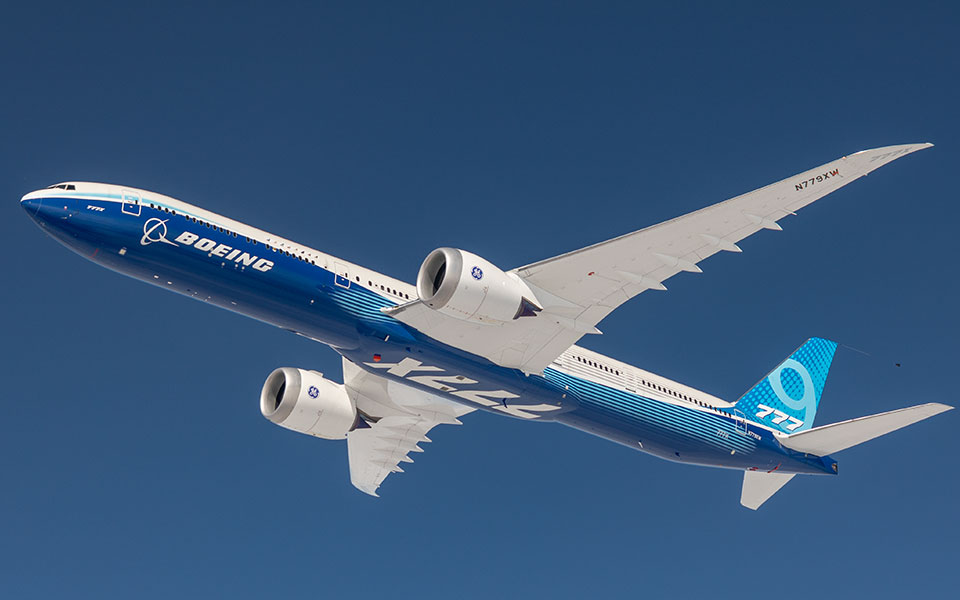
Folding Wingtips and Airport Compatibility
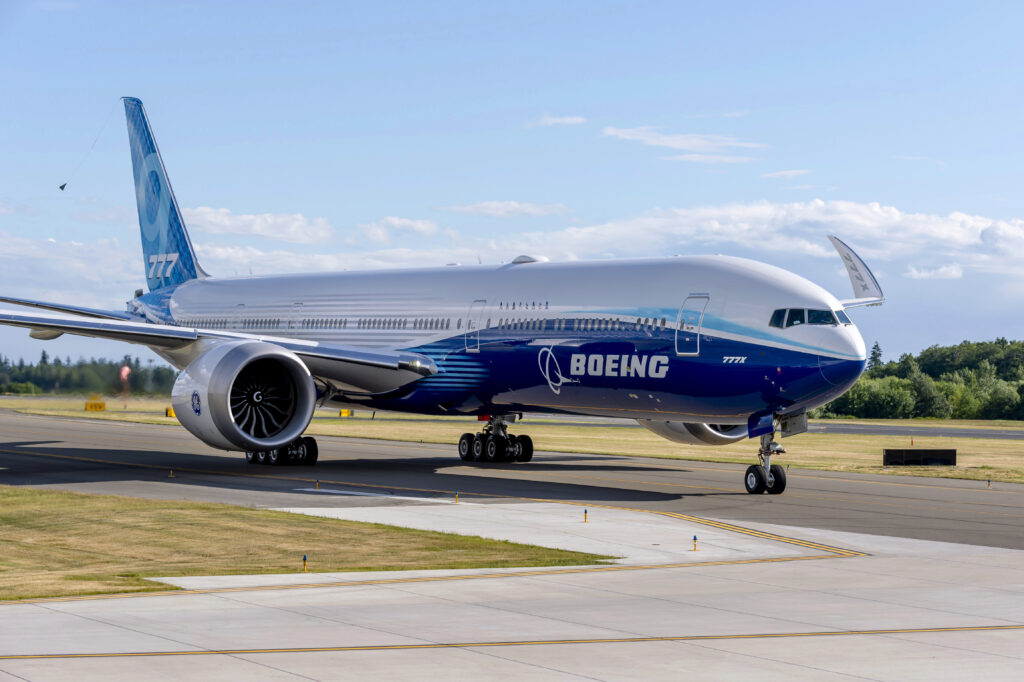
The 777-9’s most distinctive feature is its folding wingtip system. Its extended wingspan boosts aerodynamic efficiency but exceeds standard gate limits. Boeing addressed this by engineering folding outer sections measuring 11.5 feet on each wing.
When on the ground, the tips fold upward to maintain compatibility with gates used by current 777 models.
The mechanism includes redundant locking systems, safety interlocks, and independent power sources to prevent accidental movement.
The system meets full flight-critical certification standards and adapts concepts long used on military aircraft.
The design allows Boeing to maximize aerodynamic efficiency without requiring new airport infrastructure, unlike the Airbus A380, which required facility modifications.
Global Airline Orders for the Boeing 777X
More than 500 Boeing 777X aircraft have been ordered. Emirates (EK), based at Dubai International Airport (DXB), is the largest customer with 270 aircraft, including 35 Boeing 777-8s and 235 Boeing 777-9s.
Qatar Airways (QR) and Korean Air (KE) follow with major commitments. Data from ch-aviation confirms Qatar Airways is positioned to become the second-largest operator.
Major 777X Orders
| Rank | Airline | 777-8 | 777-9 | Total |
|---|---|---|---|---|
| 1 | Emirates | 35 | 235 | 270 |
| 2 | Qatar Airways | – | 90 | 90 |
| 3 | Korean Air | – | 40 | 40 |
| 4 | Cathay Pacific | – | 35 | 35 |
| 5 | Singapore Airlines | – | 31 | 31 |
| 6 | Etihad Airways | 8 | 17 | 25 |
| 7 | British Airways | – | 24 | 24 |
| 8 | Lufthansa | – | 20 | 20 |
| 9 | All Nippon Airways | – | 18 | 18 |
| 10 | China Airlines | – | 10 | 10 |
Stay tuned with us. Further, follow us on social media for the latest updates.
Join us on Telegram Group for the Latest Aviation Updates. Subsequently, follow us on Google News